The Miami Strangler: Miami’s Unidentified Serial Killer
Overview of the Case
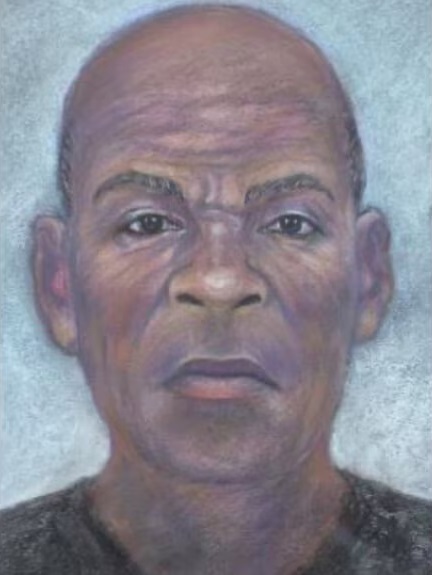
The Miami Strangler is the name given to an unidentified serial killer believed to have murdered at least nine women in Miami, Florida, between August 1964 and October 1970. Two additional killings committed in 1971 have sometimes been discussed as possible extensions of the series. The killer was never identified, arrested, or prosecuted, leaving one of South Florida’s most disturbing serial-murder investigations unresolved.
Despite the nickname, the victims were not all strangled. Some were smothered, others were beaten to death, and one was shot after a scarf was placed around her neck. Investigators connected the cases because of recurring details involving the victims’ clothing, missing personal garments, the positioning of their bodies, and the apparent absence of conventional robbery motives. Jewelry and other valuables were sometimes left behind even when purses, shoes, keys, or clothing were taken.
Many of the women were attacked while alone inside their homes or apartments. Others were intercepted after leaving work or during routine activities. Several scenes showed no obvious signs of forced entry, raising the possibility that the killer gained access through deception, was admitted by the victims, or knew enough about their routines to approach them without immediately causing alarm.
Confirmed Victims Attributed to the Miami Strangler
- Mary E. McGreevy, 64 — August 17, 1964 — Miami, Florida: McGreevy was killed inside her home. She was smothered with a pillow, establishing suffocation as one of the methods later associated with the unidentified offender. The indoor setting and apparent targeting of a woman living or spending time alone became recurring characteristics of the series.
- Sylvia Valdez, 38 — March 8–9, 1965 — Miami, Florida: Valdez left work at approximately 9:00 p.m. on March 8 and discovered that her automobile had a flat tire. A parking attendant changed the tire and later reported seeing her talking with two men. Valdez was found dead inside her car the following morning. A black silk scarf had been wrapped around her neck, her skirt had been pulled over her head, and she had been shot twice behind the right ear with a .22-caliber firearm. Her purse, shoes, car keys, and certain personal items were missing, but her diamond ring was left behind. Investigators determined that she had not been sexually assaulted.
- Bernadita Gonzalez, 44 — February 1966 — Miami and the Levitz Lake area, Florida: Gonzalez was last seen alive at a Miami beauty salon in February 1966. Her precise date of death was not established. Approximately eight weeks after her disappearance, a highway patrol officer discovered her decomposed body floating face down in Levitz Lake. An examination indicated that she had suffered severe blunt-force injuries to the skull, possibly inflicted with a hatchet or similar instrument. Her underwear had been removed, but her jewelry remained with her body.
- Sherivon Dolores Wooten, 21 — August 16, 1969 — Miami, Florida: Wooten was last seen leaving her home on the night before her body was discovered. On August 16, she was found on a dirt road between two houses. She had been strangled, and fingernail marks were visible on her neck. Her clothing had been raised over her breasts, creating a scene that investigators considered similar to the deliberate exposure or positioning found in other cases attributed to the killer.
- Mary Louise Clark Danford, 64 — May 5, 1970 — Miami, Florida: Danford was last seen purchasing groceries only hours before concerned friends entered her home after she stopped answering telephone calls. They found her strangled on her bed. Her sweater had been pushed upward, and her underwear was missing. Investigators believed the killer entered through a small window, suggesting that he may have watched the residence and chosen an entry point that allowed him to surprise her.
- Ruth Boehner, 64 — June 2, 1970 — Miami, Florida: Boehner was found murdered inside her apartment. She had suffered extensive blunt-force injuries to her head, neck, and jaw and had also been strangled with enough force to fracture the hyoid bone in her neck. Her nightgown had been pulled upward, and her clothing was disarranged. Police found no clear evidence of forced entry, leaving unanswered questions about how the assailant entered her apartment.
- Mattie Ophelia Harris, 84 — August 5, 1970 — Miami, Florida: Harris was attacked in her home and strangled with a necktie in her kitchen. Her nightgown had been pulled upward, and the residence had been ransacked. The disturbance could have represented a search for valuables, an attempt to disguise the motive, or another expression of the offender’s need to control and disrupt the victim’s surroundings.
- Regina Bonanno, 48 — October 10, 1970 — Miami, Florida: Bonanno, who was deaf and unable to speak, was found bound to her bed inside her apartment. Her bra and a scarf had been tied around her neck, underwear had been placed in her mouth, and her head had been pushed into a pillowcase. The binding, gagging, and use of the victim’s own clothing demonstrated a high degree of control and closely reflected the sexually suggestive staging associated with the series.
- Patrice Finer Newkirk, 36 — October 26, 1970 — Miami, Florida: Newkirk had been reported missing after failing to return home. Her body was discovered in the trunk of her green 1970 Pontiac LeMans, which had been left at Manor Park near her residence. She had been beaten so severely that the damage to her skull was compared to injuries caused by a fall from a substantial height. A strip torn from her dress had been tied around her neck. Her purse, keys, shoes, and underwear were missing. Her murder became the final killing officially included in the principal 1964–1970 series.
Suspected Additional Victims
- Mary Francis Sims, 31 — March 1971 — Miami, Florida: Sims was found dead by her husband inside their home. She had reportedly been sexually assaulted, strangled, and stabbed in the throat while on her bed. The attack shared elements with the earlier series, including strangulation, a woman attacked inside her residence, and apparent sexual motivation. However, the stabbing and reported assault represented notable differences, and no definitive evidence established that the Miami Strangler was responsible. Available accounts do not consistently provide an exact date of death beyond March 1971.
- Clara Jane Armaly, 25 — September 12–13, 1971 — Miami, Florida: Armaly was last seen alive on September 12, when her estranged husband arrived to collect their children for a visit. He returned on the morning of September 13 and found her face down in her bedroom. She had been strangled. An electrical cord was discovered near the body, although it was not conclusively established that the cord was the murder weapon. There were no obvious signs of forced entry or a struggle. Her murder has been discussed as a possible Miami Strangler case, but the connection remains unproven.
Recurring Characteristics of the Murders
The Miami Strangler did not follow one completely consistent method. Strangulation was common, but the series also included smothering, severe beatings, and the shooting of Sylvia Valdez. This inconsistency complicated the investigation because detectives could not rely on a single weapon, type of ligature, entry method, or location to identify every crime as the work of one person.
The strongest similarities involved the treatment of the victims and their clothing. Several women were found with dresses, sweaters, or nightgowns pulled upward. Underwear was removed or used as part of the crime scene, and scarves, neckties, bras, or pieces of clothing were wrapped around victims’ necks. Investigators regarded these actions as evidence that the murders were sexually motivated even though the confirmed victims reportedly showed no direct evidence of sexual assault.
The removal of shoes, purses, keys, and intimate garments may indicate that the killer kept trophies or wanted objects that allowed him to relive the attacks. At the same time, expensive jewelry was sometimes ignored. This suggested that financial gain was not the principal motive. When residences were disturbed or items were taken, the activity may have been intended to confuse investigators or conceal the offender’s underlying purpose.
The Flat-Tire Connection
The murder of Sylvia Valdez became especially important because her automobile had suffered a flat tire shortly before she was killed. A parking attendant assisted her and saw her speaking with two men before leaving. Investigators examined whether the tire had been deliberately disabled so the killer could create an opportunity to approach her.
The suspected use of a disabled vehicle contributed to references to the crimes as the “Flat-Tire Murders.” The possibility presented a frightening theory: the offender may have selected women in advance, damaged their vehicles, watched from nearby, and then appeared when they were isolated and needed assistance. However, a flat-tire setup was not documented in every killing, and investigators never proved that all of the crimes began in this manner.
Investigation and Primary Person of Interest
As the number of unsolved murders grew during 1970, Miami investigators reviewed earlier killings and recognized similarities that had initially been obscured by differences in cause of death. Police publicly sought help after the ninth attributed murder, asking residents to report suspicious behavior, unusual encounters, and information involving the victims.
Detectives questioned Calvin Jones Jr., a truck driver and convicted felon who had recently been released from prison. Jones was reportedly the parking attendant who changed Sylvia Valdez’s tire on the night she disappeared. He was also acquainted with Patrice Newkirk, the final confirmed victim in the series. Those connections made him a significant person of interest.
Questioning and suspicion did not produce sufficient evidence for an arrest. Jones was never charged with any Miami Strangler murder, and publicly available accounts do not establish that physical evidence conclusively connected him to a crime scene. His status therefore remained that of an investigated suspect rather than an identified killer.
Possibility of More Than One Offender
The variation among the murders has led to questions about whether every death assigned to the Miami Strangler was actually committed by the same person. The victims ranged in age from 21 to 84, and the attacks occurred in private residences, apartments, vehicles, and outdoor locations. Some victims were strangled, while others were smothered, shot, or bludgeoned.
It is possible that investigators grouped unrelated murders together because of the victims’ exposed clothing and the general appearance of sexual motivation. It is also possible that one adaptable offender changed his methods depending on the victim, the location, available weapons, and the amount of control he achieved. Without a confession, reliable forensic identification, or recovered trophies, neither explanation has been proven.
An Unresolved Miami Cold Case
The Miami Strangler was never apprehended, and no person has been convicted of the nine principal murders. The surviving case record describes an offender who repeatedly targeted women during ordinary moments of vulnerability: while they were at home, returning from work, shopping, or dealing with a disabled automobile. He used surprise, physical domination, bindings, and items taken from the victims themselves.
The passage of time has made the investigation increasingly difficult. Witnesses have died, memories have faded, records may be incomplete, and biological evidence from the 1960s and early 1970s was not always preserved in a manner suitable for modern DNA testing. Nevertheless, advances in forensic genealogy and the reexamination of archived evidence have solved other decades-old serial murders, leaving open the possibility that surviving evidence could one day identify the Miami Strangler.
Until that happens, the killer’s identity, motive, and ultimate fate remain unknown. The case endures not only because of the number of victims, but because the murders occurred over several years without the offender ever being conclusively exposed. Mary McGreevy, Sylvia Valdez, Bernadita Gonzalez, Sherivon Wooten, Mary Danford, Ruth Boehner, Mattie Harris, Regina Bonanno, and Patrice Newkirk remain at the center of an investigation that has never received a final answer.