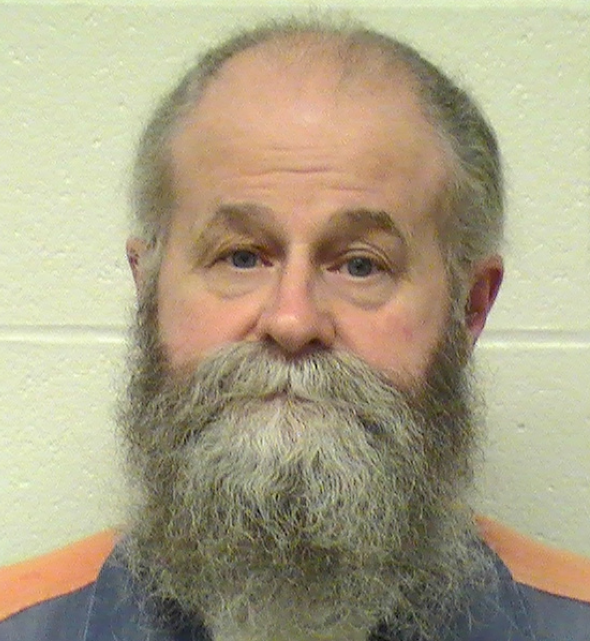
Flora Maxine Barnett
Overview
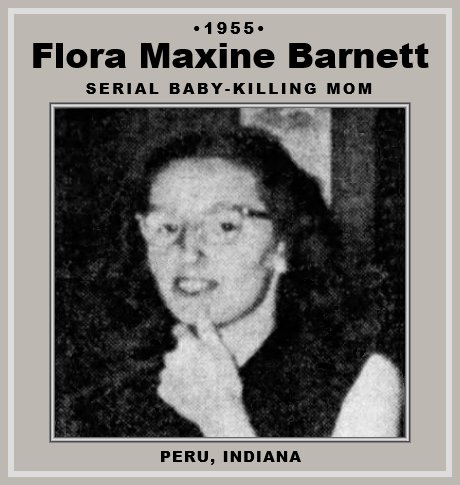
Flora Maxine Barnett was an American woman associated with Peru, Indiana, who became known for the deaths of several of her newborn children during the early 1950s. Her case is unusual because very little detailed contemporary material about it has survived in readily accessible public records. Later crime indexes identify Barnett as a multiple murderer or serial killer and describe a confession in which she admitted killing three newborn sons. Some secondary compilations have listed four infant victims, but the better-documented account specifically describes three newborn boys whom Barnett confessed to killing.
Barnett was reportedly born in 1923, making her approximately thirty or thirty-one years old when authorities became involved in the case. She was described as an unmarried mother. Accounts of the investigation state that the infants were fathered by Barnett's uncle, placing the pregnancies within an incestuous family relationship that apparently remained concealed for a period of time. The surviving summaries do not provide enough information to determine the circumstances under which that relationship began or whether coercion or abuse was involved, so conclusions about that aspect of the case should not be made beyond what the historical record establishes.
The Deaths of the Newborn Children
According to accounts of Barnett's confession, she gave birth to three sons at different times and killed each shortly after birth. The method attributed to her was strangulation. Rather than reporting the births or arranging for the infants to be buried, Barnett reportedly attempted to eliminate evidence of what had happened by burning their bodies.
The combination of repeated secret pregnancies, deaths shortly after delivery, and destruction of the remains made the crimes extraordinarily difficult to reconstruct afterward. There were no conventional homicide scenes containing intact bodies that investigators could examine, and the available accounts do not identify the infants by name. It is possible that they were never legally named or that any names associated with the births were never preserved in the surviving public record.
The precise chronology is also uncertain. Although Barnett's case is generally associated with 1954 and 1955, accessible historical summaries do not provide verifiable individual dates of death for the three newborn boys. For that reason, exact dates should not be assigned to the victims without additional contemporary court, police, coroner, or newspaper documentation.
Known Victims
- Unnamed newborn son: One of Barnett's infant sons. Barnett reportedly confessed that she strangled the child shortly after birth and later disposed of the remains by burning them. The child's name and exact date of death have not been reliably documented in accessible sources. The case is associated with Peru, Indiana.
- Unnamed newborn son: A second infant boy reportedly born to Barnett and killed shortly after birth. Barnett's confession described strangulation followed by destruction of the remains through burning. No reliably verified individual date of death or name is available in the accessible historical record. The case is associated with Peru, Indiana.
- Unnamed newborn son: A third infant son whom Barnett reportedly admitted killing after birth. As with the other children, the reported method was strangulation, followed by burning of the body in an effort to dispose of the remains. His exact birth date, death date, and name have not been reliably established in accessible sources. The case is associated with Peru, Indiana.
Disputed Fourth Victim
Some later lists of female serial killers attribute four infant deaths to Flora Maxine Barnett. That figure conflicts with accounts specifically describing her confession to the strangulation of three newborn sons. No publicly accessible documentation located for the case provides a name, exact death date, or detailed circumstances for a fourth child. Because of that discrepancy, three victims can be described with substantially greater confidence, while a supposed fourth victim should be considered unverified unless additional contemporary records are located.
Discovery and Investigation
The surviving historical record does not provide a detailed reconstruction of how authorities first became suspicious of Barnett. What is clear from later chronologies is that law enforcement intervention occurred by the mid-1950s. One serial-killer chronology places her apprehension in 1954, while other compilations associate the Barnett case with 1955. The difference may reflect the distinction between her arrest and the later resolution of the criminal proceedings, although the limited surviving documentation prevents a precise timeline from being established.
Once the deaths were investigated, Barnett reportedly confessed. Her admission was especially important because the reported burning of the infants' bodies would have greatly reduced the amount of physical evidence available to investigators. Her statement established a repeated pattern: childbirth, strangulation of the newborn, and destruction of the body.
The crimes would today generally be discussed as cases of neonaticide, meaning the killing of a child during the first twenty-four hours after birth, if it could be established that every infant was killed within that period. The surviving accounts describe the victims as newborns and state that they were killed shortly after birth, but they do not provide sufficiently precise medical or chronological evidence to determine the exact interval between birth and death in each case.
Family Circumstances
One of the most disturbing details associated with the Barnett case is the report that the children's father was Barnett's uncle. The pregnancies therefore apparently resulted from an incestuous relationship within her own family. Historical summaries do not identify the uncle by name or describe whether he was questioned, arrested, charged, or otherwise held responsible for his involvement with Barnett.
That lack of information is significant. The circumstances surrounding the pregnancies could potentially have provided important context regarding Barnett's actions and state of mind, but surviving public summaries are too limited to establish what occurred between Barnett and her uncle. It would therefore be misleading to assign motives or responsibility beyond the murders to individuals whose roles cannot be documented.
Method of Killing and Concealment
Barnett's reported method was consistent across the three confessed killings. Each victim was a newborn male child, and each was reportedly strangled. The bodies were then burned. Burning the remains served an obvious concealment function by making discovery and identification more difficult and by destroying potential physical evidence.
The repetition is one reason Barnett is included in historical compilations of serial murderers rather than being treated solely as the perpetrator of a single episode of infanticide. The deaths reportedly occurred following separate pregnancies and births, meaning there would have been substantial periods between the killings. Each new birth therefore created another distinct opportunity for Barnett to choose a different course of action, yet according to her confession the same fatal pattern was repeated.
Confession and Criminal Case
Historical accounts state that Barnett confessed to strangling three of her newborn sons. The confession transformed the investigation from a suspected series of unexplained infant deaths into an acknowledged pattern of homicide. Because the bodies had reportedly been burned, Barnett's own description of the killings became central to understanding what had occurred.
Available summaries report that Barnett ultimately received a sentence of life imprisonment. Detailed information concerning the formal charges, the precise date of conviction, whether she entered a guilty plea or was convicted following a trial, and the specific institution where she initially served her sentence is difficult to verify through readily accessible online historical material.
The available evidence nevertheless establishes the essential outcome: authorities treated the deaths as intentional killings, Barnett admitted responsibility for multiple newborn deaths, and she was sentenced to spend the remainder of her life in prison.
Questions Remaining About the Case
Many basic details that would normally be available in a modern homicide prosecution remain uncertain in the Barnett case. The names of the infants have not been preserved in accessible accounts. Their precise dates of birth and death are not reliably documented. The locations where the births and killings occurred are also unclear beyond the case's association with Peru, Indiana.
There is likewise uncertainty regarding the total number of victims. The most detailed surviving summary states that Barnett confessed to killing three newborn sons, while at least one later historical index assigns four infant victims to her. Without contemporary documentation explaining the additional death, the fourth-victim figure cannot be treated with the same confidence as the three confessed killings.
Historical Classification
Flora Maxine Barnett is commonly included in lists of American female serial killers because she reportedly committed multiple intentional killings during separate incidents. Her victims were exceptionally vulnerable: newborn children who had no ability to protect themselves or alert anyone to their danger. The crimes also involved repeated efforts to prevent discovery by destroying the infants' remains.
Her case differs considerably from the more familiar image of a serial murderer selecting unrelated victims. Barnett's victims were her own children, and the killings were connected to repeated concealed pregnancies rather than predatory attacks on strangers. Nevertheless, the allegation of three separate intentional killings over time satisfies the basic historical reason she has been classified as a serial murderer.
Legacy of the Flora Barnett Case
The Barnett case remains obscure compared with many American serial-murder cases of the twentieth century. There are no widely circulated victim photographs, detailed biographies of the children, or extensive modern investigative files available online. Even their names appear to have disappeared from the surviving public narrative. What remains is a stark account of a young Indiana woman who repeatedly gave birth in secrecy, strangled three newborn sons, destroyed their bodies by fire, confessed when the crimes were uncovered, and received a life sentence.
The absence of verified names and exact death dates is itself an important part of accurately documenting the case. Later crime databases sometimes reduce historical crimes to a name and victim count, but Barnett's history demonstrates why those summaries must be treated cautiously. Three newborn sons are specifically associated with her confession; claims of a fourth victim remain insufficiently documented. Until contemporary police files, court records, or newspaper reports establish additional facts, those distinctions are necessary to avoid turning uncertain information into established history.