Robert Carl Foley: Kentucky Serial Killer
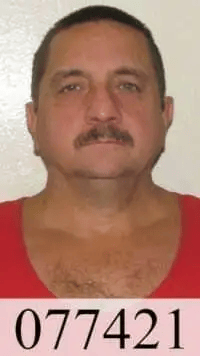
Robert Carl Foley, born September 13, 1956, in Harlan, Kentucky, is an American murderer commonly described as a serial killer because his known killings occurred during separate violent episodes spanning many years. Foley was convicted of seven murders: one killing committed in 1976, four murders committed in 1989, and the murders of two brothers in 1991. The six later murders resulted in multiple death sentences and made Foley one of Kentucky's most notorious death-row prisoners.
The 1976 Murder of Zetler Fields Jr.
Foley's first known murder occurred on April 17, 1976, in Harlan, Kentucky. During a shooting confrontation, Foley fatally shot Zetler Fields Jr. Two other men, Jimmy Joe Ball and Wendell Hale, were also shot but survived. Foley was prosecuted in Harlan County and was found guilty of Fields's murder and two counts of first-degree assault in March 1977. He received a total sentence of 35 years in prison.
Despite the lengthy sentence, Foley did not remain incarcerated for the full term. He was eventually released on parole. His murder conviction would later become important during his subsequent capital cases because prosecutors were able to establish that his later killings were committed by a man who already had a serious history of violent crime.
The 1989 Laurel County Quadruple Murder
On October 8, 1989, Foley committed the crime that would eventually result in four separate death sentences. The victims were Kimberly "Kim" Bowersock, Calvin Reynolds, Lillian Contino, and Jerry McMillan. The killings took place inside a cabin in the Bald Rock community of Laurel County, Kentucky. The cabin belonged to David Gross and was occupied by Phoebe Watts and her children.
Bowersock, Contino, and McMillan had traveled from Van Wert, Ohio, to Kentucky. Bowersock's boyfriend, Calvin Reynolds, lived in Laurel County and had been released from jail on October 7, the day before the murders. Bowersock had been attempting to arrange transportation to Kentucky so that she could meet Reynolds and bring him back to Ohio. Contino agreed to accompany her, and McMillan ultimately provided transportation.
According to testimony presented at Foley's trial, Foley had become angry with Bowersock because he believed she had accused him of growing and selling marijuana and had caused problems between Foley and his parole officer. Prosecutors presented evidence that Foley made threatening statements after learning that Bowersock was in the area. He later traveled with Gordon Canter to the cabin where Bowersock and the others were gathered.
Foley and Canter arrived shortly after 11:30 p.m. Witnesses testified that Foley immediately approached Bowersock and grabbed her by the hair. When Calvin Reynolds got up to assist her, Foley pulled a handgun and began shooting. Reynolds, Bowersock, Contino, and McMillan were all shot and killed. According to the prosecution's theory, Bowersock was the person Foley specifically intended to confront, while the remaining victims were killed because they were present and had witnessed the attack.
The crime did not end with the shootings. Testimony established that Foley, David Gross, and Gordon Canter removed valuables from the victims and moved their bodies out of the cabin. McMillan's automobile was driven away and abandoned in Lexington. The following night, the four bodies were placed inside a septic tank on nearby property in the Bald Rock community. Lime was placed with the bodies, and the septic tank was covered with cement in an attempt to conceal what had happened.
The four victims effectively disappeared. Their bodies remained hidden for approximately two years. In 1991, after Foley had been arrested in connection with another double murder, witnesses provided investigators with information about the 1989 killings. Authorities searched the Bald Rock property and recovered the four victims from the septic tank in October 1991. Their discovery transformed what had been a long-running missing-person mystery into a four-victim murder investigation.
The 1991 Murders of Rodney and Harry Lynn Vaughn
Foley's next confirmed murders occurred on August 17, 1991, at his home on White Oak Church Road in Laurel County, Kentucky. Numerous adults and several children were present at the house that evening. Among the guests were brothers Rodney Vaughn and Harry Lynn Vaughn, who was generally known as Lynn.
Court testimony described an atmosphere involving drinking and several armed individuals. Other male guests had placed their firearms in a kitchen cabinet, but Foley kept a .38-caliber Colt snub-nose revolver concealed beneath his clothing. Tension developed between Foley and Rodney Vaughn, and two confrontations followed. Foley acknowledged that he started the first physical fight by striking Rodney. Other people separated the men, but the dispute later resumed.
During the second confrontation, Foley drew his revolver and repeatedly shot Rodney. Rodney suffered multiple gunshot wounds and died from the resulting blood loss. Foley maintained that he had acted in self-defense, but prosecutors disputed his account.
Lynn Vaughn was killed shortly afterward. At the time of Lynn's shooting, Foley, Lynn, and Ronnie Dugger were among the people remaining inside the house. Dugger testified that Foley shot Lynn, while Foley attempted to place responsibility for Lynn's death on Dugger. The jury ultimately accepted the prosecution's case and convicted Foley of murdering both brothers.
After the shootings, the Vaughn brothers' bodies were removed from Foley's home and dumped in Sinking Creek in Laurel County. The investigation quickly centered on Foley, and the double homicide eventually led investigators back toward the four people who had disappeared from the Bald Rock cabin in 1989.
Confirmed Victims
- Zetler Fields Jr. — Died April 17, 1976, in Harlan, Kentucky. Foley fatally shot Fields during an incident in which Jimmy Joe Ball and Wendell Hale were also wounded. Foley was convicted of Fields's murder in 1977.
- Kimberly "Kim" Bowersock — Died October 8, 1989, at David Gross's cabin in the Bald Rock community of Laurel County, Kentucky. Prosecutors said Foley specifically targeted Bowersock because he believed she had caused trouble between him and his parole officer.
- Calvin Reynolds — Died October 8, 1989, at the Bald Rock cabin in Laurel County, Kentucky. Reynolds was Bowersock's boyfriend and was shot after getting up to assist her during Foley's confrontation with her.
- Lillian Contino — Died October 8, 1989, at the Bald Rock cabin in Laurel County, Kentucky. Contino had traveled from Van Wert, Ohio, with Bowersock and McMillan and was present when Foley opened fire.
- Jerry McMillan — Died October 8, 1989, at the Bald Rock cabin in Laurel County, Kentucky. McMillan had agreed to drive Bowersock and Contino from Ohio to Kentucky. His vehicle was later taken from the area and abandoned in Lexington.
- Rodney Vaughn — Died August 17, 1991, at Foley's residence on White Oak Church Road in Laurel County, Kentucky. Foley shot Rodney after an evening in which the two men had been involved in repeated confrontations.
- Harry Lynn Vaughn — Died August 17, 1991, at Foley's residence on White Oak Church Road in Laurel County, Kentucky. Lynn was killed shortly after his brother Rodney. Foley denied killing Lynn, but a jury convicted him of the murder.
Trials and Death Sentences
The Vaughn murders were prosecuted first. In 1993, Foley was convicted of murdering Rodney and Lynn Vaughn in Laurel Circuit Court and received two death sentences. While those proceedings were unfolding, investigators and prosecutors were also developing the case involving Bowersock, Reynolds, Contino, and McMillan.
Because of the extensive publicity surrounding Foley in Laurel County, the trial for the four 1989 murders was moved to Madison County. In April 1994, a jury convicted Foley of all four killings. The court entered judgment on April 27, 1994, imposing a death sentence for each murder. Together with the Vaughn case, Foley therefore received six death sentences for the six murders committed in 1989 and 1991.
Appeals and Later Status
Foley repeatedly challenged his convictions and sentences in Kentucky state courts and in the federal court system. His arguments included disputes over witnesses, evidence, jury selection, pretrial publicity, defense representation, and alternative theories concerning the murders. The Kentucky Supreme Court upheld the major convictions and death sentences, and federal courts also rejected numerous challenges to the judgments.
The 1989 murders in particular generated extensive litigation because Foley later argued that other men were responsible for the four deaths. Courts reviewed alleged newly discovered evidence and competing accounts of what happened at the cabin but declined to overturn the convictions. The original prosecution case was supported by eyewitness testimony describing Foley entering the cabin, confronting Bowersock, shooting the four victims, and participating in the concealment of their bodies.
As of 2026, Robert Carl Foley remains a Kentucky death-row prisoner. His confirmed murder record stretches from the killing of Zetler Fields Jr. in 1976 through the four Laurel County cabin murders in 1989 and the Vaughn brothers' murders in 1991. Although Foley has at various times been publicly connected to additional unsolved deaths, those cases did not result in murder convictions and are not included among the seven confirmed victims listed above.