Kermit Barron Gosnell: Convicted Murders and Other Crimes
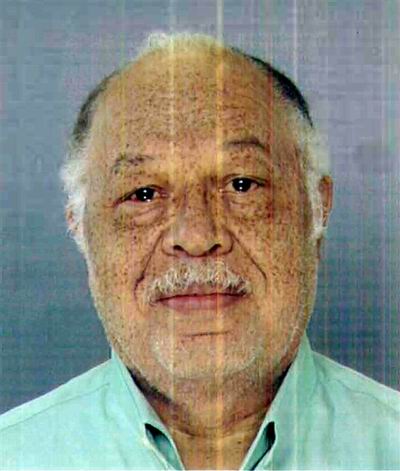
Kermit Barron Gosnell was a Philadelphia physician who became one of the most notorious criminal doctors in modern American history. He operated the Women’s Medical Society at 3801 Lancaster Avenue in West Philadelphia. Investigators eventually discovered a clinic marked by dangerous medical practices, poorly trained or unlicensed employees, illegal late-term abortions, improper administration of powerful sedatives, falsified records, and the killing of infants who prosecutors proved had been born alive. On May 13, 2013, a Philadelphia jury convicted Gosnell of three counts of first-degree murder for the deaths of infants identified in court as Baby Boy A, Baby C, and Baby D. He was also convicted of involuntary manslaughter for the death of patient Karnamaya Mongar and of numerous additional offenses connected with his clinic.
The Women’s Medical Society
Gosnell operated the Women’s Medical Society for years in West Philadelphia, treating many patients who were poor or had limited access to other medical services. According to the grand jury investigation, the clinic eventually operated far outside accepted medical standards. Employees without appropriate medical licenses performed important medical tasks, including inserting intravenous lines, administering medication, conducting ultrasounds, and monitoring patients. Former workers testified that Gosnell frequently arrived late in the day while staff members handled patients without adequate supervision.
Investigators who entered the clinic during a February 18, 2010 law-enforcement search found conditions that became central to the later criminal case. Authorities found dirty medical equipment, inadequate emergency equipment, fetal remains stored in containers and refrigerators, and cramped passageways that made emergency transport difficult. The investigation had originally focused on allegations that Gosnell was illegally prescribing controlled substances, but what investigators encountered inside the clinic led to a much larger homicide and medical-practice investigation.
The Killing of Infants Born Alive
The most serious allegations concerned infants who were delivered during attempted late-term abortions and showed signs of life outside their mothers’ bodies. Clinic workers testified that they saw infants breathe, move their arms or legs, make sounds, or otherwise demonstrate signs of life. According to the grand jury, Gosnell developed a practice in which the spinal cords of these infants were severed with scissors. Employees testified that Gosnell performed the procedure himself and also trained or instructed other workers to do it.
The grand jury identified seven infant cases strongly enough to recommend murder charges, although the final trial did not result in seven murder convictions. Several charges were dismissed before the case reached the jury, and Gosnell was acquitted in another infant death. The jury ultimately found him guilty beyond a reasonable doubt of first-degree murder in the deaths of Baby Boy A, Baby C, and Baby D.
Victims and Verified Dates
- Baby Boy A — July 2008 — Women’s Medical Society, West Philadelphia: The official grand-jury record identifies the date only as July 2008 and does not provide a reliable exact day. The mother, identified under the pseudonym “Sue,” was 17 years old. An ultrasound placed the pregnancy at approximately 29.4 weeks, while a neonatologist who later examined a photograph believed the infant appeared to be at least 32 weeks gestational age. Witness Kareema Cross testified that Baby Boy A was breathing and moving after delivery. Gosnell then severed the infant’s spinal cord with scissors. Workers were so disturbed by the infant’s size that several photographed him. Gosnell was convicted of first-degree murder for Baby Boy A’s death.
- Baby C — 2006 or 2007 — Women’s Medical Society, West Philadelphia: The grand-jury record could establish only that the death occurred in 2006 or 2007, not an exact date. Kareema Cross testified that Baby C remained moving and breathing for approximately 20 minutes after delivery. Employee Lynda Williams then severed the infant’s spinal cord. Testimony indicated that Williams had repeatedly observed Gosnell use the same method. Prosecutors argued that the killing was part of the system Gosnell created and directed at the clinic. Gosnell was convicted of first-degree murder in Baby C’s death.
- Baby D — before July 2008 — Women’s Medical Society, West Philadelphia: Witnesses could not establish an exact date or even a precise year. The grand jury was able to determine that the incident occurred before employee Steven Massof left the clinic in July 2008. According to testimony, Baby D was delivered into a toilet and was visibly moving afterward. Employee Adrienne Moton removed the infant and severed the spinal cord. Moton later acknowledged to investigators that she had performed this procedure on living infants and said Gosnell had trained and instructed her to do it. Gosnell was convicted of first-degree murder in Baby D’s death.
- Karnamaya Mongar — November 20, 2009 — Hospital of the University of Pennsylvania, Philadelphia: Mongar was a 41-year-old immigrant from Bhutan who came to Gosnell’s clinic for an abortion. On November 19, employees repeatedly administered sedating drugs, including Demerol, while she was inadequately monitored. She stopped breathing and suffered cardiac arrest. The grand jury found that staff delayed calling 911 and that emergency responders then encountered additional delays because an emergency exit was locked and the clinic’s narrow hallways made removing her difficult. Mongar was transported to the Hospital of the University of Pennsylvania and never regained consciousness. She was pronounced dead at 6:15 p.m. on November 20, 2009. Gosnell was acquitted of the more serious murder accusation involving Mongar but was convicted of involuntary manslaughter in her death.
- Semika Shaw — March 2000 — Philadelphia: Shaw was a 22-year-old mother who died following an abortion performed at Gosnell’s clinic. The official grand-jury report confirms that her death occurred in March 2000 but warns that earlier state paperwork contained incorrect dates, so a specific day is not stated here. The grand jury reported that Gosnell perforated Shaw’s cervix and uterus during the procedure and that she later died from infection and sepsis. Her family received a large malpractice settlement. Gosnell was not prosecuted for Shaw’s death, but the case became an important part of the grand jury’s criticism of Pennsylvania regulators because authorities had been informed of her death years before Gosnell’s clinic was finally closed.
The Death of Karnamaya Mongar
Mongar’s death demonstrated how dangerous the clinic’s medical practices had become. She arrived at the clinic on November 19, 2009, accompanied by family members. According to the grand jury, unlicensed employees administered repeated combinations of sedative and pain medications under procedures established by Gosnell. Among the medications was Demerol, a narcotic capable of suppressing breathing. Expert testimony indicated that the amount of Demerol detected in Mongar’s blood was inconsistent with the much smaller doses that clinic personnel later claimed had been given.
After Mongar became unresponsive, emergency treatment was delayed. A properly functioning monitoring system was not being used, staff members struggled with resuscitation, and 911 was not called promptly. When paramedics finally arrived shortly after 11 p.m., Mongar had no pulse and was not breathing. They managed to restore some heart activity, but transporting her from the clinic was difficult because the emergency exit was locked. At the hospital, physicians temporarily restored a weak heartbeat, but Mongar had suffered devastating brain injury from lack of oxygen. Her family eventually authorized the removal of life support, and she was pronounced dead the following evening.
Other Injured Patients
The grand jury documented many patients who survived serious injuries. Some suffered perforated uteruses, damaged cervixes, bowel injuries, severe infections, dangerous blood loss, or retained fetal tissue. One woman required removal of part of her intestine after suffering injuries during a procedure. A 19-year-old patient went into shock after her uterus was perforated and ultimately required a hysterectomy. The grand jury concluded that such cases showed a pattern extending well beyond isolated medical mistakes.
Gosnell was also accused of concealing problems. Records were incomplete or inaccurate, and investigators concluded that documentation surrounding Mongar’s treatment understated the amount of medication she received. Employees gave inconsistent accounts of who had administered drugs and when. The destruction or absence of records also made it impossible for prosecutors to reconstruct every suspected infant death described by former employees.
The Prescription Drug Operation
Gosnell’s crimes were not limited to the abortion practice. Federal prosecutors proved that he also operated a prescription “pill mill” from the Lancaster Avenue clinic. From June 2008 through February 18, 2010, Gosnell and employees provided prescriptions for controlled drugs to customers who often received only cursory examinations or no meaningful medical examination at all. Federal authorities said he wrote prescriptions involving hundreds of thousands of pills containing oxycodone and alprazolam as well as large quantities of codeine-containing cough syrup.
On July 9, 2013, Gosnell pleaded guilty to 12 federal counts, including conspiracy to distribute controlled substances, distribution and aiding and abetting the distribution of oxycodone, and maintaining a location for illegal drug distribution. On December 16, 2013, a federal judge sentenced him to 30 years in prison for the pill-mill operation.
Conviction and Sentencing
Gosnell’s state criminal trial lasted for weeks in Philadelphia in 2013. His defense disputed that the infants had been born alive, arguing that movements observed by witnesses could have occurred after death. The jury rejected that argument in three cases. On May 13, 2013, Gosnell was found guilty of first-degree murder in the deaths of Baby Boy A, Baby C, and Baby D. He was also convicted of involuntary manslaughter in Karnamaya Mongar’s death and numerous other offenses connected with his medical practice.
Gosnell subsequently agreed to give up his appeal rights in exchange for prosecutors abandoning pursuit of the death penalty. On May 14 and May 15, 2013, he received three consecutive life sentences without the possibility of parole for the three first-degree murder convictions, along with additional prison terms for his other offenses. The federal pill-mill sentence was imposed later that year.
Death and Legacy
Gosnell remained imprisoned for the rest of his life. He died on March 1, 2026, at age 85 in a Pennsylvania hospital while still serving his life sentences. His criminal case became notorious not simply because of the three murder convictions, but because testimony indicated that the proven deaths represented only part of a much larger pattern that investigators could not completely reconstruct. The grand jury was particularly critical of state agencies that had received complaints, reports of serious injuries, and information concerning Semika Shaw’s death but failed for years to take action that might have exposed the clinic sooner.
Legally, the clearest record is important: Gosnell was convicted of murdering three infants born alive, convicted of involuntary manslaughter in the death of Karnamaya Mongar, convicted of numerous offenses arising from the operation of his clinic, and later pleaded guilty to federal controlled-substance crimes. Other suspected infant deaths and Semika Shaw’s death remain significant parts of the documented history of the clinic, but they should be distinguished from the murders for which a jury actually found Gosnell guilty.