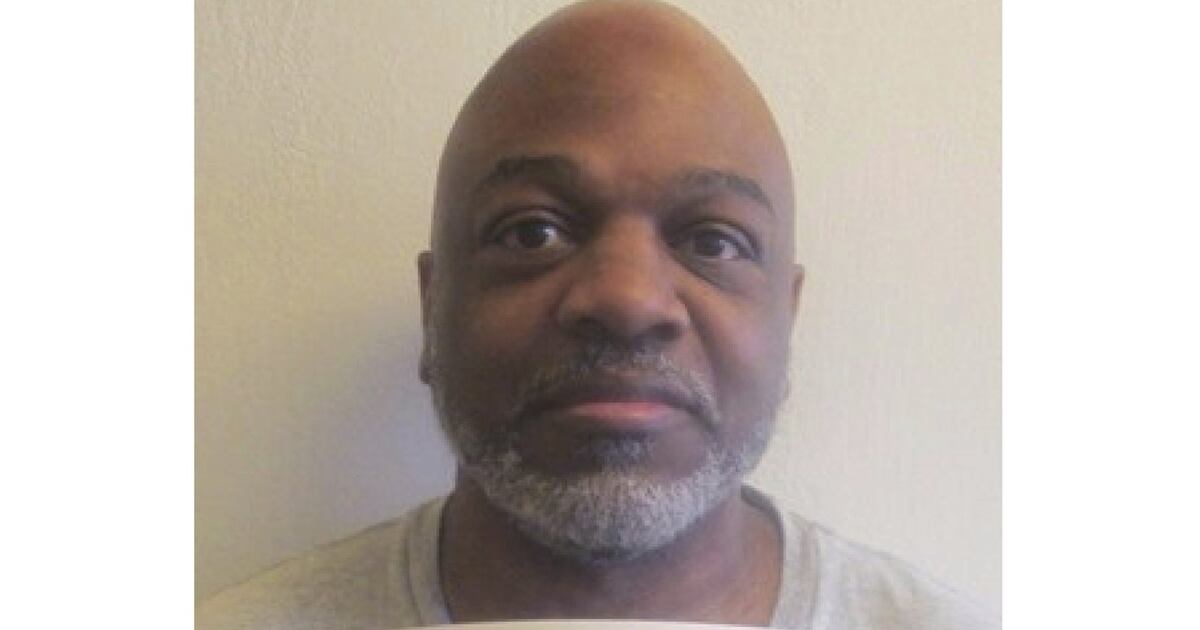
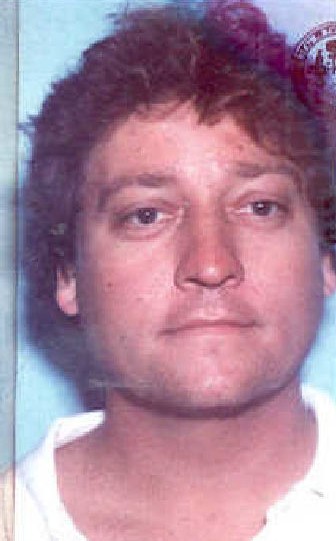
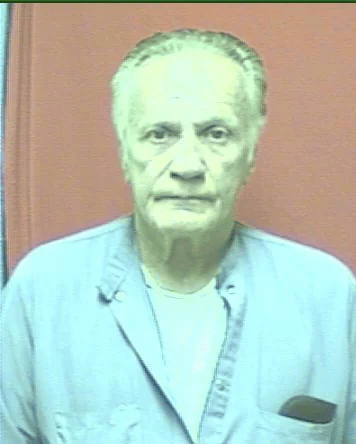
Raymond Eugene Johnson: The Oklahoma Parolee Killer
Overview
Raymond Eugene Johnson was an American murderer whose criminal life was defined by two acts of extreme violence separated by a decade. In 1995, he killed an acquaintance in Oklahoma City and was convicted of manslaughter. A fateful decision by the parole board released him after he served less than half of his sentence. Free again, Johnson's capacity for violence escalated horrifically. In 2007, he tortured and murdered his 24-year-old ex-girlfriend, Brooke Whitaker, and her 7-month-old daughter, Kya, in Tulsa, Oklahoma. He beat the young mother with a claw hammer for hours before dousing her and her baby with gasoline and setting their home ablaze. The sheer brutality of the crime led to a swift conviction and two death sentences. After nearly two decades of appeals, Johnson was executed by lethal injection on May 14, 2026, bringing a final, somber end to a case that highlighted the devastating potential of domestic abuse and the failures of the justice system.
Early Life and First Homicide
Raymond Eugene Johnson was born on March 26, 1974, in Oklahoma City, Oklahoma. His childhood was reportedly marked by instability, and by his teenage years, he had already begun accumulating an extensive criminal record. His behavior was often fueled by drug use and what was described as a hair-trigger temper.
On September 11, 1995, Johnson's violence turned deadly. At the age of 21, he got into a heated argument with a 25-year-old acquaintance, Clarence Ray Oliver, in Oklahoma City. As the conflict intensified, Johnson produced a gun. Oliver tried to escape in his car, but Johnson fired through the passenger-side window, striking him. The vehicle crashed into a ditch, where Oliver's body was discovered the next day.
Detectives questioned Johnson about two weeks later, and he was arrested for the murder. He ultimately pleaded guilty to first-degree manslaughter and received a 20-year prison sentence. This conviction for a violent felony would later become a key aggravating factor in his capital murder trial.
Parole and Escalating Abuse
Despite the 20-year sentence for taking a life, Raymond Johnson was granted parole in 2005 after serving only nine years. Upon his release, he moved to Tulsa and soon entered a relationship with Brooke Lauren Whitaker, a 24-year-old mother of four. The relationship quickly soured, descending into a pattern of control, abuse, and threats.
Johnson became possessive and violent, stalking Whitaker and threatening to kill her on more than ten occasions. The threats were explicit and terrifying. Brooke confided in her mother, Andra Muir, that Johnson had threatened her life. Frightened, she and her children moved in with her mother for two weeks in April 2007. During that time, Johnson called Andra and told her directly that he was going to kill Brooke.
Despite the danger, Brooke returned to her home with Johnson around the beginning of May. That same month, she sought legal protection, and a court granted her a restraining order against him. However, the order was dismissed on May 21, 2007, when neither Johnson nor Whitaker appeared for a scheduled court hearing. By early June, Johnson had moved out of Brooke's house. During this same period, he was also involved with another woman, Jennifer Walton, who had become pregnant with his child.
The Murders of Brooke and Kya Whitaker
In the early morning hours of June 23, 2007, Johnson returned to Brooke Whitaker's home on East Newton Street in Tulsa. What followed was a prolonged and sadistic attack that prosecutors would later describe as torture. Johnson confronted Brooke, and an argument began. He grabbed a claw hammer and struck her in the head, causing her to drop to the floor.
She was not knocked unconscious. According to Johnson's own confession, Brooke was awake and aware as she looked up at him from the floor with her skull fractured. She begged him to call 911 for help. Instead, he swung the hammer again and again, striking her at least 24 times in total. Prosecutors believe he kept her alive for as long as six hours, during which she pleaded for her life and the safety of her children.
After the brutal beating, Johnson found a can of gasoline. He doused Brooke's body and spread the accelerant throughout the house, including in the bedroom where her 7-month-old daughter, Kya Jade Whitaker, was sleeping. He then lit a dish towel, threw it on Brooke, and fled as the house was consumed by fire.
Firefighters were dispatched to the scene at 11:11 a.m. They entered the smoke-filled home and made a series of horrific discoveries. In one room, they found Brooke Whitaker on the floor, unconscious and with extensive burns but still alive. Paramedics rushed her to the hospital, but she died shortly after arrival from the combined effects of blunt force trauma to the head and smoke inhalation. Near the front door, another firefighter found the body of baby Kya. Her burns were so severe that the first responder initially mistook her for a charred doll. The medical examiner later determined she died from the thermal injuries, not smoke inhalation, meaning she was burned alive.
The Victims
- Clarence Ray Oliver, 25 — Killed on September 11, 1995, in Oklahoma City. He was shot and killed by Johnson during an argument as he attempted to drive away.
- Brooke Lauren Whitaker, 24 — Died on June 23, 2007, in Tulsa. Born on April 13, 1983, she was a mother of four who was described by her family as enjoying life and loving her family. She was brutally beaten with a hammer and set on fire by Johnson, her abusive ex-boyfriend.
- Kya Jade Whitaker, 7 months — Died on June 23, 2007, in Tulsa, alongside her mother. Born on November 21, 2006, she was Brooke's youngest child. She died from severe burns after Johnson intentionally set their home on fire.
Investigation and Capture
The investigation moved quickly. At the scene, investigators found a burned gasoline can in the front yard and noted that an accelerant had been used at multiple ignition points. Brooke's cell phone was recovered from the living room floor, and records showed two calls were made to Jennifer Walton, Johnson's other girlfriend, shortly before the fire was reported.
Police located and interviewed Walton later that day. She told them that Johnson had called her that morning asking for a ride. When she picked him up near Brooke's house, he smelled of gasoline, had blood on his clothes, and put two garbage bags in her trunk. He told her a friend had hit Brooke with a hammer. Walton then drove Johnson to a dumpster at a Warehouse Market, where he disposed of a white trash bag.
Acting on this information, police recovered the bag from the dumpster. Inside, they found bloody boots and clothing, Brooke Whitaker's wallet with her driver's license, and the blood-stained claw hammer used in the attack. An arrest warrant was issued for Johnson, and police set up surveillance at a house in Catoosa where Walton had dropped him off. Around 6:00 p.m. that same evening, officers watched Johnson walk out of the house and arrested him on outstanding traffic warrants.
Johnson was taken to the Tulsa Police Station, where he waived his Miranda rights and gave a full, videotaped confession. He admitted to hitting Brooke with the hammer, pouring the gasoline, and intentionally killing her. He was charged with two counts of first-degree murder and one count of first-degree arson.
Trial and Sentencing
Jury selection for Raymond Johnson's trial began in June 2009. The prosecution sought the death penalty, presenting a mountain of evidence that included Johnson's confession, the physical evidence from the dumpster, and testimony from 26 witnesses. They argued for four aggravating circumstances to justify a death sentence: 1) Johnson's prior conviction for a violent felony (the manslaughter of Clarence Oliver); 2) he knowingly created a great risk of death to more than one person; 3) the murders were especially heinous, atrocious, or cruel; and 4) he posed a continuing threat to society.
The jury found Johnson guilty on all counts. On July 28, 2009, following the jury's recommendation, a Tulsa County judge formally sentenced Johnson to death for each of the murders and a consecutive life sentence for the arson charge. Johnson offered no statement at his sentencing. Brooke's family, present in the courtroom, welcomed the verdict.
Appeals and Clemency
For the next decade and a half, Johnson's case moved through the state and federal appellate court systems. His lawyers argued that his arrest was illegal and his confession should have been suppressed, among other claims. Every appeal was denied, with the Oklahoma Court of Criminal Appeals affirming his conviction and sentence and the U.S. Supreme Court denying his final petitions.
With his legal options exhausted, Johnson's execution was scheduled. His final hope was a plea for mercy to the Oklahoma Pardon and Parole Board. At his clemency hearing on April 8, 2026, his attorneys argued that he had become a changed man on death row. They claimed he was a devout Christian, a positive influence on other inmates, and had been diagnosed with bipolar disorder. Johnson himself stated that he had tried to plead guilty in exchange for life sentences to spare the Whitaker family the pain of a trial. His children and members of his church testified on his behalf.
The state vigorously opposed clemency. Assistant Attorney General Jennifer Crabb argued that Johnson was manipulative and that his religious involvement was not new; he had been active in church even while committing his crimes. Attorney General Gentner Drummond wrote that Johnson had never taken "full accountability" for his "unconscionable acts." The board was unmoved by the pleas for mercy, voting unanimously 5-0 to deny clemency.
Execution and Aftermath
In the early morning of May 14, 2026, Raymond Eugene Johnson was executed by lethal injection at the Oklahoma State Penitentiary in McAlester. For his last meal, he requested boneless chicken, a pint of gizzards, fried pickles, hot sauce, and ranch dressing.
Strapped to the gurney, he delivered his final words, apologizing to the Whitaker family. "To Brooke and Kya and your family, I want to apologize for my actions and the pain I caused you," he said. "I hope people can speak your names without my name attached to it. I hurt you. One day, I hope you can forgive me." The execution began at 10:01 a.m., and he was pronounced dead at 10:12 a.m.
For the family of Brooke and Kya, the execution was the end of a nearly 20-year ordeal. Brooke's mother, Andra, had died of a sudden heart attack in 2024, never getting to see the sentence carried out. Her family believed the stress of the prolonged legal process contributed to her death. Brooke's aunt, Angie Short, spoke to the media after witnessing the execution. She dismissed Johnson's apology as "a little too late" and something he only offered when begging for his life. Reflecting on the horrific details of the crime, she said, "The way he died today was so simple. It was like putting a dog down." The family expressed that while nothing could bring Brooke and Kya back, the execution meant they would no longer have to see their killer's face or have their loved ones' names associated with his.