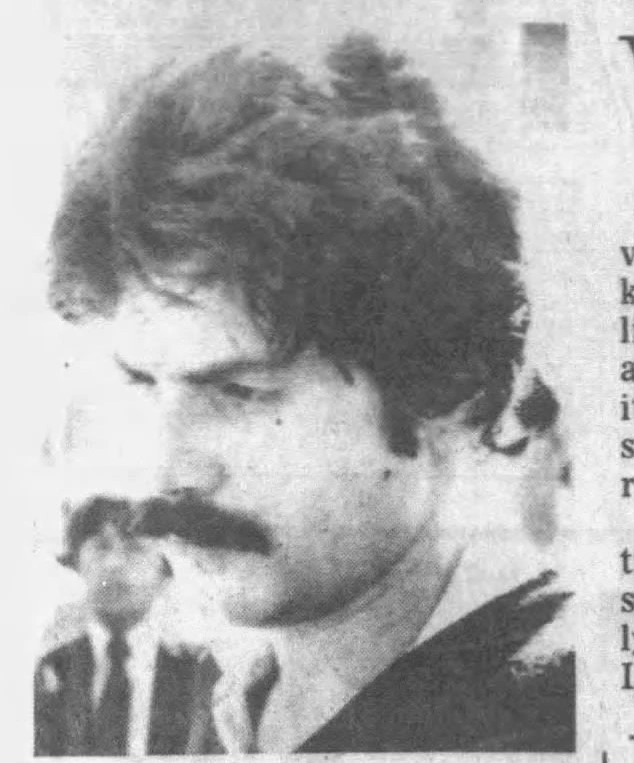
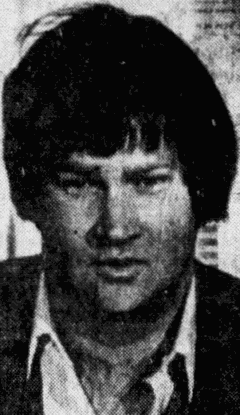
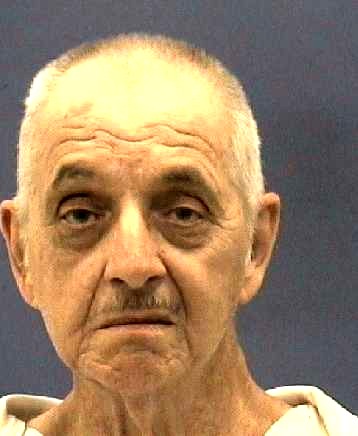
Raymond Lassor: The Providence Strangler
Overview
During the sweltering summer of 1984, a shadow of fear fell over downtown Providence, Rhode Island. A series of brutal murders targeting vulnerable women suggested a serial killer was moving through the city's transient hubs. Over a span of just over two months, Raymond J. Lassor, a 23-year-old drifter, murdered three women and left a teenage girl for dead in a savage attack. His crimes were characterized by extreme violence, including strangulation, blunt force trauma, and sexual assault, all committed within a few city blocks.
The reign of terror came to an abrupt end not through a complex police investigation, but through the incredible fortitude of his final victim. A 14-year-old girl, left with horrific injuries in a city park, survived and was able to identify her attacker. Lassor's subsequent arrest led to a full confession to all four attacks. His trial became a landmark legal event in Rhode Island, as he was the first person successfully prosecuted and sentenced under the state's newly enacted "Life Without Parole Statute," ensuring that the man who had terrorized Providence would never again be free.
Early Life and Background
Raymond J. Lassor was born on November 16, 1960, in Westerly, a town on Rhode Island's southern coast. His early life was marked by instability and a lack of firm roots. Publicly available information about his childhood is limited, but court testimony and reports painted a picture of a troubled upbringing. He was the third of four children and reportedly harbored deep-seated resentment from a young age, which manifested as significant behavioral problems.
His family life was fractured. He had a difficult relationship with a stepfather and a history of running away from home. This pattern of flight led him into the state's care system, and he spent portions of the 1970s cycling through various foster homes. He never established a stable foundation, and by his early twenties, he was adrift.
In 1984, Lassor was living in Providence. He was married and had an infant daughter, but the family structure was collapsing. Estranged from his wife after losing his job, he descended into a transient lifestyle. He became a fixture in the city's underbelly, particularly around the downtown bus terminal on Sabin Street. There, he engaged in sex work, going by the name "Ray" to solicit male clients. This area, a crossroads for travelers, runaways, and those living on the margins, became the hunting ground where he would select his victims.
The Murders
The violence began on June 26, 1984. Lassor’s first victim was Lori Carlucci, a 22-year-old woman who, like him, was part of the downtown scene. Her body was discovered in a desolate, weed-strewn parking lot on Gaspee Street, an area near the State House. She was partially clothed, and the cause of death was determined to be strangulation. An autopsy revealed she had also suffered a brutal beating. In his later confession, Lassor provided chilling details of the encounter. He admitted to meeting Carlucci, striking her in the face multiple times, strangling her until she was lifeless, and then pulling off her pants before leaving her body exposed in the lot.
For nearly two months, the city remained unaware that a predator was in its midst. Then, on August 16, Lassor struck again. His second victim was Wanda Sue Adams, an 18-year-old visiting Providence from her home in Columbia, South Carolina. Adams, who had aspirations of becoming a model and gospel singer, was in town to see relatives. Lassor encountered her at a bus stop near the Providence train station. He lured her to a secluded spot near the Woonasquatucket River with the promise of smoking marijuana.
According to his confession, when Adams rebuffed his sexual advances, his friendly demeanor vanished. He grabbed her in a powerful headlock and strangled her. After she was dead, he partially undressed her body, which then fell into the river. Her remains were discovered floating in the water the following day. The medical examiner confirmed that she had died from strangulation before her body entered the river, ruling out drowning.
The final murder occurred just two weeks later, on August 30. Delores Neuser, a 58-year-old transient woman, had the misfortune of crossing Lassor's path in a parking garage on Washington Street. Lassor was in a stairwell preparing to smoke marijuana when Neuser confronted him and threatened to call the police. His reaction was swift and merciless. He attacked her, choking her in a headlock and bludgeoning her with savage force. Her body was found nude from the waist down, with her sweater pushed up over her chest. The discovery of a third strangled woman in the same small downtown radius sent a wave of panic through Providence, as police and the public realized a "serial strangler" was at large.
The Victims
- Lori Carlucci, 22 — Murdered on June 26, 1984, in Providence. A local woman who was known to frequent the downtown area, her life was violently taken in a vacant city lot.
- Wanda Sue Adams, 18 — Murdered on August 16, 1984, in Providence. An aspiring model and singer from South Carolina, she was visiting family when she was tragically killed. Her bright future was extinguished far from home.
- Delores Neuser, 58 — Murdered on August 30, 1984, in Providence. Described as a transient woman, she was killed for simply confronting Lassor in a parking garage stairwell.
Investigation and Capture
The crucial break in the case came not from a police tip or forensic discovery, but from the astonishing survival and courage of a 14-year-old girl. On the evening of September 17, 1984, Lassor met Carrie-Ann Talbot at his usual haunt, the Sabin Street bus station. Talbot, a runaway, knew him only as "Ray." After they shared alcohol and marijuana, Lassor persuaded her to accompany him to Roger Williams Park, a large public space south of downtown.
Once they were in a secluded area of the park, Lassor’s predatory nature was unleashed. He launched into a vicious assault, striking Talbot repeatedly and strangling her. He stomped on her face with such ferocity that she was permanently blinded in one eye. Believing her to be dead or dying, he then sexually assaulted her with a tree branch, inflicting catastrophic internal injuries that included a severed portion of her liver.
Lassor abandoned her in the darkness, leaving her for dead. Miraculously, Talbot survived. Despite her grievous injuries and immense pain, she found the strength to crawl and stumble toward a road, where she was able to flag down help. At the hospital, she provided police with a detailed description of her attacker, the man she knew as "Ray" from the bus station. A friend of Talbot’s, who had seen her with Lassor earlier that evening, was also able to provide information.
Providence police detectives compiled a photographic lineup. When it was presented to Talbot, she unhesitatingly identified Raymond Lassor as the man who attacked her. Her friend independently selected his photograph as well. Armed with this positive identification, police moved quickly.
On September 18, 1984, Raymond Lassor was arrested. During his interrogation at the police station, he was read his Miranda rights multiple times. Initially, he denied involvement, but the detectives persisted. They first questioned him about the attack on Talbot, and he confessed. Then, they confronted him with the three unsolved murders that had plagued the city. When detectives showed him graphic crime scene photos from the Lori Carlucci case, Lassor’s composure shattered. He broke down, crying, and uttered the words that ended the manhunt: "I killed all of them."
Over the next several hours, Lassor provided four separate, detailed, and signed written confessions. He recounted each attack, providing specific details that had not been released to the public and could only have been known by the killer. He described the locations, the methods he used, and the state in which he left his victims. The hunt for the Providence Strangler was over.
Trial and Sentence
Raymond Lassor was charged in a single five-count indictment covering all four attacks: three counts of first-degree murder for the deaths of Lori Carlucci, Wanda Sue Adams, and Delores Neuser, and one count each of attempted murder and first-degree sexual assault for the attack on Carrie-Ann Talbot.
His trial began in Rhode Island Superior Court and drew significant media attention. The prosecution, led by Assistant Attorney General Jeffrey B. Pine, presented an overwhelming case. The cornerstones of their argument were Lassor's own detailed confessions and the powerful, harrowing testimony of Carrie-Ann Talbot. Talbot took the stand and recounted the brutal assault in unflinching detail, identifying Lassor in the courtroom as her attacker.
Pine argued that the confessions were voluntary and corroborated by the evidence found at each crime scene. He methodically demonstrated how details in the confessions matched the forensic findings. In his closing argument, Pine told the jury that Lassor’s signature was on every crime. "His fingerprint is on every crime in the case," he stated. "It jumps out at you. Each one bears his mark."
Lassor's defense team, facing a mountain of evidence, attempted to suppress the confessions, arguing they had been illegally obtained and coerced by police during a lengthy interrogation. Lassor took the stand in his own defense, recanting his confessions and claiming that detectives had physically and psychologically pressured him into signing documents he hadn't read. He also claimed he was with his wife on the night of the Talbot attack. The defense also tried to undermine Talbot's testimony, suggesting her memory was unreliable due to her injuries and her consumption of alcohol and marijuana.
The jury was not convinced by the defense's arguments. On October 2, 1986, after deliberating for several hours, they returned a verdict of guilty on all five counts.
The sentencing phase marked a pivotal moment in Rhode Island's legal history. The prosecution announced its intention to seek a sentence of life imprisonment without the possibility of parole. This was made possible by the "Life Without Parole Statute," a law passed by the Rhode Island General Assembly in 1984 specifically for crimes involving "torture or aggravated battery to the victim." Lassor's case was the first time the statute would be put to the test.
The presiding judge, after reviewing the evidence of the extreme brutality of the crimes, particularly the savage assault on Talbot, agreed that the case met the statute's criteria. He sentenced Raymond Lassor to three consecutive life sentences for the murders and additional time for the assault, all to be served without the possibility of parole. In 1989, the Rhode Island Supreme Court rejected Lassor's appeal, affirming both his convictions and his landmark sentence.
Aftermath and Legacy
The conviction of Raymond Lassor brought a close to a terrifying chapter in Providence's history. His case was the first application of Rhode Island's life without parole law, establishing a critical legal precedent for dealing with the state's most violent criminals. The brutality of his crimes served as a stark reminder of the dangers faced by vulnerable populations living on the fringes of society.
More than anything, the case is a testament to the extraordinary courage of Carrie-Ann Talbot. Her survival was nothing short of a miracle, and her willingness to face her attacker in court was the key to securing justice for herself and the three women who did not survive. Her testimony single-handedly stopped a serial killer's spree and ensured he would be permanently removed from society.
Raymond Lassor remains incarcerated at the Adult Correctional Institutions in Cranston, Rhode Island, where he is serving the life sentence that ensures he will never harm another person.