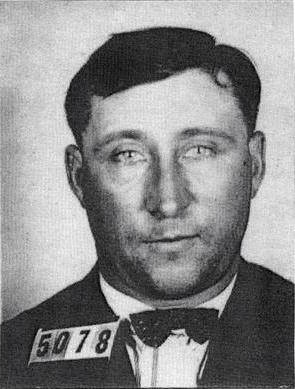
Thomas Kokoraleis and the Crimes of the Chicago Ripper Crew
Member of a Notorious Murder Group
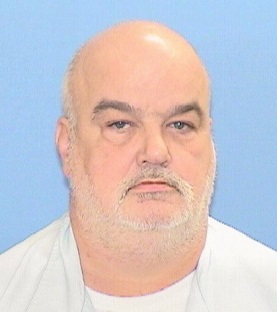
Thomas C. Kokoraleis was a member of the violent group commonly known as the Chicago Ripper Crew or the Chicago Rippers. The group operated in northeastern Illinois during 1981 and 1982 and included Kokoraleis, his younger brother Andrew Kokoraleis, Edward Spreitzer and alleged leader Robin Gecht. Investigators connected the men to a series of abductions, sexual assaults, mutilations and murders committed against women in Chicago and the surrounding suburbs.
The Ripper Crew was suspected of attacking numerous women, although the precise number of victims has never been conclusively established. Some accounts have attributed as many as seventeen murders or disappearances to the group, but prosecutors obtained convictions in only a limited number of cases. Thomas Kokoraleis was ultimately held legally responsible for the murder of 21-year-old Lorraine “Lori” Ann Borowski. Statements attributed to him also described his participation in the killing of Linda Sutton and supplied investigators with disturbing information about the group’s methods.
The Abduction of Linda Sutton
Linda Sutton, a 28-year-old woman from Chicago, disappeared on May 23, 1981. She was reportedly abducted while walking near the Elmhurst area. Her mutilated body was discovered approximately ten days later in a field near the Villa Park and Elmhurst area, behind a motel close to Route 83. Her remains showed evidence of severe violence, including the amputation of one of her breasts.
During police questioning in November 1982, Thomas Kokoraleis made statements concerning Sutton’s murder. According to the prosecution’s account, Kokoraleis described being with other members of the group when Sutton was abducted and taken to a motel. The statements contained details about her restraint, stabbing and mutilation. Prosecutors later introduced this information during proceedings against Kokoraleis, although the murder charge involving Sutton was eventually dismissed as part of the agreement under which he pleaded guilty in the Borowski case.
The Murder of Lorraine Borowski
Lorraine “Lori” Ann Borowski was 21 years old and worked as a secretary at a real estate office in Elmhurst, Illinois. On the morning of May 15, 1982, she arrived at the office to begin her workday. Evidence found outside indicated that she had been interrupted almost immediately after arriving. Her shoes and personal belongings were left behind, suggesting that she had been forcibly seized before she could enter the building.
Borowski was forced into a vehicle and driven away. According to confessions and testimony introduced in court, members of the Ripper Crew transported her to a motel, where she was restrained and repeatedly attacked. She was stabbed with sharp instruments, including what was described as an ice pick, and suffered extensive injuries. Her body was later transported to a cemetery near Clarendon Hills, Illinois, where it was concealed.
Borowski’s skeletal and decomposed remains were discovered on October 10, 1982, nearly five months after her disappearance. Dental records were used to identify her. A forensic examination revealed puncture wounds and injuries to her bones that were consistent with the account investigators had obtained from members of the group.
Thomas Kokoraleis was charged with Borowski’s murder, aggravated kidnapping, rape and aggravated battery. He was initially convicted after a jury trial and sentenced to life imprisonment without the possibility of parole. An appellate court later reversed portions of the case because of errors involving evidence presented at trial. Rather than face another trial, Kokoraleis pleaded guilty to Borowski’s murder and received a 70-year prison sentence.
Other Victims Associated with the Ripper Crew
The following victims were murdered during the period in which Thomas Kokoraleis and the other members of the Ripper Crew were active. Not every murder was separately proven against Kokoraleis in court. Some were established through the convictions or statements of other members, while others remained suspected group crimes.
- Linda Sutton — May 23, 1981 — Elmhurst and Villa Park, Illinois: Sutton, 28, disappeared on May 23 and was found dead approximately ten days later in a field behind a motel. She had been stabbed and mutilated. Thomas Kokoraleis gave police a statement describing his alleged participation, but the charge involving Sutton was dismissed when he entered his later plea agreement.
- Lorraine “Lori” Ann Borowski — May 15, 1982 — Elmhurst and Clarendon Hills, Illinois: Borowski, 21, was abducted outside the Elmhurst real estate office where she worked. She was taken to a motel, attacked and stabbed before her body was left in a cemetery. Thomas Kokoraleis pleaded guilty to her murder and received a 70-year sentence.
- Shui Mak — May 29, 1982 — Hanover Park, Illinois: Mak, approximately 30 years old, disappeared after leaving her family’s restaurant in Hanover Park. Her remains were found several months later. Members of the Ripper Crew were connected to her killing through statements and evidence, although Thomas Kokoraleis was not separately convicted of her murder.
- Sandra Delaware — August 1982 — Chicago, Illinois: Delaware, a teenage woman, was found dead near the Chicago River on August 28, 1982. She had been stabbed and strangled, and one of her breasts had been amputated. Her injuries resembled those inflicted on other victims associated with the group.
- Rose Beck Davis — September 8, 1982 — Chicago, Illinois: Davis, 30, was found murdered in an alley in Chicago. She had been sexually assaulted, beaten, stabbed and mutilated. Andrew Kokoraleis was convicted of her murder, while other members of the crew were also implicated in the circumstances surrounding her death.
- Rafael Tirado — October 6, 1982 — Chicago, Illinois: Tirado, 28, was fatally wounded during a drive-by shooting in Chicago. Another man, Alberto Rosario, was injured but survived. The shooting was attributed to members of the Ripper Crew, although it differed from the abductions and mutilation murders for which the group became notorious.
Survivors and the Investigation
Several women survived attacks attributed to the Ripper Crew. One survivor, Angel York, reported being forced into a van, restrained and cut across the breast before being released. Her account contained elements that would later resemble the injuries found on murdered victims.
Another survivor, Beverly Washington, was abducted in Chicago on October 6, 1982. She was sexually assaulted, beaten and mutilated before being left near railroad tracks. Despite her severe injuries, Washington survived and gave investigators a description of her attacker and the distinctive van used in the crime. Her information helped police focus on Robin Gecht and eventually led investigators to the other members of the group.
Police arrested Gecht in October 1982. Edward Spreitzer and the Kokoraleis brothers were taken into custody during the following weeks. During interrogation, Thomas and Andrew Kokoraleis gave statements connecting themselves and their associates to several crimes. The brothers later attempted to challenge their statements, alleging that investigators had pressured or mistreated them. Courts examined those claims during lengthy appeals and hearings.
Confessions and Ritual Claims
Statements attributed to Thomas Kokoraleis described a series of ritualized acts carried out after women were abducted. He told investigators that victims were restrained, sexually assaulted and mutilated. Some accounts described the removal of breasts with knives or wire. Kokoraleis also claimed that body parts were taken to a room used by the group and that members engaged in grotesque rituals directed by Gecht.
These claims produced sensational descriptions of the group as a satanic cult. However, some of the most extreme allegations were based primarily on confessions rather than independently documented physical evidence. What was firmly established was that multiple women had been abducted and subjected to remarkably similar patterns of sexual violence, stabbing, strangulation and mutilation.
Conviction and Sentencing
Thomas Kokoraleis was first convicted of Borowski’s murder and aggravated kidnapping in 1984. The court imposed a sentence of life imprisonment without parole for murder and an additional prison term for kidnapping. His conviction was later reversed in part on appeal, creating the possibility of another trial.
In 1987, Kokoraleis avoided a retrial by pleading guilty to Borowski’s murder. Under the agreement, he received a 70-year prison sentence. The prosecution dismissed the separate murder charge involving Linda Sutton. Because Illinois law at the time allowed prisoners to receive substantial credit for good behavior, Kokoraleis did not have to serve the entire 70-year term.
Release from Prison
Kokoraleis became eligible for release decades after his conviction. His release was initially delayed because authorities could not approve a suitable residence for him. He was finally released from prison on March 29, 2019, after serving approximately 35 years.
His release generated anger among victims’ relatives, public officials and members of the communities affected by the crimes. Many argued that the sentencing rules in effect when Kokoraleis was convicted allowed him to leave prison despite the extreme brutality of the murder to which he had pleaded guilty. After his release, he denied being a monster and disputed portions of the prosecution’s portrayal of him, but his guilty plea for Borowski’s murder remained part of the official court record.
The Lasting Impact of the Crimes
The crimes associated with Thomas Kokoraleis and the Chicago Ripper Crew remain among the most disturbing murder cases in Illinois history. The victims were not merely killed; many were abducted, terrorized, sexually assaulted and deliberately mutilated. Similar injuries found on women across Chicago and its suburbs convinced investigators that the attacks were connected and committed by men operating together.
Although Thomas Kokoraleis was convicted of only one murder, investigators and prosecutors presented evidence linking him to a wider pattern of violence. His statements concerning Linda Sutton and Lorraine Borowski helped expose the methods used by the group and supported cases against its members. The limited number of convictions, compared with the number of suspected victims, left significant questions about how many people the Ripper Crew actually killed.
Lorraine Borowski, Linda Sutton, Shui Mak, Sandra Delaware, Rose Beck Davis and the other victims are central to the history of the case. Their deaths and the suffering of the surviving women reveal the human cost behind the Ripper Crew’s notorious name. The case remains a grim reminder of a concentrated period of violence that terrorized women throughout the Chicago area and left families carrying the consequences for decades.