Asbury Respus: The Confessed Killer of Eight
Overview
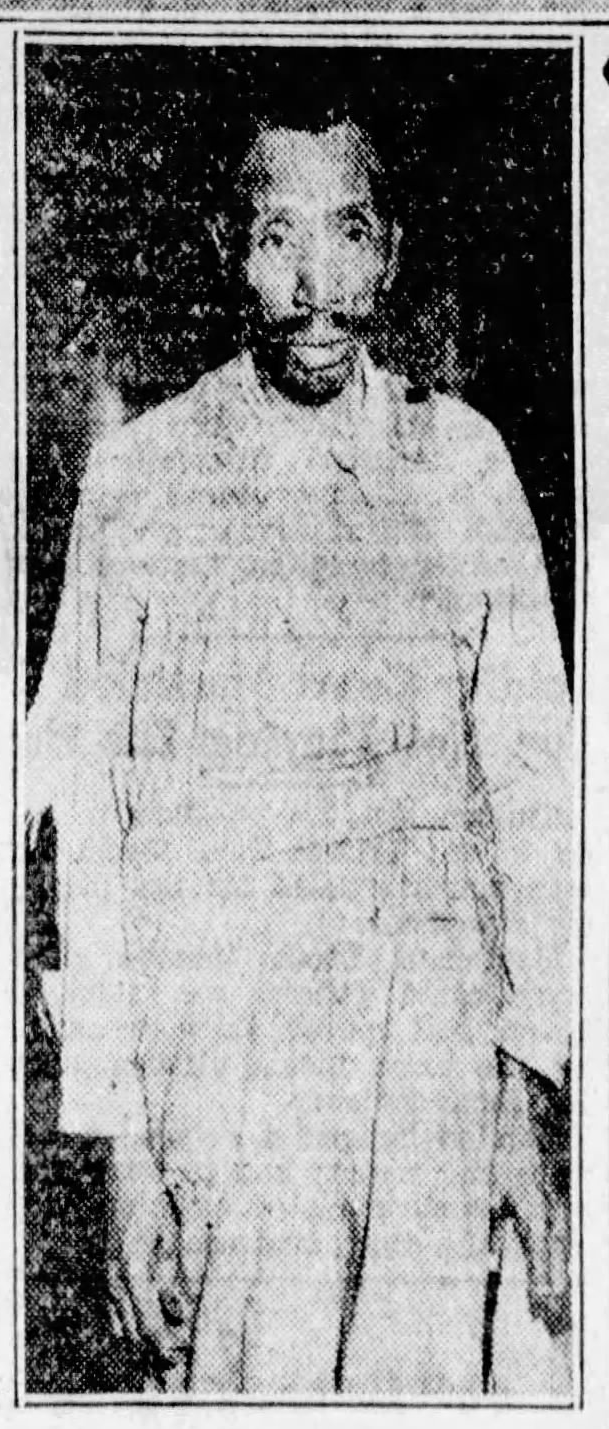
Asbury Respus, whose surname was also recorded as Respass, was an American serial killer who confessed to at least eight murders committed in North Carolina and Virginia between approximately 1910 and 1931. He sometimes lived under assumed names, including Will Moore, and remained unidentified as the perpetrator of several deaths for many years. Some of his victims had originally been believed to have died in accidents, fires, or suicides.
Respus did not follow a single, easily defined victim pattern. His victims included men and women, children and elderly adults, and both Black and white residents. His methods also varied. He shot some victims, beat others with sticks or other blunt objects, drowned a young child, and used fire or staged scenes in attempts to conceal his crimes.
Although Respus was convicted of a killing in 1912, he escaped from custody in 1916 and remained free for approximately fifteen years. His full history of violence did not emerge until his arrest for the September 1931 murder of nine-year-old Vera Leonard. While awaiting execution, he gave a lengthy confession and declared that he could clearly remember eight murders, although he believed that he might have killed nine people.
Early Life and Reported Mental Problems
Respus was born in North Carolina around 1878 to Miles and Ellen Respus. Records from the region sometimes used the spelling Asbury Respass. He married Ophelia Harrell in Northampton County, North Carolina, on June 28, 1900, but little reliable information survives about their relationship or his activities during the following decade.
Respus later claimed that he had fallen from a barn during his youth and suffered a serious head injury. An indentation reportedly remained visible in his skull. He blamed this injury for periods in which he experienced violent impulses and described episodes during which he suddenly wanted to kill without understanding why. His statements were made decades after the alleged accident, and there is no surviving medical evidence proving that the injury caused his crimes.
He was also known to use alcohol and drugs. After his final murder, he claimed that intoxication contributed to his violent state. These explanations did not prevent a jury from holding him legally responsible, and witnesses who had known or examined him testified that he appeared capable of understanding his actions.
Victims and Confessed Murders
- Becky Storr — approximately 1910, Boykins, Virginia: Respus confessed that he killed Storr by beating her with a stick. Her exact date of death has not been firmly established in surviving accounts. This was one of the earliest murders he could remember, and the case was known primarily through his later confession.
- Lizzie Banks — before 1912, location uncertain: Respus said that he shot Banks to death. Surviving reports do not provide a verified exact date or a definite location for the killing. Authorities had apparently not connected him to her death before his confession.
- Zenie Britt — before 1912, location uncertain: Respus confessed that he beat Britt to death. As with Banks, the precise date and location have not been reliably preserved. The lack of complete contemporary documentation makes it difficult to determine whether investigators independently confirmed every part of his account.
- Ed B. Wynne — 1912, Severn, Northampton County, North Carolina: Wynne, a man of approximately 53, was shot and killed during what was described as a domestic-related dispute. Unlike most of Respus’s earlier confessed crimes, authorities identified him as the killer. Respus was convicted of second-degree murder and began serving a fifteen-year sentence on August 31, 1912.
- Jennie Gilbreath — January 14, 1918, Guilford County near Greensboro, North Carolina: Gilbreath was killed while her husband was away. Respus later confessed to attacking her and leaving her body inside her home before setting the residence on fire. Because the flames destroyed much of the evidence, her death was originally treated as the result of an accidental house fire rather than murder.
- Robert Neal Osborn — July 21, 1920, Guilford County, North Carolina: Four-year-old Robert Osborn was drowned in a stream. Respus later said that he forced the child’s head beneath the water and held him there with his feet. He then pretended to discover the body. The death was initially recorded as accidental, and Respus was not publicly identified as the killer until his confession more than a decade later.
- Eunice Stevenson — July 17, 1925, Guilford County, North Carolina: Stevenson was an elderly widow, approximately 82 years old, who lived alone. Respus broke into her home, beat her to death, and suspended her body from the rafters in an effort to make the killing resemble suicide. Authorities recognized that she had been murdered, but an intellectually disabled man reportedly gave a false confession and became the initial focus of the case. Respus was not linked to Stevenson’s death until 1931.
- Vera DeWitt Leonard — September 30, 1931, Randleman Road near Greensboro, Guilford County, North Carolina: Nine-year-old Vera left her family home that morning to wait for her school bus. Respus, who was working as a farm laborer on nearby property and using the name Will Moore, intercepted her and beat her to death with a stick or similar blunt object. He wrapped her body in bedding, placed it beneath a bed inside the Leonard home, and set the house on fire in an attempt to destroy the evidence.
Imprisonment, Institutionalization, and Escape
Following his conviction for killing Ed Wynne, Respus was sent to prison to serve a fifteen-year sentence. In February 1913, prison officials declared him criminally insane and transferred him to a state mental institution. He was later considered sufficiently stable to return to ordinary custody and was assigned work as a cook at a prison camp.
On September 13, 1916, Respus and three other prison cooks escaped. The men reportedly created a false key, left through the prison kitchen, and climbed over a wall before guards could stop them. Tracking dogs were used, but Respus avoided recapture. He subsequently moved through parts of Virginia and North Carolina, taking laboring jobs and using different names.
His status as an escaped prisoner was apparently not discovered by those around him. During the years following his escape, several people died under circumstances that did not immediately expose him as a murderer. His ability to remain unidentified was aided by his transient lifestyle, weak communication between jurisdictions, and his efforts to disguise crimes as accidents or suicides.
The Murder of Vera Leonard
On the morning of September 30, 1931, Vera Leonard was preparing to board her school bus from her family’s rural home several miles outside Greensboro. Her parents and younger brother were away when Respus attacked her. Evidence later indicated that she was assaulted outside or near the house and then carried into the residence.
Shortly afterward, a passerby noticed smoke rising from the Leonard property. Neighbors entered the burning house and attempted to remove furniture and other possessions. They discovered blood inside the home, raising immediate concern that the fire was concealing a violent crime. After the flames were controlled, Vera’s body was found wrapped in a quilt beneath a bed. Her skull had been crushed, and the fire had burned part of her body.
Witnesses noticed Respus repeatedly appearing near the scene. His behavior attracted suspicion, and officers detained him later that day. A search of his residence uncovered bloodstained clothing and shoes. The shoes were reportedly consistent with bloody tracks found near the Leonard home.
Respus initially denied involvement and identified himself as Will Moore. When investigators confronted him with the physical evidence, he admitted that he was Asbury Respus, the escaped prisoner convicted in the Wynne killing. He then confessed to attacking Vera and setting the house on fire. Authorities suspected that the crime may have involved a sexual motive, but Respus denied sexually assaulting her and claimed that drugs and alcohol had driven him into a violent frenzy.
Trial and Conviction
Public anger following Vera’s murder was intense. Officials feared that a mob might seize and kill Respus before he could be tried, so he was moved to the Central Prison in Raleigh for protection. Security was also increased around the courthouse when his case went to trial.
Respus was arraigned on accusations that included murder and arson, although prosecutors ultimately concentrated on the murder charge. His defense attempted to raise questions about his mental condition, referring to his reported head injury, violent episodes, and earlier institutionalization. Testimony presented during the trial, however, did not persuade the jury that he was legally insane.
The trial began on October 28, 1931, and moved rapidly. After approximately one hour of deliberation, the jury found Respus guilty of first-degree murder. He was sentenced to die in North Carolina’s electric chair on January 8, 1932.
Confession to Additional Murders
Statements made during and after the trial suggested that Vera Leonard was only the latest victim in a much longer series. On January 7, 1932, the day before his execution, Respus spoke with Central Prison warden H. H. Honeycutt and reporters about his past. He described eight killings that he believed he had committed and added that the true number might have been nine.
His confessions provided explanations for deaths that had never been classified as murders. Jennie Gilbreath had apparently been considered the victim of an accidental fire, while Robert Osborn’s drowning had been officially regarded as an accident. Respus also supplied information about Eunice Stevenson’s staged hanging and admitted responsibility for early murders involving victims who had never been publicly connected to him.
Not every confession could be conclusively verified. Records concerning Lizzie Banks, Zenie Britt, and Becky Storr were incomplete, and investigators had limited opportunity to examine Respus’s claims before his execution. Nevertheless, several details were consistent with documented deaths, including cases that had not previously been recognized as homicides.
Execution
Respus sought executive clemency, but the request was denied. His attorneys did not pursue a final psychiatric examination or another legal challenge. In the days before his death, Respus reportedly said that he preferred execution to continued imprisonment and claimed that death would end the torment he felt on earth.
On January 8, 1932, Respus was taken into the execution chamber at Central Prison in Raleigh. Witnesses reported that he sang a hymn as guards prepared the electric chair. At approximately 10:30 that morning, he was executed by electrocution. The first application of electricity did not immediately stop his heart, and a second electrical charge was administered.
No relative came forward to claim his body. Reports indicated that it remained at a local morgue and might be provided for medical examination. Respus was approximately 53 or 54 years old at the time of his death.
Legacy and Unanswered Questions
Asbury Respus is often described as one of North Carolina’s earliest documented serial killers. His known and confessed crimes stretched across more than two decades, interrupted by imprisonment and his escape. Unlike killers who selected victims from a narrow group, Respus attacked people of widely different ages, races, and genders.
The variety of his methods also made the crimes difficult to connect. Shootings, beatings, drowning, arson, and a staged hanging did not initially appear to be the work of one person. Several deaths remained separated by years and county boundaries, and law-enforcement agencies lacked the centralized records and forensic resources available to modern investigators.
Questions remain about the accuracy of Respus’s complete confession. He may have exaggerated, confused details, or claimed responsibility for crimes he did not commit. It is also possible that he killed additional people whose names he could no longer remember. His own final estimate was that he had murdered eight or perhaps nine people, but the exact number will probably never be established.