James Paster: The Houston Contract Killer
Overview
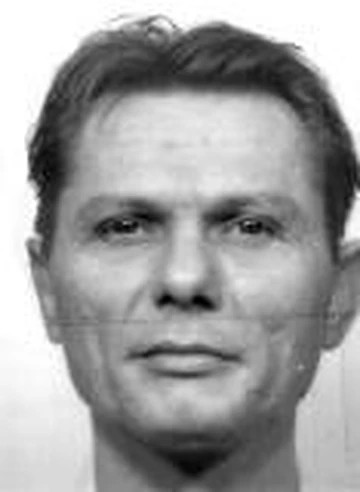
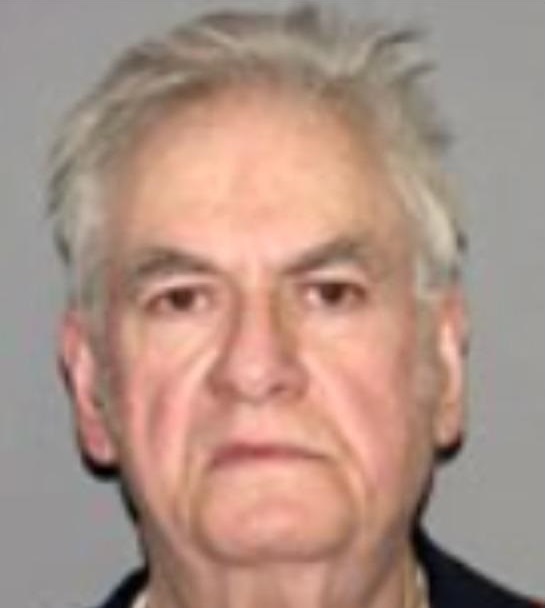
James Emery Paster, a career criminal with a history of violence, orchestrated a brief but savage crime spree in Houston, Texas, between late 1980 and early 1981. Alongside his primary accomplice, Stephen Albert McCoy, Paster was responsible for at least three murders that began with a straightforward contract killing and spiraled into a pact of shared guilt sealed by the blood of innocent women. The group, which also included a third man, Gary Louis LeBlanc, who later became the state's key witness, committed abductions, rapes, and murders that underscored a chilling disregard for human life.
The case unraveled years later due to a tip from McCoy's ex-wife, leading to the convictions of all involved. Paster and McCoy were sentenced to death and executed by the state of Texas in 1989, just four months apart. Moments before his own death, Paster confessed to two additional, unprosecuted murders, leaving a lingering question about the true extent of his lethality. The case is also remembered for the reportedly botched execution of McCoy, which fueled debate over the practice of lethal injection.
Early Life and Criminal Background
James Emery Paster was born on January 30, 1945, in Hamilton County, Ohio. Details about his upbringing and family life are not well-documented in public records. By the time he arrived in Houston, he was a hardened criminal with a significant record. He had served time in California's notorious San Quentin State Prison during the 1970s, an experience that likely further ingrained him in a life of crime.
Before his Texas crimes came to light, Paster was arrested and convicted in Alabama in 1982 for a string of violent offenses, including robbery-assault, first-degree robbery, and first-degree burglary. For these crimes, he was given three life sentences and incarcerated at the Holman Correctional Facility. It was from this Alabama prison that he would ultimately be extradited to Texas to face capital murder charges.
His main partner in the Houston killings was Stephen Albert McCoy, born in Harris County, Texas, on December 17, 1948. McCoy worked as an electrician and had a history of lesser crimes, including burglary. The third accomplice was Gary Louis LeBlanc, whose brother, Eddie, would become entangled in the group's first murder. Gary LeBlanc's decision to cooperate with prosecutors in exchange for a lesser sentence would prove crucial in securing convictions against Paster and McCoy.
The Murder-for-Hire
The chain of events that led to multiple murders began with a domestic dispute and a plot for revenge. In the fall of 1980, Trudy Howard and her new husband, Eddie LeBlanc, decided to have Trudy's ex-husband, Robert Edward Howard, killed. They approached James Paster, offering him $1,000 and a motorcycle to carry out the murder. Paster accepted the contract and enlisted the help of Stephen McCoy and Eddie's brother, Gary LeBlanc.
On the evening of October 25, 1980, the trio located Robert Howard's truck in the parking lot of the Legal Tender Club, a Houston bar he frequented. They devised a simple but effective plan, slashing one of the truck's tires and then retreating to wait for their target. When Howard, 38, emerged from the club and knelt to examine the flat tire, Paster walked up behind him and shot him once in the back of the head, killing him instantly. The three men then fled the scene.
The Blood Pact
In the aftermath of Robert Howard's murder, Paster became consumed with paranoia. He feared that one of his accomplices, particularly Gary LeBlanc, might eventually talk to the police. To ensure their silence, he conceived a grim and binding solution: a "blood oath." He decreed that each of them must commit a murder in the presence of the others. This act of shared, unforgivable guilt, he reasoned, would create a pact of mutually assured destruction, making it impossible for any one of them to betray the others without implicating themselves.
McCoy and LeBlanc, caught in Paster's web of coercion and fear, agreed to the plan. This decision transformed a single contract killing into the beginning of a serial murder spree.
The first victim of the pact was Diana Trevino Oliver, 27. In mid-November 1980, Paster, McCoy, and LeBlanc were driving through Houston when they spotted her and abducted her, forcing her into their car. They drove her to a secluded, wooded area in Harris County where she was brutally raped by the men. To fulfill his part of the oath, Stephen McCoy then stabbed her to death as the others watched.
Just weeks later, the trio sought out their next victim. On New Year's Eve 1980, they were driving on a Houston freeway when they saw 18-year-old Cynthia Darlene Johnson stranded on the shoulder with her disabled car. They pulled over, feigning a desire to help. Johnson, seeing no other option, accepted their offer of a ride. They drove her not to safety, but to a warehouse. There, she was raped by the men.
Following the assault, it was Gary LeBlanc's turn to fulfill the pact. He attempted to strangle Johnson with an electrical cord but lost his nerve and could not complete the act. Enraged by his failure, Paster took over. In the early hours of January 1, 1981, he strangled Cynthia Johnson to death. To be certain she was dead, Paster committed a final, gruesome act of desecration by driving a nail up her nose.
The Victims
- Robert Edward Howard, 38 — Murdered on October 25, 1980, in Houston, Texas. He was ambushed in a parking lot and shot in the head as the victim of a murder-for-hire plot arranged by his ex-wife and her new husband.
- Diana Trevino Oliver, 27 — Abducted, sexually assaulted, and murdered in November 1980 in a remote area of Harris County, Texas. She was the first victim killed to seal the "blood oath" Paster devised to ensure his accomplices' silence.
- Cynthia Darlene Johnson, 18 — Abducted on December 31, 1980, after her car broke down on a Houston freeway. She was taken to a warehouse, sexually assaulted, and murdered in the early hours of January 1, 1981, becoming the final victim of the pact.
Investigation and Capture
For two years, the murders remained unsolved. The break in the case came from an unexpected source in early 1983. Stephen McCoy's ex-wife, who had been present when the men disposed of Cynthia Johnson's body, had been living in fear. She finally confided in her brother, who had connections within law enforcement and urged her to come forward. Her testimony provided investigators with the first concrete link to the perpetrators.
Armed with this new information, Houston police detectives began to piece the case together. They quickly identified the three men involved. By this time, both Paster and McCoy were already incarcerated. Paster was serving three life sentences in Alabama, and McCoy was in a Texas prison serving a five-year sentence for an unrelated burglary.
Investigators traveled to Alabama to interview Paster. In a tape-recorded statement, he confessed to his role in the murder-for-hire of Robert Howard. Meanwhile, faced with the overwhelming evidence and the prospect of a death sentence, Gary LeBlanc agreed to a plea deal. In exchange for his full cooperation and testimony against Paster and McCoy, he would receive a reduced sentence.
On April 19, 1983, Stephen McCoy was indicted for the capital murder of Cynthia Johnson. On June 1, 1983, James Paster was indicted for the capital murder of Robert Howard. The instigators of the original crime, Trudy Howard and Eddie LeBlanc, were also arrested and charged for their roles in the plot.
Trial and Sentence
James Paster went on trial for the capital murder of Robert Howard in September 1983. The prosecution's case was built on two pillars: Paster's own taped confession and the damning eyewitness testimony of his former accomplice, Gary LeBlanc. On September 21, 1983, the jury found him guilty. The following day, after a brief punishment phase, he was sentenced to death by lethal injection. He later received an additional life sentence for his part in the murder of Cynthia Johnson.
Stephen Albert McCoy was tried separately for the capital murder of Cynthia Johnson. LeBlanc again served as the star witness, detailing the abduction, rape, and McCoy's role in the "blood oath." On July 26, 1984, McCoy was convicted of capital murder. The jury subsequently sentenced him to death.
For their roles in initiating the entire bloody saga, Trudy Howard and Eddie LeBlanc were both convicted of murder and received life sentences. Gary LeBlanc, whose testimony was indispensable to the state, was sentenced to 35 years in prison as part of his plea agreement.
Execution
While on death row at the Ellis I Unit in Huntsville, Paster's criminal impulses did not cease. In April 1989, he and another condemned inmate, James Demouchette, attempted a daring escape. They managed to squeeze through an air vent in their cell and were navigating a pipe corridor when they were discovered by guards and returned to their cells.
On May 24, 1989, Stephen Albert McCoy was taken to the execution chamber. His execution became a subject of controversy. As the lethal drugs began to flow, witnesses reported that he had an immediate and violent reaction. He gasped, choked, and his chest heaved violently for several minutes. A reporter for the Associated Press, present as a media witness, fainted. The Texas Attorney General later stated that McCoy "seemed to have a somewhat stronger reaction" than usual, speculating that the drugs may have been administered too quickly. McCoy made no final statement. He was 40 years old.
Four months later, on September 20, 1989, it was James Paster's turn. For his last meal, he requested steak, salad with Thousand Island dressing, French fries, and watermelon. In his final statement, he addressed the family of his first victim, saying, "I hope Mrs. Howard can find peace in this." Just before being executed, Paster confessed to authorities that he had killed two other women in the Houston area, crimes for which he was never charged. No details about these alleged victims or the circumstances of their deaths have ever been publicly released. James Paster was executed by lethal injection at the age of 44. Both he and McCoy are buried in the Captain Joe Byrd Cemetery, the prison cemetery in Huntsville.
Aftermath and Legacy
The case of James Paster and Stephen McCoy is a chilling illustration of how a single criminal conspiracy can rapidly escalate. Paster's invention of the "blood oath" was a mechanism of control that directly led to the abduction, rape, and murder of two young women, transforming a murder-for-hire into a spree of serial killing. The brutality of the crimes, particularly the murder of Cynthia Johnson on New Year's Day, left a scar on the community.
The troubled execution of Stephen McCoy added a contentious chapter to the history of capital punishment in the United States, serving as a case study for opponents of lethal injection who argue it can be a cruel and unusual punishment. Furthermore, Paster's death chamber confession to two additional murders leaves an unsettling open question. It remains unknown whether this was a final, truthful admission or a parting act of manipulation from a career sociopath. For law enforcement and the families of the missing in the Houston area at the time, it represents a painful and unresolved possibility that the true victim count of James Paster is higher than the three for which he was condemned.