Lemuel Warren Smith: Murders Across Upstate New York
Early Life and the Beginning of His Criminal Record
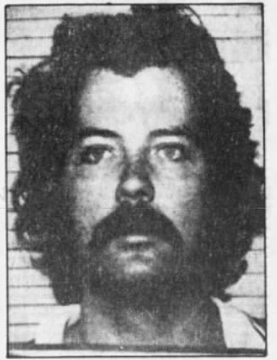
Lemuel Warren Smith was born on July 23, 1941, in Amsterdam, New York. His documented history of extreme violence began while he was still a teenager and eventually developed into a series of murders, kidnappings and sexual assaults spanning more than two decades. Smith repeatedly returned to violent behavior after periods of imprisonment, and his final known murder occurred inside one of New York's maximum-security prisons.
The first homicide associated with Smith was the January 21, 1958, killing of 46-year-old Dorothy Waterstreet in Amsterdam. Waterstreet was walking home from church when she was attacked near her neighborhood. She was robbed, severely beaten and left in a vacant lot. Smith, who was 16 years old and lived nearby, became a suspect, but investigators did not obtain a legally usable confession and he was never prosecuted for the crime. Nearly 20 years later, Smith reportedly admitted killing Waterstreet while confessing to several murders.
Violent Offenses and Repeated Imprisonment
In 1958, while under suspicion in the Waterstreet investigation, Smith left New York and went to Baltimore, Maryland. There, he kidnapped and attacked a 25-year-old woman. The assault was interrupted, allowing the victim to survive. Smith was arrested and, on April 12, 1959, received a 20-year prison sentence for assault with intent to murder.
Smith was paroled in May 1968 after serving approximately nine years. On May 20, 1969, he abducted and sexually assaulted a woman who escaped after other people intervened. Later that same day, he kidnapped and raped a 46-year-old woman who knew his mother. Smith was arrested again and returned to prison. Although his history already demonstrated that he remained extremely dangerous after release, he was eventually paroled once more in October 1976.
The Hedderman Religious Shop Murders
Only weeks after his 1976 release, Smith committed the double murder that would eventually lead to two of his principal homicide convictions. On November 24, 1976, Robert Hedderman and his secretary, Margaret Byron, were working inside the Hedderman Religious Shop at 50 Columbia Street in Albany, New York. At approximately 3:00 p.m., both were attacked in the rear of the business.
Hedderman and Byron suffered multiple stab wounds, and both victims' throats were cut. Investigators questioned Smith shortly after the murders because he worked nearby and had recently been released from prison. He was initially allowed to leave, but physical and circumstantial evidence gradually strengthened the case against him. Hair and blood evidence connected him to the crime, while a police tracking dog repeatedly identified Smith after being given the scent of material recovered from the murder scene.
The Murder of Joan Richburg
On December 23, 1976, less than one month after the religious-shop murders, 24-year-old Joan Richburg was attacked at Colonie Center in Colonie, New York. She was found murdered inside her vehicle in the shopping mall parking area. Investigators concluded that she had been sexually assaulted and killed before her body was subjected to additional injuries.
The similarities between Richburg's death and the earlier Albany murders caused investigators to focus on Smith. Evidence recovered from the scene also placed him under suspicion, but prosecutors did not immediately have enough evidence to bring the case to trial. Smith later confessed to killing Richburg. He was indicted, but the charge was ultimately dismissed after he had already received sentences that ensured he would remain imprisoned for life.
The Murder of Maralie Wilson
On July 22, 1977, the body of 30-year-old Maralie Jean Wilson was discovered near railroad tracks in downtown Schenectady, New York. Wilson had been abducted, strangled and subjected to extensive injuries. Witnesses remembered seeing her being approached or confronted by a large man, and Smith was known to spend time in the area where she disappeared.
Investigators noticed what appeared to be a bite injury on Wilson's body. Her remains were later exhumed so that the evidence could be examined more closely. Dental impressions taken from Smith were compared with the injury, and forensic experts concluded that the pattern was consistent with his teeth. The bite-mark comparison became important evidence not only in Wilson's case but also in the later prosecution of Smith for a murder committed in prison.
Arrest and Confession
Smith's freedom ended on August 19, 1977, after he kidnapped and raped 18-year-old Marianne Maggio. Smith forced her into a vehicle and made her drive in the direction of Albany. Police stopped the car and arrested him. Maggio survived, and her testimony resulted in additional convictions and a lengthy prison sentence.
On March 5, 1978, Smith confessed to five murders: Dorothy Waterstreet, Robert Hedderman, Margaret Byron, Joan Richburg and Maralie Wilson. His statements contained details that investigators believed demonstrated knowledge of the crimes. Smith and his attorneys attempted to use his psychological condition as part of an insanity defense, claiming that he experienced delusions and separate personalities. Mental-health professionals acknowledged that he displayed serious psychological disturbances, but the courts did not conclude that he lacked criminal responsibility for his actions.
Smith was convicted on February 2, 1979, of murdering Robert Hedderman and Margaret Byron. He received two consecutive sentences of 25 years to life. He was also indicted in connection with the Wilson and Richburg murders, but those prosecutions were discontinued because his existing sentences already made his release effectively impossible.
The Murder of Correction Officer Donna Payant
By 1981, Smith was imprisoned at Green Haven Correctional Facility, a maximum-security prison in Stormville, New York. On May 15, 1981, 31-year-old correction officer Donna Alice Payant reported for her afternoon shift. Payant, a wife and mother of three, had worked at Green Haven for only about one month.
During her shift, Payant left her assigned area after indicating that she needed to handle a problem. When she failed to return or leave the prison at the end of her shift, officers began an extensive search. Her body was discovered the following morning at a landfill in Amenia, New York, after refuse removed from Green Haven was emptied and examined. The medical examination determined that Payant had been strangled inside the prison before her body was concealed in the institution's garbage system.
Investigators concentrated on Smith, who worked in the office of the prison's Catholic chaplain, the area where prosecutors maintained that Payant was killed. A bite injury found on her body was compared with Smith's dental pattern and with the earlier injury documented on Maralie Wilson. Prosecutors also presented testimony from inmates and correctional employees concerning Smith's movements and statements inside the prison.
Smith denied killing Payant and claimed that she had been murdered by corrupt prison employees. Despite his denial, a jury convicted him of first-degree murder on April 21, 1983. On June 10, 1983, he was sentenced to death under a New York law requiring execution for a prisoner serving a life sentence who murdered another person. In July 1984, the New York Court of Appeals ruled that the mandatory death provision was unconstitutional and reduced Smith's punishment to another life sentence.
Known and Confessed Victims
- Dorothy Waterstreet, 46 — January 21, 1958 — Amsterdam, New York: Attacked while returning home from church and found beaten to death in a vacant lot. Smith later confessed, but he was never prosecuted for her murder.
- Robert Hedderman, 48 — November 24, 1976 — Albany, New York: Murdered inside the Hedderman Religious Shop at 50 Columbia Street. Smith was convicted of the killing in 1979.
- Margaret Byron, 59 — November 24, 1976 — Albany, New York: Hedderman's secretary, murdered alongside him inside the religious-goods store. Smith was convicted of her killing in 1979.
- Joan Richburg, 24 — December 23, 1976 — Colonie, New York: Abducted and murdered in her vehicle at Colonie Center. Smith confessed and was indicted, but the charge was later dismissed because he was already serving life sentences.
- Maralie Jean Wilson, 30 — July 22, 1977 — Schenectady, New York: Found strangled near railroad tracks in downtown Schenectady. Smith confessed, and investigators connected him to the case through witness accounts and forensic bite-mark evidence.
- Donna Alice Payant, 31 — May 15, 1981 — Green Haven Correctional Facility, Stormville, New York: Strangled while working as a correction officer. Her body was transported from the prison in refuse and found at a landfill in Amenia. Smith was convicted of first-degree murder.
Legal Consequences and Continuing Controversy
Smith's convictions established him as one of the most dangerous prisoners in the New York correctional system. The murder of Donna Payant was especially significant because it demonstrated that Smith remained capable of killing even while confined in a maximum-security institution. His actions also raised questions about prison staffing, inmate supervision and security procedures that allowed a correction officer to disappear during her shift.
Although Smith admitted responsibility for the five murders committed outside prison, he continued to deny killing Payant. His defense attorneys argued that questionable activities involving other prison employees created alternative explanations for her death. The jury rejected those claims, and the conviction survived appellate review even though the death sentence was overturned.
Smith spent many years under highly restrictive conditions because officials considered him a threat to correctional employees and other inmates. His criminal history illustrates a repeated pattern in which imprisonment temporarily stopped his violence but did not end it. Each time he returned to society, his offenses escalated, and even a life sentence failed to prevent the final known murder attributed to him.
Legacy of the Case
Lemuel Warren Smith's known crimes extended from the 1958 killing of Dorothy Waterstreet to the 1981 murder of Donna Payant, a period of more than 23 years. He confessed to five murders and was convicted of three, including the Albany double homicide and Payant's murder. The remaining homicide charges were either never prosecuted or dismissed after his permanent imprisonment had already been secured.
The cases left lasting effects on several New York communities, from Amsterdam and Albany to Schenectady and Dutchess County. Smith's record also became a prominent example of the difficulty authorities faced when attempting to connect crimes committed years apart and in different jurisdictions. Investigators relied on confessions, witness observations, physical evidence and forensic methods to reconstruct a pattern of violence that had begun when Smith was still a teenager.