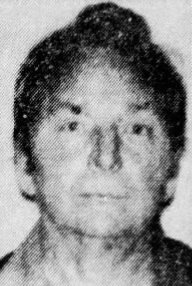
John Rodney McRae: Convicted Child Murderer and Suspected Serial Killer
Overview
John Rodney McRae was an American murderer who was convicted of killing two boys in Michigan and later became the principal suspect in the unresolved disappearances of several young males in Florida. His known criminal history extended across nearly four decades, beginning with the murder of an eight-year-old neighbor in 1950 and ending with the 1987 killing of a Michigan teenager. Although McRae was never convicted of the Florida cases, investigators believed that his movements, access to vulnerable youths and documented history of violence made him a strong suspect.
McRae was born on November 20, 1934, in Belleville, Michigan. During his adolescence, he developed a reputation for theft, aggressive behavior and inappropriate conduct toward younger children. He was only 15 years old when he committed his first confirmed murder. Despite the severity of that crime, McRae was eventually paroled, allowing him to return to society and place himself in positions that gave him access to children and teenagers.
The Murder of Joseph “Joey” Housey Jr.
On September 9, 1950, eight-year-old Joseph James “Joey” Housey Jr. disappeared while playing near his home in St. Clair Shores, Michigan. McRae lived in the same neighborhood and joined residents and police officers in searching for the missing child. His participation in the search later appeared especially disturbing because he already knew where Joey had been left.
Joey’s body was discovered on September 23, 1950, in a shallow grave in a secluded area only a short distance from his home. Rain had disturbed material covering the grave, making it easier for searchers to locate. Investigators determined that Joey had suffered knife wounds and severe injuries to his head. Evidence also indicated that he had been sexually assaulted.
McRae attracted suspicion after making unusual statements about evidence connected to the disappearance and failing to provide a satisfactory account of his movements. Before police could question him further, he fled toward Canada. He left a note denying involvement, stole a boat and traveled to Sarnia, Ontario, where authorities eventually located him.
After being returned to Michigan, McRae confessed during questioning on October 1, 1950. He admitted attacking Joey but refused to give a clear explanation for his motive. He later withdrew the confession and attempted to present an insanity defense. Psychiatric evaluation found that he understood his actions and was competent to face prosecution.
On February 21, 1951, McRae was convicted of Joey Housey’s murder. He received a life sentence and was sent to prison. Because McRae was a juvenile at the time of the killing, his sentence was later modified to permit the possibility of parole. He was released on February 2, 1972, after serving approximately 21 years.
Release and Move to Florida
Following his release, McRae initially lived in Michigan and attempted to establish a conventional life. He married, became a father and later received permission to leave the state. During the mid-1970s, he moved to Brevard County, Florida, where he obtained employment as a correctional officer at the Brevard Correctional Institution, a facility housing young offenders.
McRae’s employment placed a convicted child murderer in direct contact with vulnerable teenagers. Between 1977 and 1979, several boys and young men disappeared in the surrounding area. McRae was questioned or investigated in connection with at least three of those cases. No remains were recovered, and no physical evidence was found that was sufficient to charge him. However, investigators continued to regard him as a significant suspect.
Suspected Florida Victims
McRae was never convicted of murdering Keith Fleming, Kipling Hess or Charles Collingwood. All three remain classified as missing, and their exact dates of death have never been established. Their disappearance dates are therefore listed rather than unverified death dates.
- Keith Dean Fleming, age 13: Keith disappeared on April 28, 1977, from Cocoa Beach, Florida. He was last seen near a roadway after leaving his girlfriend’s residence and reportedly intended to hitchhike home. McRae lived only a short distance from the area where Keith was last observed. Keith was never found, and McRae became the prime and reportedly only named suspect in the case.
- Kipling Randolph “Kip” Hess III, age 12: Kip disappeared on March 27, 1979, while walking to school in Merritt Island, Florida. He never arrived at class. Investigators learned that McRae and his son had met Kip at a church carnival shortly before the disappearance. McRae later assisted in searches for Kip, and a missing-person poster bearing the boy’s image was reportedly discovered inside McRae’s workplace locker. Kip’s remains have never been recovered.
- Charles Edward Collingwood, age 19: Charles disappeared on December 1, 1979, from the Titusville or Sharpes area of Brevard County, Florida. He had been confined at the correctional institution where McRae worked and was initially reported to have escaped. Investigators later examined allegations that McRae had maintained an improper relationship with Charles. McRae claimed that Charles had merely acted as an informant for him. Charles was never seen again, and his fate remains unknown.
The disappearances shared troubling circumstances. Each involved a young male in Brevard County while McRae was living and working nearby. McRae had prior access to youths through his correctional employment, inserted himself into at least one search and had already been convicted of sexually assaulting and murdering a child. Nevertheless, the absence of bodies, witnesses and direct forensic evidence prevented prosecutors from filing charges.
Return to Michigan
McRae left his correctional position and returned to Michigan in 1980. He eventually settled with his family near Harrison in Clare County. To many neighbors, he appeared to be an ordinary husband and father. His earlier murder conviction was not widely known, and he became involved in activities that brought him into contact with local youths through his teenage son.
One of those teenagers was Randy Ray Laufer, a friend of McRae’s son. Randy had visited the McRae property and was familiar with members of the family. When he vanished in 1987, McRae again placed himself near the center of a search for a missing boy.
The Murder of Randy Ray Laufer
Randy Ray Laufer, age 15, was last seen alive on September 15, 1987, in Clare County, Michigan. He reportedly left after school and was believed to be walking toward a friend’s residence. Randy never reached his destination and did not return home. His disappearance led to an extensive search, but no trace of him was found at the time.
McRae was questioned because Randy knew his family and had spent time at their property. McRae participated in search efforts and denied harming the teenager. Without a body or physical evidence, investigators could not arrest him. Several months after Randy vanished, McRae and his family left Michigan and relocated to Mesa, Arizona.
The case remained unresolved for nearly ten years. On August 20, 1997, a worker digging on McRae’s former property near Harrison uncovered human skeletal remains. Dental records and other identifying information established that the remains belonged to Randy Laufer. Examination of the bones revealed damage consistent with repeated stabbing and violent injury. Randy had been buried on land controlled by the McRae family.
The discovery transformed the missing-person investigation into a murder case. McRae and his adult son were arrested in Mesa, Arizona, on October 15, 1997. The son was later released, while McRae was returned to Michigan to face prosecution. Prosecutors argued that McRae had killed Randy and concealed the body on his own property, much as he had hidden Joey Housey’s body decades earlier.
Confirmed Murder Victims
- Joseph James “Joey” Housey Jr., age 8: Joey disappeared on September 9, 1950, from St. Clair Shores, Michigan. His body was discovered on September 23, 1950, in a shallow grave near his neighborhood. McRae confessed, was convicted on February 21, 1951, and received a life sentence.
- Randy Ray Laufer, age 15: Randy was last seen on September 15, 1987, in Clare County near Harrison, Michigan, and is believed to have been killed that day. His remains were recovered from McRae’s former property on August 20, 1997. McRae was convicted of first-degree murder.
Trials and Convictions
McRae’s first trial for Randy’s murder began in 1998. Prosecutors had no eyewitness to the killing and little conventional forensic evidence because Randy’s remains had been buried for approximately ten years. Instead, they built a circumstantial case based on McRae’s access to Randy, the location of the remains and similarities between Randy’s death and the murder of Joey Housey.
A jury convicted McRae of first-degree premeditated murder in December 1998. He was sentenced to life imprisonment without the possibility of parole. McRae continued to deny responsibility and appealed the conviction. In 2004, a court overturned the verdict after finding problems connected to his legal representation, and a new trial was ordered.
The retrial began in May 2005. Prosecutors again presented the history of the Housey murder and evidence showing that Randy had been buried at McRae’s former residence. McRae was convicted for a second time and once again received life imprisonment without parole. Despite being questioned about the missing Florida boys, he never admitted killing them or revealed where their bodies might be located.
Death in Prison and Unanswered Questions
John Rodney McRae died on June 28, 2005, at the Southern Michigan Correctional Facility in Jackson, Michigan. He was 70 years old and had been resentenced only days earlier. His death was attributed to complications involving gastrointestinal illness and bleeding.
McRae died with only two murders legally attached to his name. Investigators nevertheless believed that his actual victim count may have been higher. The unresolved disappearances of Keith Fleming, Kipling Hess and Charles Collingwood remain the most prominent cases associated with him. Each disappeared while McRae was living or working nearby, but the evidence was never sufficient to prove that he killed them.
The long gap between McRae’s two confirmed murders demonstrates how a convicted child killer was able to return to society, obtain authority over young offenders and live for years without his history being widely recognized. The eventual discovery of Randy Laufer’s remains exposed the danger that had remained hidden beneath McRae’s outward appearance. Although his convictions brought legal accountability for Joey and Randy, the families of the missing Florida boys were left without remains, confirmed dates of death or definitive answers about what happened to their children.