Frederick William Hollman: Crimes and Victims
Background
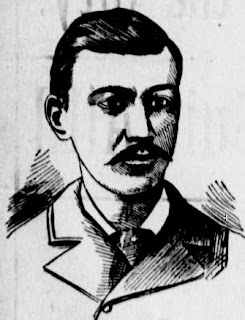
Frederick William Hollman, born Friedrich Wilhelm Hoellman in Brandenburg, Germany, in 1859, was a nineteenth-century murderer whose known and suspected crimes occurred in the American Midwest. He immigrated to the United States with his first wife, Amelia, in 1883 and settled in Grand Haven, Michigan. Hollman worked at different times as a farmer, sailor, laborer and traveling salesman. After Amelia died during childbirth in 1887, he married Augusta Pauline Rohde and eventually moved with her to Wisconsin.
Accounts of Hollman’s domestic life described him as violent, controlling and deeply hostile toward women. He abandoned his second wife and children in the early 1890s and began traveling under different names. Because he moved frequently and gave misleading information about himself, investigators later found it difficult to reconstruct his movements. Contemporary authorities suspected that he had attacked or killed women in several states, although only one murder resulted in a conviction.
Pattern of Violence
Hollman usually approached women who lived alone, particularly older women in rural communities. He attempted to appear harmless by presenting himself as a religious, polite or hardworking traveler. He reportedly carried a Bible and spoke about faith, creating a striking contrast with his violent behavior. Once he gained access to a victim’s home, he could overpower her, steal money or property and leave the area before suspicion fell upon him.
Strangulation was associated with several killings attributed to Hollman. His confirmed victim, however, was beaten and hanged in a manner intended to resemble suicide. This effort to disguise the crime became an important part of the prosecution’s case. Hollman was also suspected of returning to isolated houses or observing potential victims before attacking them.
Known and Suspected Victims
- Grethe Seifkin — June 13, 1896 — Wisconsin: Seifkin, approximately 60 years old, was found dead after an apparent strangulation. Hollman was later considered a suspect because he was believed to have been traveling in the region and because the killing resembled other attacks attributed to him. He was never tried for her death, and the identification of Hollman as her killer remains an allegation rather than a proven fact.
- Bertha Hilgendorf — July 1896 — Wisconsin: Hilgendorf was reportedly found strangled during July 1896. The precise day of her death is not consistently preserved in surviving accounts. Investigators and later researchers connected the case to Hollman because of his movements, his hostility toward women and the similar method of attack. No court established his responsibility for her death.
- Anne Catherine Mohr — September 22, 1896 — Illinois: Mohr, aged 73, was found dead following an apparent strangulation. Her age, isolation and the circumstances surrounding the killing fit the pattern later associated with Hollman. He was suspected of involvement but was not convicted or formally proven to have murdered her.
- Caroline Lenz — November 26, 1896 — near Roberts, Ford County, Illinois: Lenz was found strangled at her rural home. Hollman had reportedly been seen in the area and was linked to the case through his movements and behavior. Authorities regarded him as a strong suspect, but the case did not lead to a separate conviction.
- Wiebke Geddes — December 2, 1896 — near Sibley, Ford County, Illinois: Geddes was Hollman’s confirmed victim. She was attacked inside her home, beaten and then hanged with a rope. The hanging appears to have been arranged to make her death look like suicide. Evidence indicated that Hollman had been near the property and had attempted to conceal his role in the killing. This murder led directly to his arrest, trial and execution.
The Murder of Wiebke Geddes
Wiebke Geddes lived in rural Ford County, Illinois. On December 2, 1896, she was discovered hanging inside her home. At first glance, the scene could have suggested suicide, but investigators noticed signs that she had been assaulted before the hanging. Injuries to her body and disturbances inside the house indicated that another person had attacked her and then arranged the rope.
Suspicion quickly turned toward Hollman. Witnesses had observed him in the vicinity, and his explanations about his whereabouts were inconsistent. He had also made statements and behaved in ways that suggested knowledge of the crime. Investigators concluded that he had entered the Geddes home, attacked her and attempted to disguise the killing.
Hollman was captured on December 6, 1896, and confined in the Ford County Jail at Paxton, Illinois. During questioning, he denied responsibility and gave contradictory accounts. Authorities also began examining unsolved killings in nearby communities and in Wisconsin. Similarities among the victims and methods caused investigators to suspect that Geddes was not his first victim.
Trial and Conviction
Hollman was tried in Ford County for the murder of Wiebke Geddes. The prosecution presented physical evidence, testimony concerning his presence near the crime scene and statements showing inconsistencies in his story. His effort to make the killing appear to be suicide was treated as evidence of planning and consciousness of guilt.
The jury found Hollman guilty of murder. He was sentenced to death by hanging. Although newspaper reports connected him with numerous additional deaths, those accusations were never tested in court. Later claims that he murdered as many as 17 women are based largely on historical suspicion, press reports and attempts to match his travels with unsolved crimes. The exact number of people he killed remains unknown.
Execution
Frederick William Hollman was executed by hanging at the Ford County Jail in Paxton, Illinois, on May 14, 1897. He was approximately 38 years old. Reports described him as outwardly religious during his imprisonment, frequently reading the Bible and discussing salvation. He continued to deny or avoid a complete confession to the crimes attributed to him.
Hollman’s execution ended the investigation that had begun with the death of Wiebke Geddes, but it did not resolve the other murders associated with his name. Because nineteenth-century police departments had limited methods for exchanging information, a traveling offender could commit crimes in different counties or states without investigators immediately recognizing a pattern.
Historical Assessment
Hollman is often described as one of the early serial-killer suspects in the United States. That description requires caution. His responsibility for the murder of Wiebke Geddes was established by a criminal conviction, while the deaths of Grethe Seifkin, Bertha Hilgendorf, Anne Catherine Mohr and Caroline Lenz remain suspected connections.
The case illustrates how isolated women could become vulnerable to traveling offenders in rural nineteenth-century America. Hollman appears to have used mobility, false identities and a respectable public manner to avoid detection. His habit of presenting himself as religious may have helped him gain trust and made his violence more difficult for acquaintances to imagine.
Although the full extent of his crimes may never be known, the verified record shows that Hollman murdered Wiebke Geddes on December 2, 1896, attempted to conceal the crime and was executed for it on May 14, 1897. The other deaths remain part of a disturbing but unproven pattern surrounding his movements through Wisconsin and Illinois.