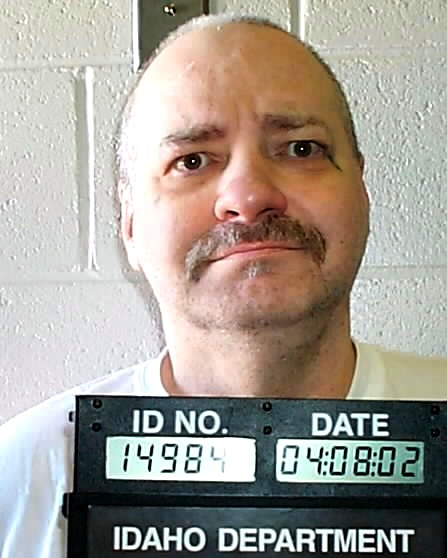
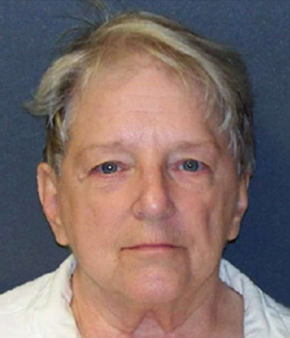
Glennon Edward Engleman: The Killing Dentist
Overview
Glennon Edward Engleman was an American dentist, contract killer, and serial murderer whose crimes stretched across Missouri and Illinois for more than two decades. Born on February 6, 1927, in St. Louis, Missouri, Engleman eventually became known as the "Killing Dentist" because he maintained a respectable dental practice while secretly participating in murder-for-profit schemes. His known crimes began in 1958 and continued until 1980, with investigators ultimately connecting him to at least seven deaths.
Money was at the center of many of Engleman's crimes. Rather than selecting strangers at random, he became involved in carefully arranged plots in which a victim's death could produce life-insurance payments, an inheritance, or relief from a financial problem. Several women associated with Engleman became involved in his schemes, and prosecutors portrayed him as a manipulative figure who persuaded others that murder could solve their financial difficulties. His methods varied considerably, including shootings and explosives, making the individual killings initially appear unrelated.
Early Life and Dental Career
Engleman served in the United States Army Air Corps before attending dental school with assistance from the GI Bill. He graduated from Washington University in St. Louis in 1954 and established a dental practice in the St. Louis area. Patients and neighbors saw a professional man with a conventional occupation, a sharp contrast to the criminal activity investigators would later attribute to him.
His dental career also gave him access to people whose personal and financial circumstances he could learn about. Over time, a network of former wives, girlfriends, patients, employees, and acquaintances became intertwined with his criminal cases. Later court testimony described Engleman openly discussing murder as a method of obtaining insurance money and claiming that he had successfully used such schemes before.
The Murder of James Stanley Bullock
The first killing widely associated with Engleman was the death of James Stanley Bullock, a 27-year-old Union Electric Company clerk and part-time student. Bullock had married Engleman's former wife, Edna Ruth Ball, on June 28, 1958. Less than six months later, on December 17, 1958, Bullock was shot near the St. Louis Art Museum and Forest Park in St. Louis.
Bullock had substantial life-insurance coverage, and Edna Ruth Bullock was the beneficiary of the policies. The unusual circumstances surrounding his death and the amount of insurance involved caused investigators and insurance companies to examine the case closely. A later federal insurance case confirmed December 17, 1958, as Bullock's date of death and documented Engleman's previous relationship with Edna Ruth as well as his professional contact with Bullock.
Engleman was never prosecuted for Bullock's murder. Nevertheless, the case became an important part of the larger pattern later attributed to him. Investigators believed Bullock's death demonstrated the basic formula that would repeatedly appear in Engleman's later crimes: arrange for someone close to the victim to benefit financially and then remove the insured person through murder.
The Death of Eric Frey
Engleman's next known victim was Eric Lindau Frey, who worked with him in connection with the Pacific Drag Strip near Pacific, Missouri. On September 26, 1963, Frey was killed while work involving dynamite was being performed at the property. His death initially appeared to be an accident involving explosives and a well or cistern at the construction site.
Years later, testimony in Engleman's federal prosecution transformed the incident from a supposed industrial accident into evidence of murder. A business associate testified that Engleman had admitted killing Frey for insurance money. Other accounts of the case described Frey being struck before being placed or pushed into the well, after which explosives were detonated. Frey's widow subsequently received insurance proceeds, some of which were invested in the drag-strip operation.
Most biographical and memorial records give Frey's death date as September 26, 1963. A later federal appellate opinion referred to the incident as occurring on September 23, creating a discrepancy in the historical record. September 26 is the date appearing in multiple independent records specifically documenting Frey's death.
The Murder of Peter J. Halm Jr.
The murder of Peter J. Halm Jr. eventually became one of the cases that sent Engleman to prison. Halm's wife, Carmen Miranda Halm, had previously worked as a dental assistant trainee for Engleman and had known him for years. According to testimony presented in court, Engleman suggested that Carmen marry a man, obtain insurance on his life, and allow Engleman to kill him so they could profit from the proceeds.
Carmen married Peter Halm on October 31, 1975. During the months that followed, insurance policies were obtained or arranged, and Engleman participated in planning Halm's death. Court records describe several contemplated attempts before a rural site near Pacific, Missouri, was selected.
On September 5, 1976, Carmen brought her husband to the selected location. Engleman was waiting nearby with a rifle. Halm was shot in the back. Other people arrived after the shooting, and Halm was taken to St. Francis Hospital in Washington, Missouri, where he was pronounced dead on arrival.
Carmen ultimately collected insurance proceeds following her husband's death. Her brother later delivered $10,000 in cash to Engleman as payment for his role in the scheme. When investigators eventually reconstructed the plot, Carmen and her brother received immunity in exchange for testimony. Engleman was convicted in Missouri of the capital murder of Peter Halm and sentenced to life imprisonment without eligibility for parole for a minimum of 50 years.
The Gusewelle Family Murders
Engleman's most elaborate murder scheme involved Arthur and Vernita Gusewelle and their son, Ronald. Ronald Gusewelle was married to Barbara Gusewelle, later known as Barbara Boyle. Prosecutors alleged that Barbara and Engleman planned Ronald's murder so that she could benefit from insurance policies on his life. Before Ronald was killed, however, Engleman learned that Ronald's parents possessed significant assets.
Investigators concluded that the elder Gusewelles were killed first so that part of their estate would pass to Ronald. Ronald could then be murdered, increasing the amount his widow stood to inherit. The plan turned three members of one family into victims of a prolonged murder-for-profit conspiracy.
On November 3, 1977, Arthur W. Gusewelle, 61, and his wife, Vernita Gusewelle, 55, were attacked at their farmhouse in the Hamel area of Madison County, Illinois, near Edwardsville. Court testimony established that both had been shot in the back of the head. Vernita was found dead in the kitchen. Arthur survived long enough to call for help and tell an operator that he had been robbed, but he died later that evening.
Accomplice Robert Handy later testified that he had driven Engleman to the Gusewelle property and waited while Engleman entered the home. The house had been disturbed in a way that suggested robbery, although investigators could not establish that anything significant had actually been stolen. After the couple's deaths, their estate was divided between their sons, including Ronald.
The Murder of Ronald Gusewelle
Ronald Gusewelle was killed on March 31, 1979, approximately 17 months after the deaths of his parents. He was 33 years old and worked at the Amoco refinery in Wood River, Illinois, while also farming part time. He left work at approximately 10:50 p.m. on March 31 but never arrived home.
According to testimony later presented in Barbara Boyle's trial, Ronald was attacked at his home. Prosecutors alleged that Engleman participated directly in the killing while Barbara helped facilitate the crime. Ronald was shot and struck in the head. His body was then placed in his automobile and moved away from the residence.
Ronald remained missing for several days. At approximately 7:00 p.m. on April 4, 1979, his body was discovered in the back seat of his 1972 Chevrolet Camaro in the parking lot of Coleman's Plaza, a former Holiday Inn property in East St. Louis, Illinois. Witnesses indicated that the vehicle appeared to have been parked there since about March 31.
At the time of Ronald's death, numerous life-insurance policies were in effect. Court records placed their combined proceeds at approximately $194,000, in addition to the property Ronald had inherited after his parents' deaths. Barbara Boyle was ultimately convicted in connection with her husband's murder, although she was acquitted of murdering Arthur and Vernita.
The Murder of Sophie Marie Barrera
Sophie Marie Barrera, 50, owned a St. Louis dental laboratory that had done business with Engleman. By 1979, Barrera and Engleman were involved in a significant financial dispute. Barrera claimed Engleman owed her more than $14,000 and pursued the matter through the courts.
On March 20, 1979, months before her death, a bomb placed near Barrera's vehicle only partially detonated. The device contained dynamite that had become wet, preventing the attack from succeeding as intended. According to later testimony, Engleman discussed the failed bombing with his former wife and acknowledged responsibility for arranging it.
The civil dispute between Barrera and Engleman remained unresolved. The case was eventually scheduled for trial during the week of January 21, 1980. Barrera never reached that court date.
At approximately 5:00 p.m. on January 14, 1980, Barrera was driving her Ford Pinto delivery vehicle when a bomb exploded, killing her in St. Louis. Investigators recovered components from the explosive device that were similar to materials associated with the earlier bombing attempt. Engleman's financial dispute with Barrera and his knowledge of explosives quickly became central to the investigation.
Engleman was subsequently convicted in federal court of offenses connected with the bombing and related fraudulent activity. He also faced a Missouri capital-murder prosecution for Barrera's death. He was convicted and sentenced to life imprisonment without eligibility for parole until he had served at least 50 years.
Investigation, Recordings, and Arrest
The investigation that finally dismantled Engleman's criminal operation was helped significantly by his former wife, Ruth Engleman. In January 1980, she contacted federal law-enforcement authorities and provided information about his past activities. Working with federal investigators, she later wore electronic equipment that allowed conversations with Engleman to be monitored and recorded.
Those recordings became powerful evidence. Engleman discussed the Halm insurance scheme, acknowledged receiving money connected with the killing, and made incriminating statements concerning Barrera. Prosecutors combined the recordings with testimony from Carmen Halm, her brother, associates of Engleman, insurance-company representatives, and other witnesses.
Engleman was arrested on February 24, 1980. Federal proceedings resulted in convictions for mail fraud, conspiracy, and the destruction of Barrera's vehicle with explosives. He received a total of 60 years in federal prison from those cases in addition to the state murder sentences imposed in Missouri.
The Illinois Confessions and Guilty Pleas
The Gusewelle murders remained the subject of further investigation after Engleman was already imprisoned. Robert Handy eventually cooperated with authorities and described the murder conspiracy in detail. His testimony implicated Engleman in the deaths of Arthur, Vernita, and Ronald Gusewelle and helped prosecutors reconstruct the sequence in which the parents were killed to increase Ronald's inheritance before Ronald himself was murdered.
In 1985, Engleman pleaded guilty to murdering all three members of the Gusewelle family. He received three concurrent life sentences in Illinois. By that time, the once-respected St. Louis dentist had accumulated murder convictions in two states as well as lengthy federal sentences.
Known Victims
- James Stanley Bullock, 27 - Died December 17, 1958, after being shot near the St. Louis Art Museum and Forest Park in St. Louis, Missouri. Bullock was married to Engleman's former wife, Edna Ruth, and substantial life-insurance benefits became payable after his death. Engleman was suspected but never prosecuted for the killing.
- Eric Lindau Frey - Died September 26, 1963, at the Pacific Drag Strip property near Pacific, Missouri. His death occurred during work involving a well and dynamite and was initially treated as accidental. Witnesses in later proceedings testified that Engleman admitted killing Frey for insurance money. A federal appellate opinion later referred to September 23, but multiple death records and case histories identify September 26 as Frey's date of death.
- Peter J. Halm Jr., 26 - Died September 5, 1976, near Pacific, Missouri. Halm was lured to a rural area by his wife, Carmen, and shot in the back with a rifle. He was pronounced dead at St. Francis Hospital in Washington, Missouri. Engleman was convicted of capital murder for Halm's death.
- Arthur W. Gusewelle, 61 - Died November 3, 1977, after being shot at his farmhouse in the Hamel area near Edwardsville, Illinois. Arthur survived the initial attack long enough to summon help but died later that evening. Engleman pleaded guilty to his murder in 1985.
- Vernita L. Gusewelle, 55 - Died November 3, 1977, at the Gusewelle farmhouse near Edwardsville, Illinois. She was shot multiple times and found dead inside the home. Engleman pleaded guilty to her murder in 1985.
- Ronald A. Gusewelle, 33 - Died March 31, 1979, in Illinois. Prosecutors said he was murdered after his parents' estate had increased his personal wealth. His body was moved in his own automobile and discovered on April 4, 1979, in the parking lot of Coleman's Plaza in East St. Louis. Engleman pleaded guilty to Ronald's murder in 1985.
- Sophie Marie Barrera, 50 - Died January 14, 1980, in St. Louis, Missouri, when a bomb exploded in her Ford Pinto delivery vehicle. Barrera owned a dental laboratory and was pursuing Engleman for more than $14,000 she said he owed her. Engleman was convicted of her capital murder and of federal offenses arising from the bombing.
Convictions and Sentences
Engleman's legal consequences accumulated across several separate prosecutions. Federal juries convicted him of offenses involving insurance fraud and explosives, resulting in a combined 60-year federal sentence. Missouri juries convicted him of the capital murders of Peter Halm and Sophie Barrera, with each case resulting in a life sentence requiring a minimum of 50 years before parole eligibility. He later pleaded guilty in Illinois to the murders of Arthur, Vernita, and Ronald Gusewelle and received three additional concurrent life sentences.
Not all of the killings associated with Engleman resulted in criminal convictions. James Bullock's murder remained officially unresolved despite the long-standing suspicion surrounding Engleman, while Eric Frey's death had originally been classified as an accident and was never separately prosecuted as a homicide. Testimony about Frey's death nevertheless became important evidence because witnesses said Engleman had admitted killing him and had described the insurance scheme as proof that similar plans could succeed.
Death and Legacy
Glennon Edward Engleman remained incarcerated for the rest of his life. He died on March 3, 1999, at the Jefferson City Correctional Center in Jefferson City, Missouri, at the age of 72. He had a history of serious health problems, including diabetes, and was being treated in the prison infirmary near the end of his life.
Engleman's case remains unusual because his murders were not linked by a single method or by random victim selection. Instead, the recurring connection was financial planning. Victims were insured, expected to inherit property, or involved in financial disputes with him. Murders were designed to create payments or remove obstacles, while accomplices and beneficiaries helped place victims in vulnerable situations. His ability to maintain a professional dental practice while participating in such schemes allowed individual deaths to remain disconnected for years. Only after investigators combined insurance records, witness testimony, recorded conversations, and evidence from several jurisdictions did the full extent of the Killing Dentist's crimes become clear.