Glen Edward Rogers: The Cross-Country Killer
Background and Criminal History
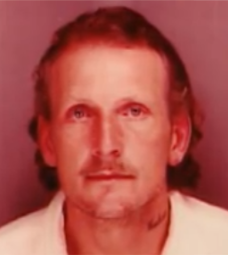
Glen Edward Rogers was an American murderer whose violent travels across the United States earned him the names “The Cross-Country Killer” and “The Casanova Killer.” Born on July 15, 1962, in Hamilton, Ohio, Rogers spent much of his adult life moving between states, working temporary jobs and forming brief relationships with women he met in bars, restaurants and other social settings. Witnesses often described him as charming and confident when first introduced, but people who knew him more closely reported a volatile temper and a capacity for intimidation and violence.
Rogers was convicted of two murders committed in 1995: the killing of Sandra Gallagher in California and the killing of Tina Marie Cribbs in Florida. Investigators also considered him the principal suspect in the deaths of Linda Price in Mississippi and Andy Jiles Sutton in Louisiana. He was further suspected in the earlier killing of Mark Peters, an elderly man from Ohio whose remains were discovered at a Rogers family cabin in Kentucky.
Following his capture, Rogers reportedly claimed that he had killed as many as 70 people. He later withdrew the statement and said that he had been joking. Authorities were never able to substantiate such an enormous victim count, and he was never prosecuted for dozens of murders. His established criminal record nevertheless revealed a deadly pattern involving sudden relationships, stolen property, rapid interstate travel and victims left behind in homes, motel rooms or vehicles.
The Death of Mark Peters
Mark Peters was a 71-year-old retired electrician and military veteran who lived in Hamilton, Ohio. Peters allowed Rogers to stay in his home during 1993. In October of that year, Peters disappeared along with his automobile and several possessions, including firearms, antiques and a coin collection. Rogers also left the area.
On January 10, 1994, Peters’ remains were discovered inside a cabin belonging to the Rogers family near Beattyville, Kentucky. His body had reportedly been bound to a chair and concealed beneath furniture. The condition of the remains made it difficult to establish a precise date of death, although investigators believed Peters had been killed around the time of his disappearance in October 1993.
Rogers was strongly suspected because he had been staying with Peters, disappeared when Peters vanished and was allegedly connected to property taken from the victim. Despite those circumstances, Rogers was not convicted of Peters’ murder.
The Murder of Sandra Gallagher
On September 28, 1995, Rogers met 33-year-old Sandra Gallagher at McRed’s bar in Van Nuys, California. Gallagher was a mother of three. Witnesses saw her socializing with Rogers before the two left the establishment together.
During the early morning of September 29, Gallagher’s pickup truck was discovered near Rogers’ apartment. Her body was inside the vehicle. She had been strangled, and both her body and the truck had been set on fire in an apparent attempt to destroy evidence. Investigators determined that the killing occurred during the night of September 28 or the early hours of September 29, 1995.
Rogers quickly left California after Gallagher’s death. Physical and circumstantial evidence eventually connected him to the crime, including evidence recovered near his residence. In June 1999, a California jury convicted Rogers of first-degree murder and arson. He received a death sentence for Gallagher’s killing.
The Killing of Linda Price
Rogers next appeared in Jackson, Mississippi, where he became involved with 34-year-old Linda Price, a mother of two. Price reportedly met Rogers during the Mississippi State Fair in October 1995. The relationship progressed rapidly, and Rogers temporarily stayed with her at her apartment.
Price was last known to be alive near the end of October. Her family became concerned when she failed to answer her door and could not be reached. On November 3, 1995, Price was found dead in the bathtub of her Jackson apartment. She had suffered fatal stab wounds. Rogers and Price’s automobile were gone.
The circumstances closely resembled the crimes that followed. Rogers had quickly entered Price’s life, stayed in her home and disappeared immediately after her death. Although Mississippi authorities identified him as the leading suspect, he was never tried or convicted for killing Price.
The Murder of Tina Marie Cribbs
On November 5, 1995, Rogers met 34-year-old Tina Marie Cribbs at the Showtown Bar in Gibsonton, Florida. Cribbs was a mother of two. Rogers purchased drinks for her and her friends before asking Cribbs to give him a ride. Witnesses later saw the two leave the bar together in Cribbs’ white Ford Festiva.
Rogers had rented a room at the Tampa 8 Inn in East Tampa. On November 7, a motel employee entered the room and found Cribbs dead in the bathtub. She had been stabbed in the chest and other areas of her body. Her jewelry, wallet and vehicle were missing.
Cribbs’ wallet was later recovered at a highway rest area in northern Florida. Fingerprints connected Rogers to the wallet and the motel room. He continued north in Cribbs’ car, traveling through several states while authorities organized a nationwide search.
On November 13, 1995, police spotted Rogers driving Cribbs’ Ford Festiva in Kentucky. He attempted to escape, leading officers on a highway pursuit before he was stopped and arrested. Rogers claimed that Cribbs had allowed him to use the car and was alive when he left Florida, but the physical evidence and witness testimony contradicted his account.
A Florida jury convicted Rogers of first-degree murder, armed robbery and grand theft of a motor vehicle in July 1997. He was sentenced to death for Cribbs’ murder.
The Death of Andy Jiles Sutton
Andy Jiles Sutton, also identified in some records as Andy Lou Jiles Sutton, was a 37-year-old woman living in Bossier City, Louisiana. She knew Rogers before her death and allowed him into her apartment while he was traveling through Louisiana.
On November 9, 1995, Sutton was found dead inside the apartment. Her throat had been cut, and her body was discovered on a punctured waterbed. Rogers had already departed the area by the time the crime was discovered.
Investigators identified Rogers as the primary suspect because of his relationship with Sutton, his presence in the region and the timing of the killing. Sutton died only two days after Cribbs was found in Florida and shortly before Rogers was captured in Kentucky. Rogers was not prosecuted for Sutton’s death, but authorities continued to associate the case with his 1995 interstate crime spree.
Known and Suspected Victims
- Mark Peters — Approximately October 1993, Hamilton, Ohio, with his remains discovered on January 10, 1994, at a family cabin near Beattyville, Kentucky. Rogers was suspected but never convicted.
- Sandra Gallagher — Killed during the night of September 28 or early morning of September 29, 1995, in Van Nuys, California. Her burned body was found inside her pickup truck. Rogers was convicted of her murder.
- Linda Price — Found dead on November 3, 1995, in the bathtub of her apartment in Jackson, Mississippi. Rogers was the principal suspect but was never tried.
- Tina Marie Cribbs — Killed between November 5 and November 7, 1995, at the Tampa 8 Inn in Tampa, Florida. Her body was discovered on November 7. Rogers was convicted of her murder.
- Andy Jiles Sutton — Found murdered on November 9, 1995, in her apartment in Bossier City, Louisiana. Rogers was identified as the leading suspect but was never prosecuted.
Capture and Investigation
Rogers’ capture brought an end to a rapid series of killings spanning California, Mississippi, Florida and Louisiana. The cases shared several features. Rogers established relationships quickly, gained access to the victims’ homes or vehicles and then disappeared after their deaths. Property belonging to the victims was frequently missing, allowing him to finance his travel or continue fleeing from police.
After his arrest, authorities from numerous jurisdictions compared unresolved murders with Rogers’ movements. His reported claim of approximately 70 victims generated national attention, but investigators could not verify it. Rogers later denied the confession and insisted that his comments had not been serious.
Rogers was also publicly alleged to have been involved in other famous killings, including the 1994 murders of Nicole Brown Simpson and Ronald Goldman. Those assertions were never supported by credible evidence, and Los Angeles investigators rejected the proposed connection. Rogers was not charged in that case.
Trials, Death Sentences and Execution
Rogers first received a death sentence in Florida after his 1997 conviction for murdering Tina Marie Cribbs. California later prosecuted him for Sandra Gallagher’s death. He was convicted in June 1999 and received a second death sentence the following month.
For nearly three decades, Rogers remained on Florida’s death row while his attorneys pursued appeals and post-conviction challenges. The Florida conviction remained intact, as did the separate California judgment. Although Rogers was suspected in additional killings, the convictions for Cribbs and Gallagher were the only murder convictions entered against him.
Glen Edward Rogers was executed by lethal injection at Florida State Prison on May 15, 2025. He was pronounced dead at 6:16 p.m. The execution was carried out for the murder of Tina Marie Cribbs, nearly 30 years after she was killed.
Legacy of the Cross-Country Murders
The full number of people killed by Rogers remains unknown. The evidence firmly established his responsibility for the deaths of Sandra Gallagher and Tina Marie Cribbs, while the cases of Linda Price, Andy Jiles Sutton and Mark Peters contained substantial circumstances pointing toward him. His changing statements, constant movement and tendency to use temporary relationships made it difficult for investigators to reconstruct every period of his life.
Rogers’ crimes demonstrated how a mobile offender could exploit the limited communication that existed between distant police departments during the 1990s. Each death initially appeared to be a separate local crime. Only after investigators compared names, vehicles, fingerprints, witnesses and travel records did the broader pattern become apparent.
Behind the nicknames and claims of an enormous victim count were the deaths of real people whose families were left with lasting grief. Sandra Gallagher and Tina Marie Cribbs received courtroom judgments holding Rogers responsible, while the families of the suspected victims were denied the same legal resolution. Rogers died in 2025, but unanswered questions about his movements and possible additional crimes remain part of his disturbing history.