Stephen Dee Richards: The Nebraska Fiend
Early Life and Journey West
Stephen Dee Richards, whose full name was Stephen Decatur Richards, was one of the earliest documented serial killers of the American frontier. Also identified in historical records as Stephen D. Richards, he was born on March 18, 1856, in Wheeling, which was then part of Virginia and later became part of West Virginia. His family subsequently moved to Ohio, eventually settling near the Quaker community of Mount Pleasant. Richards was described as intelligent, personable and outwardly respectable, qualities that allowed him to travel among strangers without immediately attracting suspicion.
In February 1876, Richards left Ohio and traveled west. He moved through Iowa, Missouri and Nebraska, using several aliases, including William Hudson, F. A. Hoge, Dick Richardson and D. J. Roberts. He worked briefly as an attendant at the Iowa Hospital for the Insane in Mount Pleasant. Richards later claimed that handling the bodies of deceased patients at the institution had hardened him and diminished his emotional response to death. Whether this explanation was truthful or merely an attempt to account for his behavior, his violent crimes began soon afterward.
The First Confessed Murders
Richards claimed that his first murder occurred in late 1876, approximately two weeks after he arrived in Kearney, Nebraska. While traveling on horseback, he met an unidentified man and camped with him between Dobytown and a wagon bridge near the Platte River. The men played cards, and Richards won much of the stranger’s money. The following morning, an argument developed when the man demanded the return of his losses. Richards shot him above the left eye, dragged his body to the river and threw it into the water. He then stole the victim’s horse and traded it in Kearney.
Several days later, near an area known as Walker’s Ranch in Nebraska, Richards encountered a second man. The stranger was reportedly a friend of the first victim and questioned Richards about the missing traveler, whom he identified only by the first name John. Richards became concerned that the man suspected him of murder. He invited the stranger to ride an extra horse and then shot him in the back of the head when he was not looking. Richards left the body in the countryside and sold the stolen horse the following morning. Neither victim was conclusively identified, and exact dates for the two killings were never established.
The Cedar Rapids Murder
Later in 1876, Richards traveled through Iowa. Near Cedar Rapids, he purchased a team of horses and a buggy from a young man, paying largely with counterfeit money. When the seller discovered the fraud, he followed Richards into a wooded area approximately three miles outside Cedar Rapids and demanded either legitimate payment or the return of his property.
Richards refused and shot the young man at dusk during rainy weather. He described the victim as approximately 19 years old, tall and slender, with light-colored hair and eyes. Richards covered the body with brush, kept the horses and buggy, and later sold them for genuine money. He claimed that he did not know the victim’s name. The exact date of the killing has never been verified, although Richards placed it shortly before he reached Lincoln, Nebraska, near the end of January 1877.
The Murder of Gemge
On or about March 19, 1877, Richards left Grand Island, Nebraska, with a young man whose surname was recorded as Gemge. They traveled on horseback toward Kearney and stopped for the night near the south end of a railroad bridge crossing the Platte River, between Lowell and Kearney.
At approximately three o’clock the following morning, March 20, Richards awakened Gemge and suggested that they resume their journey. Gemge became angry and accused Richards of lying about the time. Richards later claimed that Gemge reached toward a pistol and threatened him. Richards drew his own revolver and shot Gemge behind the ear while the victim was seated on the ground. He took both horses and continued toward Kearney, leaving Gemge’s body at the campsite.
Richards registered at a Kearney hotel under the name F. A. Hoge. On March 21, he and an acquaintance were arrested, but they were detained in connection with the unrelated death of a man named Peter Geteway or Geway. Richards was released after an examination failed to connect him to that case. He later admitted that he had initially feared the officers had discovered Gemge’s murder.
The Harlson Family Murders
The crimes that brought Richards lasting notoriety occurred on the farm of Mary L. Harlson in Kearney County, Nebraska. Richards had known Mary and her husband, Jasper Harlson, and had become familiar with their children. While Richards and Mary were briefly jailed on unrelated allegations during 1878, they discussed an arrangement under which Richards would obtain her property for approximately $600. After his release, Richards returned to the Harlson farm on October 18, 1878, and remained there for several weeks.
Richards later claimed that Mary knew about his earlier crimes and that he feared she might reveal what she knew. Property was also an apparent motive. By killing Mary and her children, Richards could silence a potential witness and retain control of the farm without opposition.
Early on November 3, 1878, Richards dug a grave near the Harlson home while the family slept. He then entered the house and killed Mary and all three children. Richards said he used an axe and struck the victims while they were in bed. Some contemporary reports stated that a smoothing iron or other blunt object may also have been used, but accounts differ regarding the precise weapons.
The children knew Richards and reportedly trusted him. Daisy was approximately ten years old, Mabel was four and Jasper, commonly called Jesse, was two. Richards had previously played with them and described Mabel as his favorite. His willingness to kill children who regarded him as a familiar family friend became one of the most disturbing aspects of the case.
After the murders, Richards washed away the blood, ate breakfast and moved the bodies to the grave he had prepared. When neighbors asked about the family’s disappearance, he claimed that Mary and the children had left the area. Their bodies were discovered on December 11, 1878. Some early accounts stated that the remains were found beneath or near a haystack, while Richards maintained that he had buried them in a grave.
The Murder of Peter Anderson
Peter Anderson was a 26-year-old Swedish immigrant who lived near the Harlson property. On December 9, 1878, Richards was working with Anderson when a confrontation occurred. Anderson had reportedly become ill after eating food prepared by Richards and suspected that Richards had attempted to poison him. Richards denied poisoning Anderson and insisted that he preferred more direct methods of killing.
According to testimony Richards later gave in court, Anderson called him a liar. Richards struck him, knocking him down. When Anderson moved toward an axe or hatchet, Richards seized a hammer and struck him repeatedly in the head. Richards carried Anderson’s body into the cellar and concealed it beneath a pile of coal. Although Richards claimed that he acted in self-defense, his own testimony included the admission that he killed Anderson because Anderson had called him a liar.
Neighbors became concerned when Anderson disappeared and went to his home. Richards told them that Anderson was inside the house. As they entered to investigate, Richards took a horse and fled. Anderson’s body was soon discovered in the cellar, and the discovery of the Harlson family’s remains followed two days later.
Known and Confessed Victims
- Unidentified male traveler — Killed in late 1876 near Dobytown and the Platte River outside Kearney, Nebraska. Richards shot the man following a dispute over money won in a card game and disposed of his body in the river.
- John, surname unknown — Killed in late 1876 approximately fifteen miles northwest of Walker’s Ranch, Nebraska. Richards shot him after the man asked questions about the disappearance of the first victim.
- Unidentified young man, approximately 19 — Killed in late 1876 or early January 1877 in wooded land about three miles from Cedar Rapids, Iowa. Richards shot him after paying for horses and a buggy with counterfeit money.
- Gemge, first name unknown — Killed during the early morning of March 20, 1877, near a railroad bridge over the Platte River between Lowell and Kearney, Nebraska. Richards shot him behind the ear during an argument.
- Mary L. Harlson — Killed on November 3, 1878, at the Harlson farm in Kearney County, Nebraska. Richards murdered her while she was in the family home.
- Daisy Harlson, approximately 10 — Killed on November 3, 1878, at the Harlson farm in Kearney County, Nebraska.
- Mabel Harlson, age 4 — Killed on November 3, 1878, at the Harlson farm in Kearney County, Nebraska.
- Jasper “Jesse” Harlson, age 2 — Killed on November 3, 1878, at the Harlson farm in Kearney County, Nebraska.
- Peter Anderson, age 26 — Killed on December 9, 1878, at his home in Kearney County, Nebraska. His body was concealed beneath coal in the cellar.
Flight and Capture
After the disappearance of Anderson attracted attention, Richards fled from Nebraska. He traveled through Bloomington, Omaha and Chicago before continuing east toward West Virginia and Ohio. Nebraska Governor Silas Garber issued a warrant on December 16, 1878, and offered a reward for Richards’s arrest and conviction.
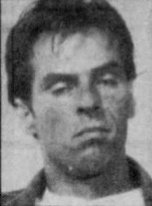
Richards was captured on December 20, 1878, near Mount Pleasant, Ohio. A local constable recognized him from a circulated description or wanted notice. Richards was found walking through a field in the company of two young women. Although he later claimed that he would have fought the officers if he had been alone, he surrendered without resistance because the women refused to leave him.
Authorities returned Richards to Nebraska, where he was placed in the Kearney jail before being transferred for trial. His calm behavior surprised reporters and officers. He spoke openly about several killings and displayed little apparent fear of conviction or execution.
Confession and Trial
In January 1879, Richards provided a lengthy confession in which he admitted killing nine people. He described the unidentified travelers, the Iowa victim, Gemge, Mary Harlson and her three children, and Peter Anderson. Some later accounts suspected him of as many as twelve murders, but the evidence for additional victims remained uncertain.
Richards attempted to portray several killings as acts of self-defense. His descriptions, however, revealed calculated efforts to rob victims, prevent witnesses from speaking and eliminate people who interfered with him. The second traveler was shot from behind because Richards feared his questions. The Iowa victim was killed to conceal a counterfeit-money fraud. The Harlson family was murdered after Richards prepared their grave in advance. These circumstances contradicted his repeated efforts to present himself as a man forced into violence.
Richards was prosecuted in Minden, Nebraska. During his trial for the murder of Peter Anderson, seven witnesses presented evidence about Anderson’s disappearance and the discovery of his body. Richards testified and admitted striking Anderson repeatedly with a hammer. A jury convicted him of first-degree murder in January 1879. He was also held legally responsible for the four Harlson murders, giving him five confirmed murder convictions, although his confession covered nine victims.
Execution
Stephen Dee Richards was sentenced to death and executed by hanging on April 26, 1879, in the courthouse square at Minden, Nebraska. He was 23 years old. He became the first person executed under the authority of the State of Nebraska. Contemporary reports described him as composed and largely indifferent as the date of his execution approached.
Richards’s case became widely known because of the number of victims, the murder of an entire family and his unusually detailed confession. Newspapers called him the “Nebraska Fiend” and the “Ohio Monster.” His polite appearance and calm manner stood in sharp contrast to the calculated violence he described. That contrast helped him gain the confidence of travelers, neighbors and families before turning against them.
Historical Legacy
Richards is commonly regarded as Nebraska’s first documented serial killer. Six victims—the four members of the Harlson family, Peter Anderson and Gemge—are generally treated as identified or historically documented victims connected to him. Three additional unidentified men were described in his confession. Because Richards was the principal source for several of the early cases, some details cannot be independently confirmed, and the exact dates of the unidentified victims’ deaths remain unknown.
His crimes reflected the dangers of the developing American frontier, where isolated settlements, limited communication and the frequent movement of strangers made disappearances difficult to investigate. Richards exploited those conditions by changing names, traveling between states, stealing horses and inventing explanations for missing people. His capture ended a brief but exceptionally violent period in which robbery, concealment and the elimination of witnesses repeatedly led him to murder.