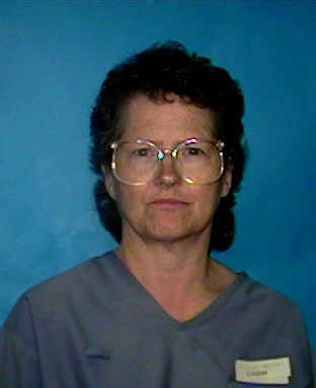
Henry Lee Lucas: Murderer, Drifter, and the “Confession Killer”
Overview
Henry Lee Lucas became one of the most notorious figures in American criminal history after claiming responsibility for hundreds of murders across the United States. During the early 1980s, investigators from numerous jurisdictions traveled to Texas to question him about their unsolved cases. Lucas offered detailed-sounding accounts of killings involving women, men, and children, and police departments initially credited him with solving more than 200 homicides. He was frequently described as the most prolific serial killer in American history.
That reputation eventually collapsed. Travel records, employment documents, jail records, witness statements, and later DNA testing proved that Lucas could not have committed many of the murders he confessed to. In some cases, he was demonstrably hundreds or thousands of miles away when the victims were killed. Investigators also allowed him to study photographs, reports, maps, and other case information before or during interviews, enabling him to repeat facts that appeared to demonstrate inside knowledge.
Lucas was unquestionably a murderer, but the true number of his victims remains far smaller than his extraordinary claims suggested. The strongest evidence connects him to three killings: his mother, Nellie Viola Lucas; 15-year-old Frieda Lorraine “Becky” Powell; and 80-year-old Kate Rich. He was convicted of additional murders, but many of those convictions rested heavily on confessions that were later discredited or seriously questioned.
Early Life and Criminal Background
Henry Lee Lucas was born on August 23, 1936, near Blacksburg, Virginia. Accounts of his childhood describe severe poverty, instability, neglect, and physical abuse. Lucas later claimed that his mother, Nellie Viola Lucas, regularly beat and humiliated him. He lost an eye during childhood after an injury was left untreated, and he struggled socially and academically.
As a teenager and young adult, Lucas accumulated arrests for offenses that included burglary, theft, and automobile-related crimes. He spent time in juvenile institutions and prisons before committing his first proven murder. His pattern of drifting, stealing vehicles, using false identities, and moving between states later made it difficult for investigators to reconstruct his whereabouts.
The Murder of Nellie Viola Lucas
On January 11, 1960, Lucas killed his mother, Nellie Viola Lucas, in Tecumseh, Michigan. She had traveled from Virginia to visit him and reportedly wanted him to return home with her. After drinking together, the two began arguing inside the residence where Lucas was staying.
Lucas attacked his mother during the confrontation, stabbing her in the neck. He later maintained that the stabbing was not intentional and claimed that she fell after he struck her, but the evidence established that he caused her fatal injuries. He fled after the attack and was arrested shortly afterward.
Lucas was convicted of second-degree murder and sentenced to a prison term of 20 to 40 years. He also spent time in a state psychiatric hospital, where he underwent treatment before returning to prison. Despite the length of his sentence, he was released in June 1970 after serving approximately ten years.
Life After Prison
Following his release, Lucas returned to a transient lifestyle. He traveled through numerous states, worked temporary jobs, committed thefts, and lived periodically with relatives or acquaintances. During the 1970s, he became closely associated with Ottis Elwood Toole, another violent drifter who later confessed to numerous murders. Like Lucas, Toole gave investigators many statements that proved inconsistent or unreliable.
Lucas eventually became involved with Toole’s teenage niece, Frieda Lorraine Powell, who commonly used the name Becky. Lucas presented Becky as his wife even though she was only 15 years old. The pair traveled together and stayed at religious communities, shelters, and private residences. Their relationship became increasingly unstable, particularly after Becky expressed a desire to leave Lucas and return to her family.
The Murder of Frieda Lorraine “Becky” Powell
Frieda Lorraine “Becky” Powell was killed on or about August 23 or August 24, 1982, in Denton County, Texas. The exact date has been reported differently in surviving records, but the killing occurred in late August 1982. Becky was 15 years old.
Lucas later said that he and Becky argued while traveling through the area. According to his confession, she told him that she wanted to leave and return to Florida. The argument escalated, and Lucas stabbed her with a knife. He then concealed her body near a drainage area or field.
Becky remained missing until Lucas led investigators to the location in June 1983. Skeletal remains and personal items were recovered, and the evidence was consistent with his account. His ability to direct authorities to the secluded location gave his confession considerably more credibility than the hundreds of claims he made later.
The Murder of Kate Rich
Kate Rich, an 80-year-old resident of Ringgold, Texas, disappeared on September 16, 1982. Rich had befriended Lucas and had previously offered him assistance. Lucas later admitted that he killed her after returning to her home.
According to his account, Lucas stabbed Rich, removed her body from the residence, and attempted to destroy or conceal her remains. He stole property and her automobile after the killing. Investigators eventually recovered human remains and evidence connected to Rich at locations associated with Lucas.
Lucas provided information about the disposal of Rich’s body and led authorities to relevant evidence. Together with the discovery of Becky Powell’s remains, the Rich investigation established that Lucas had committed at least two murders after his release from prison.
Arrest and the Beginning of the Confessions
Lucas was arrested in Texas on June 11, 1983, initially for unlawfully possessing a firearm. Investigators were already examining the disappearances of Becky Powell and Kate Rich. While in custody, Lucas confessed to both killings and began claiming that he had committed many additional murders.
The number of confessions grew rapidly. Lucas first spoke of dozens of victims, then hundreds. At various times, he claimed responsibility for approximately 600 killings. He described traveling across the country with Ottis Toole and murdering strangers along highways, at campsites, in abandoned buildings, and in isolated rural areas.
The Texas Department of Public Safety formed a special task force to coordinate inquiries from law-enforcement agencies throughout the country. Officers brought Lucas their unsolved files, and Lucas regularly confessed. He was transported to crime scenes, treated to restaurant meals, given cigarettes and milkshakes, and allowed unusual privileges while assisting investigators.
How the Confession System Failed
Lucas learned to read the reactions of detectives. When he supplied an incorrect answer, investigators sometimes gave him another opportunity or revealed additional information. He was occasionally shown crime-scene photographs, victim photographs, investigative reports, and maps. After absorbing those details, he could repeat them in a later statement and appear to possess knowledge known only to the killer.
Many interviews were not fully recorded, making it impossible to determine how much information investigators supplied before Lucas gave his answers. Departments under pressure to solve old murders were able to clear cases by accepting his confessions. Lucas, meanwhile, received attention, improved living conditions, travel, food, and temporary relief from the ordinary restrictions of incarceration.
Journalists and skeptical investigators eventually compared his claims with documented facts. They discovered cases in which Lucas was incarcerated, working at a documented job, receiving medical treatment, or living far from the crime scene when the murder occurred. Some of the travel schedules required him to cover impossible distances within extremely short periods.
A 1986 investigation conducted under Texas Attorney General Jim Mattox concluded that Lucas had carried out an enormous confession hoax. The report found little reliable physical evidence connecting him to the great majority of the crimes he claimed. Numerous cases once marked as solved had to be reopened, leaving victims’ families to confront the possibility that the actual killers had never been identified.
Victims Strongly or Directly Connected to Lucas
- Nellie Viola Lucas — January 11, 1960 — Tecumseh, Michigan: Lucas stabbed his 71-year-old mother during an argument. He was convicted of second-degree murder and served approximately ten years in prison and a psychiatric institution.
- Frieda Lorraine “Becky” Powell — approximately August 23–24, 1982 — Denton County, Texas: Lucas killed the 15-year-old after she said that she wanted to leave him. He later directed investigators to the location of her remains.
- Kate Rich — September 16, 1982 — Ringgold, Texas: Lucas killed the 80-year-old woman, stole her property and vehicle, and concealed or attempted to destroy her remains. Evidence recovered through his information strongly connected him to the crime.
Other Murder Convictions and Disputed Attributions
Lucas was convicted in connection with additional killings, but those cases must be separated from the three murders most reliably linked to him. Several convictions were obtained through guilty pleas or confessions rather than independent forensic evidence. Later investigations demonstrated that Lucas routinely admitted to crimes he did not commit.
Among the victims whose deaths were legally attributed to Lucas at various times were Linda Jane Phillips, an unidentified woman once known as “Orange Socks,” and several other women killed in Texas and elsewhere. The accuracy of many of those attributions remains doubtful. Some cases have been reopened, while DNA testing has eliminated Lucas as the killer in a number of murders formerly credited to him.
- Linda Jane Phillips — August 8–10, 1970 — Richardson and Kaufman County, Texas: The 26-year-old schoolteacher disappeared on August 8, and her body was discovered on August 10. Lucas confessed and was convicted, but the reliability of the confession has remained disputed because of his extensive history of false admissions.
- Debra Louise Jackson, formerly known as “Orange Socks” — body discovered October 31, 1979 — near Georgetown, Williamson County, Texas: Lucas was sentenced to death for this murder. Evidence later showed that he was probably working in Florida at the time, and there was no physical evidence placing him at the crime scene. Jackson was identified through genetic genealogy in 2019. Lucas’s conviction in this case is widely regarded as unreliable.
- Kathy Ann Smith — body discovered June 21, 1979 — near Elgin, Bastrop County, Texas: The 22-year-old was unidentified for more than four decades. Lucas confessed to killing her, but the confession did not conclusively establish his guilt. Smith was identified in 2023, and authorities continued to describe Lucas as a suspect rather than treating the case as definitively solved.
The “Orange Socks” Death Sentence
The most consequential of Lucas’s disputed confessions involved a young woman whose body was found beside Interstate 35 near Georgetown, Texas, on October 31, 1979. She had been strangled and was initially known only by the orange socks she was wearing. In 2019, she was identified as 23-year-old Debra Louise Jackson.
Lucas confessed to the murder and was convicted of capital murder in 1984. He received a death sentence even though no physical evidence connected him to Jackson. Work and travel records reportedly placed him in Florida around the time of the killing, making his presence in Texas highly improbable.
As Lucas’s execution date approached, doubts about the conviction became overwhelming. In June 1998, Texas Governor George W. Bush commuted the death sentence to life imprisonment. It was the only death sentence Bush commuted during his time as governor. The decision did not free Lucas because he was already serving multiple lengthy sentences for other convictions.
Recantations and Changing Stories
Lucas repeatedly changed his account of how many people he had killed. He confessed, recanted, confessed again, and sometimes accused investigators of supplying him with information. At one point, he acknowledged that he had killed only his mother, Becky Powell, and Kate Rich. At other times, he continued to insist that some of his additional confessions were genuine.
His contradictory behavior made the task of separating fact from fabrication extremely difficult. It is possible that Lucas committed crimes beyond the three most strongly supported murders, particularly during his years as a drifter. However, investigators cannot responsibly treat his confession alone as proof.
The Lucas scandal demonstrated that a confession can sound detailed and convincing while still being false. It also revealed the danger of measuring investigative success by the number of cases cleared rather than by the quality of the evidence supporting those clearances.
Relationship with Ottis Toole
Lucas’s association with Ottis Toole further complicated the investigation. The men traveled together during portions of the 1970s and early 1980s, and both claimed that they participated in numerous murders. Their stories frequently shifted and contradicted one another.
Toole was a convicted murderer and violent offender, but he also became known for unreliable confessions. He famously confessed to the 1981 abduction and murder of six-year-old Adam Walsh in Florida, later recanted, and died before he could be prosecuted. Florida authorities ultimately concluded that Toole was responsible for Walsh’s death, although important physical evidence had been lost.
Lucas sometimes claimed that he and Toole belonged to a nationwide organization that carried out murders on command. No credible evidence established the existence of such a group. The stories appeared to be another extension of Lucas’s effort to enlarge his criminal identity and maintain the attention of investigators.
Imprisonment and Death
After the nationwide confession operation disintegrated, Lucas remained imprisoned in Texas. Although his death sentence was commuted, his other sentences ensured that he would never be released. He spent his final years in the custody of the Texas Department of Criminal Justice.
Henry Lee Lucas died in prison on March 12, 2001, at the age of 64. His death was attributed to natural causes, including heart-related illness. He left behind a criminal record filled with proven violence, disputed convictions, fabricated stories, and hundreds of investigative files clouded by false information.
Legacy
Henry Lee Lucas is remembered not simply as a serial killer but as the central figure in one of the greatest investigative failures in modern American criminal justice. He exploited a system in which detectives were eager to close cases and authorities failed to demand independent corroboration for his statements.
The consequences extended far beyond Lucas himself. Real murders went uninvestigated after cases were falsely declared solved. Some actual offenders remained free, while families were given explanations that later proved untrue. Decades afterward, police agencies have continued using DNA analysis and genetic genealogy to identify victims, eliminate Lucas, and search for the people who truly committed the crimes.
Lucas was a confirmed murderer whose acts against Nellie Viola Lucas, Becky Powell, and Kate Rich demonstrated his capacity for lethal violence. Nevertheless, describing every victim once attributed to him as one of his murders would repeat the same mistake made during the confession scandal. His case remains a warning that even the confession of a known killer must be supported by timelines, physical evidence, witness testimony, and facts obtained independently of the suspect.