Joseph LaPage: The “French Monster”
Early Life and Violent History
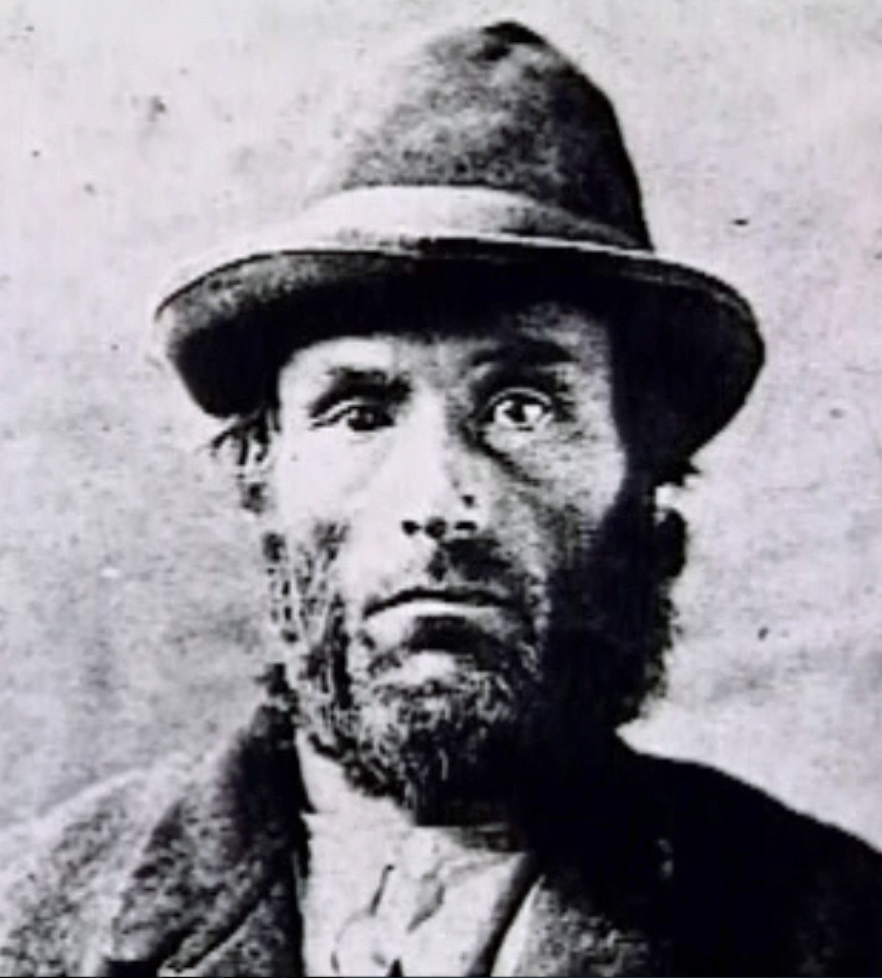
Joseph LaPage was a 19th-century Canadian-American murderer whose crimes horrified communities in Quebec, Vermont, and New Hampshire. Born Joseph Paget in Lower Canada around 1838, he was also identified in historical records under several variations of his name, including Joseph La Pagette, Joseph Paige, Joseph Paize, and Joseph Le Paize. Newspapers later branded him the “French Monster” because of the extreme violence directed at his victims.
LaPage married as a young man and had several children, but accounts of his family life described him as abusive and dangerously unstable. Before the murders for which he became infamous, he allegedly assaulted his wife, mistreated his eldest daughter, and nearly killed his sister-in-law, Julienne Rousse. After being arrested for attacking Rousse, he reportedly struck an officer and escaped. He eventually crossed into the United States and settled with his family near St. Albans, Vermont.
LaPage worked intermittently as a farm laborer, woodcutter, and mill worker. His movements between isolated rural communities gave him access to wooded paths and sparsely traveled roads. These secluded areas became important features in the murders later connected to him. His known and suspected victims were women or teenage girls traveling without protection, and his attacks were marked by sexual violence, severe beating, and mutilation.
Victims Attributed to Joseph LaPage
- Mrs. George Fountie — October 12, 1867 — Saint-Alexandre, Quebec, Canada: Mrs. Fountie and her 16-year-old daughter, Minnie, disappeared while returning home from the village of Saint-Alexandre. Their mutilated bodies were discovered beneath brush in a pasture near the road. LaPage was not charged with these killings, and the accusation against him emerged only after his execution. Witnesses reportedly remembered him speaking offensively to the women shortly before they vanished and then walking toward the area where their bodies were found.
- Minnie Fountie — October 12, 1867 — Saint-Alexandre, Quebec, Canada: Sixteen-year-old Minnie was killed alongside her mother. Historical reports stated that she had been sexually assaulted and mutilated. Another man was initially arrested but released after investigators determined that he had not been near the crime scene. LaPage’s presence in the village and his reported confrontation with the women caused the murders to be attributed to him years later, although his responsibility was never established in court.
- Marietta N. Ball — July 24, 1874 — St. Albans, Vermont: Marietta Ball, a 20-year-old schoolteacher, disappeared while walking along a wooded route from her school district toward the home of friends. Searchers found her body in the woods after she failed to arrive. She had been sexually assaulted, strangled, and savagely beaten about the head. LaPage was questioned and briefly detained because he worked near her route and had scratches on his face, but investigators lacked enough evidence to prosecute him. Shortly before his execution, LaPage confessed that he had killed Ball.
- Josephine Ann “Josie” Langmaid — October 4, 1875 — Pembroke, New Hampshire: Seventeen-year-old Josie Langmaid was attacked while walking from her family’s home to Pembroke Academy. Her body was discovered in woods near Academy Road, while her severed head was found farther away the following morning. She had been sexually assaulted, beaten, and decapitated. Evidence and witness accounts led authorities to LaPage, who was arrested on October 14, 1875. He was tried, convicted, and ultimately executed for her murder.
The Murder of Marietta Ball
Marietta Ball was a young teacher living and working near St. Albans, Vermont. On July 24, 1874, she left her school in the afternoon and began walking through a wooded area toward the residence of Foster Page, where she often spent weekends. Because her routine sometimes varied, her absence did not immediately create alarm. When it became clear that she had reached neither her boarding house nor her intended destination, local residents organized a search.
Ball’s body was found beside the path through the woods. The violence of the scene shocked St. Albans. Her head had been battered, and investigators determined that she had been sexually attacked. A large reward was offered, and suspicion shifted among several men. At one point, rumors implicated a member of a prominent Vermont family, but those accusations were publicly challenged and never supported by reliable evidence.
LaPage attracted attention because he had worked in a field near Ball’s regular route and had reportedly shown unusual interest in her movements. Around the time of the murder, witnesses noticed scratches on his face. He also made inquiries about train schedules, behavior that authorities interpreted as a possible effort to leave the area. Nevertheless, the evidence was circumstantial, and LaPage was released without being tried.
Years later, as he awaited execution in New Hampshire, LaPage admitted killing both Ball and Josie Langmaid. Historical accounts state that he provided descriptions or drawings showing the locations of the crimes. Because his confession came after the Vermont investigation had ended, he was never prosecuted for Ball’s death. His admission, however, removed much of the doubt that had surrounded his involvement.
The Murder of Josie Langmaid
By 1875, LaPage had moved to the Suncook area of New Hampshire and found employment connected to a mill in Pembroke. While working there, he reportedly asked questions about a young female student who traveled along an old road to Pembroke Academy. On the morning of October 4, he waited near the route. The student he may originally have intended to attack obtained a ride, leaving 17-year-old Josie Langmaid to walk along the road alone.
Josie left her family’s home that morning but never arrived at school. Her disappearance quickly alarmed her relatives and the surrounding community. Search parties entered the fields and woods along her route. Late that night, they discovered her mutilated and partially unclothed body in a wooded area near the road. Her head was missing. The following morning, searchers found it approximately half a mile from the place where her body had been left.
The crime caused panic and outrage throughout Pembroke and Suncook. Several innocent or weakly suspected men were briefly detained, and one local man was nearly attacked by an angry crowd. Investigators soon learned, however, that LaPage had been asking about the daily movements of female students. Authorities in Vermont also informed New Hampshire officials that he had previously been suspected in Marietta Ball’s murder.
Physical and circumstantial evidence strengthened the case against him. LaPage had unexplained scratches on his neck and face. He offered inconsistent explanations for his whereabouts and reportedly claimed that the marks had been caused by poison ivy. Investigators examined his clothing and footwear, and testimony connected him to the area where Josie had been attacked. His prior violent conduct could not always be presented directly to the jury, but it played an important role in identifying him as the principal suspect.
Arrest, Trials, and Conviction
Joseph LaPage was arrested on October 14, 1875, ten days after Josie’s murder. Prosecutors assembled a case based on his movements, his inquiries about young women traveling the road, the scratches found on his body, physical evidence, and his suspicious behavior following the killing. He denied responsibility and attempted to distance himself from both the Pembroke crime and the earlier Vermont murder.
LaPage was convicted of first-degree murder and sentenced to death. The initial judgment did not immediately end the case. His attorneys challenged the proceedings, and the first conviction was overturned or set aside because of legal concerns surrounding the trial. A second trial was held, giving LaPage another opportunity to defend himself. The second jury also found him guilty, and the death sentence was reinstated.
The trials received extensive newspaper coverage. Reporters described LaPage as sullen and difficult to understand, partly because of his limited command of English. His defense questioned the reliability of the circumstantial evidence and attempted to show that the prosecution had not directly witnessed the murder. The jurors nevertheless concluded that the combined evidence established his guilt beyond a reasonable doubt.
Confessions and Additional Suspected Murders
While confined at the New Hampshire State Prison in Concord, LaPage received visits from clergy members, officials, and newspaper correspondents. As his execution approached, he confessed to killing Josie Langmaid and Marietta Ball. His statements were brief and reportedly delivered in broken English, but he clearly acknowledged responsibility for the two schoolteacher and student murders.
Several weeks after LaPage’s execution, reports from Quebec connected him to the October 12, 1867 murders of Mrs. George Fountie and her daughter Minnie. The women had visited the village of Saint-Alexandre and were returning home when they disappeared. Their bodies were found hidden under brush near a rural path. Minnie had been sexually assaulted, and both victims had suffered terrible injuries.
Witnesses later claimed that LaPage had confronted the mother and daughter shortly before their deaths. After they threatened to report his insulting behavior, he allegedly made a threatening remark and walked toward the route they would use to return home. Because LaPage was already dead when these reports received wider attention, he could neither be questioned nor prosecuted. The Fountie murders therefore remain historical attributions rather than judicially proven crimes.
Execution and Legacy
Joseph LaPage was hanged at the New Hampshire State Prison in Concord on March 15, 1878. He was approximately 39 or 40 years old. Witnesses described him as calm as he approached the scaffold accompanied by Catholic priests who recited prayers with him in French. After the death warrant was read, the trap was released, ending one of New England’s most notorious murder cases of the 19th century.
LaPage’s crimes occurred before the development of fingerprint identification, DNA testing, modern blood analysis, or systematic cooperation between police departments. Investigators depended on witness recollections, footprints, clothing, injuries, inconsistent statements, and reports carried between distant towns. His ability to move from Quebec to Vermont and then New Hampshire allowed him to escape sustained scrutiny until the murder of Josie Langmaid brought together information about his earlier conduct.
Although he was convicted only of killing Josie, his confession established his responsibility for Marietta Ball’s murder. The 1867 deaths of Mrs. Fountie and Minnie were linked to him through witness accounts and similarities in his later crimes, but those allegations were never tested in court. For this reason, LaPage is generally described as having two confirmed victims and two additional victims strongly attributed to him.
The murder of Josie Langmaid left a lasting mark on Pembroke. Memorial stones were erected near the places where her body and head were recovered, preserving the memory of the young student whose death finally ended LaPage’s freedom. His case remains an early example of serial murder spanning international and state boundaries, as well as a grim illustration of how an offender could exploit isolated roads, incomplete records, and limited communication between 19th-century law-enforcement agencies.