Edith Murray: The Suspected Cleveland Black Widow
A Mysterious Trail of Death and Insurance
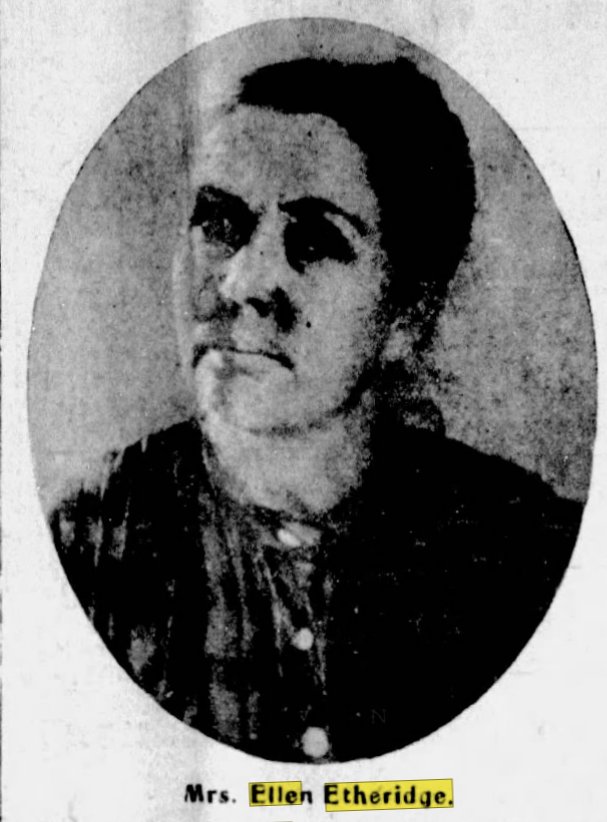
Edith Murray was an American woman suspected of poisoning as many as three husbands and causing the deaths of two of her children during a period extending from 1903 to 1921. Often referred to as the “Cleveland Black Widow,” Murray was never convicted of murder, and the surviving evidence did not conclusively establish that she intentionally killed anyone. Nevertheless, the repeated deaths of people close to her, the insurance policies associated with several of those deaths, and the discovery of arsenic in her final husband’s remains caused investigators to examine her life closely.
Much of Murray’s early history remains uncertain. Even the names and precise death dates of several alleged victims were not preserved in readily available public records. Contemporary investigators reportedly connected her to suspicious deaths in both Pittsburgh, Pennsylvania, and Cleveland, Ohio. Her case became especially troubling because apparently healthy husbands seemed to die soon after insurance coverage was obtained, while Murray was repeatedly described as being unusually interested in the money that could be collected after a death.
The Deaths of Her Two Daughters
The first known tragedy associated with Murray occurred in Pittsburgh in 1903. At the time, she was living with her first husband and their two young daughters. Both children reportedly died after consuming poisonous tablets that had been left unsecured inside the home. Authorities treated the deaths as an accident, and Murray was not accused or arrested.
The names of the two girls and their exact dates of death have not been reliably established in available accounts. Their deaths later received renewed attention because of the additional fatalities that followed Murray throughout her adult life. Investigators looking back at the 1903 incident questioned whether the children had truly taken the tablets accidentally, but no physical evidence was available to prove otherwise. Murray divorced her first husband sometime after the deaths.
A Second Marriage and an Interest in Insurance
Murray next married a Pittsburgh pharmacist. The couple reportedly had two daughters, one born in 1907 and the other in 1908. This husband did not die under suspicious circumstances, and the marriage eventually ended in divorce during the period surrounding the First World War.
Years later, the former husband reportedly told investigators that Murray displayed what he regarded as an unhealthy fascination with insurance. He claimed that she was strongly interested in obtaining policies and collecting money from them. His statements did not prove that she committed a crime, but they became important when authorities began examining the deaths of her later husbands.
The Sudden Death of Her Third Husband
Murray married for a third time in Pittsburgh before relocating with her husband and daughters to Cleveland. Her third husband obtained a well-paying position that reportedly included a life insurance policy worth approximately $1,200. According to later accounts, the policy had been in effect for only about a week when he suddenly collapsed at work and died.
The man had reportedly appeared healthy before his collapse. His name and exact date of death have not been conclusively established in accessible records, making it impossible to provide a verified day or month. No murder charge resulted from the death, and there is no known surviving toxicological evidence demonstrating that he was poisoned. However, the timing of his death in relation to the insurance policy later contributed to suspicions surrounding Murray.
The Death of a Wealthy Husband in 1919
Less than a year after her third husband’s death, Murray reportedly married a wealthy man. Soon after the wedding, his health began to deteriorate rapidly. He died in May 1919, and Murray reportedly received approximately $5,000 from his life insurance policy.
The identity of this husband and the precise day of his death are not consistently documented in available accounts. Investigators later viewed the circumstances as suspicious because the man became ill after marrying Murray and because she financially benefited from his death. No surviving evidence established the exact nature of his illness, and Murray was never convicted in connection with the case.
Marriage to John Joseph Murray
Approximately seven months after the 1919 death, Murray became involved with John Joseph Murray, a former soldier who had returned from military service following the First World War. The couple married and lived at 1907 East 40th Street in Cleveland. John carried government-provided veterans’ insurance reportedly valued at $5,000.
According to later testimony attributed to Murray’s friend Jessie Burns, Edith made disturbing comments about her husband. She allegedly said that she wished John would die so that she could enjoy parties and other pleasures. Burns further claimed that Edith eventually became more explicit, allegedly saying that she would like to get rid of John and give him arsenic.
Such statements were accusations reported after John’s death and were never tested through a completed murder prosecution. Murray maintained control over the preparation of her husband’s food and reportedly became angry when he failed to finish meals she had cooked. She also allegedly attempted to persuade him to join an organization that offered additional death benefits.
Shortly before John died, Murray reportedly tried to increase his veterans’ life insurance from $5,000 to $10,000. The attempt was unsuccessful. John, who had appeared healthy shortly before his final illness, died on May 24, 1921, in Cleveland.
Arsenic Found After John Murray’s Death
John Murray’s death attracted suspicion, leading to an examination of his remains. Investigators reportedly found traces of arsenic in his stomach and internal organs. Arsenic was a well-known poison, but it was also used in certain medicines during that era. John’s physician stated that he had prescribed medication containing arsenic, creating uncertainty about the source of the substance.
The amount detected was reportedly considered too small to establish that John had received a fatal dose. Investigators were therefore unable to prove that the arsenic caused his death or that Edith had administered it. Although the discovery strengthened suspicions, it did not provide sufficient evidence to support a murder conviction.
Spending and a New Engagement
Following John’s death, Murray reportedly changed her lifestyle rapidly. Within days, she moved into a more expensive apartment and purchased a new automobile. She subsequently became engaged to another man identified as L. P. Farrell.
Murray and Farrell reportedly planned to marry on April 24, 1922. Before the wedding could occur, however, Murray was arrested on an unrelated larceny charge. Her detention gave Cleveland authorities an opportunity to investigate the deaths connected to her past.
The 1922 Investigation
In May 1922, police publicly disclosed that they were investigating Murray in connection with the deaths of several family members. George Voerg, a Cleveland city chemist, examined evidence from John Murray’s body. Although an initial examination reportedly produced little of significance, further testing detected arsenic in John’s organs.
The findings remained inconclusive because the concentration was not considered sufficient to prove fatal poisoning, and the arsenic-containing medication provided an alternative explanation. Investigators also reviewed the deaths of Murray’s previous husbands and children, but the passage of time made it difficult to obtain reliable physical evidence.
Authorities could point to an alarming pattern, alleged statements about arsenic, repeated insurance payments and the sudden deaths of apparently healthy men. What they could not establish was direct proof showing that Murray had administered poison to a particular victim. She was released sometime after May 10, 1922, and no murder trial followed.
Known and Suspected Victims
- Two unnamed daughters — Pittsburgh, Pennsylvania — 1903: Murray’s young daughters died after reportedly swallowing poisonous tablets that had been left within their reach. Their exact names and dates of death have not been reliably established. The deaths were originally classified as accidental.
- Unnamed third husband — Cleveland, Ohio — date not reliably established: He reportedly collapsed and died at work approximately one week after a $1,200 life insurance policy connected to his employment took effect. He had reportedly been in good health before his death.
- Unnamed wealthy husband — believed to have died in Cleveland, Ohio — May 1919: His health reportedly declined soon after marrying Murray. Following his death, she collected approximately $5,000 in insurance proceeds. The exact date and his full name have not been conclusively verified.
- John Joseph Murray — Cleveland, Ohio — May 24, 1921: Murray’s final husband was a former soldier with a veterans’ insurance policy. Arsenic was detected in his remains, but investigators could not determine whether it came from poison or prescribed medication. Edith Murray was never convicted of causing his death.
A Suspected Serial Killer Who Was Never Convicted
Edith Murray is commonly described as a suspected serial killer rather than a proven murderer. No court determined that she killed her husbands or children, and several of the allegations rested on circumstantial evidence, statements attributed to acquaintances and retrospective suspicion. Her possible victim count is therefore generally presented as ranging from zero to five.
The pattern nevertheless remains disturbing. Two children died from poison in 1903. A husband died shortly after obtaining an insurance benefit. Another husband became ill and died in May 1919, leaving Murray a substantial payment. John Joseph Murray then died in 1921 after his wife allegedly discussed arsenic and attempted to increase his insurance coverage.
After her release, Murray returned to Pennsylvania. She continued to deny responsibility for the suspicious deaths and apparently lived for nearly another half-century. She died in 1969 and was reportedly buried beside John Joseph Murray in Lake View Cemetery in Cleveland.
Because the investigation ended without a prosecution, the complete truth may never be known. Edith Murray may have been an innocent woman surrounded by an extraordinary series of tragedies, or she may have been a calculated poisoner who used marriage and insurance to obtain money. The lack of preserved evidence, unidentified alleged victims and inconclusive arsenic findings left the case unresolved, securing Murray’s place in criminal history as the mysterious suspected “Cleveland Black Widow.”