Paul Allen Perez: The Murder of Five Infant Children
Overview
Paul Allen Perez is a California serial child murderer whose crimes involved five of his own infant children over approximately nine years. The children were born between 1992 and 2001 in Merced and Fresno, California. Each died or disappeared before reaching six months of age. Because several of the infants’ bodies were never recovered, the case remained concealed for decades and eventually depended upon DNA analysis, family testimony, medical evidence and the repeated disappearance of Perez’s newborn children.
Perez lived a transient existence throughout Central and Northern California. Prosecutors portrayed the children’s deaths as part of an unmistakable pattern rather than a series of unrelated tragedies. Five babies born to the same parents vanished or died in infancy, some without official burial records or credible explanations. Two pairs of children were even given nearly identical names, further complicating efforts to reconstruct the family’s history.
The case began to unravel after fishermen discovered the decomposed body of an unidentified baby in Yolo County in 2007. More than twelve years later, advances in DNA technology identified the child as one of Perez’s sons. That identification led investigators to four additional infant siblings who were known or believed to have died under suspicious circumstances.
The Victims
Kato Allen Perez — died October 21, 1992, in Sacramento, California: Kato was born in Merced in 1992 and died while still an infant. His mother later testified that she heard Paul Perez striking the baby. Kato’s death was recorded in California, although the full circumstances were not publicly recognized as part of a serial murder case until decades later.
Mika Alena Perez — died in 1996, exact date and location not publicly established: Mika was born on November 2, 1995, in Merced, California. She disappeared or died before reaching six months of age. Her remains have not been located. Investigators ultimately concluded that she was one of the children killed during Perez’s pattern of infant abuse and violence.
Nikko Lee Perez — died in late 1996 or early 1997, exact date unknown: Nikko was born on November 8, 1996, in Fresno, California. He was approximately one to three months old when he was killed by blunt-force trauma. His body was wrapped in plastic and a Winnie-the-Pooh blanket, placed inside a metal cooler and weighed down with a brick and heavy metal objects. The cooler was later submerged in Conway Slough east of Woodland in Yolo County. His remains were discovered on March 29, 2007, but he was not identified until October 2019.
Nikko Lee Perez — died in 1997, exact date and location not publicly established: A second infant son was also named Nikko Lee Perez. He was born in Fresno in 1997 and died before reaching six months of age. His remains have never been recovered. The repeated use of the same name initially caused confusion when investigators reconstructed the identities and birth histories of the children.
Kato Krow Perez — died in 2001, exact date and location not publicly established: Kato Krow was born in Fresno in 2001. He was the last known infant victim in the series. Like Mika and the younger Nikko, he disappeared during infancy, and investigators have never recovered his remains.
The 1992 Death of Kato Allen Perez
The earliest known death occurred in 1992. Kato Allen Perez was only an infant when he died. During Perez’s later trial, the children’s mother, Yolanda Perez, described hearing Paul Perez hitting the baby. Her testimony placed Perez directly with the child during the fatal violence and established the beginning of a pattern that continued with four additional infants.
Kato’s body was recovered, making him one of only two children in the case whose remains were located. His death was documented on October 21, 1992, in Sacramento. However, the broader significance of his death was not understood until investigators connected him to the other missing or deceased Perez children many years later.
The Disappearance of Mika Alena Perez
Mika Alena Perez was born in Merced in November 1995. She lived for only a few months. There was no publicly documented natural death, funeral or confirmed burial that adequately explained what happened to her. By the time investigators examined the family in detail, Mika had been missing for decades.
Her body has never been found. Prosecutors nevertheless presented her death as part of the same course of conduct: an infant born to Paul and Yolanda Perez disappeared shortly after birth, while Perez exercised violence and control over the household. The absence of remains made the prosecution more difficult, but it did not erase the repeated pattern surrounding the children.
The Murder and Concealment of Nikko Lee Perez
The best-documented murder was that of Nikko Lee Perez, born on November 8, 1996. Nikko suffered fatal blunt-force injuries while approximately one to three months old. After his death, his body was concealed inside a metal cooler. He was wrapped in plastic and a child’s blanket and was still wearing a diaper.
The cooler contained a brick, pieces of metal and other heavy objects intended to keep it beneath the water. It was discarded in Conway Slough, a waterway east of Woodland and approximately twenty miles northwest of Sacramento. The method of concealment showed a deliberate effort to prevent the infant from being found and identified.
On March 29, 2007, fishermen pulled the cooler from the slough. When law-enforcement officers opened it, they discovered the badly decomposed remains of the baby. A homicide investigation began immediately, but the child’s identity was unknown. Investigators preserved biological evidence and entered the case into databases, yet conventional investigative methods produced no immediate answers.
The unidentified child remained without a name for approximately twelve years. DNA comparisons eventually established a biological connection between the infant and Paul Allen Perez. In October 2019, investigators confirmed that the baby was Nikko Lee Perez. The identification transformed an isolated cold case into an investigation of an entire family’s missing children.
Four Additional Infant Deaths
Once Nikko was identified, investigators examined birth records, death information and family relationships. They discovered that he had four infant siblings who were also dead or missing. All five children had been born between 1992 and 2001, and none survived beyond early infancy.
The recurring pattern was striking. The children were born in either Merced or Fresno. Several disappeared without recoverable remains. Two sons were named Nikko Lee Perez, while two others were named Kato. Authorities believed that the repeated names and the family’s unstable movements helped obscure the identities of the children and delayed recognition that several infants were missing.
Only the remains of Kato Allen Perez and the Nikko born in 1996 were recovered. Mika Alena Perez, the Nikko born in 1997 and Kato Krow Perez remain missing. Their precise places of death and the locations where their bodies were disposed of have not been publicly established.
Domestic Abuse and Intimidation
The investigation revealed a household dominated by violence, fear and coercive control. Yolanda Perez testified that Paul Perez physically abused her and threatened severe violence if she reported what happened to the children. She described threats against her life and said Perez claimed that he could break her neck.
Prosecutors argued that the mother’s fear helped explain why the infants’ deaths were not reported at the time. Her conduct was also scrutinized by authorities. She was initially exposed to serious criminal charges but ultimately pleaded guilty to five counts of child endangerment and agreed to testify against Perez.
The prosecution described Paul Perez as a violent offender whose conduct affected women, children, men and animals over several decades. At the time the infant murder charges were filed, he was already imprisoned for unrelated offenses and was a registered sex offender.
Arrest and Murder Charges
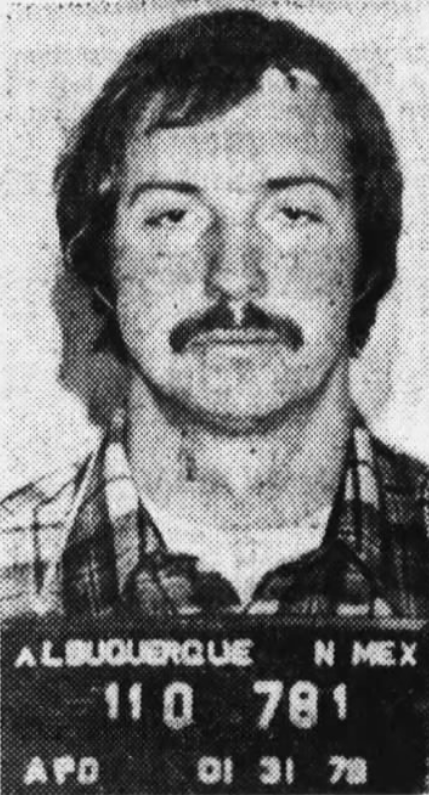
Paul Allen Perez was arrested in January 2020 while incarcerated at Kern Valley State Prison. His arrest came shortly before he was expected to be released on an unrelated sentence. Prosecutors charged him with five counts of first-degree murder, one for each infant, and alleged special circumstances involving multiple murders and torture.
The lack of bodies for three children created an unusually complex prosecution. Investigators had to establish that the infants were dead and that their deaths resulted from criminal acts despite the absence of recoverable remains. The case relied on the discovered bodies, forensic findings, DNA evidence, birth and death records, witness testimony and the statistical improbability that five infants in the same family had independently died or vanished under similar circumstances.
The Trial
During the trial, prosecutors described the deaths as deliberate acts committed against exceptionally vulnerable victims. They emphasized that a single unexplained infant death might be viewed as an accident, but five deaths in the same immediate family demonstrated intent and a continuing pattern.
Evidence concerning the 1996 Nikko was especially important. His documented blunt-force injuries and the elaborate concealment of his body proved that at least one of the children had unquestionably been murdered. Prosecutors then connected that killing to the earlier and later infant deaths through family history, testimony and Perez’s repeated conduct.
Perez pleaded not guilty. His defense challenged the sufficiency of the evidence, particularly in cases where no body had been recovered and no precise cause of death could be established. Jurors were therefore required to consider each child separately rather than treating all five deaths as automatically proven by the same evidence.
Conviction
On January 6, 2026, a Yolo County jury found Paul Allen Perez guilty of one count of first-degree murder and three counts of second-degree murder. He was also convicted of assaulting a child under eight with force likely to produce great bodily injury resulting in death.
Jurors found the multiple-murder enhancement to be true. They acquitted Perez of first-degree and second-degree murder in connection with one of the five children, although the jury did not reach a unanimous decision on a lesser involuntary-manslaughter allegation associated with that death. Despite that legal distinction, authorities continued to identify five infants as victims of Perez’s violence.
The verdict established Perez as the person criminally responsible for a series of infant killings that began in 1992 and continued through 2001. He faces life imprisonment without the possibility of parole. His sentencing was originally scheduled for April 6, 2026, but was postponed while his attorney pursued post-trial efforts seeking a new trial.
Significance of the DNA Investigation
The case was solved largely because investigators preserved evidence from the unidentified infant found in 2007. Traditional methods had failed to identify the child, but later advances in California’s DNA programs allowed forensic specialists to detect a biological kinship connection.
Once Paul Perez was identified as the infant’s father, investigators could search birth records and reconstruct the histories of the other children. The discovery demonstrated how identifying one unknown victim can expose crimes that had never been reported or properly investigated.
Nikko’s identification also restored a name to a baby who had been treated as an unidentified homicide victim for more than a decade. It allowed authorities to recognize that he was not an isolated victim but part of a series of killings involving four of his siblings.
Unanswered Questions
Important questions remain unresolved. Three of the infants’ bodies have never been found, and their exact dates, places and causes of death remain unknown. Authorities have not publicly disclosed where Perez may have disposed of their remains or whether evidence exists identifying specific burial or concealment sites.
The precise motive for the killings has also never been conclusively established. The evidence demonstrated repeated violence, domination and concealment, but no rational explanation could account for the systematic deaths of Perez’s newborn children.
The case of Paul Allen Perez remained hidden for decades because the victims were infants, several had no recoverable remains and the surviving adult witness lived under threats and abuse. The eventual convictions resulted from the convergence of preserved forensic evidence, modern DNA analysis and a detailed reconstruction of a family in which five babies died or disappeared before they had the opportunity to grow beyond infancy.