William Heirens: The Lipstick Killer
Overview
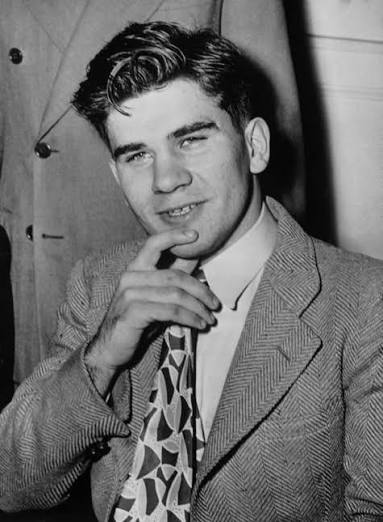
William George Heirens was a University of Chicago student whose 1946 conviction for three brutal murders horrified the city and earned him the grim moniker "The Lipstick Killer." At just 17 years old, he confessed to the killings of two women and a 6-year-old girl, crimes that had stoked widespread panic. The nickname stemmed from a chilling message scrawled in lipstick at one of the crime scenes: "For heavens sake catch me before I kill more I cannot control myself." Heirens pleaded guilty to avoid the electric chair and was sentenced to three consecutive life terms. He would spend the next 65 years in prison, becoming Illinois' longest-serving inmate. Almost immediately after his conviction, Heirens recanted his confession, claiming it was coerced through brutal interrogation tactics. He maintained his innocence until his death in 2012, leaving behind a legacy of enduring questions about his guilt and the methods used to close one of Chicago's most sensational cases.
Early Life and Background
William Heirens was born on November 15, 1928, in Evanston, Illinois, to George and Margaret Heirens. Raised in nearby Lincolnwood during the Great Depression, his family was poor, and his parents' constant arguments led a young William to wander the streets to escape the tension at home. He developed a habit of committing burglaries, later claiming he did it for the thrill and to release tension, not for monetary gain.
His criminal behavior started early. At age 13, he was arrested for carrying a loaded gun. A search of his home uncovered stolen weapons and other goods. He confessed to numerous burglaries and was sent to the Gibault School for wayward boys. After his release, he was arrested again and sentenced to three years at St. Bede Academy, where he paradoxically excelled as a student. His high test scores earned him early admission into a special program at the University of Chicago in 1945 at age 16. To pay his expenses, he worked as an usher but also resumed his life of crime, committing burglaries in neighborhoods near the university.
The Murder of Josephine Ross
On June 5, 1945, the first murder occurred. Josephine Ross, 43, was found dead in her apartment in the 4100 block of North Kenmore Avenue. She had been repeatedly stabbed, and her head was wrapped in a dress. Police believed she had surprised an intruder. Dark hairs were found clutched in her hand, suggesting a struggle with her attacker. The killer had washed her body and, in a bizarre act, placed adhesive tape over her wounds. The apartment was ransacked, but nothing of value was taken. The brutality of the crime, combined with the lack of a clear motive, left investigators with few leads.
The Murder of Frances Brown
Six months later, on December 10, 1945, the killer struck again. Frances Brown, a 33-year-old former Navy WAVE, was discovered murdered in her apartment at 3941 North Pine Grove Avenue. The scene was horrifically violent: she had been shot in the head, and a butcher knife was lodged in her neck. Like Josephine Ross, her body had been washed.
It was at this scene that the killer left his infamous calling card. Scrawled in Brown's lipstick on the wall was the desperate plea: "For heavens sake catch me before I kill more I cannot control myself." The message was sensationalized by the press, which dubbed the unknown assailant "The Lipstick Killer." The city of Chicago was gripped by fear as the police hunted for a murderer who seemed to be taunting them.
The Abduction and Murder of Suzanne Degnan
The killer's final act was his most shocking. On the morning of January 7, 1946, 6-year-old Suzanne Degnan was discovered missing from her first-floor bedroom in her family's Edgewater apartment at 5943 North Kenmore Avenue. A ladder was found outside her window, and a ransom note demanding $20,000 was left behind.
The hope that Suzanne was alive was quickly extinguished. That same day, police acting on a hunch or a tip began searching sewers and drains near the Degnan home. They soon made a series of gruesome discoveries: Suzanne's head, and later her torso and legs, were found in different locations. An autopsy revealed she had been strangled shortly after her abduction and then dismembered in a nearby basement laundry room. The brutal murder of a young child sent a wave of terror and outrage across Chicago, putting immense pressure on law enforcement to find the person responsible.
The Victims
- Josephine Ross, 43 — Found on June 5, 1945, in her Chicago apartment. She was a widow who was killed after apparently surprising a burglar in her home.
- Frances Brown, 33 — Discovered on December 10, 1945, in her apartment. A former member of the WAVES (Women Accepted for Volunteer Emergency Service) during World War II, she was working as a bookkeeper at the time of her death.
- Suzanne Degnan, 6 — Abducted from her bedroom and killed on January 7, 1946. A blue-eyed, blonde first-grader at Sacred Heart Academy, her shocking death terrified parents across the city.
Investigation and Capture
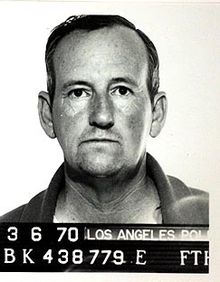
The investigation into the three murders was one of the largest in Chicago's history, with police questioning hundreds of suspects. The pressure was immense, particularly after the Degnan murder. Several individuals were arrested and subjected to intense interrogation, with one man, a 65-year-old janitor named Hector Verburgh, later successfully suing the police department for the brutal "third degree" tactics he endured.
The break in the case came on June 26, 1946. A 17-year-old William Heirens was caught in the act of committing a burglary. During a struggle with police, his gun misfired, and he was apprehended after an officer struck him over the head with flower pots, fracturing his skull. While Heirens was hospitalized, police linked his fingerprints to the Degnan ransom note. This, combined with his history as a prolific burglar in the areas where the murders occurred, made him the prime suspect.
Confession and Controversy
What followed Heirens's arrest is one of the most controversial aspects of the case. Heirens claimed he was interrogated for six consecutive days, during which he was beaten, starved, and not allowed to see his parents or a lawyer. Most controversially, investigators, without a warrant or consent, had doctors administer sodium pentothal—a so-called "truth serum"—to question him.
Authorities claimed that under the drug's influence, Heirens spoke of an alternate personality named "George Murman" who committed the murders. However, the transcript of this interrogation later vanished, and one of the doctors present would later state that Heirens never implicated himself. Faced with the threat of the electric chair and pressured by his own lawyers who believed the evidence was insurmountable, Heirens agreed to a plea bargain. In exchange for confessing to all three murders, prosecutors would recommend three consecutive life sentences. On September 4, 1946, Heirens pleaded guilty in court. That night, he attempted to hang himself in his cell.
Trial and Sentence
There was no trial. On September 4 and 5, 1946, William Heirens formally pleaded guilty to the three murders as well as numerous charges of burglary and assault as part of the plea agreement. The State's Attorney, William Tuohy, later admitted that without the confession and the cooperation of Heirens's defense team, he doubted he could have secured a conviction. The court accepted the guilty pleas and sentenced Heirens to three consecutive life terms, ensuring he would likely never be free. The day after his sentencing, he was transferred to Stateville Prison in Joliet to begin his sentence.
Aftermath and Legacy
Almost immediately after his conviction, William Heirens recanted his confession, a position he would maintain for the rest of his life. He argued that he only confessed to save himself from the death penalty and that he was the victim of a coerced confession and a public desperate for a conviction. Over the decades, his case became a cause célèbre for advocates questioning the fairness of his conviction. Even the daughter of his first victim, Josephine Ross, publicly stated she did not believe Heirens had killed her mother.
In prison, Heirens became a model inmate. In 1972, he became the first prisoner in Illinois history to earn a four-year college degree. He learned several trades and helped other inmates with their education. He was transferred from Stateville to the minimum-security Vienna Correctional Center and later to the Dixon Correctional Center.
Despite his record, Heirens was denied parole nearly 30 times. A petition for clemency filed in 2002 was also denied. On March 5, 2012, after being hospitalized for complications from diabetes, William Heirens died at the age of 83. He had spent over 65 years behind bars, the longest-serving prisoner in Illinois history. The case of "The Lipstick Killer" remains a dark and debated chapter in Chicago's criminal history, leaving a legacy of brutal crimes and lingering doubts about the man convicted of them.