Michael A. Johnson Jr.: Chicago Serial Murder Suspect
Overview
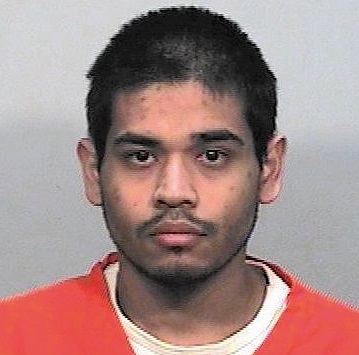
Michael A. Johnson Jr. is a Chicago murderer and convicted sexual predator whom prosecutors described as a serial killer after he was connected to a group of women who were strangled or violently assaulted on the city’s Far South Side. The crimes attributed to Johnson occurred between 2008 and 2010, primarily in and around the Roseland, West Pullman and surrounding South Side neighborhoods. Several victims were discovered naked or partially undressed inside abandoned buildings, vacant apartments or other isolated locations.
Johnson was accused of murdering four women and attacking at least two others who survived. The cases shared a number of disturbing characteristics. The women were approached in areas where prostitution and drug activity were common, taken to secluded places, sexually assaulted or beaten and strangled until they lost consciousness. Johnson allegedly abandoned them afterward without checking whether they were alive. Three of the homicide investigations were linked through DNA evidence, while a surviving victim’s identification led directly to his arrest.
Although Johnson was convicted in one murder case, that conviction was reversed by an Illinois appellate court in 2018. The court ruled that the evidence established that Johnson had sexual contact with the victim but did not prove beyond a reasonable doubt that he murdered her. He remained imprisoned, however, because of his lengthy sentence for the attempted murder, sexual assault and beating of a surviving woman. Johnson was charged in the other homicide cases, but publicly available court records do not establish convictions for those deaths.
Early Life and Background
Michael A. Johnson Jr. was born on September 5, 1985, and grew up on Chicago’s South Side. Accounts presented during later court proceedings described an unstable and impoverished childhood marked by neglect, physical abuse and limited education. Johnson was born with only two fingers on one hand, a noticeable physical characteristic that later became relevant when witnesses and investigators attempted to identify him.
As a young adult, Johnson reportedly struggled with unemployment and homelessness. He obtained work at a shipping company in 2008 but eventually lost the job. During this period, prosecutors alleged that Johnson began targeting women whose circumstances made them particularly vulnerable. Many of the women connected to the investigation struggled with addiction or supported themselves through sex work, making their disappearances less likely to receive immediate public attention.
The First Known Surviving Victim
During the summer of 2008, Johnson reportedly approached a 43-year-old woman at a gas station and arranged to pay her for sex. He brought her to a vacant or foreclosed residence where he had previously lived. When the woman refused one of his demands, Johnson became violent. He choked her until she lost consciousness, sexually assaulted her and threw her from a second-floor balcony.
Johnson then allegedly dragged the unconscious woman into an alley and abandoned her, apparently believing she would die. She survived despite suffering severe injuries, including a collapsed lung, liver damage and extensive permanent scarring. This attack was later presented as evidence of a developing pattern in which Johnson used strangulation, sexual violence and secluded properties to overpower women before leaving them for dead.
Victims and Alleged Victims
- Eureka Jackson — November 6, 2008 — 34 East 120th Street, Chicago: Jackson, 38, was found dead inside a boarded-up or abandoned building near the West Pullman neighborhood. She had been strangled. Investigators reported that clothing had been tied around her neck and secured to a closet-door handle. Johnson was later charged in connection with her death after forensic evidence allegedly linked him to the case. No publicly documented murder conviction against Johnson for Jackson’s death has been established.
- Leslie Brown — January 11, 2010 — West 119th Street, Chicago: Brown, 29, was last seen alive shortly after midnight walking toward 119th Street. Later that day, her body was discovered in a pile of debris inside an abandoned apartment. She was wearing only socks, and her arms and legs were spread apart. An autopsy determined that she had been strangled. DNA matching Johnson was recovered from her body. Johnson was convicted of her murder and sexual assault in 2015 and sentenced to 100 years, but the conviction and sentence were reversed on October 5, 2018, because the appellate court found the evidence legally insufficient to prove that he killed or assaulted her.
- Siobhan “Shay” Hampton — March 2010 — Far South Side of Chicago: Hampton, 30, was found dead in an abandoned South Side location near a restaurant. She had been strangled, and the circumstances of her death resembled those of Jackson and Brown. Investigators said forensic evidence connected Johnson to Hampton’s case. Johnson was charged with her murder, but an exact date of death was not consistently established in the available public reporting, and no publicly documented conviction for Hampton’s death has been confirmed.
- Lutelda Hudson — May 2010 — Vacant building on Chicago’s Far South Side: Hudson, 29, was discovered strangled inside a vacant property. Her death drew investigators’ attention because of its similarities to the other cases involving women found in abandoned South Side buildings. Johnson was investigated in connection with Hudson’s death and was widely identified as the suspected perpetrator. The exact date of Hudson’s death is not consistently reported in reliable public records, and the available record does not establish that Johnson was convicted of killing her.
The Attack on Candice Franklin
The investigation that finally brought Johnson into police custody centered on Candice Franklin, a woman who survived a brutal attack in early 2010. Franklin encountered Johnson near West 119th Street and South Harvard Avenue and agreed to accompany him for money. After they entered a secluded gangway, she became suspicious when Johnson appeared unable or unwilling to produce the promised payment.
Johnson grabbed Franklin by her clothing, pulled her to the ground and strangled her. Franklin later recalled the cold expression on his face as he quietly ordered her to remain silent. She lost consciousness during the attack. When she awoke, much of her clothing had been removed or torn open, and she realized that she had been sexually assaulted. Her face was swollen and bloodied, but she was able to gather her belongings and escape.
Franklin initially did not report the attack. She later explained that violence was common among women working on the streets and that many victims believed the authorities would not take them seriously. Several weeks afterward, however, Franklin encountered Johnson again near a neighborhood store and recognized him. On May 22, 2010, she saw him once more and contacted her boyfriend and another man, who stopped Johnson nearby. Franklin then flagged down police officers and identified Johnson as her attacker.
Arrest and DNA Investigation
Police took Johnson into custody on May 22, 2010. Investigators questioned him about Franklin’s assault and about several unsolved strangulation murders in the surrounding neighborhoods. A sample of Johnson’s DNA was compared with biological evidence recovered during the homicide investigations. Prosecutors subsequently alleged that his genetic profile connected him to multiple victims.
Johnson was formally accused of four murders, along with attempted murder, aggravated criminal sexual assault and aggravated battery. Police announced the charges publicly on May 30, 2010. At the time, investigators were also reviewing other unsolved strangulations to determine whether Johnson might have attacked additional women.
The geographic concentration of the cases strengthened the theory that the same offender was responsible. The women were found within a relatively small section of the Far South Side, frequently inside vacant structures where a killer could operate without attracting attention. Strangulation appeared repeatedly, as did the removal or disturbance of the victims’ clothing. Investigators believed Johnson selected women whom he expected would not be immediately reported missing and whose occupations or addictions might be used to discredit them.
Conviction for the Franklin Attack
Johnson was tried for the attack on Candice Franklin before the homicide cases were resolved. Franklin testified about being pulled down, strangled into unconsciousness and sexually assaulted. Her identification of Johnson was supported by the circumstances of his arrest and forensic evidence. A jury convicted him of attempted murder, aggravated criminal sexual assault and aggravated battery.
In 2014, Johnson received a combined sentence of 90 years in prison. An appellate court later reduced one portion of the sentence, lowering his total punishment in that case to approximately 85 years. The Franklin prosecution provided the strongest surviving legal judgment against Johnson and ensured that he would remain imprisoned regardless of the outcome of the murder charges.
The Leslie Brown Trial
Johnson was later tried for the murder and sexual assault of Leslie Brown. Prosecutors emphasized that Brown had been strangled and left naked inside an abandoned apartment. DNA recovered from vaginal and anal swabs matched Johnson, while Franklin testified about the similarities between Brown’s death and the attack she survived.
Johnson denied knowing Brown or having sexual contact with her. Prosecutors argued that this denial, combined with the DNA findings and his attack on Franklin, demonstrated consciousness of guilt. In 2015, a jury found Johnson guilty of first-degree murder and two counts of aggravated criminal sexual assault. He was sentenced to 40 years for murder and 30 years for each sexual-assault conviction, with the terms ordered to run consecutively for a total of 100 years.
Reversal of the Murder Conviction
On October 5, 2018, the Illinois Appellate Court reversed Johnson’s convictions and sentence in the Brown case. The majority concluded that the DNA evidence proved Johnson had sexual contact with Brown within approximately 72 hours of her death but did not prove when that contact occurred or that Johnson was the last person to see her alive.
Testing also revealed DNA from other men, particularly on an oral swab. The appellate court found that the prosecution’s theory required the jury to speculate that Johnson’s encounter with Brown occurred immediately before she was strangled. The court also ruled that Franklin’s testimony about a similar attack did not supply the missing proof that Johnson killed Brown.
One justice dissented, arguing that Johnson’s DNA was the only male profile found in both Brown’s vaginal and anal samples and that the condition of her body supported the jury’s conclusion. Nevertheless, the majority ruling controlled, and Johnson’s murder and sexual-assault convictions in Brown’s case were overturned.
Legal Status and Legacy
Michael Johnson continues to be described in crime reporting as a suspected serial killer because prosecutors charged him with four murders and argued that the crimes formed a recognizable pattern. Legally, however, it is important to distinguish allegations from sustained convictions. His conviction for Leslie Brown’s murder was reversed, and the public record does not show completed murder convictions for Eureka Jackson, Siobhan Hampton or Lutelda Hudson.
Johnson remains a convicted attempted murderer and serial sexual predator because of the attack on Candice Franklin. Her survival, recognition of Johnson and willingness to involve police were central to ending the series of assaults attributed to him. Without her identification, investigators might not have obtained the DNA sample that led them to examine Johnson’s possible connection to the strangled women.
The case also exposed the dangers faced by women living with addiction, homelessness or involvement in sex work. Several victims were attacked in neglected buildings and discarded in places where their killer apparently believed they would remain unnoticed. Their circumstances complicated the investigations, but they also revealed how an offender could exploit social isolation and the expectation that vulnerable victims would be ignored.
Although the full legal responsibility for the four deaths remains unresolved, the similarities among the attacks led Chicago authorities to treat Johnson as an exceptionally dangerous offender. His prosecution demonstrated both the power and the limitations of DNA evidence: genetic material connected him to victims, but in the Brown case, the appellate court concluded that it could not establish the precise timing or circumstances necessary to prove murder beyond a reasonable doubt.