Dean Arnold Corll: The Houston Mass Murders
Overview
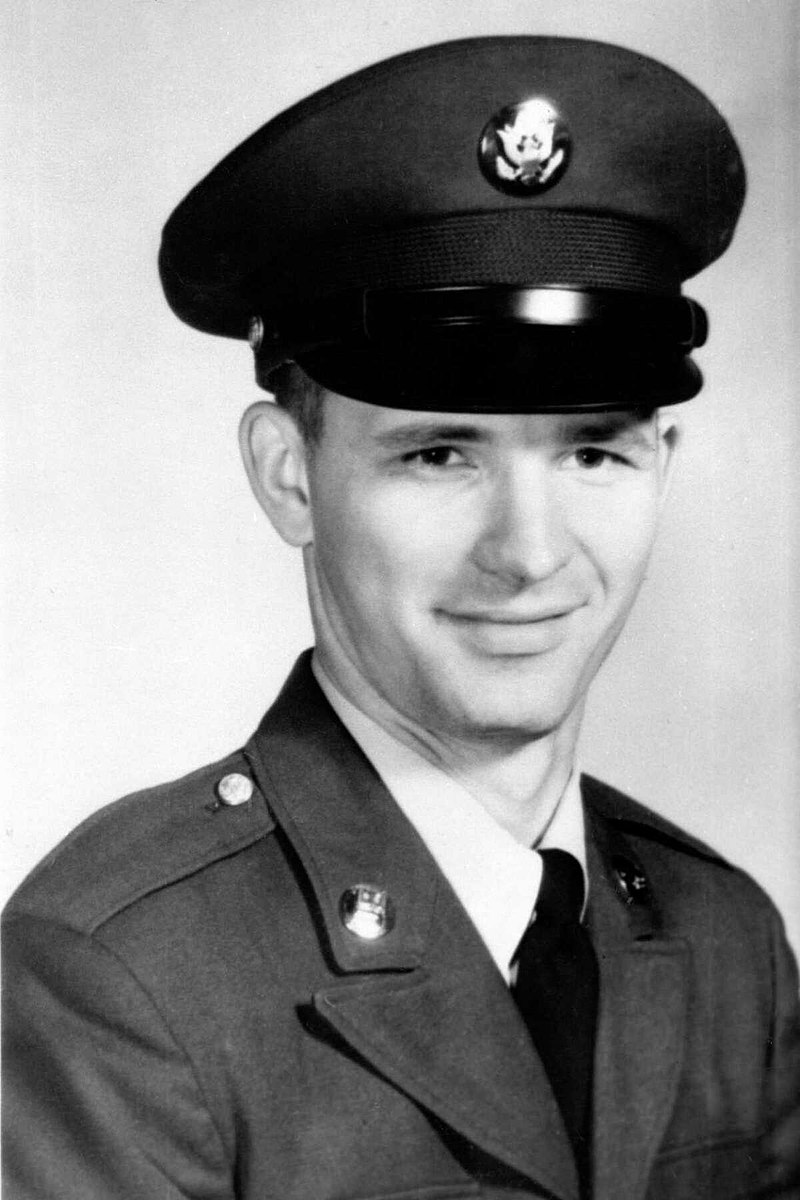
Dean Arnold Corll was an American serial killer responsible for one of the most extensive series of murders uncovered in the United States during the twentieth century. Between 1970 and August 1973, Corll and his teenage accomplices, David Owen Brooks and Elmer Wayne Henley Jr., abducted, sexually assaulted, tortured and murdered teenage boys and young men in the Houston, Texas, area. At least 29 victims are associated with the murder series, although investigators and later forensic researchers have long suspected that the actual number was higher.
Corll became known as the "Candy Man" and the "Pied Piper." The Candy Man nickname came from his family's candy-manufacturing business in Houston, where Corll had worked and where he became known for giving free candy to neighborhood children. The harmless image concealed a predatory life that eventually resulted in the discovery of numerous bodies buried beneath a rented boat shed, along beaches near High Island, and in wooded areas around Lake Sam Rayburn.
Corll was born on December 24, 1939, in Fort Wayne, Indiana. His family eventually settled in Texas, and during the 1960s he became closely involved with the family's candy business in Houston Heights. He later worked as an electrician. Many of his eventual victims lived in or had connections to Houston Heights, and some knew Corll, Brooks or Henley personally.
David Brooks and Elmer Wayne Henley
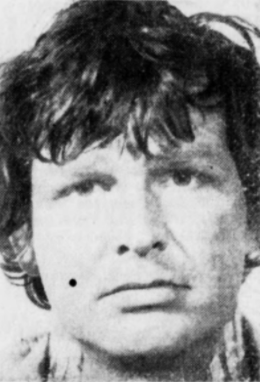
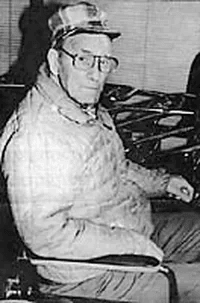
Corll's ability to commit murders repeatedly was greatly increased through his relationships with David Owen Brooks and Elmer Wayne Henley Jr. Brooks met Corll while still a teenager and became a frequent visitor to his home. According to Brooks's later statements, he eventually discovered that Corll was sexually abusing boys. Corll drew Brooks deeper into his activities and began using him to find and bring teenage boys to his residences.
Henley was another Houston Heights teenager who entered Corll's circle through Brooks. Henley initially believed that he could earn money by bringing boys to Corll. He subsequently became an active participant in kidnappings and murders. Because Brooks and Henley were themselves teenagers and knew many youths in the Heights, potential victims often had little reason to fear going somewhere with them.
The victims were frequently approached with offers of a ride, alcohol, a party or simply an opportunity to spend time with friends. Some willingly entered a vehicle because they knew Brooks or Henley. Once inside one of Corll's residences, however, they could be overpowered and restrained.
Corll's Method of Murder
Corll moved among several residences during the murder period, including apartments and houses on Yorktown, Mangum Road, West 11th Street, Schuler Street, Westcott, Wirt Road and finally Lamar Drive in Pasadena. Although the location changed, the basic pattern remained similar.
Victims were restrained with handcuffs, ropes or other bindings. A plywood restraint board became one of the most infamous pieces of physical evidence recovered after the crimes were exposed. Victims were sexually assaulted and tortured, sometimes for prolonged periods. Corll killed primarily by strangulation or shooting. Henley and Brooks later described participating in varying degrees in the restraint, abuse, murder and disposal of victims.
Corll attempted to conceal the disappearance of some victims by forcing them to telephone relatives or write letters before their deaths. Families were therefore sometimes left believing that their sons had voluntarily left Houston. Several victims were teenagers whom police initially treated as possible runaways, allowing Corll's murders to continue without investigators recognizing that a serial predator was operating in the city.
Because many victims were not recovered until months or years after they disappeared, an exact medical time of death cannot be established in every case. The dates below distinguish, where possible, between a verified killing date and a disappearance date when the precise date of death remains uncertain.
Known and Confirmed Victims
- Jeffrey Alan Konen, 18 — September 25, 1970 — Houston/High Island, Texas: Konen was a University of Texas freshman returning to Houston from Austin. He was last seen after being dropped near Westheimer Road and South Voss Road. He was strangled and his body was buried at High Island Beach. His remains were recovered in August 1973.
- James Eugene Glass, 14 — December 13, 1970 — Houston, Texas: Glass was lured away from a religious gathering in Houston Heights with his friend Danny Yates. The boys were taken to Corll's Yorktown apartment, where they were restrained and strangled. Glass was buried in Corll's rented boat shed.
- Danny Michael Yates, 14 — December 13, 1970 — Houston, Texas: Yates disappeared with James Glass after the two were taken from a Heights religious gathering. He was strangled and buried with Glass in the boat shed.
- Donald Wayne Waldrop, 15 — January 31, 1971 — Houston, Texas: Donald and his younger brother Jerry were abducted on January 30 while walking home after attempting to visit a friend. According to the accounts later given by Corll's accomplices, the brothers were killed the following day. Donald was strangled and buried in the boat shed.
- Jerry Lynn Waldrop, 13 — January 31, 1971 — Houston, Texas: Jerry was abducted with his brother Donald on January 30. Both boys were strangled and buried together in the boat shed. Jerry was among the youngest known victims of the Houston murder series.
- Randell Lee Harvey, 15 — March 9, 1971 — Houston, Texas: Harvey disappeared while traveling to his part-time job at a gas station. He was shot in the head and buried in the boat shed. His remains remained unidentified for decades before DNA and forensic work established his identity in 2008.
- David William Hilligiest, 13 — May 29, 1971 — Houston, Texas: Hilligiest, a childhood friend of Henley, disappeared while traveling with Gregory Winkle to a swimming pool. Witness information placed the boys entering a white van. Hilligiest was strangled and buried in the boat shed.
- Gregory Malley Winkle, 16 — May 29, 1971 — Houston, Texas: Winkle disappeared with David Hilligiest. He had previously worked for Corll's candy company and knew people connected to Corll. Winkle was strangled and buried in the boat shed.
- Ruben Willfard Watson Haney, 17 — August 17, 1971 — Houston, Texas: Haney left home to go to a movie and later telephoned his mother to say he was spending the evening with David Brooks. He was taken to Corll's residence, strangled and buried in the boat shed.
- Frank Anthony Aguirre, 18 — March 24, 1972 — Houston/High Island, Texas: Aguirre was an acquaintance of Henley and was connected to Rhonda Williams, who would later be present during Corll's final confrontation with Henley. Aguirre was strangled and buried at High Island Beach.
- Mark Steven Scott, 17 — approximately April 21, 1972 — Houston/High Island, Texas: Scott disappeared on April 20. He knew both Henley and Brooks. He was forced to write a misleading message to his parents claiming that he had found work in Austin. Henley later stated that Scott was strangled the following morning and buried at High Island. Despite repeated searches and later forensic investigations, Scott's remains have never been conclusively recovered.
- Johnny Ray Delome, 16 — May 21, 1972 — Houston/High Island, Texas: Delome disappeared while out with his friend Billy Baulch. Delome was shot in the head and then strangled. His body was buried at High Island Beach.
- Billy Gene Baulch Jr., 17 — May 21, 1972 — Houston/High Island, Texas: Baulch, a former employee of Corll's candy company, disappeared with Johnny Delome. Before his murder he was forced to participate in creating a false explanation for his disappearance. He was strangled and buried at High Island Beach.
- Steven Kent Sickman, 17 — approximately July 20, 1972 — Houston, Texas: Sickman was last seen around midnight on July 19-20 after leaving a gathering in Houston Heights. He was assaulted and strangled at Corll's Westcott residence and buried in the boat shed. His remains were mistakenly identified for years as those of Mark Scott before DNA testing corrected the error in 2011.
- Roy Eugene "Ikie" Bunton, 19 — on or about August 21, 1972 — Houston, Texas: Bunton disappeared while heading to work at a shoe store. He was shot twice in the head and buried in the boat shed. His remains were originally misidentified and were not conclusively identified as Bunton until DNA testing in 2011.
- Wally Jay Simoneaux, 14 — approximately October 3, 1972 — Houston, Texas: Simoneaux disappeared with Richard Hembree after the boys encountered Corll's accomplices. Simoneaux attempted to telephone his mother from Corll's residence before the call was interrupted. He was strangled and buried in the boat shed. Some later case chronologies place the deaths of the boys during the overnight period of October 3-4.
- Richard Edward Hembree, 13 — approximately October 3, 1972 — Houston, Texas: Hembree disappeared with Wally Simoneaux. He was shot in the mouth and strangled at Corll's Westcott residence before his body was concealed. As with Simoneaux, surviving records do not permit absolute certainty over whether death occurred late October 3 or during the early hours of October 4.
- Willard Karmon "Rusty" Branch Jr., 18 — approximately November 1, 1972 — Houston, Texas: Branch disappeared during the fall of 1972. He was subjected to severe abuse before being shot in the head and buried in the boat shed. His remains were finally identified in 1985. Historical records have contained conflicting dates for his disappearance, and approximately November 1972 is the more cautious date for his death.
- Richard Alan Kepner, 19 — November 1972 — Houston/High Island, Texas: Kepner disappeared after leaving to use a pay telephone to contact his fiancée. He was strangled and buried at High Island Beach. Records commonly place his disappearance on November 11, although some historical case chronologies have used November 15. His remains were identified in 1983.
- Joseph Allen Lyles, 17 — early February 1973 — Houston/Jefferson County, Texas: Lyles knew Corll and lived in the same general area as Brooks. Records place his disappearance between February 1 and February 3, 1973. His remains were discovered on a Jefferson County beach in August 1983 but remained unidentified until DNA testing established his identity in November 2009. His case provided important evidence that Corll had used another coastal burial location.
- William Ray "Billy" Lawrence, 15 — approximately June 7, 1973 — Houston/Lake Sam Rayburn, Texas: Lawrence was last seen by his father on June 4 and telephoned that night saying he was going fishing with friends. Testimony indicated that Corll kept Lawrence alive for approximately three days before strangling him with a cord. His body was buried in wooded land near Lake Sam Rayburn. David Brooks was later convicted of murder for his participation in Lawrence's death.
- Raymond Stanley Blackburn, 20 — June 15, 1973 — Pasadena/Lake Sam Rayburn, Texas: Blackburn was a married construction worker from Baton Rouge, Louisiana, who disappeared while hitchhiking. He was strangled at Corll's Lamar Drive residence in Pasadena and buried near Lake Sam Rayburn.
- Homer Louis Garcia, 15 — July 7, 1973 — Pasadena/Lake Sam Rayburn, Texas: Garcia became acquainted with Henley while attending a driving school in Bellaire. He was taken to Corll's Pasadena house, where he was shot in the head and chest. His body was subsequently transported to the Lake Sam Rayburn burial area.
- Michael Anthony Baulch, 15 — July 19, 1973 — Pasadena/Lake Sam Rayburn, Texas: Michael was the younger brother of Billy Baulch, whom Corll had murdered the previous year. Michael disappeared while away from home and was strangled. His body was buried near Lake Sam Rayburn. DNA testing finally established the correct identity of his remains in 2010 after an earlier identification error.
- Charles Cary Cobble, 17 — July 27, 1973 — Pasadena, Texas: Cobble and his friend Marty Jones disappeared on July 25 after being seen with Henley. Evidence presented at Henley's trial established that the two youths remained alive for approximately two days. Cobble was eventually shot in the head. His body was buried in the Houston boat shed.
- Marty Ray Jones, 18 — July 27, 1973 — Pasadena, Texas: Jones disappeared with Charles Cobble on July 25. Both were held captive at the Lamar Drive house before their deaths two days later. Jones was strangled, and his remains were buried in the boat shed.
- James Stanton Dreymala, 13 — August 3, 1973 — Pasadena, Texas: Dreymala was the last conclusively documented victim killed before Corll's death. He was encountered while riding his bicycle in Pasadena and was taken to the Lamar Drive residence. He was strangled and buried in the boat shed. His murder occurred only five days before Corll himself was killed.
Donald John Falcon and the Later DNA Evidence
- Donald John Falcon, 17 — disappeared July 1, 1971 — Houston, Texas: Falcon disappeared near his family's apartment in West University Place. Four arm bones recovered from the boat shed in 1973 could not initially be connected to any known victim. Familial DNA analysis decades later established that the bones belonged to Falcon. His exact date and medical cause of death cannot be established from the surviving remains, so July 1 should be regarded as his disappearance and presumed approximate killing date rather than a medically certified date of death. Forensic specialists have regarded the location of his remains as powerful evidence that he was another Corll victim.
The Unidentified "Swimsuit Boy"
- Unidentified male, commonly called "Swimsuit Boy" or "John Houston Doe" — approximately 1971-1972 — Houston, Texas: One of the young males recovered from the boat shed has never been conclusively identified. He was found wearing distinctive red, white and blue striped swimming trunks along with cowboy boots and other clothing. The location of his grave and the condition of his remains have led investigators to believe he may have been killed during the later months of 1971, although an exact date cannot be established. Modern forensic efforts have continued in an attempt to determine his identity.
The Disputed John Sellars Case
- John Manning Sellars, 17 — July 12, 1973 — High Island, Texas: Sellars is frequently included among Corll's victims because his bound body was discovered buried at High Island, a location used by Corll and his accomplices. He had been shot four times in the chest with a rifle. However, Harris County medical examiner Joseph Jachimczyk questioned the attribution during Henley's 1974 trial because Sellars's wounds and several circumstances differed from Corll's established pattern. Neither Brooks nor Henley specifically identified Sellars in their confessions. For that reason, Sellars should be described as an attributed or disputed Corll victim rather than an unquestionably confirmed case.
The Burial Sites
The largest burial site was a rented boat shed in southwest Houston. Corll had leased the structure years before the murders were discovered and used its dirt floor to conceal victim after victim. Bodies were generally wrapped in plastic and buried beneath the floor, sometimes with lime placed around the remains. The positioning of the graves ultimately provided forensic investigators with clues about the order in which some victims had been killed.
High Island and the Bolivar Peninsula formed a second major disposal area. Corll and his accomplices traveled from Houston to the isolated coastal region and buried several victims in the sand. Jeffrey Konen, Frank Aguirre, Johnny Delome, Billy Baulch and Richard Kepner were among those associated with the High Island burial area. Henley maintained that Mark Scott was also buried there, although Scott's body has never been recovered.
Another burial ground was located in a heavily wooded area near Lake Sam Rayburn in East Texas, not far from property connected to Corll's family. William Lawrence, Raymond Blackburn, Homer Garcia and Michael Baulch were associated with this location. Joseph Lyles was ultimately linked to a separate burial site on a beach in Jefferson County.
August 8, 1973: The Murder Series Ends
Corll's crimes ended unexpectedly on the morning of August 8, 1973. The previous night, Henley had arrived at Corll's Lamar Drive home with Timothy Kerley and 15-year-old Rhonda Williams. Corll became enraged that Henley had brought a girl to the house. At some point Corll restrained all three youths, and it became apparent that Kerley and Williams were in immediate danger.
Corll eventually released Henley from his restraints, apparently believing that Henley would again cooperate with him. Instead, Henley obtained Corll's .22-caliber pistol. During the confrontation that followed, Henley shot Corll multiple times. Corll died inside the Pasadena house on August 8, 1973.
Henley then telephoned the Pasadena Police Department. When officers arrived, what initially appeared to be a shooting investigation rapidly became something far larger. Henley told detectives that there were bodies buried elsewhere and offered to show police where they were located.
The Discovery of the Houston Mass Murders
Henley first directed investigators to Corll's rented boat shed. Police began digging through the floor on August 8 and quickly uncovered human remains. By the end of the first night, eight bodies had been recovered. Excavation resumed the next day and additional graves were located.
Henley and Brooks subsequently directed authorities to burial areas near Lake Sam Rayburn and High Island. By the conclusion of the principal 1973 searches, investigators had recovered 27 bodies connected to what newspapers called the Houston Mass Murders. At the time, it was one of the largest known serial-murder investigations in American history.
The investigation also exposed serious failures in the handling of missing teenage boys. Families of several victims had repeatedly sought help, only to have disappearances dismissed as likely runaway cases. The discovery that so many missing youths had instead been murdered produced anger among relatives who believed earlier investigation might have uncovered a pattern and prevented additional deaths.
Forensic Identification Decades Later
The story did not end in 1973. Several bodies recovered from Corll's burial sites were unidentified or incorrectly identified. Advances in forensic anthropology and DNA testing eventually corrected a number of those mistakes.
Randell Harvey was identified in 2008. Joseph Lyles, whose remains had been found separately in 1983, was identified through DNA in 2009. Michael Baulch's identification was corrected in 2010. Further DNA work established in 2011 that remains once attributed to Mark Scott actually belonged to Steven Sickman, while another set of remains was identified as Roy Bunton. In 2014, previously unexplained arm bones recovered from the boat shed were identified as belonging to Donald Falcon.
These discoveries demonstrated why the victim count in the Corll case has changed over time. The 27 bodies recovered during the original investigation were not necessarily the total number of people murdered. Mark Scott was a conclusively known victim whose body remained missing, Joseph Lyles was found years later at a separate location, Donald Falcon was linked to remains through modern DNA testing, and at least one boat-shed victim remains unidentified.
Trials of Elmer Wayne Henley and David Brooks
Dean Corll never faced arrest or trial because he was killed before the burial sites were discovered. Prosecutors instead pursued Henley and Brooks for their roles in the killings.
Henley was tried in 1974 for six murders. The prosecution introduced his confession, testimony describing the burial sites and physical evidence recovered from Corll's properties. He was convicted of all six killings and received six 99-year prison sentences. His original convictions were later reversed for a new trial, but in June 1979 he was again convicted on all six counts and again received six 99-year sentences, this time ordered to run concurrently.
David Brooks was tried in 1975 for the murder of William Ray Lawrence. Although Brooks argued that Corll and Henley had been responsible for the actual killing, prosecutors maintained that his participation made him legally responsible for Lawrence's murder. Brooks was convicted on March 4, 1975, and sentenced to life imprisonment. He remained incarcerated until his death in 2020.
How Many Victims Did Corll Kill?
The exact total will probably never be known. At least 29 victims are commonly associated with Corll and his accomplices when later forensic findings and the unrecovered Mark Scott are considered, but the classification of cases such as Donald Falcon and John Sellars complicates any simple numerical total.
Brooks and Henley also described incidents that suggested additional unidentified victims may have existed. Investigators recovered unexplained human bone fragments, including material that did not fit neatly into the original victim count. Corll had moved repeatedly during the murder period, and the known burial sites were found primarily because Henley and Brooks could remember or locate them. If Corll killed victims without either accomplice present and buried them elsewhere, those crimes may never have been discovered.
Legacy of the Case
The Dean Corll murders remain particularly disturbing because so many of the victims were teenagers from the same general Houston neighborhoods. Many knew one another. Several were friends of Henley or Brooks, and two sets of brothers were devastated by Corll's crimes: Donald and Jerry Waldrop were murdered together, while Billy Baulch was killed in 1972 and his younger brother Michael was murdered the following year.
The case also became an example of how assumptions about teenage runaways can obscure patterns of violent crime. Parents repeatedly reported children missing, yet the disappearances were not initially connected. Corll was therefore able to prey on young people for nearly three years without authorities recognizing the scale of what was occurring.
Modern DNA analysis has continued to restore names to victims who were once unidentified or misidentified. Those later identifications have shifted attention away from Corll's notoriety and toward the teenagers and young men whose lives were lost. More than half a century after the Houston Mass Murders were uncovered, unanswered questions remain about the unidentified victim from the boat shed, the location of Mark Scott's remains, the precise status of several disputed cases and whether additional victims of Dean Arnold Corll have yet to be found.