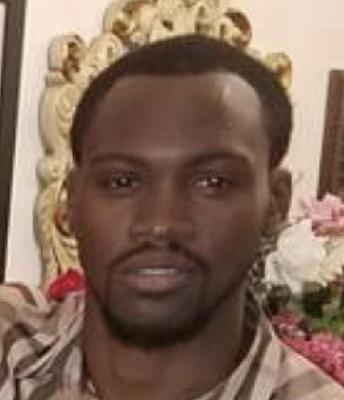
In the fall of 1972, a 17-year-old White male named Willard Karmon "Rusty" Branch Jr. vanished while trying to make his way back to Houston, Texas. Known to hitchhike, Willard was last seen in November of that year, setting off a frantic search by his family. The weight of his son's disappearance proved too much for Willard's father, a Houston police officer, who tragically suffered a fatal heart attack during the desperate search for his boy.
For a long time, Willard's fate remained a painful mystery, one of many disappearances of young men that plagued the Houston area in the early 1970s. The terrible truth of what happened to him would not begin to surface until the following summer, as part of a horrifying discovery that would shock the nation and expose a staggering level of depravity.
The break in the case came on August 8, 1973, when a 17-year-old named Elmer Wayne Henley called the police and confessed to shooting and killing a man named Dean Corll. When investigators arrived at Corll's Pasadena home, they found a scene of chaos and evidence of a violent struggle. Henley's confession, however, went far beyond the shooting. He and another teenager, David Owen Brooks, began to unravel a gruesome tale of abduction, torture, and murder orchestrated by Corll, a local candy factory owner who was known to give free sweets to children, earning him the moniker "The Candy Man." Henley and Brooks admitted to luring dozens of teenage boys and young men to Corll's various residences over a period of three years. For their part in delivering the victims, they were paid by Corll. Their confessions led police to a rented boat shed in Southwest Houston, where a mass grave was unearthed, containing the remains of many of the victims. Willard Branch was among those found buried in the boat shed. His body was not formally identified until July of 1985. The investigation revealed that he had been gagged and brutally murdered before his burial.
The architect of these horrific crimes, Dean Corll, was killed by Elmer Wayne Henley before he could be brought to justice. However, his two young accomplices faced the legal consequences of their actions. Both Elmer Wayne Henley and David Owen Brooks were arrested and charged for their roles in what became known as the "Houston Mass Murders." Henley was convicted and received six consecutive life sentences for his participation in the murders. David Owen Brooks was also convicted and sentenced to life in prison. The case of Willard Branch stands as a particularly tragic chapter in this dark period of Houston's history, not only for the brutal nature of his death but for the devastating impact it had on his family. The investigation brought to light a spree of killings that claimed the lives of at least 28 young men, revealing a network of manipulation and violence that preyed on the city's youth. Even decades later, complexities arose, with some researchers suggesting in 2025 that the remains identified as Branch's might belong to another victim, and that Willard's body may have been misidentified, leaving a lingering question over the final resting place of the young man whose disappearance set off a chain of tragic events.