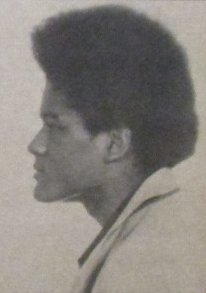
Michael Bruce Ross: The Connecticut Serial Killer
Background and Escalation
Michael Bruce Ross was an American serial killer and sexual predator who murdered eight girls and young women in New York and Connecticut between 1981 and 1984. Born on July 26, 1959, in Putnam, Connecticut, Ross grew up on his family’s chicken farm in Brooklyn, Connecticut. He was intelligent, performed well academically and later attended Cornell University, where he studied agricultural economics. Behind this outward appearance of achievement, however, Ross developed increasingly violent sexual fantasies and began stalking women.
Ross later described experiencing powerful compulsions that he called an uncontrollable force within himself. His crimes generally followed a recognizable pattern: he approached young women who were walking alone, hitchhiking or otherwise vulnerable, forced or persuaded them into his vehicle and drove them to isolated locations. He sexually assaulted most of his victims and killed them by strangulation. Their bodies were abandoned in fields, wooded areas, roadside drainage sites or other secluded places where discovery might be delayed.
Known Victims
- Dzung Ngoc Tu, 25 — May 12, 1981 — Ithaca, New York: Tu was a Cornell University student who disappeared from the university’s Warren Hall. Ross later admitted that he attacked and strangled her before placing her body in Fall Creek Gorge near the Cornell campus. Her remains were discovered on May 17, 1981. Because of the location in which she was found, her death was initially classified as a suicide. Ross confessed years later, but he was never prosecuted for her murder.
- Tammy Williams, 17 — January 5, 1982 — Brooklyn, Connecticut: Williams disappeared while walking home from her boyfriend’s residence in the rural community where Ross had grown up. Ross abducted her, sexually assaulted her and strangled her. Her body was left in an isolated area. The murder demonstrated that Ross was willing to hunt for victims in familiar surroundings and near communities where he could potentially be recognized.
- Paula Perrera, 16 — April 2, 1982 — Wallkill, New York: Perrera was hitchhiking when Ross encountered her while traveling from the Cornell area toward Connecticut. He picked her up, drove her away from the road and sexually assaulted and strangled her. Ross discarded her body near Interstate 84. Her remains were found approximately eighteen days later. In 2001, Ross pleaded guilty in New York to first-degree manslaughter in connection with her death and received a prison sentence of eight and one-third to twenty-five years.
- Debra Smith Taylor, 23 — June 15, 1982 — Danielson area, Connecticut: Taylor and her husband experienced automobile trouble and separated to search for assistance. While Taylor was alone, Ross encountered and abducted her. He sexually assaulted and strangled her before concealing her body in a wooded area. A jogger discovered her skeletal remains about four months later. Ross was eventually convicted and sentenced to life imprisonment for Taylor’s murder.
- Robin Dawn Stavinsky, 19 — November 19, 1983 — Norwich, Connecticut: Stavinsky was hitchhiking when Ross picked her up. He transported her to a secluded wooded section of the former Norwich State Hospital property, where he sexually assaulted and strangled her. Her body was discovered approximately one week later. Stavinsky’s murder became one of the four Connecticut cases for which Ross ultimately received death sentences.
- April Brunais, 14 — April 22, 1984 — Griswold, Connecticut, and Exeter, Rhode Island: Brunais was walking with her friend Leslie Shelley when Ross offered them a ride. He took the girls across the state line to the Beach Pond area in Rhode Island. Ross sexually assaulted Brunais and strangled her. He then transported the victims’ bodies back toward Connecticut and abandoned them inside a roadside culvert near Preston.
- Leslie Shelley, 14 — April 22, 1984 — Griswold, Connecticut, and Exeter, Rhode Island: Shelley was abducted along with April Brunais while the two friends were walking together. After driving them to the isolated Beach Pond area, Ross murdered both teenagers. He placed their bodies in his vehicle and later concealed them in a culvert near Route 12 in Preston, Connecticut. The joint abduction and murder of the two 14-year-olds became one of the most disturbing episodes in Ross’s series of crimes.
- Wendy Baribeault, 17 — June 13, 1984 — Griswold and Lisbon, Connecticut: Baribeault disappeared while walking along Connecticut Route 12 toward a convenience store. Ross forced her into his vehicle, sexually assaulted her and strangled her. Her partially concealed body was discovered in a field in Lisbon two days later. Witnesses had noticed Ross and his vehicle in the area, providing investigators with information that helped direct suspicion toward him.
Investigation and Arrest
The investigation accelerated after Wendy Baribeault’s disappearance and the discovery of her body. Witnesses reported seeing a vehicle and a man matching Ross’s appearance near the area where she had been walking. Investigators identified Ross, who was then employed as an insurance salesman, and began questioning him about his movements and his contact with Baribeault.
Ross was taken into custody in late June 1984. During questioning, investigators found significant inconsistencies in his explanations. He eventually confessed to multiple murders and provided details that connected him to the deaths of Baribeault, Stavinsky, Brunais, Shelley, Williams and Taylor. He later admitted responsibility for the deaths of Dzung Ngoc Tu and Paula Perrera as well, bringing the total number of acknowledged victims to eight.
His confessions revealed that the murders were not isolated acts committed during sudden arguments. Ross deliberately searched for young women who were alone and accessible. He exploited hitchhiking, rural roads and temporary moments of vulnerability. The victims were often moved across town, county or state lines before being assaulted and killed, complicating the investigations and delaying recognition that the crimes were connected.
Trials and Sentences
Ross was prosecuted in Connecticut for six murders. He received two consecutive life sentences for the killings of Tammy Williams and Debra Smith Taylor. He was convicted of capital felonies for the murders of Robin Stavinsky, April Brunais, Leslie Shelley and Wendy Baribeault. On July 6, 1987, he was sentenced to death for those four crimes.
His death sentences were later overturned because of errors involving the original sentencing proceedings, but the murder convictions remained intact. A second penalty trial began years later. In 2000, another jury again concluded that Ross should receive the death penalty. The prolonged appeals and repeated court hearings forced the victims’ relatives to revisit the cases for nearly two decades.
Ross also faced legal consequences in New York for Paula Perrera’s death. In 2001, he pleaded guilty to first-degree manslaughter. Although he admitted killing Dzung Ngoc Tu, the unusual initial classification of her death and the passage of time meant that he was never prosecuted for that crime.
Mental-Health Disputes and Final Appeals
Psychiatrists who examined Ross diagnosed him with serious personality and sexual disorders, although experts disagreed about whether those conditions prevented him from controlling his behavior or understanding the criminality of his actions. His defense argued that his mental condition should be considered a major mitigating factor. Prosecutors maintained that Ross planned his crimes, concealed evidence and selected circumstances that reduced the likelihood of detection, demonstrating awareness and control.
After years of opposing his sentences, Ross announced that he wanted to abandon further appeals and accept execution. That decision produced another legal conflict. Attorneys and mental-health specialists questioned whether the psychological effects of prolonged confinement on death row had made him unable to make a competent and voluntary choice. Courts conducted hearings to determine whether he understood the consequences of ending his appeals.
Ross stated that he wanted the litigation to stop, claiming that continued hearings inflicted additional pain on the victims’ families. Critics argued that the state should not execute a prisoner simply because he had stopped fighting his sentence. After repeated delays and competency reviews, the courts ultimately permitted the execution to proceed.
Execution and Legacy
Michael Bruce Ross was executed by lethal injection at Osborn Correctional Institution in Somers, Connecticut, during the early morning of May 13, 2005. He was 45 years old and was pronounced dead at 2:25 a.m. His execution was Connecticut’s first since 1960 and the first carried out anywhere in New England in nearly forty-five years.
The case left a lasting impact on Connecticut because of the number and youth of the victims, the years of appeals and the controversy surrounding Ross’s mental condition and decision to accept execution. Connecticut abolished capital punishment for future offenses in 2012, and the state’s remaining death sentences were later replaced with life imprisonment without the possibility of release. Ross therefore became the last person executed in Connecticut.
Although Ross frequently discussed his own upbringing, psychological disorders and imprisonment, the central legacy of the case remains the lives he destroyed. Dzung Ngoc Tu, Tammy Williams, Paula Perrera, Debra Smith Taylor, Robin Dawn Stavinsky, April Brunais, Leslie Shelley and Wendy Baribeault were students, daughters, sisters and friends whose futures were taken during a violent series of calculated attacks. Their families endured not only the original crimes but also decades of investigations, trials, sentencing hearings and appeals before the legal proceedings finally ended.