Crime Solvers Central
298 Cases Solved. Advancing justice for missing persons, unsolved homicides, unidentified and unclaimed remains.
⚠️ Warning: Viewer Discretion Advised ⚠️ The following section contains detailed information about serial killers, their crimes, and case details. Some content may be disturbing or graphic.

Description

See any errors? Let us know!
Summary based on 9 sources

Henry Lee Moore: Convicted Ax Murderer and Suspected Serial Killer


Overview

Henry Lee Moore was an American murderer whose name became connected to one of the most mysterious series of family killings in early twentieth-century America. Moore was convicted of murdering his mother and maternal grandmother in Columbia, Missouri, on December 17, 1912. Both women were killed with an ax inside the home they shared. After his conviction, a federal investigator suggested that Moore might also have been responsible for numerous unsolved ax murders committed across the Midwest between 1911 and 1912, including the eight killings known as the Villisca Ax Murders. Only the murders of Moore’s mother and grandmother were legally proven against him. He was never charged with the other killings, and significant questions remain about whether he could have committed some of them. Henry Lee Moore is therefore more accurately described as a convicted double murderer and suspected serial killer rather than a man conclusively proven to have killed dozens of people.

Early Life and Criminal Background

Henry Lee Moore was born on November 1, 1874, in or near Columbia, Missouri. He was the eldest son of Enoch Moore and Georgia Ann Wilson Moore. His family lived in Boone County, and Moore later found employment as a laborer and blacksmith’s helper around railroad facilities, including shops associated with the Wabash Railroad in Moberly, Missouri. His employment gave him experience traveling through communities connected by rail, a detail that later attracted the attention of investigators studying ax murders committed near railroad lines. Contemporary descriptions portrayed Moore as an unusual and sometimes unsettling man. Reports claimed that he collected newspaper articles about sensational crimes and visited morgues to look at bodies. These stories were repeated during the publicity surrounding his murder trial, although Moore denied some of the more disturbing allegations made about him. In May 1910, Moore was arrested in Wichita, Kansas, on a forgery charge. He was convicted and incarcerated at the Kansas State Reformatory in Hutchinson. He was released in April 1911. Several of the family ax murders later attributed to a traveling killer occurred after his release, causing investigators to examine his movements during that period.

The Columbia Double Murder

By December 1912, Moore had reportedly been corresponding with a teenage girl named Queenie Nichols. According to evidence discussed during the investigation, Moore wanted to establish a home and may have viewed the property occupied by his mother and grandmother as something he could eventually control. A letter attributed to Moore suggested that his mother’s home would soon belong to him. Prosecutors later treated the letter as evidence of motive and premeditation. On December 16, 1912, Moore traveled to Columbia and registered at the Central Hotel under the name “L. Smith.” During the following night, he went to the house occupied by his mother, Georgia Moore, and his grandmother, Mary J. Wilson. Prosecutors alleged that he carried a worn ax with a broken or damaged handle into the residence. Georgia Moore was attacked while seated downstairs. She suffered repeated blows to her head and neck. Moore then entered the bedroom where Mary Wilson was sleeping and killed her in the same manner. The location of the bodies and the condition of the rooms indicated that the women had been taken by surprise and had little opportunity to defend themselves. After the killings, Moore allegedly discarded the ax in a ditch and returned to his hotel. Blood was later discovered on clothing associated with him and on the bedding in his room. Investigators also learned that he had arrived in Columbia before the time he claimed and had registered under an assumed name. These circumstances severely damaged his explanation that he had simply arrived later and discovered the women dead.

Confirmed Victims

  • Georgia Ann Wilson Moore — Killed on December 17, 1912, at her home in Columbia, Boone County, Missouri. She was Henry Lee Moore’s mother. She was attacked with an ax while seated inside the residence and suffered fatal wounds to her head and neck.
  • Mary J. Wilson — Killed on December 17, 1912, at the same Columbia, Missouri, residence. She was Moore’s maternal grandmother and Georgia Moore’s mother. She was attacked with an ax while in her bedroom.


Arrest and Evidence

The bodies were discovered on December 18, 1912. Moore attempted to behave as though he had only recently arrived in Columbia, but investigators quickly became suspicious. Witnesses and hotel records established that he had been in town earlier and had stayed under an alias. Blood evidence was found in his hotel room and on his clothing, and he was unable to provide a convincing innocent explanation for it. Investigators also recovered the suspected murder weapon. The circumstantial case against Moore included his secret arrival, the false name used at the hotel, his contradictory statements, his apparent interest in obtaining a home, and the physical evidence found after the killings. Although no eyewitness saw him attack the women, prosecutors argued that the combined evidence left no reasonable explanation other than his guilt.

Trial and Conviction

Moore was tried in March 1913. He maintained that he was innocent and disputed several stories that had appeared in newspapers about his behavior. Prosecutors presented testimony concerning his movements, his hotel registration, the blood evidence, and statements he had made before and after the murders. On March 14, 1913, Moore was found guilty of murdering his mother and grandmother. The jury spared him from execution and imposed a life sentence. Attempts to overturn the judgment were unsuccessful, and Moore was sent to the Missouri State Penitentiary in Jefferson City.

The Federal Serial-Murder Theory

After Moore entered prison, his case attracted the attention of Matthew W. McClaughry, a federal investigator who had participated in the investigation of the Villisca Ax Murders. McClaughry believed that several family massacres committed in Colorado, Illinois, Kansas and Iowa displayed striking similarities. Entire households had been attacked at night, usually while the victims slept. An ax or similar blunt instrument was used, the victims’ heads were covered in some cases, and several crime scenes were close to railroad tracks. McClaughry proposed that the crimes were the work of one traveling murderer sometimes called “Billy the Axeman.” He considered Henry Lee Moore a possible suspect because Moore had railroad experience, had traveled through the region and had been convicted of a remarkably similar double murder. Some newspapers exaggerated the theory and reported that Moore was suspected of as many as twenty-five killings. The theory was never established in court. No reliable physical evidence conclusively connected Moore to the other crime scenes. In addition, questions about his whereabouts created possible alibis for at least some of the murders. The suspected victims listed below were never legally recognized as Moore’s victims and should not be confused with the two murders for which he was convicted.

Suspected Colorado Springs Victims

During the night of September 17–18, 1911, two neighboring households were attacked in Colorado Springs, Colorado. The Burnham and Wayne residences were separate homes, but the killings were committed during the same period and in a similar manner. Six victims were found with severe head injuries caused by the blunt side of an ax.
  • May Alice Burnham — Killed during the night of September 17–18, 1911, at the Burnham residence in Colorado Springs, Colorado.
  • Nellie Burnham — Killed during the night of September 17–18, 1911, in Colorado Springs. She was May Burnham’s young daughter.
  • John Burnham — Killed during the night of September 17–18, 1911, in Colorado Springs. He was May Burnham’s young son.
  • Henry F. Wayne — Killed during the night of September 17–18, 1911, at the Wayne residence in Colorado Springs.
  • Blanche Wayne — Killed during the night of September 17–18, 1911, in Colorado Springs. She was Henry Wayne’s wife.
  • Lula Wayne — Killed during the night of September 17–18, 1911, in Colorado Springs. She was the Wayne family’s approximately eighteen-month-old daughter.
The bodies were not discovered until September 20. Investigators initially considered people connected to the families, including May Burnham’s husband, Arthur, but no prosecution solved the killings. Later reports claimed that a man resembling Moore had been seen in the area. Other information, however, suggested that Moore may have been in Missouri during the relevant period. His responsibility for the Colorado Springs murders was never proven.

Suspected Dawson Family Victims

On September 30, 1911, three members of the Dawson family were murdered in their home in Monmouth, Illinois. The victims were struck with an ax, and the crime became part of the series studied by investigators searching for a traveling family murderer.
  • William E. Dawson — Killed on September 30, 1911, at the Dawson home in Monmouth, Warren County, Illinois.
  • Charity Dawson — Killed on September 30, 1911, at the family residence in Monmouth. She was William Dawson’s wife.
  • Georgia Dawson — Killed on September 30, 1911, in Monmouth. She was the couple’s thirteen-year-old daughter.
Other suspects were investigated in connection with the Dawson murders. Loving Mitchell was arrested years later, but the case remained unresolved. Moore was never charged with killing the family, and the suggestion that he committed the murders rested largely on similarities to other ax attacks.

Suspected Showman Family Victims

During the night of October 15–16, 1911, the Showman family was attacked in a small house near railroad lines in Ellsworth, Kansas. William and Pauline Showman and their three young children were killed with an ax. The windows were covered, and the murder weapon was reportedly left at the scene.
  • William H. Showman — Killed on October 15, 1911, at the family home near Ellsworth, Kansas.
  • Pauline “Polly” Showman — Killed on October 15, 1911, at the Ellsworth residence. She was William Showman’s wife.
  • Lester W. Showman — Killed on October 15, 1911, in Ellsworth. He was the couple’s six-year-old son.
  • Fern Showman — Killed on October 15, 1911, in Ellsworth. She was the couple’s four-year-old daughter.
  • Fenton Showman — Killed on October 15, 1911, in Ellsworth. He was the couple’s one-year-old son.
Several local suspects were questioned and released. The Showman massacre helped convince newspapers that a single killer might be moving between towns by train. Moore was later named as a possible offender, but investigators never produced evidence placing him inside the Showman home.

Suspected Hudson Family Victims

On the night of June 5, 1912, a young married couple was murdered in Paola, Kansas. Rollin Hudson and his wife, Anna, were found in bed with their skulls crushed. The crime occurred only a few days before the Villisca massacre and displayed several features that investigators believed were similar.
  • Rollin David Hudson — Killed during the night of June 5, 1912, at 710 West Wea Street in Paola, Miami County, Kansas.
  • Anna Hudson — Killed during the night of June 5, 1912, at the same Paola residence. She was Rollin Hudson’s wife.
A lamp with its chimney removed was reportedly found at the crime scene, a detail later compared with evidence found in Villisca. No one was convicted of the Hudson murders. Although Moore’s name was eventually associated with the case, the link remained speculative.

Suspected Villisca Victims

The most famous crime attributed to the unknown Midwestern ax murderer occurred in Villisca, Iowa. During the night of June 9–10, 1912, Josiah and Sarah Moore, their four children, and two visiting sisters were killed inside the Moore family home. Henry Lee Moore was not related to the Villisca family despite sharing their surname.
  • Josiah B. Moore — Killed during the night of June 9–10, 1912, at the Moore residence in Villisca, Montgomery County, Iowa.
  • Sarah Montgomery Moore — Killed during the night of June 9–10, 1912, in Villisca. She was Josiah Moore’s wife.
  • Herman Moore — Killed during the night of June 9–10, 1912, in Villisca. He was the couple’s eleven-year-old son.
  • Katherine Moore — Killed during the night of June 9–10, 1912, in Villisca. She was the couple’s ten-year-old daughter.
  • Boyd Moore — Killed during the night of June 9–10, 1912, in Villisca. He was the couple’s seven-year-old son.
  • Paul Moore — Killed during the night of June 9–10, 1912, in Villisca. He was the couple’s five-year-old son.
  • Lena Gertrude Stillinger — Killed during the night of June 9–10, 1912, while staying at the Moore home in Villisca. She was twelve years old.
  • Ina Mae Stillinger — Killed during the night of June 9–10, 1912, while staying at the Moore home in Villisca. She was eight years old.
The victims had returned from a church program and gone to bed before the attack. An ax belonging to Josiah Moore was used in the killings and left inside the house. The victims’ faces were covered, the windows and mirrors were concealed, and a lamp was altered in a manner that investigators considered similar to the Paola crime scene. Numerous suspects were investigated. Traveling minister George Kelly was tried twice; the first trial ended without a unanimous verdict, and he was acquitted at the second. Other suspects included Frank Jones, William Mansfield and various transient laborers. Henry Lee Moore was never tried for the Villisca killings, and the murders officially remain unsolved.

Earlier Acreman Family Murders

Some accounts also attempted to connect Moore to the deaths of the Acreman family near Allentown in Santa Rosa County, Florida. On May 14, 1906, nine members of the family were discovered dead after their rural home burned. Reports indicated that the victims had suffered crushing injuries before the fire was set.
  • William Glenn Acreman — Killed on or before May 14, 1906, near Allentown, Florida.
  • Amanda Sorrells Acreman — Killed on or before May 14, 1906, near Allentown. She was William Acreman’s wife.
  • Seven Acreman children — Killed on or before May 14, 1906, at the family home, including four sons, two daughters and an infant only a few days old.
The Acreman killings occurred years before the main Midwestern series and before Moore’s documented release from the Kansas reformatory. The attempt to attribute these deaths to him was especially weak, and no prosecution or conclusive evidence connected him to the Florida crime.

Problems With the Serial-Killer Accusation

The case against Moore as a traveling serial killer was based primarily on patterns rather than direct proof. His confirmed crime involved an ax, two female relatives and an attack inside a private home. The suspected crimes also involved sleeping families, blunt-force injuries, isolated communities and access to railway transportation. Moore’s work around railroads appeared to provide a possible method of travel. However, similarities between crimes do not establish the identity of the offender. Investigators found no fingerprints, personal property, confession or eyewitness evidence conclusively placing Moore at the suspected scenes. Reports concerning his location during portions of 1911 also cast doubt on his ability to commit some of the massacres. Contemporary newspapers frequently presented speculation as fact, helping create the lasting image of Moore as a murderer responsible for twenty-five deaths. It is possible that one traveling offender committed several of the Midwestern family murders, but that offender has never been conclusively identified. Other researchers have proposed different suspects, including itinerant laborers and men connected to separate ax killings. Moore remains one name among several in a group of unsolved cases rather than their proven perpetrator.

Imprisonment, Release and Death

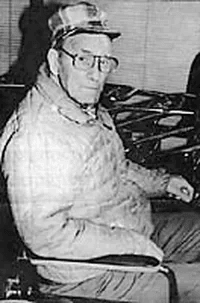
Moore spent approximately thirty-six years imprisoned under his life sentence. Missouri Governor Forrest Smith granted him parole on December 2, 1949. His sentence was later commuted on July 30, 1956. By that time, Moore was elderly and was reported to be living at a Salvation Army facility in St. Louis. Henry Lee Moore died in St. Louis, Missouri, on September 30, 1963, at the age of eighty-eight. His death certificate reportedly identified heart and kidney failure as causes of death. He died without confessing to the Columbia murders or to the larger series of ax killings attributed to him.

Legacy

Henry Lee Moore’s established criminal record consists of the murders of Georgia Moore and Mary J. Wilson. The evidence presented at his trial convinced a jury that he secretly entered their Columbia home and killed them with an ax in December 1912. Those two women are his only confirmed victims. His larger reputation developed from McClaughry’s attempt to solve a frightening series of family massacres that crossed state lines. The theory was historically important because it treated the murders as potentially connected crimes committed by a mobile offender, an investigative approach that was uncommon at the time. Nevertheless, the theory did not prove that Moore was responsible. Moore’s story remains intertwined with the enduring mystery of the Midwestern ax murders. He was undeniably capable of committing a brutal domestic double murder, but whether he traveled from town to town slaughtering entire families remains unknown. The distinction between his confirmed crimes and the unresolved accusations is essential to an accurate account of the case.

Victims

See any mistakes? Let us know!
Confirmed Victims: (2)
  • Georgia Ann Wilson Moore , Date of Death: 1912-12-17
  • Mary J. Wilson , Date of Death: 1912-12-17

  • Suspected Victims:
  • May Alice Burnham , Date of Death: 1911-09
  • Nellie Burnham , Date of Death: 1911-09
  • John Burnham , Date of Death: 1911-09
  • Henry F Wayne , Date of Death: 1911-09
  • Blanche Wayne , Date of Death: 1911-09
  • Lula Wayne , Date of Death: 1911-09
  • William E Dawson , Date of Death: 1911-09-30
  • Charity Dawson , Date of Death: 1911-09-30
  • Georgia Dawson , Date of Death: 1911-09-30
  • William Showman , Date of Death: 1911-10-15
  • Pauline Showman , Date of Death: 1911-10-15
  • Lester Showman , Date of Death: 1911-10-15
  • Fern Showman , Date of Death: 1911-10-15
  • Fenton Showman , Date of Death: 1911-10-15
  • Rollin David Hudson , Date of Death: 1912-06-05
  • Anna Hudson , Date of Death: 1912-06-05
  • Josiah Moore , Date of Death: 1912-06
  • Sarah Moore , Date of Death: 1912-06
  • Herman Moore , Date of Death: 1912-06
  • Katherine Moore , Date of Death: 1912-06
  • Boyd Moore , Date of Death: 1912-06
  • Paul Moore , Date of Death: 1912-06
  • Lena Stillinger , Date of Death: 1912-06
  • Ina Mae Stillinger , Date of Death: 1912-06
  • William Glenn Acreman , Date of Death: 1906-05-14
  • Amanda Sorrells Acreman , Date of Death: 1906-05-14
  • Seven Acreman Children , Date of Death: 1906-05-14