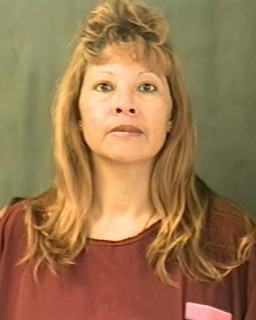
Joseph Alexander Emory – The “Cut-Rate Osteopath”
Background
Joseph Alexander Emory was a Los Angeles osteopath whose medical career became associated with an illegal abortion death and, many years later, an extraordinary series of infant deaths at a small maternity clinic he operated in Los Angeles. Some serial-killer reference works have classified Emory as a serial murderer and have attributed as many as eleven or more deaths to him. The surviving legal record, however, makes an important distinction: Emory was convicted of second-degree murder in the death of one woman, Viola Go, while the later infant deaths resulted in multiple murder charges but are not as clearly documented as convictions.
Emory practiced medicine in the Los Angeles area during an era when abortion was generally illegal in California except under limited circumstances. His first documented homicide case arose in 1959, when 35-year-old Viola Go traveled from the Salinas area to Los Angeles seeking an abortion. What happened during and after the procedure eventually became the basis of a second-degree murder conviction and a detailed California appellate court decision.
The Death of Viola Go
Viola Go had been examined by a physician in Salinas several times during August 1959 and was confirmed to be pregnant. Her physician described her as being in good health and testified that there was no medical reason requiring termination of the pregnancy to preserve her life.
On September 4, 1959, Go and her husband, George Go, traveled to Los Angeles. With the assistance of an acquaintance, an appointment was arranged with Emory. According to testimony later presented in court, Emory instructed Go to return to his home the following morning.
On September 5, Go was taken to Emory's residence. During the procedure, Emory inserted placental forceps into her uterus. The instrument perforated the uterus and caught a portion of her intestine. Emory later admitted to police that when he withdrew the instrument he saw what he recognized as a loop of bowel attached to it. He pushed the tissue back inside and kept Go at his residence rather than immediately transferring her for emergency surgical treatment.
Go remained seriously ill. Her husband stayed with her at Emory's residence through September 7. After seeking assistance from another physician, arrangements were finally made for her admission to Santa Monica Hospital. She arrived there during the early morning hours of September 9 in critical condition.
Doctors found extensive internal injuries. Her uterus had been perforated, her small bowel had been lacerated, and intestinal contents had escaped into her abdominal cavity, producing severe generalized peritonitis. Surgeons operated on September 10 in an attempt to repair the damage. Go continued to suffer complications, including abdominal infection and abscess formation, and underwent another operation on September 29.
Viola Go died on September 30, 1959, at Santa Monica Hospital. Medical testimony attributed her death to complications of the abortion, including injury to the bowel, peritonitis, abdominal abscesses and hemorrhage. An autopsy supported the conclusion that an abortion had been performed and that her uterus had been perforated during the procedure.
Murder Conviction
Los Angeles police questioned Emory on October 1, 1959, the day after Go died. During the investigation, Emory acknowledged inserting the forceps and discovering that he had pulled out a loop of intestine. Police also found a room at his property containing a gynecological examination table, medical instruments and medications. Investigators learned that Emory had made no patient record documenting his treatment of Go.
Emory was prosecuted for murder and for unlawfully procuring an abortion. In a nonjury trial, he was found guilty, with the homicide classified as second-degree murder. Later summaries commonly date the conviction to approximately 1960. The case reached the California Court of Appeal, which issued its decision on June 8, 1961.
The appellate court concluded that the evidence adequately demonstrated that Emory had performed an unlawful abortion and that the same act had caused Go's death. His second-degree murder conviction was affirmed. The separate abortion conviction was reversed because California law prevented him from being punished twice for the same underlying criminal act.
Further Abortion Problems and Loss of His License
Emory's difficulties did not end with the Go case. Historical accounts report that he again became involved in an illegal-abortion prosecution and eventually served time in prison. His medical license was revoked. The precise chronology of these later proceedings varies among surviving accounts, but Emory was out of legitimate medical practice for a period before successfully obtaining reinstatement of his osteopathic license.
The decision that proved especially consequential came in May 1974, when Emory was permitted to practice again. Given his previous second-degree murder conviction involving a patient, his reinstatement later generated intense criticism from prosecutors and others who questioned how a practitioner with such a record had been allowed to return to medicine.
Highland Medical Center
After regaining his license, Emory established a small operation known as the Highland Medical Center in north-central Los Angeles. Despite its name, contemporary descriptions portrayed it as a makeshift clinic operating from a modest residential property rather than a conventional hospital.
Emory developed a clientele consisting largely of poor pregnant women, including Mexican immigrants who might have had difficulty obtaining or paying for conventional hospital maternity care. His prices were one of the principal attractions. During the mid-1970s, he reportedly charged approximately $200 to $300 for delivering a baby, considerably below normal hospital costs.
Business was substantial. Between approximately 1974 and June 1976, Emory reportedly delivered more than 700 babies. His wife participated in the clinic's operation, as did their adult son Alan Emory, although contemporary reports stated that his wife and son did not possess the medical certification that would have qualified them to independently perform many of the duties associated with medical care.
A Disturbing Number of Infant Deaths
Behind the clinic's low prices was an alarming mortality record. Investigators examining Emory's practice determined that more than 25 infants had died after being delivered at the Highland Medical Center during roughly two years of operation. Accounts generally state that 25 infant deaths were recorded at the clinic itself and that a 26th infant died at a hospital only hours after being removed from Emory's clinic for emergency treatment.
The sheer number of deaths attracted the attention of Los Angeles authorities. Prosecutors did not simply characterize the cases as unfortunate medical outcomes. They alleged that the treatment provided by Emory and those assisting him demonstrated conduct sufficiently reckless to justify murder charges.
The investigation eventually focused on ten of the infant deaths. Authorities believed the circumstances surrounding those cases supported criminal homicide allegations against Joseph Emory and his wife. Five of the cases were also attributed to their son Alan.
The June 8, 1976 Arrest
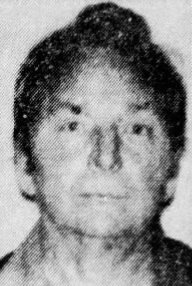
On June 8, 1976, Joseph Emory, then approximately 55 years old, was arrested and booked in connection with ten counts of murder arising from infant deaths associated with the clinic. His wife, Harriett Emory, was reportedly booked on the same number of murder counts. Their 32-year-old son, Alan Emory, was booked on five murder counts.
Deputy District Attorney Dinko Bozanich described the theory behind the prosecution as involving a "wanton and reckless disregard for life." In homicide law, extremely reckless conduct performed with conscious disregard for human life can support a murder prosecution even when prosecutors cannot prove that the accused specifically intended to kill the victim.
Authorities nevertheless indicated that the investigation had not completely excluded the possibility that some deaths might have been intentional. At the time of the arrests, prosecutors did not publicly reveal all of the evidence supporting the ten murder allegations, leaving many details of the individual infant cases outside contemporary public reporting.
The case immediately raised a broader question about medical regulation. Emory had already been convicted of second-degree murder following the death of an abortion patient. Despite that record and subsequent problems involving illegal abortion, he had regained his medical license in May 1974. Only about two years later, authorities were investigating a clinic associated with more than two dozen infant deaths.
Known and Alleged Victims
- Viola Go – September 30, 1959 – Santa Monica Hospital, Santa Monica, California: Go, 35, died after an abortion performed by Joseph Emory in the Los Angeles area. During the procedure on September 5, her uterus was perforated and her small bowel was injured. She developed severe peritonitis and other complications and died after weeks of hospitalization. Emory was convicted of second-degree murder in her death, and that conviction was affirmed by the California Court of Appeal in 1961.
- Ten infants involved in the 1976 murder allegations – Highland Medical Center, Los Angeles, California: Joseph Emory was arrested on June 8, 1976, in connection with ten infant deaths occurring during the approximately 1974-1976 operation of his maternity clinic. Surviving readily accessible contemporary reports do not publicly identify the ten infants by name or provide individually verified dates of death, so specific names or dates should not be assigned to them without additional primary documentation.
- Additional infant deaths – Highland Medical Center, Los Angeles, California: Contemporary reporting stated that at least 25 infants died at the clinic during approximately two years and that a 26th died after emergency transfer to a hospital. These deaths were part of the investigation surrounding the clinic, although the June 1976 murder allegations were limited to ten particular cases. Individual names and exact death dates for the larger group were not disclosed in the available reporting.
Was Joseph Emory a Serial Killer?
Joseph Emory is sometimes included in encyclopedias and databases of serial killers under the nickname "The Cut-Rate Osteopath," with victim estimates ranging from one confirmed victim to eleven or more alleged victims. That classification requires caution. His legal record firmly establishes a second-degree murder conviction for the death of Viola Go. It also establishes that authorities later accused him of murder in connection with ten infant deaths.
However, an arrest or murder charge is not the same as a murder conviction. Available historical summaries of Emory's case concentrate heavily on the sensational June 1976 arrests and do not provide comparably clear documentation showing that he was ultimately convicted of murdering the ten infants. For that reason, the most accurate description distinguishes between Go, whose death resulted in a confirmed murder conviction, and the infants whose deaths formed the basis of the later allegations.
Likewise, contemporary prosecutors based the infant cases principally on allegations of extraordinarily reckless medical treatment. Reports stated that intentional killing had not been ruled out, but they did not establish that Emory deliberately set out to kill babies. His inclusion among serial killers therefore reflects a broad historical classification rather than the traditional pattern of a murderer intentionally selecting and killing victims on separate occasions.
Legacy of the Case
The Joseph Emory case is especially disturbing because both major chapters involved people who had entered his care as a medical practitioner. Viola Go sought a medical procedure and suffered catastrophic internal injuries that ultimately killed her. Years later, vulnerable mothers brought their newborn children to a clinic advertised as an affordable alternative to conventional hospital care, only for authorities to discover an extraordinary number of infant deaths associated with the facility.
Emory's history also became an example of the potentially disastrous consequences of failures in professional licensing and medical oversight. By the time authorities arrested him in June 1976, prosecutors were openly questioning why a man previously convicted of second-degree murder in the death of a patient had been permitted to regain his medical license and establish another practice.
The surviving record consequently presents Joseph Alexander Emory as something more complicated than a conventional serial murderer. He was unquestionably a physician convicted of second-degree murder after an unlawful abortion killed Viola Go, and he later operated a clinic associated with more than two dozen infant deaths. Ten of those deaths resulted in his arrest on murder allegations in 1976. The combination of a prior murder conviction, repeated medical misconduct and the later cluster of deaths earned Emory the grim nickname "The Cut-Rate Osteopath" and a lasting place in compilations of unusual American homicide cases.