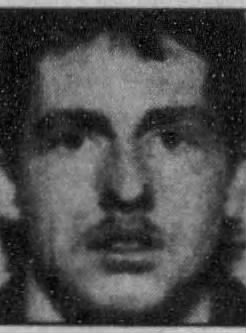
Dennis Lynn Rader: The BTK Serial Killer
Overview
Dennis Lynn Rader was an American serial killer who murdered ten people in and around Wichita, Kansas, between January 1974 and January 1991. He called himself “BTK,” an abbreviation for “Bind, Torture, Kill,” a name he used in communications sent to police officers and news organizations. Rader carefully stalked many of his victims, studied their routines and entered their homes when he believed they would be vulnerable.
Rader maintained an outwardly conventional life while committing his crimes. He married, raised two children, served in the United States Air Force, worked for a home-security company and later became a municipal compliance officer in Park City, Kansas. He was also active in Christ Lutheran Church, where he eventually served as president of the church council. His public identity as a husband, father, church member and local employee concealed his violent fantasies and criminal behavior for more than three decades.
The Otero Family Murders
Rader committed his first known murders on January 15, 1974, at the Wichita home of Joseph and Julie Otero. He had previously watched the residence and prepared what he called a “hit kit,” containing items he intended to use during the attack. After entering the house, he confronted the family and claimed that he was a wanted criminal who needed food, money and a vehicle. He then forced the family members to cooperate while he restrained them.
Joseph Otero, his wife Julie and two of their children were killed inside the residence. Three other Otero children were away from home at the time. When they returned, they discovered the crime scene. The murders shocked Wichita because several members of one family had been killed in their own home without an immediately apparent motive.
- Joseph Otero Sr. — Age 38. Murdered on January 15, 1974, at the Otero family home on North Edgemoor Street in Wichita, Kansas.
- Julie Otero — Age 33. Murdered on January 15, 1974, at the family’s North Edgemoor Street residence in Wichita.
- Josephine Otero — Age 11. Murdered on January 15, 1974, inside the Otero residence in Wichita.
- Joseph Otero Jr. — Age 9. Murdered on January 15, 1974, inside the Otero residence in Wichita.
The Attack on Kathryn and Kevin Bright
On April 4, 1974, Rader entered the Wichita home of 21-year-old Kathryn Bright and waited for her to return. Kathryn arrived with her brother, Kevin Bright, whom Rader had not expected to be present. He threatened the siblings with a firearm and forced them into separate rooms.
Kathryn was restrained and attacked. Kevin was shot and seriously wounded, but he fought back and survived. After Rader fled, Kevin escaped from the house and obtained help. Kathryn died from her injuries. Kevin later provided investigators with a description of the attacker, although the information was not enough to identify Rader at the time.
- Kathryn Doreen Bright — Age 21. Murdered on April 4, 1974, at her home on East 13th Street in Wichita, Kansas. Her brother, Kevin Bright, survived the attack despite being shot and seriously injured.
The Emergence of the BTK Name
In October 1974, a letter connected to the Otero murders was discovered in a book at the Wichita Public Library. The writer described details of the crime that had not been publicly released, establishing that the communication came from someone with direct knowledge of the murders. In the message, Rader suggested several names for himself, including the initials “BTK.”
Rader wanted recognition and became frustrated when he believed that the news media was not giving his crimes sufficient attention. His communications were intended to frighten the public, demonstrate his knowledge of the murders and create a criminal identity that would remain in the public consciousness.
The Murder of Shirley Vian
On March 17, 1977, Rader approached the Wichita residence of Shirley Vian. According to his later confession, he initially encountered one of Vian’s young children outside and used the child to gain access to the home. Once inside, he displayed a weapon and took control of the household.
Vian’s children were confined in a bathroom while Rader restrained and killed their mother in another room. The children survived and were later able to provide information about the intruder. The presence of children during the attack underscored Rader’s willingness to terrorize entire families while targeting one member of the household.
- Shirley Ruth Vian — Age 24. Murdered on March 17, 1977, at her home on South Hydraulic Avenue in Wichita, Kansas. Her three young children were inside the residence but survived.
The Murder of Nancy Fox
Rader selected Nancy Fox after observing her activities and learning where she lived. On December 8, 1977, he cut the telephone line outside her home, entered the residence and waited for her to return. When Fox arrived, Rader confronted her and carried out his planned attack.
After leaving the residence, Rader called emergency dispatchers from a public telephone and reported the killing in a deliberately controlled voice. He gave the victim’s address and identified the crime as a homicide. The recorded call became one of the most significant pieces of evidence from the early BTK investigation, although Rader’s voice was not identified until many years later.
- Nancy Jo Fox — Age 25. Murdered on December 8, 1977, at her home at 843 South Pershing Street in Wichita, Kansas.
Letters, Poems and Public Taunting
In early 1978, Rader sent additional communications to Wichita television station KAKE and other recipients. These materials included descriptions of the murders, drawings and a poem about Shirley Vian. He claimed responsibility for the Otero, Bright, Vian and Fox attacks and complained that the public had not fully recognized the existence of a serial killer.
The communications caused widespread fear. Authorities created a task force to investigate the murders, but Rader left little conventional evidence and remained unidentified. He understood basic investigative methods and attempted to avoid fingerprints and other traces. He also changed his methods, delayed between crimes and chose victims who did not share an obvious personal connection.
The Murder of Marine Hedge
After several years without a known murder, Rader killed 53-year-old Marine Hedge, who lived near him in Park City. During the night of April 27, 1985, he entered Hedge’s home and waited for her to return. He killed her inside the residence and removed her body.
Rader transported Hedge to Christ Lutheran Church, where he photographed her body in staged positions. He then left her remains in a rural area. Hedge was reported missing, and her body was discovered on May 5, 1985, near North Webb Road in Sedgwick County. At the time, investigators did not publicly connect her death to BTK.
- Marine Wallace Hedge — Age 53. Murdered on April 27, 1985, at her home in Park City, Kansas. Her body was discovered on May 5, 1985, near North Webb Road outside Wichita.
The Murder of Vicki Wegerle
On September 16, 1986, Rader went to the Wichita home of Vicki Wegerle while posing as a telephone repairman. He claimed that he needed to inspect the telephone wiring and was allowed inside. Wegerle’s two-year-old son was in the house during the encounter.
Rader produced a weapon and attempted to restrain Wegerle, but she resisted fiercely. He killed her and took several items from the home, including her driver’s license. He also used a camera to photograph portions of the attack. Her husband discovered her after returning home. Because Rader did not immediately claim responsibility, Wegerle’s husband was subjected to suspicion before later evidence established that BTK had committed the murder.
- Vicki Lynn Wegerle — Age 28. Murdered on September 16, 1986, at her home on West 13th Street in Wichita, Kansas. Her young son was present in the residence but was not physically harmed.
The Murder of Dolores Davis
Rader committed his final confirmed murder during the night of January 18–19, 1991. His victim was 62-year-old Dolores Davis, who lived alone north of Wichita. Rader gained entry by throwing a concrete block through a glass door. After confronting Davis, he initially claimed that he was a fugitive who needed food, money and her automobile.
Rader restrained Davis and killed her before wrapping her body in bedding and placing it in the trunk of her car. He transported her to a rural location near 117th Street North and Meridian Avenue. Her body was discovered on February 1, 1991. The murder was not publicly attributed to BTK until after Rader’s arrest and confession in 2005.
- Dolores Earline Davis — Age 62. Murdered on January 19, 1991, after being attacked at her home at 6226 North Hillside Street near Park City, Kansas. Her body was found on February 1, 1991, near 117th Street North and Meridian Avenue.
Other Intended Victims and Uncompleted Plans
Rader later admitted that he had stalked and planned attacks against additional women. He gave potential victims code names and created detailed plans involving their homes, schedules and family circumstances. Some intended victims were not home when he attempted to reach them, while other plans were abandoned because conditions did not match his expectations.
One woman whom Rader called “Project Anna” was targeted in April 1979. He waited inside her home, but she did not return as expected. Before leaving, he took personal items and later sent a threatening poem referring to the failed attack. His records also revealed other prospective targets, showing that the ten confirmed murders represented only the attacks he successfully completed.
Life Behind a Conventional Public Identity
Rader was born on March 9, 1945, in Pittsburg, Kansas, and grew up in Wichita. He served in the United States Air Force from 1966 until 1970. After returning to Kansas, he married Paula Dietz in 1971. They had a son and a daughter.
He worked at several jobs, including a position at Coleman Company and employment with ADT Security Services. His work for ADT involved installing security systems, sometimes for customers concerned about the BTK murders. From 1991 until his arrest in 2005, he worked as a compliance officer for Park City. Residents sometimes complained that he enforced local ordinances aggressively and appeared to enjoy exercising authority.
Rader was also involved with the Boy Scouts and Christ Lutheran Church. His community activities allowed him to appear dependable and respectable. This outward normality complicated later attempts by neighbors, coworkers and relatives to reconcile the person they knew with the offender described in his confessions.
Renewed Communications in 2004
The BTK investigation had been inactive for years when Rader resumed communicating in March 2004. A Wichita newspaper received an envelope containing a copy of Vicki Wegerle’s driver’s license and photographs connected to her murder. These materials proved that BTK was still alive and established his responsibility for Wegerle’s death.
Over the following months, Rader sent letters, packages, dolls, puzzles and autobiographical materials to media outlets and police. He hid some packages in public locations and used elaborate symbols to identify his communications. His renewed activity provided investigators with new physical evidence and opportunities to track him.
The Floppy Disk That Exposed Him
Rader communicated with police through a classified advertisement and asked whether a computer floppy disk could be traced. Investigators publicly indicated that it would be safe for him to send one. Believing them, Rader mailed a purple floppy disk to a Wichita television station in February 2005.
Computer specialists recovered deleted information from the disk. The data contained references to the name “Dennis” and to Christ Lutheran Church. Investigators searched church records and identified Dennis Rader as the church council president. They compared his background, address, vehicles and known activities with information connected to the BTK crimes.
Police then obtained a DNA sample connected to Rader’s daughter through a court-authorized examination of existing medical material. The familial DNA profile supported the conclusion that Rader was the source of biological evidence preserved from one of the crime scenes. Surveillance and additional investigation strengthened the case against him.
Arrest and Confession
Police arrested Rader near his Park City home on February 25, 2005. During questioning, he eventually acknowledged that he was BTK. Searches of his home, office and other locations uncovered extensive collections of writings, photographs, drawings, newspaper articles and items associated with his victims.
Rader had maintained records of his fantasies and crimes for years. He used code names for victims, documented potential targets and photographed himself wearing women’s clothing while bound in positions that imitated his victims. Investigators also recovered trophies and personal property taken during the murders.
Guilty Plea
On June 27, 2005, Rader pleaded guilty to ten counts of first-degree murder in the District Court of Sedgwick County. Because no plea agreement had been negotiated, Judge Gregory Waller required him to describe the factual basis for each plea.
Rader delivered a lengthy and emotionally detached account of how he selected, stalked and killed each victim. He described the murders as “projects” and discussed his preparations in technical language. His courtroom statement confirmed his responsibility for all ten deaths and revealed details that investigators had kept confidential.
Sentencing
Rader’s sentencing hearing began on August 17, 2005. Prosecutors presented evidence showing the planning, cruelty and psychological suffering involved in the murders. Relatives of the victims gave statements describing the lasting damage caused by the killings.
On August 18, 2005, Rader received ten consecutive life sentences. Kansas did not have a valid death-penalty statute when the murders were committed, so execution was not an available punishment. Under the laws applicable to the crimes, his sentence required him to serve at least 175 years before becoming eligible for parole, making his release effectively impossible.
Imprisonment
Rader was transferred to the El Dorado Correctional Facility in Kansas. He was placed in highly restrictive custody because of security concerns and the notoriety of his crimes. His wife obtained an emergency divorce shortly after his guilty plea, and the court waived the normal waiting period because of the extraordinary circumstances.
The murders remain among the most notorious crimes in Kansas history. Rader’s ability to conceal his identity for decades, his deliberate manipulation of the media and his eventual exposure through digital evidence made the BTK investigation a significant example of both long-term cold-case work and the growing importance of computer forensics.
Confirmed Victims
- Joseph Otero Sr., 38 — January 15, 1974; Wichita, Kansas.
- Julie Otero, 33 — January 15, 1974; Wichita, Kansas.
- Josephine Otero, 11 — January 15, 1974; Wichita, Kansas.
- Joseph Otero Jr., 9 — January 15, 1974; Wichita, Kansas.
- Kathryn Bright, 21 — April 4, 1974; Wichita, Kansas.
- Shirley Vian, 24 — March 17, 1977; Wichita, Kansas.
- Nancy Fox, 25 — December 8, 1977; Wichita, Kansas.
- Marine Hedge, 53 — April 27, 1985; Park City, Kansas.
- Vicki Wegerle, 28 — September 16, 1986; Wichita, Kansas.
- Dolores Davis, 62 — January 19, 1991; near Park City, Kansas.
Legacy of the Case
Dennis Rader’s murders left ten victims dead and numerous relatives, survivors and community members permanently affected. The Otero children lost four members of their family in a single morning. Kevin Bright survived a violent attack in which his sister was killed. Shirley Vian’s children were left without their mother, and Vicki Wegerle’s husband endured years of suspicion before the actual killer was identified.
Although Rader attempted to turn the murders into a public identity centered on the BTK name, the case is also remembered for the victims whose lives were taken: Joseph and Julie Otero, Josephine and Joseph Otero Jr., Kathryn Bright, Shirley Vian, Nancy Fox, Marine Hedge, Vicki Wegerle and Dolores Davis. His arrest ended one of the longest and most frightening serial-murder investigations in Wichita history.