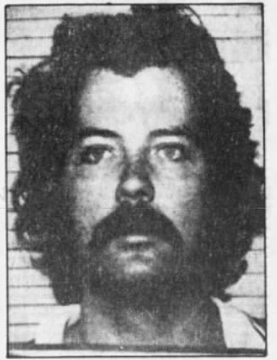
Euel Lee, who was also known by the alias Orphan Jones, was a farm laborer whose prosecution became one of the most controversial criminal cases in Depression-era Maryland. He is sometimes described as a serial killer because four people died at his hands, but the accepted facts indicate that the victims were killed during one continuous attack. He is therefore more accurately classified as a multiple or mass murderer rather than a serial killer, whose crimes would normally occur in separate incidents over time.
Lee was an African American man who worked for William Green Davis, commonly called Green Davis, a white farmer living near Taylorsville in Worcester County on Maryland’s Eastern Shore. Lee and Davis reportedly had an increasingly bitter relationship involving wages, racial insults and disagreements over money. Accounts of the case frequently state that Davis withheld a dollar from Lee’s pay or refused to pay him money that Lee believed he had earned. Although the amount was small, the dispute represented a larger conflict between the two men.
The Davis Family Murders
During the night of October 11 and the early morning of October 12, 1931, someone entered the Davis family home near Taylorsville. Green Davis, his wife and two of their daughters were attacked and killed. The crime scene revealed that a firearm had been used, although contemporary descriptions differ regarding the precise sequence in which the victims were confronted and shot.
Green Davis was found fatally wounded inside or near the family residence. The other members of his household were discovered dead in different areas of the home. The number of victims and the fact that nearly an entire household had been destroyed caused immediate alarm throughout Worcester County. News of the killings spread rapidly across the Eastern Shore, where racial tensions were already extremely high.
The verified date of death for all four members of the Davis family was October 12, 1931. Historical accounts do not consistently preserve the full names of Green Davis’s wife and daughters, and their identities have often been reduced to their relationships to the male head of the household. Because reliable surviving summaries do not agree on their complete names, they should not be identified by uncertain or unverified names.
Known Victims
William Green Davis — commonly known as Green Davis; approximately 55 years old; killed on October 12, 1931, at the Davis family farm near Taylorsville in Worcester County, Maryland.
Mrs. William Green Davis — Green Davis’s wife; killed on October 12, 1931, inside the family residence near Taylorsville, Maryland. Her complete name is not consistently provided in surviving public accounts.
Daughter of William and Mrs. Green Davis — killed on October 12, 1931, at the Davis family residence near Taylorsville, Maryland. Her complete name is not consistently documented in readily available historical records.
Daughter of William and Mrs. Green Davis — killed on October 12, 1931, at the same residence near Taylorsville, Maryland. Her complete name is also inconsistently recorded or omitted from surviving summaries.
Investigation and Arrest
Investigators quickly focused on Lee because he had recently worked for Green Davis and was known to have argued with him. The wage dispute supplied authorities with a possible motive. Lee was arrested soon after the bodies were discovered, and officials claimed that evidence and statements connected him to the killings.
Lee was questioned while being held under dangerous conditions. The Eastern Shore had a long history of racial violence, and officials feared that a white mob might seize and lynch him before a trial could occur. He was moved between detention facilities as authorities attempted to prevent an attack. The atmosphere surrounding the investigation made it difficult to separate the collection of evidence from the racial hostility directed toward the accused.
Authorities obtained statements described as confessions from Lee. The prosecution maintained that he admitted returning to the Davis farm, entering the house and killing the family following the dispute. Lee later challenged the circumstances under which the statements had been obtained, and his defense argued that the confessions were unreliable and possibly coerced.
Trials and Legal Controversy
Lee’s prosecution became far more complicated than a routine murder trial. His attorneys argued that he could not receive a fair hearing in Worcester County because the local population had already condemned him. Threats of mob violence, inflammatory newspaper coverage and open racial hostility surrounded the proceedings.
Bernard Ades, a Baltimore attorney associated with the International Labor Defense, became one of Lee’s most prominent defenders. The organization frequently represented Black defendants whose cases involved allegations of racial injustice. Ades challenged the exclusion of African Americans from juries and argued that Lee’s constitutional rights were being violated.
The case moved through several courts and counties as judges considered whether an impartial jury could be assembled. Lee was eventually tried before an all-white jury. Prosecutors presented the wage dispute, Lee’s alleged threats, physical evidence and his statements to investigators as proof that he had murdered the Davis family.
The defense attacked the confessions and emphasized the prejudicial atmosphere surrounding the case. Lee’s attorneys maintained that officials had rushed to judgment because a Black laborer had argued with a white employer shortly before the murders. They also questioned whether the evidence conclusively established the precise manner in which the crime occurred.
Despite those objections, Lee was convicted of murder and sentenced to death. Appeals challenged the trial procedures, jury selection and treatment of the defendant, but the conviction survived. Efforts to obtain executive clemency were also unsuccessful.
Execution
Euel Lee was executed in Maryland’s electric chair on October 27, 1933. He had spent approximately two years in custody while his attorneys pursued appeals and attempted to prevent the execution. His death ended the criminal prosecution but did not end debate over the fairness of the proceedings.
Lee’s case became part of the broader history of capital punishment, racial discrimination and mob influence in Maryland. His attorneys and supporters argued that racial prejudice had shaped every stage of the case, from the initial suspicion and interrogation to jury selection and sentencing. Others believed that the confessions and surrounding evidence established his responsibility for the four deaths.
Classification and Legacy
Although Euel Lee has occasionally appeared on lists of serial killers, the Davis family murders occurred during a single episode on October 12, 1931. There is no firmly established evidence that he committed a separate series of murders divided by cooling-off periods. For that reason, describing him as a mass murderer or family murderer is more historically accurate.
Claims have sometimes connected Lee to other deaths, including much earlier killings in Pennsylvania, but these allegations have not been substantiated by dependable evidence. No additional murder convictions were obtained against him, and the four members of the Davis household remain his only confirmed victims.
The case is remembered not only for the destruction of the Davis family but also for the legal and political conflict that followed. It exposed the influence of Jim Crow discrimination on Maryland’s courts, the danger of lynch mobs and the difficulty faced by Black defendants seeking impartial juries. The proceedings also contributed to public debate over whether criminal trials conducted under threats of racial violence could produce reliable justice.
The victims died together in their rural home, leaving a tragedy that shocked the Eastern Shore. Lee’s conviction and execution brought a legal conclusion, but unanswered questions about his interrogation, representation and trial have continued to make the case an important example of the relationship between violent crime, race and capital punishment in early twentieth-century America.