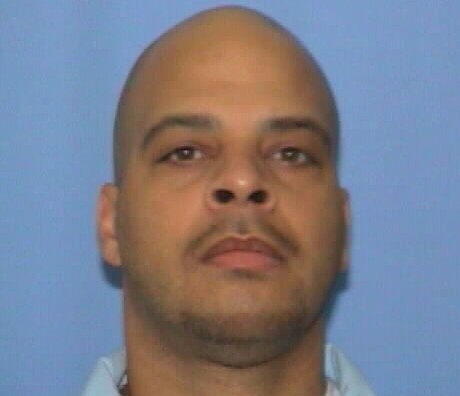
Charles Rodman Campbell: Murder, Revenge, and a Cold Case Solved by DNA
Overview
Charles Rodman Campbell was an American murderer, rapist, and serial killer whose known crimes in Washington stretched from the mid-1970s into the early 1980s. For decades, he was primarily remembered for the April 14, 1982 murders of Renae Wicklund, her eight-year-old daughter Shannah Wicklund, and their neighbor Barbara Hendrickson in Clearview, Washington. The killings were closely connected to Campbell's earlier sexual assault of Renae and to testimony that Renae and Hendrickson had given against him. Campbell was convicted of three counts of aggravated first-degree murder and sentenced to death.
Campbell's known murder count later increased. In 2023, DNA evidence linked him to the previously unsolved 1975 killing of 25-year-old University of Washington graduate student Hallie Ann Seaman in Seattle. That discovery established a separate homicide years before the Clearview triple murder and transformed the historical understanding of Campbell's criminal activity. Because Seaman was killed in a separate episode from the three 1982 victims, Campbell is now associated with four known homicide victims in two distinct periods of violence.
The 1974 Attack on Renae Wicklund
The events that eventually led to the Clearview murders began in December 1974. Renae Wicklund was living in Clearview, Washington, with her young daughter Shannah when Campbell attacked her. During the assault, Campbell threatened Renae with a knife and used the threat of violence against her one-year-old daughter to force Renae to submit to sexual acts.
After Campbell left, Renae sought help. Barbara Hendrickson, a neighbor and friend, became involved in the aftermath and later testified when Campbell was prosecuted. Campbell was not immediately captured, and the case remained unresolved while he was at large. He was eventually arrested in 1976 and identified as Renae's attacker.
Renae Wicklund and Barbara Hendrickson both became important witnesses in Campbell's prosecution. Campbell was convicted of first-degree assault and sodomy and sentenced to prison. The testimony of the two women helped ensure that he was incarcerated, and prosecutors would later argue that Campbell developed a deep resentment toward them because of their roles in sending him to prison.
The Unsolved Murder of Hallie Ann Seaman
While Campbell was still a fugitive from the Wicklund attack, another young woman was murdered in Seattle. Hallie Ann Seaman was 25 years old and a graduate student at the University of Washington, where she was studying architecture. She was only a short distance from completing her master's degree and was reportedly interested in designing high-quality affordable housing.
Seaman was last seen alive on the evening of April 29, 1975, while working at a drafting table in the University of Washington's architecture building. By the following afternoon, April 30, her body had been discovered concealed in vegetation near a parking area in Seattle's Eastlake/South Lake Union area. Investigators determined that she had been stabbed repeatedly and believed she had been killed elsewhere before her body was left at the discovery site.
Her vehicle was later found in another location after its interior had been set on fire, apparently in an attempt to destroy evidence. Despite an extensive investigation, police could not identify Seaman's killer at the time. Her homicide remained unsolved for nearly five decades and was at various times examined alongside other killings of women in Washington during the 1970s.
The case changed dramatically after investigators obtained a DNA profile from Campbell using biological material preserved after his death. Campbell had been convicted before modern offender DNA databases became standard, meaning his profile had never originally been entered into the system. After his DNA was added, investigators received a match connecting him to evidence from the Seaman homicide.
In 2023, investigators identified Campbell as the person responsible for Hallie Seaman's murder. Because Campbell had been executed nearly thirty years earlier, no criminal prosecution was possible. Nevertheless, the DNA match finally provided investigators and Seaman's family with the identity of the man responsible and revealed that Campbell had killed years before the murders for which he was executed.
Release to Work Release
After his conviction for attacking Renae Wicklund, Campbell served several years in the Washington prison system. In March 1982, he was transferred to a work-release facility in Everett. The placement allowed him considerably greater freedom than he had inside a conventional prison.
Renae Wicklund and Barbara Hendrickson had reason to fear Campbell because they had testified against him, yet the circumstances surrounding his transition into work release became a major point of controversy after their deaths. The fact that Campbell was able to return to the neighborhood of the woman whose testimony had helped imprison him would later produce intense criticism of Washington's correctional system.
The Clearview Triple Murder
On April 14, 1982, Campbell returned to Renae Wicklund's home in Clearview. Renae, then 31 years old, was sick and had remained home that day. Her daughter Shannah was eight. Barbara Hendrickson, 51, went to the Wicklund residence during the afternoon to help her friend and check on her condition.
The evidence later presented in court indicated that Renae was attacked first. She suffered a severe beating, strangulation, and a deep wound to her throat. Her injuries demonstrated the extraordinary violence of the assault, and investigators concluded that she died from massive blood loss.
Shannah Wicklund was also attacked and strangled before receiving a fatal wound to her neck. The eight-year-old suffered catastrophic blood loss. Her presence was particularly significant to the history of the case because Campbell had used Shannah as leverage during the assault on her mother years earlier, threatening the child when she was only an infant.
Barbara Hendrickson was also killed inside the Wicklund residence. Her throat was cut, causing fatal hemorrhaging. Hendrickson had not been a random visitor. She had helped Renae after the 1974 attack and had testified against Campbell during his earlier prosecution. Prosecutors therefore viewed the murders of Renae and Barbara as acts of revenge directed at two women whose testimony had contributed to Campbell's imprisonment.
At approximately 6:30 p.m., Barbara's husband, Donald Hendrickson, went to the Wicklund home because he had not heard from his wife. He discovered the three victims. The investigation quickly turned toward Campbell because of his history with Renae and Barbara and because he was on work release at the time.
Evidence Against Campbell
The physical and circumstantial evidence connecting Campbell to the murders was extensive. Witnesses reported seeing a man identified as Campbell near the Wicklund residence on the afternoon of April 14. Investigators also found evidence inside the house linking him directly to the scene.
A drinking glass recovered from the Wicklund kitchen contained a fingerprint matching Campbell. Jewelry became another important part of the case. Earrings belonging to Renae were among items taken from Campbell, while an earring identified as belonging to Shannah was discovered in Campbell's vehicle.
Investigators also recovered additional property connected to the victims after another resident of the work-release program directed authorities to an area along the Snohomish River where he and Campbell had gone on the evening of the killings. Divers recovered jewelry and other objects associated with the Wicklund household.
The prosecution's case was strengthened by Campbell's known hostility toward Renae Wicklund. His prior conviction created an unmistakable connection between Campbell and two of the adult murder victims. The evidence ultimately supported the prosecution's position that the murders of Renae and Barbara were related to their earlier testimony and that Shannah and Barbara were also killed to prevent identification or exposure.
Known Victims
- Hallie Ann Seaman, 25 - Killed during the night of April 29, 1975, in Seattle, Washington; her body was discovered on April 30 near a parking area in the Eastlake/South Lake Union area. She had been repeatedly stabbed. Campbell was identified as her killer through a posthumous DNA match announced in 2023. He was never prosecuted for her murder because he had already been executed.
- Renae Wicklund, 31 - Murdered April 14, 1982, at her home in Clearview, Snohomish County, Washington. Campbell had sexually assaulted her in 1974, and her testimony helped convict him. She was beaten, strangled, and suffered a fatal wound to her throat.
- Shannah Wicklund, 8 - Murdered April 14, 1982, at the Wicklund home in Clearview, Washington. She was Renae Wicklund's daughter and had been the infant Campbell threatened during his 1974 assault on Renae. Shannah was strangled and fatally wounded in the neck.
- Barbara Hendrickson, 51 - Murdered April 14, 1982, at Renae Wicklund's home in Clearview, Washington. Hendrickson was Renae's neighbor and friend and had testified in Campbell's earlier prosecution. She died from massive hemorrhaging after her throat was cut.
Arrest and Murder Trial
Campbell was taken into custody shortly after the Clearview murders and was ultimately charged with three counts of aggravated first-degree murder. Prosecutors announced their intention to seek the death penalty.
His trial took place in 1982. The prosecution presented eyewitness testimony, Campbell's previous relationship to the victims, fingerprints, stolen property, evidence recovered from his automobile, and objects retrieved from the Snohomish River. The Washington Supreme Court would later characterize the case against him as overwhelmingly strong.
On November 26, 1982, the jury found Campbell guilty of all three murders. Jurors also determined that aggravating circumstances were present. Among them were that Campbell was still serving a prison sentence when he committed the murders, that the killings of Renae Wicklund and Barbara Hendrickson were connected to their testimony against him, that victims were killed to conceal Campbell's identity, and that the murders occurred in connection with a burglary.
Death Sentence and Appeals
Following the murder convictions, a separate penalty proceeding was held. The jury concluded that there were insufficient mitigating circumstances to justify leniency, and Campbell was sentenced to death.
His case then moved through years of state and federal appeals. Campbell challenged numerous aspects of his trial and sentence, but his aggravated murder convictions and death sentence were repeatedly upheld. The case became one of Washington's best-known capital punishment cases, in part because of the brutality of the murders and in part because of questions about how Campbell had obtained work-release status despite his violent history.
The murders also intensified debate over the rights and protection of crime victims. Renae Wicklund and Barbara Hendrickson had cooperated with authorities and testified against Campbell, yet years later he was able to reach them while participating in a state-supervised release program. Lawsuits and political scrutiny followed the killings, and the Campbell case became an enduring example cited in discussions about victim notification and correctional supervision.
Execution
After more than a decade of appeals, Charles Rodman Campbell was executed at the Washington State Penitentiary in Walla Walla on May 27, 1994. He was 39 years old. Under Washington law at the time, condemned prisoners could choose between hanging and lethal injection. Campbell refused to make a selection, making hanging the required default method.
Campbell resisted prison officers before the execution and had to be physically restrained and transported to the execution area. He made no final statement before he was hanged shortly after midnight. His execution became historically significant as Washington's final execution by hanging.
The DNA Discovery Changes Campbell's History
For years after his execution, Campbell's documented murder record consisted of the three Clearview victims. The identification of Hallie Ann Seaman's killer changed that picture. Advances in DNA technology, combined with laws allowing biological profiles from deceased qualifying offenders to be entered into criminal databases, made it possible to obtain and compare Campbell's DNA decades after his death.
A preserved tissue sample from Campbell was used to develop his profile, which was entered into the national DNA system. The resulting match to evidence in Hallie Seaman's 1975 homicide gave investigators the break that generations of detectives had lacked.
The discovery showed that Campbell's lethal violence had begun at least seven years before the Clearview murders. It also placed him at large as a killer during a period when numerous homicides and disappearances of women were being investigated across Washington. Investigators have encouraged agencies with unsolved cases from the period when Campbell was free to examine whether additional evidence might connect him to other crimes. No additional homicide victim, however, should be attributed to Campbell without supporting evidence.
Legacy
Charles Rodman Campbell's case is remembered not only because of the violence of his crimes but because multiple failures and later technological advances shaped the story. Renae Wicklund survived a terrifying assault, cooperated with prosecutors, and helped put Campbell in prison, only to be murdered by him after he was given access to a work-release program. Barbara Hendrickson assisted Renae and testified against Campbell, and she too became a victim. Shannah Wicklund, who had been threatened by Campbell as an infant, was killed beside her mother eight years later.
Hallie Ann Seaman represents another part of Campbell's criminal history that remained hidden for almost half a century. Her murder in 1975 was investigated without the benefit of modern DNA databases. Only long after both Seaman and Campbell were dead did preserved evidence finally provide investigators with the ability to establish the connection.
Campbell was convicted during his lifetime of the murders of Renae Wicklund, Shannah Wicklund, and Barbara Hendrickson. The later DNA identification of Campbell in Hallie Seaman's homicide expanded his known victim count to four and showed that his murderous activity occurred during separate episodes in 1975 and 1982. His case remains an example of how preserved forensic evidence can reveal the full criminal history of an offender decades after a case appears to have reached its conclusion.