DeWayne Lee Harris: The Seattle Serial Killer Known as the "Jungle Killer"
Background
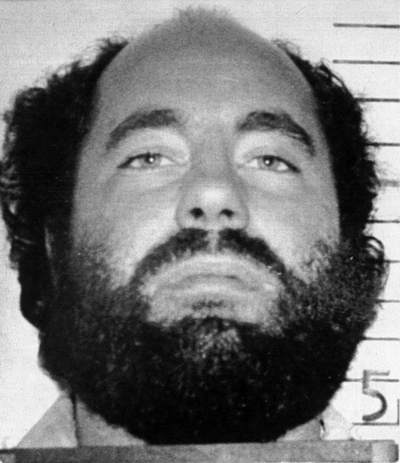
DeWayne Lee Harris was an American serial killer convicted of murdering three women in Seattle, Washington, during 1997 and 1998. Harris became associated with several nicknames, including the "Seattle Jungle Killer," "Chilly Willy," and the "Seattle Shoelace Slasher." The last nickname referred to a distinctive feature found at his crime scenes: the victims were discovered with shoelaces used to bind them.
Harris operated around some of Seattle's poorest and most isolated areas. Two of his victims were left in a wooded and undeveloped section of the city commonly called "The Jungle." The area was located beneath and around Interstate 5 and Interstate 90 and was frequented by homeless people. The secluded terrain made it possible for bodies to remain hidden for long periods.
The three women Harris was convicted of killing were Denise Marie Harris, Antoinette Jones, and Olivia Smith. Contemporary reporting established the dates on which their bodies were discovered, but it did not establish an exact date of death for every victim. For that reason, discovery dates should not automatically be treated as death dates. In the case of Antoinette Jones, forensic evidence indicated that she had probably been dead for approximately three months before her remains were found.
The Murder of Denise Marie Harris
Denise Marie Harris, who was not related to DeWayne Harris despite sharing his surname, was 42 years old. According to accounts of the case, DeWayne Harris encountered Denise in the First Avenue area of downtown Seattle. Harris later admitted responsibility for her killing.
Denise was strangled with a belt. After her death, her hands and ankles were tied with shoelaces. Her body was then abandoned in the area known as The Jungle beneath Seattle's interstate highways. The use of shoelaces to bind the victim later became an important similarity connecting this killing with another murder.
Denise's body was discovered on September 12, 1997. The available contemporary record clearly verifies this as the date her body was found, rather than establishing September 12 as her precise date of death. Her killing was the earliest of the three murders for which Harris was eventually convicted.
The Murder of Antoinette Jones
Antoinette Jones was 34 years old according to contemporary reporting from Harris's sentencing. Harris later admitted killing Jones and claimed that he believed she had stolen drugs from him.
Jones was strangled with a belt. Her wrists and ankles were bound with shoelaces, and another shoelace was found around her neck. The manner in which her body was restrained strongly resembled the treatment of Denise Marie Harris. Her remains were left in The Jungle, approximately half a mile from the area where Denise's body had previously been discovered.
Antoinette Jones's remains were discovered on February 1, 1998. Forensic examination indicated that she had been dead for roughly three months by that time, meaning that she was probably killed in late 1997. Because investigators could not establish a precise calendar date for her death, February 1 should be understood as the verified discovery date rather than the exact date she was murdered.
The Murder of Olivia Smith
Olivia Smith was 27 years old according to contemporary reporting. Her murder differed from the two strangulation killings but was ultimately connected to Harris through his confession and the investigation.
Harris encountered Smith around a building on Airport Way South in Seattle. Accounts of the case state that an argument developed between them involving drugs and sex. During the confrontation, Harris attacked Smith with a knife. She suffered multiple stab wounds as well as a severe wound to her throat.
Unlike Denise Harris and Antoinette Jones, Smith was not carried deep into The Jungle. Her body was left in or near a stairwell of a building in the same general part of Seattle. She was discovered on January 10, 1998. Available accounts do not establish a separate, conclusively verified date and time of death, so January 10 is best described as the date her body was found rather than an independently proven date of death.
Confirmed Victims
- Denise Marie Harris, 42 — Murdered in Seattle, Washington, in 1997. She was strangled with a belt, and her hands and ankles were bound with shoelaces. Her body was left in "The Jungle," beneath the Interstate 5 and Interstate 90 area. Her body was discovered on September 12, 1997. The precise date of death was not conclusively established in the available contemporary record.
- Antoinette Jones, 34 — Murdered in Seattle, Washington, probably during late 1997. She was strangled with a belt and bound with shoelaces before her body was abandoned in "The Jungle." Her remains were discovered on February 1, 1998. Forensic evidence indicated that she had been dead for approximately three months, but an exact date of death was not established.
- Olivia Smith, 27 — Murdered in Seattle, Washington. Harris attacked her with a knife during a confrontation, inflicting multiple stab wounds and a severe wound to her throat. Her body was discovered in a stairwell near Airport Way South on January 10, 1998. The precise date of death was not independently established in the available record.
The Investigation and Harris's Confession
Harris was not initially arrested for the three murders. He was in the King County Jail on an unrelated robbery matter when he began communicating with Seattle police. In a remarkable development, Harris contacted investigators and suggested that he could help them locate the person responsible for the killings.
Seattle investigators continued speaking with Harris and allowed him to present himself as someone who possessed inside knowledge about the murderer. Detectives gradually became convinced that Harris knew details because he was personally responsible for the crimes. The unusual attempt to insert himself into the investigation ultimately helped direct police attention toward him.
Harris eventually confessed to killing the three women. Investigators were able to compare what he told them with facts from the crime scenes. The shoelace bindings were particularly significant in the cases of Denise Harris and Antoinette Jones. Seattle police later described the removal and use of a victim's shoelaces as one of the killer's recognizable behaviors.
Harris reportedly spoke about murder in a cold and detached manner. He claimed that killing was something he enjoyed and described it in terms suggesting that he regarded murder as a form of entertainment or personal activity rather than recognizing the victims as human beings. He also made later claims that he had killed many more people. Those additional claims were not supported by enough evidence to produce additional murder convictions, and Harris's confirmed criminal responsibility remains centered on the three Seattle women.
Trial and Conviction
Harris was prosecuted in King County for three counts of first-degree murder. His courtroom behavior became another disturbing part of the case. During much of his trial he was kept in a restraining chair because of repeated disruptive behavior, including shouting, throwing objects, and moving or shoving courtroom furniture.
After several days of deliberation, the jury found Harris guilty of all three murders on December 15, 1998. Contemporary reporting stated that Harris reacted to the verdict by dropping his head backward and laughing.
The convictions legally established Harris as the killer of Denise Marie Harris, Antoinette Jones, and Olivia Smith. Prosecutors emphasized both the similarities among the crimes and Harris's own admissions when presenting the case against him.
Sentencing
On January 15, 1999, King County Superior Court Judge Marsha Pechman sentenced DeWayne Lee Harris to approximately 94 years in prison for the three murders. The sentence effectively ensured that he would spend the overwhelming majority, if not all, of his remaining life incarcerated.
Harris continued displaying disturbing behavior during the sentencing proceedings. Rather than showing conventional remorse, he made threatening and unsettling statements about violence and suggested that other people like him existed outside prison. His conduct reinforced the image prosecutors had presented during the trial: a manipulative offender who appeared to have extraordinarily little regard for the lives of the women he killed.
The Pattern of the Crimes
The Harris murders attracted particular attention because his victims were vulnerable women operating around areas where poverty, drugs, homelessness, and sex work were common. Offenders who target people living in such circumstances may believe disappearances will receive less immediate attention or that isolated locations will delay discovery of their crimes.
Two of Harris's victims were strangled and left in The Jungle, while Olivia Smith was killed with a knife and left in a stairwell. The shoelaces found binding the victims became one of the case's most recognizable details. Although Harris later claimed responsibility for numerous additional murders, investigators did not establish evidence sufficient to attribute dozens of other deaths to him.
DeWayne Lee Harris therefore remains a convicted three-time murderer whose known series lasted from 1997 into 1998. His case is remembered both for the brutal treatment of Denise Marie Harris, Antoinette Jones, and Olivia Smith and for the unusual way Harris attempted to involve himself in the police investigation before ultimately confessing to the crimes.