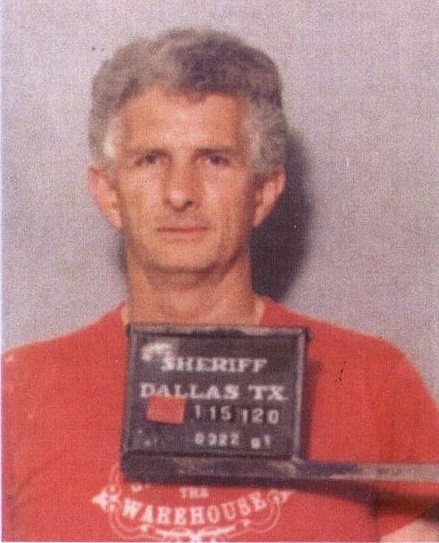
Harry Andrew Lanham: Texas Murderer and Suspected Serial Killer
Background and Criminal History
Harry Andrew Lanham was a Texas tow-truck driver, convicted rapist and violent offender who became a suspected serial killer during an investigation into the disappearances and murders of young women in southeastern Texas. Authorities believed Lanham and his associate, Anthony Michael “Tony” Knoppa Jr., were connected to as many as six killings committed between June and November 1971 in Harris, Montgomery and Brazoria counties. Some investigators reportedly suspected that Lanham’s true number of victims could have been even higher.
Lanham already had a documented history of violence before investigators began examining him as a possible multiple murderer. In one case, he was convicted of aggravated assault for repeatedly beating a five-year-old girl while staying with the child and her mother at a Houston motel. Witnesses noticed extensive bruising, and a physician described the child as severely battered. The girl testified that Lanham had struck her with his fists and a leather belt. In November 1971, the Texas Court of Criminal Appeals affirmed his sentence of two years in jail and a $1,000 fine for that assault.
Lanham also had a prior rape conviction. His record of sexual violence, physical brutality and attacks against vulnerable victims caused investigators to take particular interest in him when several young women disappeared or were found murdered in the Houston region during 1971.
The 1971 Murder Investigation
Lanham’s suspected series of crimes unfolded during a period in which several women vanished or were killed across neighboring Texas counties. Lanham and Knoppa were accused of operating together, although the exact role each man played in every case was never fully established in court. Contemporary accounts described the investigation as involving six young women, but only one murder produced convictions before Lanham’s death disrupted the remaining prosecutions.
Lanham reportedly made statements implicating himself in multiple crimes. His credibility, however, became a continuing problem for investigators. He sometimes provided information about supposed burial sites and then admitted that he had lied when police searches failed to locate remains. As a result, portions of his confessions could not be independently confirmed, leaving uncertainty about the identities and total number of his victims.
Known and Suspected Victims
- Pamela Huebner — last seen June 9, 1971, Houston, Texas: Pamela Huebner was a 22-year-old housewife who disappeared from Houston and was never heard from again. In 1972, Lanham confessed that he had raped and murdered her. He twice directed authorities to places where he claimed her body had been concealed, but neither search recovered her remains. Lanham later admitted that he had lied about the locations. Because Huebner has never been found, June 9, 1971, is her verified disappearance date rather than a confirmed date of death. Lanham was never prosecuted for her presumed murder.
- Linda Faye Sutherlin — November 4, 1971, Brazoria County, Texas: Linda Sutherlin was 21 years old when she was murdered in Brazoria County. She suffered an extraordinary number of gunshot wounds, with reports describing 72 wounds to her back, shoulders and legs. Her death became the only killing in the suspected series that resulted in murder convictions. Lanham received a 25-year prison sentence, while Knoppa received a 50-year sentence. The extreme violence inflicted on Sutherlin made her murder one of the central cases in the broader investigation.
- Additional unidentified or publicly undocumented victims — June through November 1971, southeastern Texas: Investigators believed Lanham and Knoppa may have been responsible for approximately six women killed in Harris, Montgomery and Brazoria counties. Publicly available summaries do not consistently identify all of the women or provide sufficiently reliable dates for their deaths. Authorities reportedly considered Lanham a possible suspect in as many as nine deaths, but many of those suspicions were never tested at trial.
The Murder of Linda Faye Sutherlin
Linda Faye Sutherlin’s killing was distinguished by its almost unimaginable level of violence. She was shot repeatedly in the back and other parts of her body, suggesting an attack intended not merely to kill but to inflict overwhelming destruction. The number of wounds indicated sustained gunfire and helped investigators portray the crime as part of a wider pattern of brutality associated with Lanham and Knoppa.
The prosecution of Sutherlin’s murder gave authorities their strongest legal case against the two men. Lanham was sentenced to 25 years, and Knoppa received 50 years. Although both men were linked to the offense, the precise sequence of events and the individual responsibility of each participant remained less clearly documented in surviving public accounts.
The convictions did not conclude the broader investigation. Both men still faced allegations involving other women, and Lanham was expected to serve as an important witness in cases against Knoppa. Lanham’s own statements were crucial because physical evidence tying the men to every suspected victim was limited or unavailable.
The Disappearance of Pamela Huebner
Pamela Huebner vanished from Houston on June 9, 1971. Her disappearance occurred near the beginning of the period during which Lanham and Knoppa were believed to have targeted women in southeastern Texas. Huebner left no confirmed trail after that date, and investigators came to suspect that she had been abducted and killed.
Lanham later confessed to raping and murdering Huebner. His statement appeared to provide investigators with a possible explanation for her disappearance, but he undermined the confession by repeatedly giving false information about the location of her body. Police followed his directions on two occasions, searching areas where he claimed to have disposed of her remains. Nothing was found, and Lanham admitted that he had deliberately misled them.
Without Huebner’s remains, forensic evidence or reliable directions to a crime scene, prosecutors could not build a complete murder case. She remains classified as missing, although foul play has long been suspected. Lanham’s confession continues to be a major part of her case, but the absence of physical confirmation means that the exact circumstances of her disappearance and presumed death remain unresolved.
Relationship with Anthony Michael Knoppa Jr.
Anthony Michael Knoppa Jr. was a convicted rapist who was investigated as Lanham’s partner in the suspected murder series. Authorities believed the men traveled through the Houston region and surrounding counties, attacking young women during 1971. Their association complicated the investigation because detectives had to determine whether both men participated directly in every killing or whether one man had committed certain crimes alone.
Lanham became especially important to the prosecution because he supplied statements implicating Knoppa in additional offenses. Some pending cases depended heavily on Lanham’s willingness and ability to testify. His history of lying to investigators weakened his reliability, but without him, prosecutors had limited evidence with which to pursue several of the allegations.
Lanham’s Death and the Collapse of Other Cases
Lanham died after being shot by law-enforcement officers during an attempted escape from the Harris County Jail. Accounts differ regarding whether the shooting occurred on December 30, 1972, or December 30, 1973. Available biographical records place his death on December 30, 1972, while some later case summaries give 1973. Because of that conflict, the exact year should be treated cautiously.
His death had an immediate effect on the investigations involving Knoppa. Lanham had been the principal witness expected to connect Knoppa to several of the other suspected murders. Once Lanham could no longer testify, prosecutors dropped pending charges that depended on his statements. The legal collapse prevented a courtroom examination of much of the suspected series and left several families without definitive answers.
Knoppa eventually served approximately 15 years of his 50-year sentence and was released from prison in 1989. The remaining allegations did not result in additional convictions, largely because Lanham’s death removed the prosecution’s key witness and because evidence in the older cases was insufficient to proceed independently.
Extent of Lanham’s Crimes
Harry Andrew Lanham is commonly described as a suspected serial killer rather than a fully confirmed serial murderer with a complete, legally established victim list. He was convicted in connection with Linda Faye Sutherlin’s murder and confessed to killing Pamela Huebner, but Huebner’s body was never found and he was never charged in her case. Investigators nevertheless believed that Lanham and Knoppa were responsible for a broader series involving approximately six women.
Some authorities reportedly suspected Lanham of involvement in as many as nine deaths. Those estimates were based on his confessions, the geographic and chronological concentration of the cases, his association with Knoppa and his established history of sexual and physical violence. However, Lanham’s false statements and the loss of prosecution opportunities after his death prevented investigators from conclusively proving the full extent of his crimes.
Legacy of the Investigation
The Lanham investigation illustrates the difficulties authorities faced when investigating connected murders before modern DNA profiling, computerized case comparison and centralized evidence databases. Detectives had to depend heavily on witness testimony, confessions and physical searches. When Lanham lied about burial locations or provided unverifiable accounts, investigators had few scientific methods available to test his claims.
His death ensured that many questions would remain unanswered. The names and precise circumstances of every woman believed to have been killed by Lanham and Knoppa were never conclusively established in public records. Pamela Huebner’s remains have never been recovered, and the prosecutions involving several other suspected victims were abandoned before trial.
Harry Andrew Lanham therefore occupies an uncertain but disturbing place in Texas criminal history. He was a convicted violent offender and murderer whose own confession linked him to another presumed killing. Authorities believed those crimes were only part of a larger series, but his dishonesty, his death during an escape attempt and the resulting collapse of pending cases prevented the suspected full pattern of violence from ever being completely documented.