Rodney Lynn Halbower and the Gypsy Hill Murders
Background
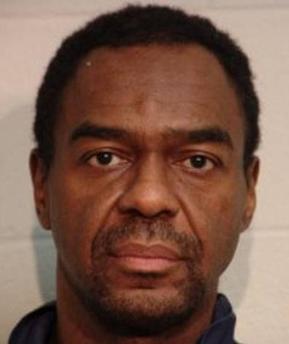
Rodney Lynn Halbower, born June 27, 1948, is an American murderer, rapist, and suspected serial killer whose name became closely associated with a group of violent crimes known as the Gypsy Hill killings or San Mateo Slasher murders. The murders occurred primarily in San Mateo County, California, during the first months of 1976, with another closely related homicide occurring in Reno, Nevada. The victims were young women and teenage girls, several of whom were stabbed and sexually assaulted.
For decades, investigators believed that a single unidentified killer might have been responsible for most or all of the Gypsy Hill murders. Later DNA testing revealed a more complicated story. Halbower was conclusively linked to the murders of Veronica Cascio and Paula Baxter and was convicted of killing them in 2018. DNA evidence also linked him to the murder of Michelle Mitchell in Reno. Other women, including Tanya Blackwell and Carol Booth, have been regarded as possible Halbower victims, although he has never been charged with their murders. Another woman, Denise Lampe, was originally included in the Gypsy Hill series but was later proven through DNA evidence to have been killed by a different man. The unsolved murder of Idell Friedman in San Francisco has also been discussed as a potentially related crime, but no established evidence directly connects her murder to Halbower.
Halbower Before the Murders
Halbower had an extensive criminal history long before his connection to the Gypsy Hill cases was discovered. As a young man, he accumulated convictions involving burglary and robbery and repeatedly escaped or attempted to escape from custody. By 1975, he had moved to Reno, Nevada. In December 1975, he was arrested for sexually assaulting a teenage girl. He was released on bail while the case proceeded, leaving him free during the early months of 1976 when the Gypsy Hill murders began.
This period of freedom became extremely important decades later when investigators reconstructed Halbower's movements. He was physically capable of traveling between Nevada and Northern California and was not confined during the period in which Veronica Cascio, Tanya Blackwell, Paula Baxter, Michelle Mitchell, Carol Booth, Idell Friedman, and Denise Lampe were attacked or disappeared.
Victims and Cases Connected to the Investigation
- Veronica "Ronnie" Cascio, 18 — January 8, 1976 — Pacifica, California: Cascio disappeared after leaving her home in Pacifica on January 7, 1976. She was reportedly walking toward a nearby bus stop. Her body was discovered the following day near a creek on the grounds of Sharp Park Golf Course. Cascio had been stabbed approximately 30 times. Biological evidence preserved from her body was tested decades later and matched Rodney Halbower. He was convicted of her murder in 2018.
- Tatiana "Tanya" Marie Blackwell, 14 — disappeared January 24, 1976 — Pacifica, California: Blackwell left her home in Pacifica on January 24 and disappeared while reportedly walking to a nearby store. Her body was not discovered until June 6, 1976, when young people found her remains in a wooded area near Sharp Park Road in the Gypsy Hills section of Pacifica. She had been stabbed repeatedly. Because her body was recovered months after she disappeared, an exact date of death could not be conclusively established. Her murder was considered part of the original Gypsy Hill series. Halbower has been considered a possible suspect, but he has never been charged with killing her and no publicly established DNA evidence has tied him to the crime.
- Paula Louise Baxter, 17 — February 1976 — Millbrae, California: Baxter disappeared after leaving Capuchino High School in San Bruno on the evening of February 4, 1976. Her vehicle was found abandoned nearby. Her body was discovered on February 6 in brush behind a church on Ludeman Lane in Millbrae. Baxter had been sexually assaulted, stabbed several times, and struck in the head with a heavy object. Biological evidence collected during the investigation was preserved and later produced a DNA profile matching Halbower. He was convicted of Baxter's murder in 2018.
- Michelle Mitchell, 19 — February 24, 1976 — Reno, Nevada: Mitchell was a nursing student at the University of Nevada, Reno. On February 24, her Volkswagen Beetle developed mechanical trouble near the university. Later that evening, she was discovered murdered inside the garage of a nearby residence. Her hands had been bound and her throat had been cut. DNA recovered from cigarette butts associated with the crime scene was later linked to the same male DNA profile found in evidence from the California Gypsy Hill cases and ultimately to Halbower. Mitchell's murder had previously resulted in the wrongful conviction of Cathy Woods.
- Carol Lee "Beedy" Booth, 26 — disappeared March 15, 1976 — South San Francisco, California: Booth disappeared while traveling home after getting off a bus on El Camino Real. Her remains were discovered in early May 1976 in a shallow grave in the South San Francisco area near Colma Creek. Because of the condition of her remains, investigators could not establish a precise date of death. Booth's murder became part of the original Gypsy Hill investigation. Halbower has been regarded as a possible suspect, but he has never been charged with her murder and no publicly established DNA evidence has conclusively linked him to the crime.
- Idell Mona Friedman, 21 — March 17, 1976 — San Francisco, California: Friedman was found murdered inside her apartment at 116 Fairmount Street in San Francisco. She had recently begun working for an import company, and a concerned co-worker reportedly discovered her after she failed to appear for work. Friedman had been stabbed, and her apartment had been ransacked. Her murder occurred during the same period as the Gypsy Hill killings and was later discussed as a possibly related case. However, there is no established DNA or other forensic evidence connecting Halbower to Friedman's murder. She should therefore be regarded as a possible related-case victim rather than a confirmed or strongly suspected victim of Halbower. Her murder remains unsolved.
- Denise Lampe, 19 — April 1, 1976 — Daly City, California: Lampe was found stabbed to death inside her Ford Mustang in a parking area at Serramonte Center. She had suffered numerous stab wounds. Her murder was originally included among the Gypsy Hill killings and for years investigators believed she might have been another victim of the same killer responsible for the Cascio and Baxter murders. Modern DNA testing eventually proved that Halbower was not responsible. DNA evidence identified Leon Melvin Seymour as Lampe's killer, and Seymour was later convicted of her murder.
The Murder of Veronica Cascio
Veronica Cascio was among the earliest victims in the series. The 18-year-old disappeared on January 7, 1976, after leaving her Pacifica home. Her body was discovered the next day on the grounds of Sharp Park Golf Course. She had suffered approximately 30 stab wounds, demonstrating the extreme violence of the attack.
At the time, investigators had no reliable way to identify her killer from the biological evidence that had been collected. The evidence was nevertheless preserved. Nearly four decades later, modern forensic testing produced a male DNA profile. That profile eventually matched Rodney Halbower and became one of the central pieces of evidence used to prosecute him.
The Disappearance and Murder of Tanya Blackwell
Only a few weeks after Cascio's murder, 14-year-old Tanya Blackwell disappeared from Pacifica. She left home on January 24, 1976, and was reportedly walking to a nearby store. She never returned.
Her family and police searched for her, but there was no immediate sign of what had happened. On June 6, more than four months after she vanished, her remains were discovered in a wooded area near Sharp Park Road. Blackwell had been stabbed repeatedly.
The location of her body and the method of attack caused investigators to associate her murder with the other Gypsy Hill killings. When Halbower was identified decades later, investigators considered the possibility that he had also murdered Blackwell. Unlike the Cascio and Baxter cases, however, no publicly established DNA evidence has conclusively connected him to Blackwell's death.
The Murder of Paula Baxter
Paula Baxter was a 17-year-old student at Capuchino High School. On February 4, 1976, she disappeared after leaving the school following evening activities. Her automobile was found abandoned nearby, but Baxter herself was missing.
Two days later, on February 6, her body was discovered in brush behind a church on Ludeman Lane in Millbrae. Baxter had been sexually assaulted and stabbed. She had also suffered severe blunt-force injuries to her head. The brutality of the attack and its proximity in time and location to Cascio's killing immediately raised concerns that the crimes might be connected.
Evidence collected from Baxter's body remained stored for decades. Modern DNA testing ultimately showed that the same male profile connected with Cascio was also present in the Baxter investigation. That profile matched Halbower and provided prosecutors with powerful forensic evidence linking him to both murders.
The Murder of Michelle Mitchell
On February 24, 1976, 19-year-old University of Nevada, Reno nursing student Michelle Mitchell experienced car trouble near the university. Her Volkswagen Beetle became disabled, leaving her vulnerable in the area around the campus.
Mitchell was later discovered inside the garage of a nearby residence. Her hands had been bound and her throat had been cut. Investigators recovered cigarette butts associated with the crime scene, but forensic technology available in 1976 could not provide the kind of genetic identification that would become possible decades later.
The Mitchell investigation initially took a disastrous direction. Cathy Woods, a woman receiving psychiatric treatment, made statements that authorities interpreted as a confession. Woods was convicted of Mitchell's murder and spent decades behind bars.
When modern DNA testing was eventually performed, the genetic evidence did not implicate Woods. Instead, DNA from the Mitchell scene was connected to biological evidence from the Gypsy Hill investigations in California. The DNA profile was ultimately matched to Rodney Halbower. Woods' conviction was overturned and she was released after spending more than three decades imprisoned for a murder she did not commit.
The Disappearance and Murder of Carol Booth
Carol Lee "Beedy" Booth was 26 years old when she disappeared on March 15, 1976. She had reportedly gotten off a bus on El Camino Real in South San Francisco and was walking toward her home. She never arrived.
Her remains were discovered weeks later in early May in a shallow grave near Colma Creek in South San Francisco. Because considerable time had passed between Booth's disappearance and the discovery of her body, investigators could not establish an exact date on which she had been killed.
Booth's disappearance, the location of her remains, and the short period separating her case from the other murders caused investigators to include her in the Gypsy Hill series. Halbower has subsequently been considered a possible suspect, but the evidence against him in Booth's case is substantially weaker than the evidence in the Cascio and Baxter murders. He has never been charged with killing Booth.
The Unsolved Murder of Idell Friedman
Idell Mona Friedman was 21 years old and had recently started a new job with an import business when she was murdered in San Francisco. On March 17, 1976, Friedman was found dead inside her apartment at 116 Fairmount Street after failing to appear for work. Her apartment had been ransacked and she had been stabbed.
The timing of Friedman's murder is notable. It occurred only two days after Carol Booth disappeared and during the same period in which the series of violent murders attributed to the San Mateo Slasher was unfolding on the Peninsula. Investigators and later researchers therefore examined the possibility that her death was connected to the broader series.
However, Friedman should not be presented as a confirmed Halbower victim. No publicly established DNA evidence, conviction, or comparable forensic connection links Halbower to her killing. Her murder remains unsolved. The most accurate description is that Friedman was the victim of a contemporaneous unsolved homicide that has been considered potentially related to the broader Gypsy Hill investigation.
The Murder of Denise Lampe
On April 1, 1976, 19-year-old Denise Lampe was discovered murdered inside her Ford Mustang near Serramonte Center in Daly City. She had been stabbed approximately 20 times. Because of the timing, the victim's age, and the violent use of a knife, investigators initially grouped Lampe's death with the other Gypsy Hill killings.
For decades, Lampe was routinely described as another victim of the unidentified San Mateo Slasher. Once DNA testing became available, however, evidence from her murder produced a different result. The genetic profile did not match Halbower.
The evidence instead led investigators to Leon Melvin Seymour. Seymour was eventually prosecuted and convicted of Lampe's murder. The discovery demonstrated that the original Gypsy Hill series was not the work of a single offender. At least two different killers had committed murders that investigators had once believed belonged to one series.
The DNA Breakthrough
The decisive development in the Gypsy Hill investigation came nearly four decades after the murders. Advances in forensic DNA analysis allowed investigators to return to evidence preserved from the original crime scenes. Biological evidence associated with Veronica Cascio and Paula Baxter produced the same male DNA profile.
Investigators also discovered that the profile was consistent with DNA recovered from cigarette butts connected to Michelle Mitchell's murder in Reno. The presence of the same genetic profile in cases separated by hundreds of miles provided investigators with a major clue that the California and Nevada murders were connected.
Halbower was already incarcerated for unrelated violent crimes when investigators obtained a DNA sample from him. His genetic profile matched the evidence connected with Cascio and Baxter. The discovery transformed a series of decades-old cold cases into prosecutable murders.
Halbower's Violent Criminal History
The murder investigation also brought renewed attention to Halbower's long record of violent crime. He had repeatedly been arrested, imprisoned, paroled, and returned to custody. His offenses included burglary, robbery, sexual assault, escape, rape, and attempted murder.
Halbower also demonstrated a repeated ability to escape from confinement. During one escape from custody decades after the Gypsy Hill murders, he traveled to Oregon and violently attacked a woman. She survived the assault and Halbower was eventually convicted of rape and attempted murder.
His criminal record became important when investigators reconstructed his whereabouts during 1976. Halbower had been arrested in Nevada for sexually assaulting a teenage girl in late 1975 but was released on bail. He was therefore free when Cascio, Blackwell, Baxter, Mitchell, Booth, Friedman, and Lampe were attacked or disappeared.
Arrest and Prosecution for the Gypsy Hill Murders
In September 2014, law enforcement publicly identified Halbower as a person of interest in the Gypsy Hill investigation after DNA testing connected him to the cases. Authorities subsequently transferred him to California.
On January 22, 2015, Halbower was formally charged with the murders of Veronica Cascio and Paula Baxter. Prosecutors focused on the two murders for which they possessed strong forensic evidence rather than attempting to charge him with every homicide historically associated with the Gypsy Hill series.
The prosecution faced unusual difficulties because more than four decades had passed. Witnesses had died, memories had faded, and the original investigators had aged or were no longer available. The preserved biological evidence nevertheless provided something the original detectives had never possessed: a genetic identification of the man who had been in intimate contact with the victims.
Trial and Conviction
Halbower's trial began in San Mateo County in 2018. Prosecutors presented the DNA evidence connecting him to Veronica Cascio and Paula Baxter and described the similarities between the two murders. Both victims were young women killed in San Mateo County within weeks of each other, and preserved biological material connected the same man to both crime scenes.
On September 18, 2018, a jury found Halbower guilty of two counts of first-degree murder for the deaths of Cascio and Baxter. The verdict came more than 42 years after the two teenagers were killed.
On October 10, 2018, Halbower was sentenced to two consecutive terms of life imprisonment without the possibility of parole. The sentence ensured that he would remain incarcerated for the remainder of his life.
Confirmed, Suspected, and Related Victims
One of the most important aspects of the Halbower case is distinguishing between crimes that have been proven and crimes that merely resemble his known murders.
Veronica Cascio and Paula Baxter are confirmed victims because Halbower was tried and convicted of murdering them. Michelle Mitchell has a strong forensic connection to Halbower because DNA associated with her crime scene matched the profile linked to the California murders and to Halbower.
Tanya Blackwell and Carol Booth remain possible or suspected victims because their murders were part of the original Gypsy Hill investigation and occurred while Halbower was free, but no publicly established forensic evidence has conclusively demonstrated that he killed them.
Idell Friedman belongs in a more cautious category. Her stabbing death occurred in San Francisco during the same period and has been considered potentially related to the murder series, but there is no established evidence directly tying Halbower to her crime. She should therefore be described as a possible related-case victim, not as a confirmed Halbower victim.
Denise Lampe should no longer be listed as one of Halbower's victims. Although her murder was originally included in the Gypsy Hill series, DNA testing identified Leon Melvin Seymour as her killer.
The Wrongful Conviction of Cathy Woods
The investigation into Michelle Mitchell's death became one of the most significant wrongful-conviction cases connected to the series. Cathy Woods was convicted of murdering Mitchell even though the physical evidence did not establish that she had committed the crime.
Woods spent more than three decades imprisoned. Modern DNA analysis eventually revealed that male genetic evidence from the Mitchell crime scene matched evidence from the California Gypsy Hill murders. The discovery helped destroy the case against Woods and redirected investigators toward Halbower.
Woods was ultimately cleared, making the Mitchell investigation an example not only of the power of modern forensic science to identify offenders but also of its ability to correct convictions based on unreliable or incomplete evidence.
Why the Gypsy Hill Series Was So Difficult to Solve
The original investigators faced a series of murders committed across several neighboring communities with few witnesses and limited forensic technology. DNA profiling did not exist in 1976. Detectives instead relied on fingerprints, blood typing, witness statements, physical evidence, and comparisons between the circumstances of different crimes.
The similarities between the victims understandably suggested a single offender. Several were young women or teenage girls, several were stabbed, and several disappeared while alone. The crimes also occurred within a relatively short period.
Modern DNA testing eventually demonstrated the danger of assuming that every similar murder had been committed by the same person. Halbower was connected to some of the cases, while Denise Lampe was killed by Leon Seymour. Idell Friedman's murder remains unsolved, and the murders of Tanya Blackwell and Carol Booth have not been conclusively attributed to Halbower.
Legacy of the Rodney Halbower Investigation
The Rodney Halbower investigation is an extraordinary example of a cold case transformed by forensic science. Veronica Cascio and Paula Baxter were murdered in 1976, yet their killer was not convicted until 2018. Evidence carefully preserved for more than four decades ultimately supplied the information investigators had been missing.
The case also changed the historical understanding of the Gypsy Hill killings. The murders were once described as the work of a single mysterious San Mateo Slasher. DNA testing demonstrated instead that several violent offenders were operating during the same period and that apparently connected cases could have different perpetrators.
Halbower's confirmed responsibility is therefore narrower than some accounts suggest but still significant. He was convicted of murdering Veronica Cascio and Paula Baxter, and forensic evidence strongly connects him to Michelle Mitchell's murder. Tanya Blackwell and Carol Booth remain possible victims whose cases have not been conclusively resolved. Idell Friedman was murdered during the same period and her case has been considered potentially related, but there is no established evidence identifying Halbower as her killer. Denise Lampe, although historically classified as part of the same series, was proven through DNA evidence to have been murdered by another man.
The surviving evidence ultimately accomplished what investigators in 1976 could not: it identified Halbower as the killer of two young women, helped expose a wrongful conviction in Nevada, separated unrelated murders that had once been grouped together, and provided answers to families who had waited more than forty years for justice.