Reginald Perkins: A Serial Killer Linked to Murders in Ohio and Texas
Early Life and Criminal Background
Reginald Perkins was born on April 29, 1955, in Woodruff County, Arkansas. He spent part of his youth in Texas before moving to Cleveland, Ohio, during the 1970s. He worked in several occupations, including as a laborer, plumber and truck driver. Behind this ordinary appearance, however, Perkins developed a lengthy history of sexual violence, threats and suspected murder.
Perkins frequently targeted women or girls who were connected to him through relatives, romantic relationships or his neighborhood. His known and suspected murder victims were generally strangled, and several were killed after they or members of their families became aware of his sexual crimes. Investigators later viewed this pattern as evidence that Perkins used murder both to dominate victims and to silence people who could expose him.
Sexual Assaults in Cleveland
On April 4, 1980, Perkins sexually assaulted a 12-year-old girl inside an abandoned house on Cleveland's East Side. The child was reportedly a friend of his younger sister. This attack became one of the offenses for which he was later convicted.
On December 13, 1980, Perkins attempted to sexually assault another 12-year-old girl. She was the daughter of one of his neighbors. The assault was interrupted before he completed it, but Perkins allegedly threatened to kill anyone who discovered what he had attempted to do.
The second girl's mother, Jerry Dean Thomas, subsequently learned about the attack. Thomas was found strangled in her home several weeks later. Her killing became one of three Cleveland murders in which Perkins was considered the principal suspect, although he was never prosecuted for those deaths.
Suspected Murder of Paula Nelson
In 1979, Perkins began a relationship with Ramola Nelson Washington. She moved in with him the following year. Washington later asked Perkins to return a set of keys to her younger sister, 21-year-old Paula Nelson.
Paula Nelson was found strangled in her bedroom in Cleveland on October 23, 1980. Washington later recalled overhearing Perkins discussing Paula with his brother shortly before the body was discovered. She believed that something had happened between Perkins and her sister.
Years afterward, while Perkins was incarcerated in Texas, Washington testified that he telephoned her and admitted killing Paula. According to her account, Perkins asked for forgiveness. The alleged confession was presented during the punishment phase of his Texas capital murder trial, but he was never separately convicted of Paula Nelson's murder.
Suspected Murder of Jennie Morman
On January 4, 1981, 43-year-old Jennie Morman was found strangled inside her Cleveland apartment. A scarf had been used to strangle her, and pillows had been placed over her face. Perkins had a personal connection to the household because he was dating Morman's daughter, with whom he later had a child.
The relationship placed Perkins close to the victim and gave him access to information about her home and routine. Cleveland investigators questioned him about Morman's death, but the available evidence was not sufficient to charge him.
Suspected Murder of Jerry Dean Thomas
Jerry Dean Thomas, one of Perkins's neighbors, was found murdered in the basement of her Cleveland home on January 23, 1981. She had been strangled with the electrical cord from a hair dryer.
Thomas was the mother of the 12-year-old girl whom Perkins had attempted to sexually assault in December 1980. She had reportedly learned of the attempted assault shortly before her death. Because Perkins had threatened to kill anyone who discovered the crime, investigators considered the possibility that Thomas was murdered to prevent her from reporting him or testifying against him.
Ohio Convictions and Imprisonment
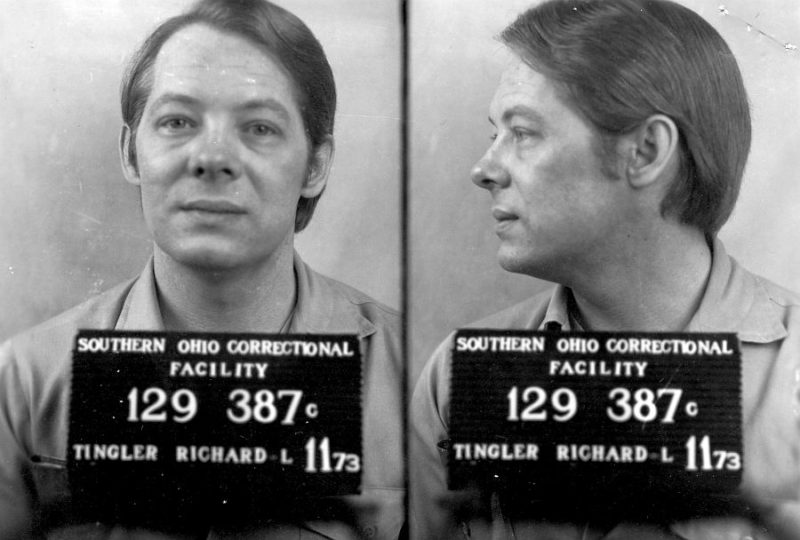
Perkins was prosecuted for the two attacks on the 12-year-old girls rather than for the three suspected murders. On November 12, 1981, he was convicted of offenses that included rape, attempted rape and gross sexual imposition. He received a life sentence in Ohio.
Despite his violent record, Perkins was eventually released on parole. He moved to Fort Worth, Texas, where he soon became associated with another pair of strangulation murders. His parole supervision later returned him to Ohio custody after he failed to comply with required sex-offender treatment or educational conditions. In 1999, an Ohio court formally classified him as a sexual predator.
Murders of Hattie Wilson and Shirley Douglas
On May 6, 1991, 79-year-old Hattie Wilson and her 44-year-old niece, Shirley Douglas, were found dead inside Wilson's apartment in Fort Worth, Texas. Both women had been strangled.
Perkins was connected socially to the family because he had been dating Wilson's granddaughter. Although investigators suspected him, the case initially remained unresolved. The forensic technology available at the time did not produce enough evidence for prosecutors to charge him.
The case was revisited years later as improved DNA testing became available. In 2008, biological evidence from the crime scene was matched to Perkins. The DNA results linked him to both killings and established that he was responsible for the double murder. Because he was already awaiting execution for another murder, no additional trial was completed before his death.
Murder of Gertie Mae Perkins
After being paroled again in 2000, Perkins returned to Texas and worked as a truck driver for a business operated by his father and stepmother. His stepmother, 64-year-old Gertie Mae Perkins, disappeared from her Fort Worth home on December 4, 2000, after failing to pick up her grandson from school.
When relatives and police examined her residence, they found signs that something was seriously wrong. A telephone had been disconnected, sections of carpeting had been removed, and bed sheets or other household items were missing. Investigators also discovered evidence suggesting that someone had attempted to clean or conceal a violent crime.
On the day Gertie disappeared, Perkins pawned a wedding ring belonging to her. He was arrested on December 5, 2000, for failing to register as a sex offender. During questioning, investigators focused on his criminal history, his access to Gertie's home and his possession of her property.
Perkins eventually directed authorities to Gertie's automobile, which had been left in a parking garage. Her body was found inside the trunk. She had been strangled, wrapped in bedding and placed in the vehicle. Prosecutors maintained that Perkins murdered her during a robbery and then attempted to hide her body and dispose of evidence.
Victims Linked to Reginald Perkins
- Paula Nelson, 21 — October 23, 1980 — Cleveland, Ohio: Found strangled in the bedroom of her home. Perkins was closely connected to her family and was later reported to have admitted killing her. He remained a suspect but was never convicted in this case.
- Jennie Morman, 43 — January 4, 1981 — Cleveland, Ohio: Found strangled with a scarf inside her apartment, with pillows covering her face. Perkins was dating Morman's daughter and was considered a suspect.
- Jerry Dean Thomas — January 23, 1981 — Cleveland, Ohio: Found strangled with a hair-dryer cord in the basement of her home. Thomas had learned that Perkins had attempted to sexually assault her 12-year-old daughter. Perkins was suspected but never prosecuted for her murder.
- Hattie Wilson, 79 — May 6, 1991 — Fort Worth, Texas: Found strangled inside her apartment. DNA testing completed in 2008 linked Perkins to her murder.
- Shirley Douglas, 44 — May 6, 1991 — Fort Worth, Texas: Wilson's niece, found strangled in the same apartment. DNA evidence also linked Perkins to her murder.
- Gertie Mae Perkins, 64 — December 4, 2000 — Fort Worth, Texas: Perkins's stepmother. She was strangled, wrapped in bedding and placed in the trunk of her car. Perkins was convicted of capital murder for killing her during a robbery.
Capital Murder Trial
Perkins was tried in Tarrant County, Texas, for the robbery and murder of Gertie Mae Perkins. Prosecutors presented evidence that he had access to her residence, possessed and pawned her wedding ring, and helped investigators locate the vehicle containing her body.
The prosecution also used Perkins's extensive history of sexual violence and suspected involvement in the Cleveland murders to demonstrate his continuing danger to society. Witnesses described his connections to Paula Nelson, Jennie Morman and Jerry Dean Thomas. Ramola Nelson Washington testified about the telephone conversation in which Perkins allegedly admitted killing her sister.
Another inmate testified that Perkins had spoken about killing Gertie, beating or attacking her, taking her property and concealing her body. The defense challenged the reliability of some witnesses, but the physical and circumstantial evidence surrounding Gertie's murder was substantial.
On March 4, 2002, Perkins was convicted of capital murder. On March 22, 2002, the court formally sentenced him to death.
DNA Identification and Serial Killer Classification
While Perkins was on Texas death row, investigators continued examining unresolved cases connected to him. In November 2008, DNA testing linked him to the murders of Hattie Wilson and Shirley Douglas. Those findings confirmed that Gertie's murder was not an isolated act and established Perkins as a serial killer responsible for at least three deaths.
The three Cleveland strangulations remained officially unresolved, but investigators considered Perkins a strong suspect in all of them. Each victim had a personal or family connection to him, and the killings occurred during a period in which he was committing sexual offenses and threatening potential witnesses. If he committed the Cleveland murders, his known period of homicidal activity extended from October 1980 through December 2000.
Execution
Reginald Perkins was executed by lethal injection at the Huntsville Unit in Huntsville, Texas, on January 22, 2009. He was 53 years old. Shortly before the execution, he maintained that he was innocent and claimed that the case against him had been built on lies and false testimony.
Perkins was pronounced dead at 6:24 p.m. His execution occurred only a few months after DNA evidence had definitively connected him to the 1991 Fort Worth double murder.
Legacy of the Case
Reginald Perkins's criminal history demonstrated the consequences of allowing an exceptionally violent offender to return repeatedly to the community. He had been convicted of serious sexual crimes, suspected in multiple strangulation murders and classified as a sexual predator before committing the murder that led to his death sentence.
He was convicted of one murder and scientifically linked to two others. Three additional Cleveland women were regarded as suspected victims. The similarities among the cases—including strangulation, personal access to the victims and apparent efforts to silence witnesses—created a pattern of violence spanning two states and approximately two decades.