Thomas Otis Knight: Kidnapper, Fugitive and Serial Killer
Early Life and Criminal History
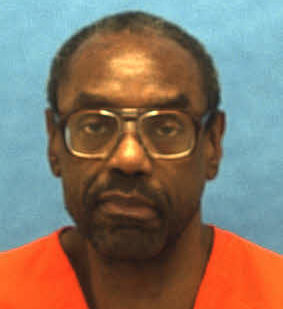
Thomas Otis Knight, who later changed his name to Askari Abdullah Muhammad, was born on February 4, 1951, in Fort Pierce, Florida. His childhood was marked by instability, violence and repeated encounters with the juvenile justice system. Knight began committing thefts at an early age and spent much of his adolescence in reform schools, detention facilities and prisons. By adulthood, he had developed an extensive criminal record that included burglary, robbery and other violent offenses.
Knight became one of Florida’s most notorious convicted murderers after a series of crimes committed during 1974 and 1980. His known victims included a Miami businessman and his wife, a Georgia liquor-store clerk and a Florida corrections officer. The killings occurred during separate episodes involving kidnapping, robbery, escape from custody and violence inside prison.
The Kidnapping of Sydney and Lillian Gans
On July 17, 1974, Knight approached 64-year-old Sydney Gans outside the business where Knight had previously worked in Miami, Florida. Armed with an automatic rifle, Knight forced Gans into his own Mercedes-Benz. He ordered him to drive to his residence, where Knight took Sydney’s 60-year-old wife, Lillian Gans, hostage as well.
Knight demanded $50,000 and forced the couple to travel to a bank. While Sydney entered the bank to obtain the money, he quietly informed bank officials that he and his wife were being held captive by an armed man. The authorities were alerted, and law-enforcement officers began following the Gans vehicle as Knight attempted to leave the Miami area with the couple and the cash.
The pursuit led toward a secluded construction area in southern Miami-Dade County. Officers temporarily lost sight of the Mercedes before locating it with its doors open. Lillian Gans was found dead inside the vehicle, while Sydney’s body was discovered a short distance away. Both victims had been shot at close range in the neck or back of the head.
Knight fled into a heavily wooded area while carrying the rifle and the stolen money. Approximately four and a half hours after the murders, officers discovered him hiding beneath dirt, weeds and vegetation. Blood was visible on his clothing, and the rifle and approximately $50,000 were found concealed near him.
Escape From the Dade County Jail
While awaiting trial for the murders of Sydney and Lillian Gans, Knight escaped from the Dade County Jail on September 19, 1974. He fled with ten other inmates, triggering a large manhunt. Although most of the escapees were quickly captured, Knight remained at large for more than three months.
During his time as a fugitive, Knight used the alias Edwin Van Williams and traveled through Florida and Georgia. He was accused of committing armed robberies and other violent crimes while attempting to avoid capture. His continued flight and willingness to use firearms caused the Federal Bureau of Investigation to add him to its Ten Most Wanted Fugitives list on December 12, 1974.
The Murder of William Culpepper
On October 21, 1974, while Knight was still a fugitive, he and an accomplice entered a liquor store in Cordele, Georgia. The men initially acted as though they intended to purchase a bottle. When a clerk turned to retrieve it, the pair announced a robbery and demanded money and the clerks’ wallets.
Knight and his accomplice opened fire inside the store. Clerk William Culpepper was shot three times and killed. A second clerk, identified as A. V. Norton, was shot twice but survived. The attackers escaped with approximately $641.
Georgia authorities linked Knight to the robbery and killing. However, he was not ultimately prosecuted in Georgia for Culpepper’s death, largely because he was already facing murder convictions and death sentences in Florida. The Georgia homicide nevertheless became part of the documented history of violent crimes attributed to Knight while he was an escaped prisoner.
Capture and Conviction
Federal agents located Knight in New Smyrna Beach, Florida, on December 31, 1974. He was arrested after authorities surrounded the rooming house where he was hiding. At the time of his capture, Knight possessed several weapons, including a sawed-off shotgun, a revolver and an automatic pistol.
Knight was returned to Miami and tried for the murders of Sydney and Lillian Gans. In 1975, a jury convicted him of both killings. He received two death sentences and was sent to Florida State Prison. Years of appeals followed, and his original sentences in the Gans case were later overturned because of errors during the penalty phase. He was eventually resentenced to death for those murders.
The Murder of Corrections Officer Richard Burke
Knight committed another murder while incarcerated on Florida’s death row. On October 12, 1980, he became angry after prison officials refused to permit a requested visit. According to the official case account, Knight made a threatening statement indicating that he intended to begin stabbing people.
Later that day, 48-year-old corrections officer Richard James Burke was helping escort death-row prisoners to the showers. When Burke opened Knight’s cell, Knight attacked him with a homemade weapon fashioned from a sharpened metal spoon.
Burke attempted to defend himself as Knight repeatedly stabbed him. Other officers heard Burke’s screams and rushed to the cell, where they found him on the floor trying to block the blows. Knight eventually obeyed an order to back away and discarded the weapon. Burke had suffered more than a dozen wounds, including a fatal stab wound to the heart.
Richard Burke had worked as a corrections officer at Florida State Prison for only several months. He left behind a wife and two children. Knight was separately convicted of Burke’s murder and received another death sentence.
Known and Attributed Victims
- Sydney Gans, 64 — July 17, 1974, Miami-Dade County, Florida: Gans was kidnapped at gunpoint outside his Miami workplace. Knight forced him to collect his wife and withdraw $50,000 from a bank. He was taken to a secluded area and shot to death near his Mercedes-Benz.
- Lillian Gans, 60 — July 17, 1974, Miami-Dade County, Florida: Lillian was abducted from her home after Knight took her husband hostage. She was forced to accompany Knight and Sydney during the ransom withdrawal. Her body was found inside the couple’s vehicle after she was shot at close range.
- William Culpepper — October 21, 1974, Cordele, Crisp County, Georgia: Culpepper was working in a liquor store when Knight and an accomplice committed an armed robbery. He was shot three times and killed. Another clerk was seriously wounded but survived. Knight was linked to the crime but was not prosecuted for the Georgia murder.
- Richard James Burke, 48 — October 12, 1980, Florida State Prison, Raiford, Florida: Burke was a corrections officer assigned to death row. Knight attacked him with a sharpened spoon after Burke opened his cell. Burke suffered more than a dozen wounds, including a fatal wound to the heart.
Appeals and Resentencing
Knight remained on death row for decades as state and federal courts reviewed his convictions and sentences. In 1987, a federal appeals court overturned the original death sentences imposed for the Gans murders because Knight had not been permitted to present certain background witnesses during the penalty phase of his trial. The murder convictions remained in place, and Knight was later resentenced to death.
His death sentence for the murder of Richard Burke also generated years of litigation. Knight’s attorneys raised arguments involving mental illness, the fairness of his trials, the length of his confinement and the procedures Florida intended to use during his execution. Courts repeatedly rejected his final attempts to prevent the sentence from being carried out.
Name Change and Conduct in Prison
During his incarceration, Knight converted to Islam and adopted the name Askari Abdullah Muhammad. Court records and news reports continued to identify him by both his birth name and his adopted name. His prison history was marked by disciplinary problems, hostility toward officials and the fatal attack on Officer Burke.
The murder of a corrections officer while Knight was already under death sentences became a central part of his case. Prosecutors argued that the killing demonstrated his continuing capacity for violence even in the highly controlled environment of death row.
Execution
Thomas Otis Knight was executed by lethal injection at Florida State Prison on January 7, 2014. He was 62 years old and had spent approximately 39 years under sentences of death. The execution warrant was based specifically on his conviction for murdering Officer Richard Burke, although the murders of Sydney and Lillian Gans remained an important part of his criminal record.
Knight declined to make a final statement. His execution ended one of Florida’s longest-running capital cases, nearly four decades after the kidnapping and murders that first placed him on death row.
Legacy of the Case
Knight’s crimes extended across several distinct stages of his life as an offender. He murdered a married couple during a carefully planned kidnapping for ransom, escaped from jail before trial, killed a store clerk while fleeing from authorities and murdered a corrections officer after being sentenced to death.
His case also became notable because of the extraordinary length of time between his convictions and execution. The repeated appeals, overturned sentences and resentencing proceedings kept the case active for decades. For the families of Sydney and Lillian Gans, William Culpepper and Richard Burke, the legal process continued long after the violent events of 1974 and 1980.
Thomas Otis Knight is generally identified as a serial killer because he was responsible for multiple murders committed during separate incidents and over an extended period. His documented history reflects escalating violence, repeated escapes from legal restraint and a willingness to kill both civilians and a law-enforcement officer.