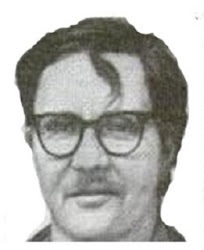
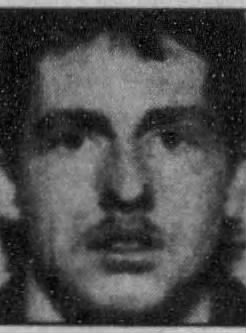
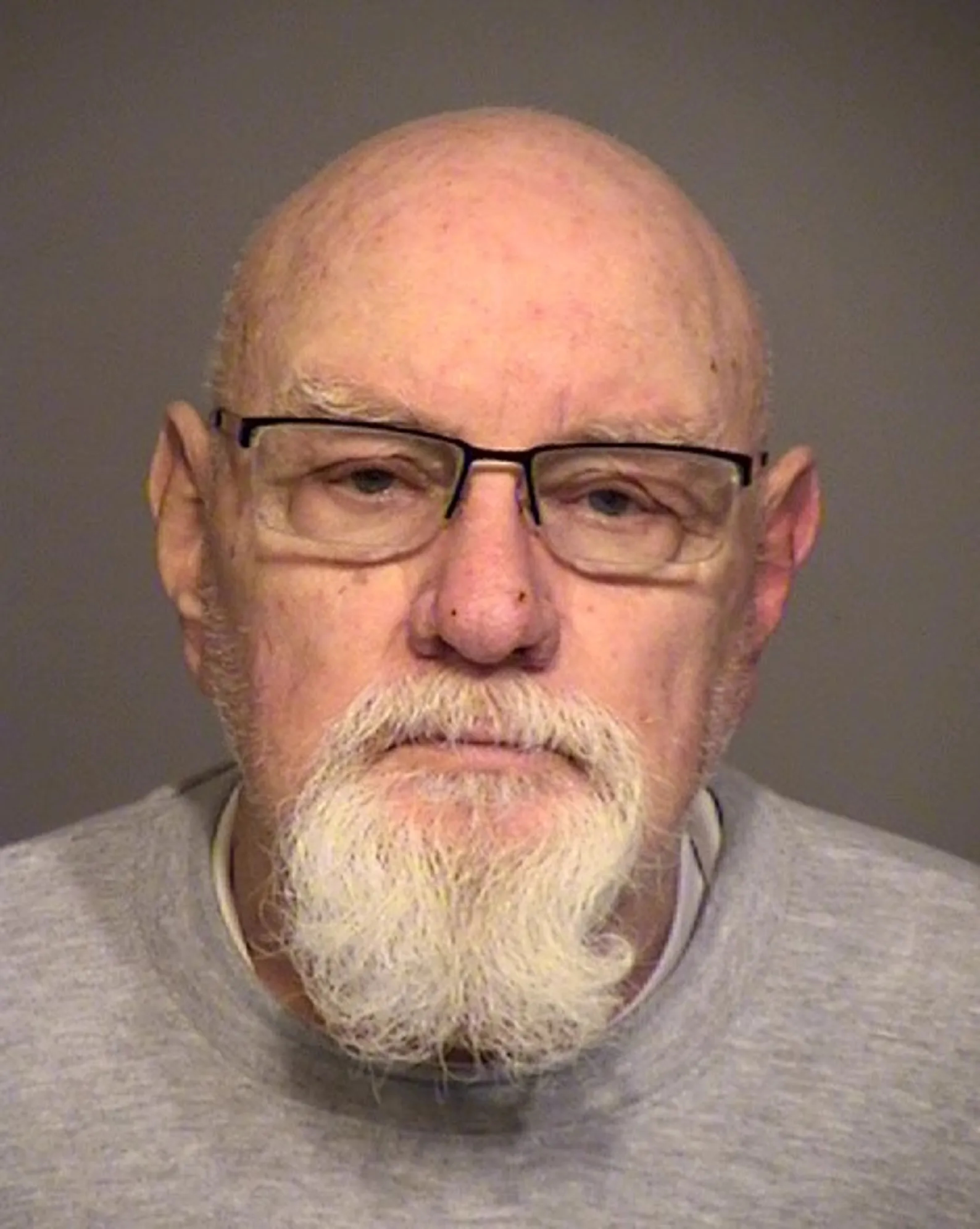
Michael Ronning: Convicted Murderer and Suspected Serial Killer
Overview
Michael Anthony Ronning was an American convicted murderer who portrayed himself as a roaming serial killer responsible for the deaths of young women in several states. He was conclusively convicted of only one murder: the 1985 kidnapping and killing of Diana Lynn Hanley in Arkansas. Over the following years, however, Ronning confessed or was linked as a suspect or person of interest in killings in Michigan, Texas and Florida. Some investigators believed that his movements placed him near a disturbing succession of disappearances and homicides, but prosecutors questioned the accuracy of several of his confessions.
Ronning frequently used the surname “Haroldson” and traveled between Michigan, Arkansas, Texas, Florida and other states. He worked temporary construction jobs, stayed with relatives or acquaintances and often moved shortly after violent crimes occurred nearby. His transient lifestyle made his movements difficult to reconstruct and gave investigators in several jurisdictions reason to examine unresolved cases from the early 1980s.
The most important distinction in any account of Ronning’s alleged crimes is that Diana Hanley was his only proven murder victim. The other women named in connection with him remain suspected victims. Ronning was never convicted of killing them, and conflicting evidence led some officials to describe him as an unreliable or false confessor.
Confirmed Victim
- Diana Lynn Hanley — Age 19. Hanley disappeared from her home on Bridger Road in Jonesboro, Arkansas, on January 6, 1985. Her body was discovered on January 19, 1985, near the O’Kean Cut-Off Road between Pocahontas and O’Kean in Randolph County, Arkansas. She had been bound and fatally stabbed in the throat.
The Murder of Diana Lynn Hanley
Diana Lynn Hanley lived with her partner, construction contractor Darrell Meredith, in a house outside Jonesboro. In December 1984, a man identifying himself as Michael Haroldson repeatedly approached Meredith in search of work. The man was actually Michael Ronning, who was wanted in Michigan on unrelated burglary charges. Meredith eventually hired him for temporary construction work.
On January 3, 1985, Ronning and another worker went to Meredith’s house to collect their wages. Meredith opened a lockbox containing approximately $1,100 in cash. Witness testimony later established that Ronning repeatedly looked toward the money and became noticeably quiet after seeing it. He was paid $77 and left the residence, but investigators believed the sight of the cash gave him a motive to return.
On the morning of January 6, Meredith left the house for work at approximately 7:20. Hanley remained at home wearing a red robe she had received for Christmas. Ronning failed to appear at the construction site that day. When Meredith returned home, Hanley’s Corvette was still in the driveway, but she had vanished. Her coat, purse, cigarettes and wallet remained inside. The lockbox had been emptied of approximately $700, and a large Bowie-style kitchen knife was missing.
Witnesses reported seeing a badly rusted, cream-colored 1965 Plymouth resembling Ronning’s vehicle at the house that morning. Police learned that “Michael Haroldson” was an alias and began watching Ronning’s residence near Pocahontas. When officers located him during the early hours of January 7, he was hiding in shrubbery approximately 75 yards behind the house.
A trapper discovered Hanley’s body on January 19. It had been left about half a mile from the O’Kean Cut-Off Road and partially concealed beneath tree branches. Her hands and feet had been bound. She had bruising along her jaw, scratches and abrasions on her thighs and three deep knife wounds across her throat. The missing knife was never established conclusively as the murder weapon, but the wounds had been inflicted with a large blade.
Prosecutors built a circumstantial case from Ronning’s unexplained absence from work, the sighting of his distinctive vehicle, the stolen money, his use of a false identity and his attempt to hide from officers. In 1986, a jury convicted him of capital murder. He received life imprisonment without the possibility of parole. The Arkansas Supreme Court affirmed his conviction on April 18, 1988.
Suspected Michigan Victims
- Margaret Mary “Maggie” Hume — Age 20. Hume was attacked in her apartment at 55 Stringham Road in Battle Creek, Michigan, during the night of August 16, 1982. She was found dead on August 18, 1982. She had been sexually assaulted and strangled. Ronning lived in the same apartment building and left Battle Creek shortly after the killing.
- Patricia “Patty” Rosansky — Age 17. Rosansky disappeared while traveling to school in Battle Creek on February 3, 1983. Her body was found in a wooded ravine in Bedford Township on April 6, 1983. Ronning later confessed, but another man had already been convicted of her murder, and courts received sharply conflicting evidence concerning the truthfulness of Ronning’s statement.
The Unsolved Murder of Maggie Hume
Maggie Hume was a recent graduate of a medical-receptionist program who had moved into an apartment on Stringham Road in Battle Creek. Ronning occupied an apartment in the same building. During the night of August 16, 1982, Hume was assaulted and strangled inside her residence. Her body was discovered two days later.
Ronning left the Battle Creek area immediately after the homicide. That abrupt departure, his proximity to Hume and the similarities investigators perceived between her murder and later cases caused police to scrutinize him. After his Arkansas conviction, Ronning confessed to killing Hume and supplied accounts of the attack during interviews with investigators.
Battle Creek detective Dennis Mullen became convinced that Ronning was responsible. Other officials were less certain because some portions of his confession did not correspond with the physical evidence. Hume’s boyfriend was also investigated, and the dispute over the competing suspects created years of disagreement between police investigators and prosecutors. No one was charged, and Hume’s murder remains officially unresolved.
The Patricia Rosansky Confession
Patricia Rosansky vanished on the morning of February 3, 1983, after leaving for school. Her partially clothed body was found more than two months later in a wooded ravine near Battle Creek. Branches had been forced into her throat, she had defensive wounds on her hands and she had suffered fatal blows to the head. Evidence indicated that she had also been sexually assaulted.
Thomas David Cress was convicted of Rosansky’s murder in 1985 after several witnesses testified that he had admitted killing her. Years later, Ronning gave videotaped statements claiming that he alone had murdered Rosansky. Some of the details he supplied were consistent with the crime scene, while others were disputed or contradicted by investigators.
Ronning’s confession became part of Cress’s prolonged effort to obtain a new trial. A judge initially considered the confession sufficiently credible to reopen the case, but prosecutors introduced evidence suggesting that Ronning had obtained information about the murder from investigative files and had admitted making false statements. The courts ultimately described substantial evidence that he was a false confessor in the Rosansky case. Ronning was never charged with her murder.
Suspected Texas Victims
- Annette Frances Melia — Age 20. Melia disappeared while walking to a convenience store in Arlington, Texas, on September 22, 1982. Hunters discovered her skeletal remains beneath discarded roofing material near Bedford in 1985. An exact date of death could not be determined. Ronning was staying with a relative connected to Melia at approximately the time she vanished.
- Melissa Jackson — Age 16. Jackson disappeared from an apartment complex in Grand Prairie, Texas, on August 12, 1983. Her remains were located near Bedford in 1986, roughly 800 yards from the place where Melia’s remains had been found. Her exact date of death was not established publicly.
The Texas Investigations
Ronning traveled to the Dallas–Fort Worth area after leaving Michigan. He stayed with a relative in Arlington, where Annette Melia was also living. On September 22, 1982, Melia left to walk to a nearby convenience store and never returned. Ronning’s presence in the household and his unexplained travel pattern later caused investigators to consider whether he had followed or intercepted her.
Three years later, hunters found Melia’s remains in a wooded dumping area near Bedford. She had been concealed beneath roofing shingles. Because only skeletal remains were recovered, investigators could not fix an exact date of death or establish every circumstance of the killing.
Melissa Jackson disappeared from Grand Prairie in August 1983. Her remains were recovered in 1986 near the location where Melia had been found. The proximity of the two burial sites led investigators to consider whether the same offender had killed both teenagers.
Years later, a television producer who corresponded extensively with Ronning reported that Ronning had admitted committing seven murders. The producer expressed confidence that Melia and Jackson were among his victims. Texas detectives wanted to interview Ronning, but he allegedly demanded guarantees that prosecutors would not seek the death penalty before he provided a complete account. No such agreement produced a prosecutable confession, and he was never charged in either Texas case.
Florida Victim and the Identification of Rebecca Sue Hill
- Rebecca Sue Hill — Approximately 16 or 17. Hill disappeared from Arkansas sometime in 1981. Her remains were discovered on April 18, 1984, near a dirt road in the Lake Dorr Recreation Area of the Ocala National Forest near Altoona, Florida. Her precise date of death remains unknown. Genetic genealogy identified her in December 2024, and authorities later named Ronning as a person of interest.
For approximately four decades, Rebecca Sue Hill was known only as “Judy Doe.” A man found her partially skeletonized remains beside a dirt road in the Lake Dorr area on April 18, 1984. Animals had scattered portions of the remains, and investigators were unable to identify her through fingerprints, dental comparisons or the missing-person reports available at the time.
The case became connected to Ronning after researchers discovered that Umatilla police had issued him a traffic citation on April 17, 1984—the day before Hill’s remains were found and only a short distance from the disposal site. Ronning had reportedly been working in the area and left Florida soon afterward. He later suggested that he possessed information about a body found in Lake County but refused to provide a complete statement without protection from a possible death sentence.
Modern DNA testing and forensic genetic genealogy finally identified the victim as Rebecca Sue Hill in December 2024. Hill had disappeared from Arkansas in 1981, when she was approximately 16 or 17. Her disappearance had not been properly recorded because her family had mistakenly been told that a different set of remains belonged to her. After the identification, Lake County investigators publicly described Ronning as a person of interest. His exact relationship to Hill and the circumstances that brought her from Arkansas to Florida remain unknown.
Confessions, Contradictions and Investigative Doubts
Ronning appeared to cultivate the image of a calculating interstate serial killer. He gave investigators accounts of multiple homicides and communicated with journalists and television producers about additional victims. His travels occasionally aligned with the times and places in which women disappeared, giving some of his claims an appearance of credibility.
At the same time, his statements frequently contained contradictions. In some cases, he knew details that investigators believed were significant; in others, he described injuries or locations incorrectly. Prosecutors argued that he might have acquired information from detectives, legal documents or media coverage. Evidence introduced during litigation over Patricia Rosansky’s murder indicated that Ronning sometimes admitted fabricating confessions.
His possible motives for confessing remain uncertain. He may have wanted notoriety, attention, improved prison conditions or bargaining power. He repeatedly attempted to exchange information for assurances that he would not face execution. It is also possible that some of his confessions were truthful while others were exaggerations, leaving investigators with the difficult task of separating genuine admissions from inventions.
Conviction, Imprisonment and Death
Ronning spent the remainder of his life in the Arkansas prison system under a sentence of life without parole for Diana Hanley’s murder. Despite repeated investigations, interviews and correspondence, no other jurisdiction obtained a murder conviction against him. The unresolved cases associated with his name continued to be reviewed long after his imprisonment.
Michael Ronning died in prison in 2022. His death eliminated the possibility of a future prosecution or a final, verifiable confession. Investigators can still compare preserved evidence from the suspected cases through DNA testing and other forensic methods, but any determination of Ronning’s involvement must now be made without his testimony.
Legacy of the Case
Michael Ronning is often called a serial killer because he claimed multiple victims and was suspected in a series of geographically separated murders. Legally and historically, however, he is more accurately described as a convicted murderer and suspected serial killer. The evidence proves that he murdered Diana Lynn Hanley, while his responsibility for the deaths of Maggie Hume, Patricia Rosansky, Annette Melia, Melissa Jackson and Rebecca Sue Hill remains unproven.
His case demonstrates the dangers created by unreliable confessions. A confession can revive a forgotten investigation, but it can also misdirect detectives, torment victims’ families and complicate prosecutions against other suspects. Ronning left behind a mixture of proven violence, plausible connections, disputed admissions and unanswered questions. Until forensic evidence conclusively links him to additional victims, the full extent of his crimes will remain uncertain.