Charles Arnett Stevens: The I-580 Killer
Background
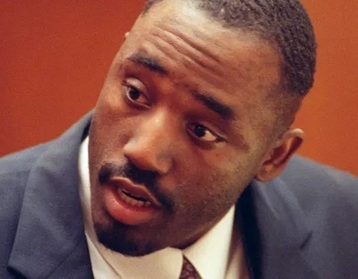
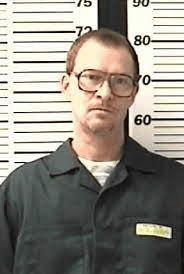
Charles Arnett Stevens was born on March 19, 1969, in Oakland, California. He became known as the “I-580 Killer” after committing a series of apparently random shootings on and near Interstate 580 in Oakland during the spring and summer of 1989. Between April 3 and July 27, Stevens killed four people and attempted to murder six others.
Stevens experienced an unstable childhood marked by family violence and his mother’s alcoholism. He later told a psychiatrist that he attempted suicide twice when he was approximately 12 years old. His mother was arrested several times for drunk driving and was once hospitalized after threatening her children. She died in March 1986. Stevens also struggled academically, repeated the ninth grade and was suspended from school for disruptive behavior. Despite these problems, he participated in bicycle racing and won several trophies.
As a teenager, Stevens sold cocaine to obtain money for clothing and jewelry. He also worked at a pawnshop but was fired after stealing a firearm. In 1989, before the murders began, he was convicted of three counts of automobile theft. Investigators later learned that stolen vehicles were used during portions of his shooting spree.
The Beginning of the Killing Spree
The first known murder occurred during the early morning of April 3, 1989. Stevens was accompanied by his friend, Richard James Clark, when they approached a vehicle occupied by Leslie Ann Noyer. Stevens opened an unlocked passenger door and left a palm print on the vehicle. Noyer was shot in the head with a .357 Magnum Desert Eagle semiautomatic pistol.
Clark later gave police several conflicting accounts of the murder. In one statement, he admitted shooting Noyer but claimed that Stevens had threatened him with a gun and forced him to do it. At trial, Clark denied being present and said that he had constructed his confession from information supplied by investigators. Stevens was convicted of Noyer’s murder, while the jury could not reach a verdict against Clark on the murder charge.
Escalation of the Attacks
After the Noyer murder, Stevens began targeting motorists and pedestrians at night. Most of the attacks occurred between midnight and 3:00 a.m. on or near Interstate 580. He generally selected strangers with whom he had no known personal connection. Several victims were driving when Stevens approached them in another vehicle and opened fire.
On June 7, 1989, Karen Alice Anderson was driving near a poorly illuminated area when Stevens fired repeatedly at her vehicle. At least one window was shattered, but Anderson escaped without being killed. The following day, June 8, Stevens murdered 16-year-old Laquann Sloan. Sloan was walking along a street in Oakland when Stevens shot the teenager in the head. Unlike the other murder victims, Sloan was not inside a vehicle when attacked.
Stevens continued firing at people during the following weeks. Janell Lee was targeted while traveling in a vehicle but survived the attack. Ballistic testing later connected the gunfire directed at Lee to the same distinctive weapon used in the murders.
The Murder of Lori Anne Rochon
During the early morning of July 6, 1989, Stevens and Richard Clark were riding in a stolen vehicle. According to Clark’s later testimony, Stevens began rocking back and forth and announced that he needed to shoot someone. Stevens initially pulled beside one motorist but abandoned that target after Clark questioned him.
Stevens then drove beside a vehicle occupied by Lori Anne Rochon on Interstate 580 in Oakland. He lowered his window and fired at Rochon, fatally wounding her. A bullet removed from her body carried distinctive polygonal markings associated with a Desert Eagle pistol. Investigators also found a newspaper article about Rochon’s murder among Stevens’ possessions.
The July 16 Freeway Shootings
On July 16, 1989, Stevens attacked several additional motorists along Interstate 580. Paul Fenn was driving a van occupied by Julia Peters when Stevens pulled alongside it and fired multiple shots. Fenn was not struck, but Peters was injured by shattered glass and required medical treatment.
Only minutes later and several hundred yards from the first attack, Stevens fired at another vehicle driven by Upendra de Silva. De Silva was wounded but survived. Copper bullet jackets recovered from the vehicles were associated with a Desert Eagle pistol. When Clark later read a newspaper article about the shootings and asked Stevens whether he was responsible, Stevens warned him not to discuss the matter over the telephone.
The Final Murder and Capture
At approximately 1:15 a.m. on July 27, 1989, Rodney Stokes was driving home from work on Interstate 580. Stevens approached in a white Mazda and began traveling beside Stokes’ vehicle. Stevens smiled and motioned as though he were attempting to attract Stokes’ attention. Believing that the other driver might be someone he knew, Stokes lowered his passenger-side window.
Stevens suddenly fired at him. Stokes dropped down on his seat, switched off his headlights and briefly lost control of his vehicle. Stevens slowed in front of him and fired two additional shots. Although the gunfire missed Stokes, he continued following the Mazda while flashing his headlights in an attempt to attract the attention of police officers.
Stokes then watched Stevens approach a vehicle driven by Raymond August. Stevens used a similar ruse to attract August’s attention and cause him to slow down. Moments later, Stokes heard at least two gunshots. August’s vehicle crashed into a pillar beneath the 35th Avenue overpass. He had been fatally shot.
After the shooting, Stevens left Interstate 580 using the 35th Avenue off-ramp and entered an on-ramp leading in the opposite direction. He parked on the shoulder and watched the crime scene from across the freeway. Stokes stopped near August’s wrecked vehicle and called 911.
When an Oakland police officer arrived, Stevens was still sitting nearby in the white Mazda. He appeared startled when ordered out of the vehicle and initially began driving away. Stevens then stopped, raised his hands and attempted to flee on foot toward a retaining wall. The officer caught him as a heavy metal object fell to the ground. It was a loaded .357 Magnum Desert Eagle semiautomatic pistol. Stevens was also carrying a loaded magazine and an additional cartridge.
Confirmed Murder Victims
- Leslie Ann Noyer, 29 — Murdered on April 3, 1989, in Oakland, California. Noyer was sitting in a parked vehicle when she was shot in the head. Stevens’ palm print was recovered from the passenger side of the vehicle. Richard James Clark was accused of firing the shot while acting with Stevens.
- Laquann Sloan, 16 — Murdered on June 8, 1989, in Oakland, California. Sloan was walking along a street when shot in the head. This was the only confirmed murder in the series in which the victim was not attacked inside a vehicle.
- Lori Anne Rochon, 36 — Murdered on July 6, 1989, on Interstate 580 in Oakland, California. Stevens drove beside Rochon’s vehicle and fired through his window. Ballistic evidence indicated that she was shot with a .357 Magnum Desert Eagle pistol.
- Raymond August, 28 — Murdered on July 27, 1989, near the 35th Avenue overpass on Interstate 580 in Oakland, California. Stevens attracted August’s attention, fired into his vehicle and caused the mortally wounded driver to crash into a freeway pillar.
Survivors of the Shooting Spree
- Karen Alice Anderson — Attacked on June 7, 1989, in Oakland. Stevens fired several rounds at her vehicle and shattered a window, but she survived.
- Janell Lee — Shot at while traveling in Oakland during the 1989 spree. Ballistic evidence connected the attack to Stevens’ weapon.
- Paul Fenn — Attacked on July 16, 1989, while driving a van on Interstate 580. Stevens fired into the vehicle, but Fenn survived.
- Julia Peters — A passenger in Fenn’s van during the July 16 attack. She was injured by flying glass and received hospital treatment.
- Upendra de Silva — Shot and wounded on July 16, 1989, only minutes after the attack on Fenn and Peters.
- Rodney Stokes, 24 — Attacked shortly after 1:15 a.m. on July 27, 1989, on Interstate 580. Stokes avoided Stevens’ gunfire, witnessed the murder of Raymond August and provided police with information that led directly to Stevens’ capture.
Physical Evidence
The Desert Eagle recovered during Stevens’ arrest became a central piece of evidence. The pistol was an unusual weapon with polygonal rifling that left recognizable markings on fired bullets. Ballistics specialists concluded that Stevens’ gun had been used in the murders of Leslie Noyer, Laquann Sloan and Raymond August. Evidence also connected the weapon to the attacks on Karen Anderson, Janell Lee and Upendra de Silva. The bullet that killed Lori Rochon was consistent with having been fired from the same type of Desert Eagle pistol.
A search of Stevens’ bedroom uncovered the pistol’s box and instruction manual, a canvas gun case, cleaning equipment, ammunition, magazines and practice targets. Police also found a collection of Oakland newspapers containing reports about the freeway shootings. An envelope contained handwritten references to California laws concerning murder, assault with a firearm, prohibited weapons and vehicle theft.
During questioning, Stevens admitted that he had possessed the Desert Eagle since approximately March 1989. When investigators asked what type of person would commit random freeway shootings, he suggested that the offender would be mentally disturbed or lonely. He also remarked that such a person might be captured if someone informed on him or if he pulled over as Stevens had done.
Trial and Conviction
Stevens was tried in Alameda County for four counts of first-degree murder and six counts of attempted murder. Prosecutors argued that the shootings were calculated attacks in which Stevens deliberately selected unsuspecting strangers. The jury also considered allegations that he personally used a firearm, committed multiple murders and killed Raymond August while lying in wait.
In January 1993, the jury convicted Stevens of all four murders and all six attempted murders. Jurors found the multiple-murder special circumstance to be true and also determined that the murder of Raymond August involved lying in wait. The latter finding was based on evidence that Stevens smiled and gestured toward motorists to conceal his intentions and lure them into vulnerable positions before opening fire.
The jury sentenced Stevens to death. Richard James Clark later pleaded no contest to voluntary manslaughter in connection with Leslie Noyer’s death and was sentenced to 13 years in prison.
Mental-Health Evidence
During the penalty phase, psychiatrist Harry Kormos testified that Stevens had an unspecified personality disorder with schizoid and borderline traits. Testing showed below-average intelligence, with an estimated intelligence quotient between 80 and 90, but no intellectual disability or organic brain disease. The psychiatrist found no evidence that Stevens was legally insane or suffered from a major mental illness.
Stevens did not deny committing the crimes during his psychiatric interviews, although he claimed to have little or no memory of most of them. The psychiatrist could not identify a clear psychological explanation for why Stevens murdered four strangers and tried to kill six others. He suggested that Stevens may have unconsciously wanted to be caught, noting his decision to remain near the scene of the final murder.
Appeals and Death Sentence
The California Supreme Court unanimously affirmed Stevens’ convictions and death sentence on June 4, 2007. The court rejected arguments concerning jury selection, the admission of evidence, the sufficiency of the prosecution’s case and the constitutionality of the lying-in-wait special circumstance.
Stevens continued challenging his conviction through the federal courts. On February 14, 2022, the United States Court of Appeals for the Ninth Circuit affirmed the denial of his federal petition for habeas corpus. A request for a rehearing was denied on April 22, 2022. The United States Supreme Court denied his final petition on January 9, 2023.
Legacy of the I-580 Shootings
Charles Arnett Stevens’ crimes created widespread fear among Oakland motorists during the summer of 1989. The attacks appeared to be indiscriminate, occurred during the darkest hours of the night and were directed at people who had no known relationship with their assailant. Drivers could not determine whether another motorist was attempting to communicate with them or preparing to open fire.
The case was solved through a combination of eyewitness testimony, ballistics analysis, physical evidence and Stevens’ decision to remain near the location of his final murder. Rodney Stokes’ actions were particularly important. After surviving Stevens’ attack, Stokes continued following him, witnessed the shooting of Raymond August and immediately directed police toward the white Mazda. His account allowed officers to arrest Stevens while the murder weapon was still in his possession, bringing the four-month series of killings and attempted killings to an end.