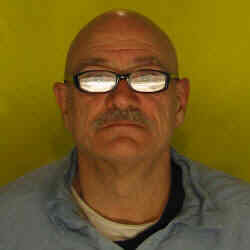
Larry M. Ralston: The Ohio Serial Killer
Background
Larry M. Ralston was born on July 5, 1949, in Norwood, Ohio. He left Norwood High School at approximately 17 years old and entered the United States Army, where he completed his high school education. After returning to Ohio, he held several jobs, including positions connected to the Hamilton County morgue and Longview State Hospital. By the time of his arrest in 1977, however, the 28-year-old Ralston was unemployed and frequently stayed with his parents or friends.
Between 1975 and 1977, girls and young women disappeared from communities in and around Cincinnati. Their remains were later recovered from isolated roads, wooded areas, creek beds and parkland in Hamilton, Clermont and Clinton counties. Several of the victims had hitchhiked or had been seen near roadways, giving their killer an opportunity to approach them without immediately attracting attention.
Ralston eventually admitted that he picked up young women in his vehicle, drove them into secluded areas and strangled them. He described spending time with some victims while drinking wine or smoking marijuana before becoming violent when they resisted his sexual advances. His crimes remained unsolved until the investigation of the abduction and rape of three teenage girls led authorities to him in late 1977.
Victims
- Linda Kay Harmon, 17 — September 3, 1975 — Mount Washington and Felicity, Ohio: Linda disappeared on the morning of September 3, 1975, while waiting for transportation near Wolfangel Road and Beechmont Avenue in Cincinnati’s Mount Washington neighborhood. It was supposed to be her first day at Withrow High School after her family moved from Finneytown. She never arrived at school and also missed a dental appointment later that day. On October 5, 1975, her scattered skeletal remains were discovered along Braun Road near Felicity in Clermont County. Portions of her remains had reportedly been carried from the wooded site by dogs. Ralston was convicted of her aggravated murder in August 1978.
- Nancy Lourie Grigsby, 23 — May 1976 — Withamsville, Ohio: Nancy disappeared on May 4, 1976, after visiting a friend’s apartment and saying that she was going for a short walk. She was known to travel by hitchhiking, although people close to her had expressed concern about the danger. Her decomposed remains and clothing were found on November 16, 1976, in woods near Bucktown Road and Moore-Marathon Road in Clermont County. Ralston confessed that he strangled Nancy and left her body at the location where it was recovered. He was convicted in 1978, but an appellate court overturned the conviction because prosecutors had not independently established a medical cause of death. The charge was subsequently dismissed, although Ralston’s detailed confession continued to connect him to her killing.
- Mary Ruth Hopkins, 21 — June 29 or June 30, 1976 — Anderson Township, Ohio: Mary, a resident of Cincinnati’s East End, was last seen on June 29, 1976, after leaving her apartment and intending to travel toward the Mount Lookout area. Her nude body was discovered the following day in a secluded lovers’ lane near Five Mile Road, north of Kellogg Avenue in Anderson Township. Her face was severely bruised, patches of hair had been pulled from her head and a tank top had been wrapped tightly around her neck. The evidence indicated that she had been strangled. Ralston pleaded guilty to her aggravated murder in 1984 and received an additional life sentence.
- Elaina Marie Bear, 15 — January 15, 1977 — Cincinnati and Clinton County, Ohio: Elaina and her friend Debbie Whitt spent the evening of January 15, 1977, visiting acquaintances and later attempted to hitchhike home. A man picked up the two teenagers and drove them through the Cincinnati area. Elaina was separated from her friend during the journey and never returned home. Her nude body was found on February 28, 1977, lying face-down in a creek bed near Katy’s Lane outside Wilmington in Clinton County. Investigators determined that she had been strangled. Ralston’s confession became central evidence at his 1978 trial, where a jury found him guilty of aggravated murder.
- Diane Sue McCrobie, 16 — July 17, 1977 — Springfield Township and East Fork Lake, Ohio: Diane disappeared on July 17, 1977, after leaving home for a date. She had known Ralston and reportedly had his name among her personal contacts. Her skeletal remains were discovered on October 22, 1977, concealed beneath brush in a wooded section of East Fork Lake State Park in Clermont County. The discovery of Ralston’s name in connection with Diane helped investigators link him to the series of killings. He was convicted of her aggravated murder on July 6, 1978, and sentenced to life imprisonment.
The Abduction and Rape Investigation
Ralston’s identification as a serial murderer began with an investigation that was not initially centered on the unsolved killings. On September 24, 1977, three 15-year-old girls reported that a man had abducted them and driven them into a rural area. The victims said they were sexually assaulted before surviving the encounter. The location was only a few miles from an area where another young woman’s body had been found.
Investigators examining the assaults began comparing the suspect’s movements and behavior with the disappearances of numerous girls and women throughout the Cincinnati region. Police were then investigating as many as 12 suspicious deaths and disappearances, although not all were ultimately attributed to Ralston.
Ralston left Ohio and traveled to his sister’s home in the Chicago area as the investigation intensified. Authorities arrested him on November 15, 1977, in connection with the assaults. He was placed in a police vehicle for the return trip to Ohio, where he was expected to face rape and kidnapping charges.
Confession During the Return to Ohio
During the drive from Illinois to Clermont County, Ralston began crying and told an investigator that he had not intended to kill the women. He then started describing the murders. His statements developed into taped confessions in which he discussed picking up victims, taking them to isolated locations and strangling them.
Ralston provided information about the victims and disposal sites that investigators believed could only have been known by the killer. He admitted responsibility for five deaths, including the killings of Linda Harmon, Nancy Grigsby, Mary Ruth Hopkins, Elaina Bear and Diane McCrobie. He also admitted sexually assaulting teenage girls.
According to investigators who interviewed him, Ralston spoke in disturbing detail about watching people die. His previous employment in a hospital setting was examined after he reportedly described deliberately observing dying patients. Detectives concluded that his fascination with death was not limited to the murders for which he was charged.
Charges and Trials
On November 29, 1977, authorities announced aggravated-murder charges against Ralston in connection with four of the recovered victims. He initially entered pleas of not guilty. Because the crimes occurred in different counties, the prosecutions were handled in separate proceedings.
Ralston’s first major murder trial concerned the death of Elaina Bear. The trial began in April 1978. Prosecutors presented his recorded confession along with evidence concerning Elaina’s disappearance, the recovery of her body and Ralston’s movements. Although the defense challenged the reliability and circumstances of the confession, the jury found him guilty on May 4, 1978, after more than seven hours of deliberation.
In June 1978, Ralston was sentenced to die in Ohio’s electric chair for Elaina’s murder. His execution was originally scheduled for October 31, 1978. The sentence was later reduced to life imprisonment after Ohio’s death-penalty statute was found constitutionally defective.
Ralston was convicted of Diane McCrobie’s murder on July 6, 1978, and received a life sentence. He was convicted of murdering Linda Harmon on August 2, 1978, and received another life term. On August 24, 1978, he was convicted of killing Nancy Grigsby and was again sentenced to life.
In September 1978, Ralston pleaded guilty to two rape charges stemming from the attack on the teenage girls. He received concurrent prison terms of seven to 25 years for those offenses, to be served in addition to his murder sentences.
The Nancy Grigsby Appeal
The legal outcome in Nancy Grigsby’s case was different from the other prosecutions. On November 7, 1979, an Ohio appellate court overturned Ralston’s conviction. Although his confession described how and where Nancy was strangled, the condition of her remains prevented medical examiners from determining an independent cause of death.
The appellate court ruled that the prosecution had failed to establish the legal requirement that Nancy’s death resulted from a criminal act before using Ralston’s confession to obtain a conviction. In February 1980, the murder charge was dismissed. The ruling did not declare that Ralston was innocent; it addressed whether the state had presented enough evidence independent of his confession to sustain the conviction.
The Mary Ruth Hopkins Conviction
Mary Ruth Hopkins was not included among Ralston’s final murder convictions during the original 1978 proceedings. Her killing remained associated with him through his confession, the method of strangulation and the circumstances in which her body was abandoned.
In May 1984, Ralston pleaded guilty to aggravated murder in Mary’s death. He received a sentence of 15 years to life, adding another homicide conviction to his prison record. This plea left him serving sentences for four legally established murders, along with the rape convictions. Nancy Grigsby remained widely recognized as the fifth victim to whom he confessed.
Imprisonment and Parole Proceedings
Ralston entered the Ohio prison system in August 1978. His death sentence had been commuted, leaving him eligible to seek parole after serving the minimum portions of his life sentences. He first became eligible for serious parole consideration decades after the murders.
At parole proceedings, relatives of the victims argued that Ralston continued to represent a danger and should never be released. They emphasized the ages of the victims, the calculated way he approached vulnerable young women and the lasting damage inflicted on their families. His requests for release were repeatedly rejected.
Ralston remained incarcerated at Madison Correctional Institution in Ohio. State prison records continued to list convictions for aggravated murder and rape, with his next parole review scheduled for 2028.
Legacy of the Case
Larry M. Ralston’s crimes terrorized the Cincinnati region during a period when young people commonly hitchhiked and law-enforcement agencies had limited methods for sharing information across county boundaries. His victims were recovered in several jurisdictions, which initially made it difficult to recognize that a single offender might be responsible.
The surviving teenage assault victims provided the information that finally directed investigators toward Ralston. Their accounts allowed police to connect a rape suspect to the broader pattern of missing and murdered young women. Once in custody, Ralston’s confession supplied the link between cases that had remained separate for years.
Ralston was ultimately held criminally responsible for the murders of Linda Kay Harmon, Mary Ruth Hopkins, Elaina Marie Bear and Diane Sue McCrobie. He also confessed to killing Nancy Lourie Grigsby, although his conviction in her case was overturned on evidentiary grounds. The five young women remain the known victims most closely associated with his killing spree from 1975 through 1977.