Earl Bud Kimball: The “Fulda Flat Werewolf”
Overview
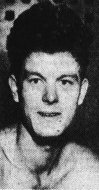
Earl Bud Kimball was a young California murderer whose crimes became associated with the isolated Fulda Flat area of Placer County during the 1930s. Contemporary newspapers gave him the sensational nickname the “Fulda Flat Werewolf,” reflecting both the brutality attributed to him and the fear surrounding the discovery of two men’s bodies in an abandoned mine shaft. Although Kimball is sometimes described as a serial killer, the verified historical record establishes two admitted killings rather than the much larger victim totals occasionally repeated in later accounts.
Kimball’s case attracted statewide attention because of his age, the remote location in which the bodies were concealed and his unusual conduct during court proceedings. He admitted under oath that he had killed two men. One victim was the subject of the murder charge that resulted in his death sentence, while the second man was never conclusively identified in the surviving court record. Both bodies had been thrown into a disused mine shaft, apparently in an effort to prevent their discovery.
Discovery of the Bodies
The killings might have remained hidden if people in the area had not begun searching for missing cattle. During that search, human remains were discovered inside an abandoned mine shaft near Fulda Flat. Investigators determined that the shaft contained the bodies of two men rather than the remains of livestock. The isolated location provided Kimball with a natural place to conceal the evidence, but the accidental discovery eventually brought the crimes to the attention of Placer County authorities.
Available court documentation does not provide dependable calendar dates for the deaths of either victim. Because those dates cannot be verified from the surviving official record, no specific death dates are stated here. The killings occurred before Kimball’s 1935 trial and were investigated after the bodies were found in the Fulda Flat region of Placer County, California.
Known Victims
- Unidentified adult man — date of death not conclusively documented — Fulda Flat area, Placer County, California: This man was one of two victims whose bodies were concealed in an abandoned mine shaft. Kimball admitted killing him while testifying in court, but the victim’s identity was not established in the published California Supreme Court opinion.
- Unidentified adult man named in Kimball’s murder prosecution — date of death not conclusively documented — Fulda Flat area, Placer County, California: Kimball was convicted and sentenced to death for this homicide. The surviving appellate decision confirms that he admitted committing a willful and premeditated killing, but it does not identify the victim by name or supply a verified date of death.
Confession and Murder Prosecution
Placer County prosecutors charged Kimball with murder. He initially entered pleas of not guilty and not guilty by reason of insanity. He later withdrew the ordinary not-guilty plea. Under California law at the time, that decision amounted to an admission that he had committed the deliberate and premeditated homicide described in the charge. The remaining issue for the jury was whether he had been legally sane when he committed the crime.
Kimball took the witness stand during the sanity proceeding and acknowledged killing two men. He also described circumstances surrounding the charged homicide. His testimony established that the bodies had been placed in the mine shaft, but it did not produce a reliable public record of the victims’ full identities or exact dates of death. This lack of surviving detail has allowed later retellings to embellish the case and sometimes attribute numerous additional murders to him without adequate documentation.
The Insanity Defense
Kimball claimed that he had suffered a serious head injury after being kicked by a mule when he was young. His attorneys attempted to show that his behavior and mental condition prevented him from being held fully responsible for the killings. However, Kimball did not call additional witnesses to support his personal account of insanity.
Three medical specialists examined or evaluated him. Two were appointed by the court, while another testified for the prosecution. They reported that Kimball showed no recognized psychosis or mental disease that would have prevented him from understanding his actions. Instead, they characterized him as criminally inclined. Each concluded that he knew the nature of what he was doing and understood the difference between right and wrong when the homicide occurred.
The jury rejected the insanity claim and found Kimball legally sane. The trial court then imposed the death penalty. Kimball appealed, arguing that errors during the sanity trial had deprived him of a fair proceeding, but the California Supreme Court upheld the judgment on March 13, 1936.
Violent and Disruptive Conduct in Court
Kimball was kept handcuffed to an officer throughout much of his trial. His attorneys objected to the restraints, claiming that their use made him appear dangerous and prejudiced the jury. Prosecutors responded with evidence that the restraints were necessary because Kimball had reportedly announced plans to escape and had threatened to attack or kill several witnesses inside the courtroom.
Officers also discovered possible weapons concealed on him. A piece of lead pipe approximately fourteen inches long was found hidden in one of his boots and beneath his clothing. Later that same day, officers found a bar of hard soap wrapped in a handkerchief, apparently fashioned into a makeshift striking weapon. The California Supreme Court concluded that these discoveries, combined with his threats, justified keeping him restrained.
Execution
After his conviction and unsuccessful appeal, Kimball remained under a sentence of death. He was executed by hanging at Folsom State Prison on May 22, 1936. Contemporary accounts described him as one of the youngest condemned prisoners executed at the institution. Records differ regarding his exact age because some sources place his birth in 1913 while later summaries list 1915. The California Supreme Court described him as twenty-two years old during the proceedings.
Questions About Additional Victims
Later crime databases and sensationalized accounts have claimed that Kimball might have killed many more people, with estimates occasionally reaching twenty or more victims. Those totals are not supported by the published appellate decision. The official record confirms that Kimball admitted killing two men and that two bodies were recovered from the mine shaft. No reliable evidence identifies a larger group of victims, and no verified names or death dates for additional victims have been established.
Kimball may properly be described as a double murderer or possible serial killer because he admitted committing two separate homicides. However, descriptions of him as a highly prolific killer should be treated cautiously. Much of his reputation was shaped by dramatic newspaper language, particularly the “Fulda Flat Werewolf” nickname, rather than by evidence connecting him to a long series of documented murders.
Legacy of the Case
Earl Bud Kimball’s crimes remain obscure compared with those of better-known American serial killers. The remoteness of Fulda Flat, the disposal of the bodies in a mine shaft and the failure to preserve complete information about the victims all contributed to the case’s mysterious reputation. The men he admitted killing are largely absent from surviving summaries, leaving their identities and personal histories overshadowed by the nickname given to their killer.
The most dependable account of the case comes from the California Supreme Court’s review of Kimball’s conviction. It confirms two admitted killings, concealment of the bodies in an abandoned shaft, rejection of his insanity defense, threatening conduct during the trial and the affirmation of his death sentence. Beyond those facts, claims involving numerous additional victims remain unverified. Kimball was ultimately executed on May 22, 1936, bringing the legal proceedings to an end while leaving significant questions about the two victims unresolved.