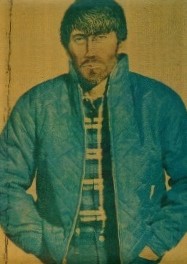
Phillip J. "Slim" Coleman Jr.: Montana Killer and Self-Confessed Serial Killer
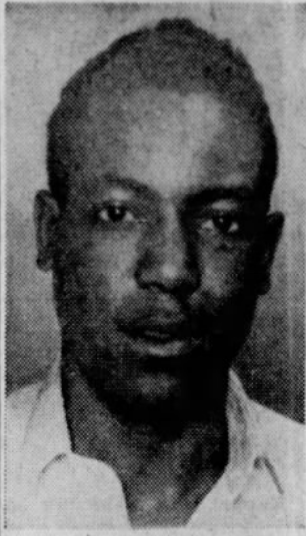
Phillip J. "Slim" Coleman Jr. was an American murderer whose brief but violent crime spree in Montana ended with his execution in 1943. Coleman was convicted for the killings connected to a robbery at Lothrop, Montana, and he was also linked by confession to the fatal attack on an elderly man in Helena. In the weeks before his execution, Coleman made an extraordinary series of additional claims, telling authorities that he had killed numerous people in several states and Canada. He ultimately claimed responsibility for as many as 23 murders. Most of those additional confessions, however, were never independently verified, making Coleman more accurately described as a convicted multiple murderer and self-confessed serial killer rather than a man proven to have committed all of the killings he claimed.
Early Life and Criminal Background
Phillip J. Coleman Jr. was born on April 24, 1919, in St. Louis, Missouri. By adulthood he had adopted a transient lifestyle, traveling through different parts of the country and finding temporary work when available. He accumulated a criminal history before arriving in Montana, including offenses involving burglary and property crime. His years of wandering later complicated investigators' attempts to determine whether his claims of murders in several states were genuine.
Coleman was only 24 years old during the Montana murders that brought him to national attention. He was commonly known by the nickname "Slim." His crimes were frequently associated with robbery, and the confirmed Montana cases demonstrated his willingness to use lethal violence for surprisingly small amounts of money.
The Fatal Attack on Andrew J. Walton
One of the killings later attributed to Coleman occurred in Helena, Montana, in July 1943. Andrew J. Walton was an elderly man whom Coleman knew. On July 3, Coleman attacked Walton with a hatchet during what was apparently a robbery. Coleman later claimed that the attack netted him only a few cents.
Walton was not immediately found dead. Accounts of the case state that he was discovered alive the following morning and taken to a hospital, where he died without regaining consciousness. Surviving secondary accounts are inconsistent about Walton's precise calendar date of death, with some records associating his death with July 3 while narrative accounts make clear that he survived the initial attack. Because of that conflict, the exact death date should be treated cautiously. What is established is that the fatal assault occurred on July 3, 1943, in Helena and that Walton died shortly afterward from the injuries.
Coleman's connection to Walton became much stronger after his arrest for the later Lothrop murders. Shortly before his execution, Coleman confessed to attacking Walton and supplied information about the crime. Authorities regarded the confession as credible enough to connect him to the killing.
The Murders of Carl and Roslyn Pearson
Less than a month after the Helena attack, Coleman became involved in the crime that would lead directly to his arrest and execution. On July 24, 1943, Coleman was in the Lothrop and Alberton area of western Montana with another laborer, Louis Brown. The men had been associated with Carl W. Pearson, a 48-year-old Northern Pacific Railway section foreman.
During the day, Coleman and Brown performed work for Pearson. Later, the men drank beer and gambled in Alberton. Coleman had reportedly become aware that Pearson kept a substantial amount of cash at his residence. Compared with the small amount taken in the Walton robbery, the possibility of obtaining approximately $200 gave Coleman a much larger incentive to return to the Pearson home.
Coleman and Brown went back to the residence under the pretense that Brown was ill and needed medicine. Once inside, the encounter turned violent. Carl Pearson was struck repeatedly with an axe or similar blunt instrument. Responsibility for delivering the fatal blows became disputed, with Coleman attempting to place responsibility for Carl's death on Brown.
Roslyn Pearson, Carl's 30-year-old wife, was also attacked inside the home. Coleman admitted responsibility for killing her. She was stabbed during the robbery after the intruders demanded information concerning the family's money. Both Carl and Roslyn Pearson were killed during the early hours associated with July 25, 1943.
The murders left behind an especially tragic witness to their aftermath. Carl and Roslyn's seven-year-old son, Richard, discovered what had happened to his parents. He went to a nearby neighbor for help, and law enforcement was notified. The Pearson automobile had been taken after the killings and was later located abandoned in Drummond, Montana, helping investigators reconstruct the escape route.
Known and Credibly Linked Victims
- Andrew J. Walton — Helena, Montana. Fatally attacked on July 3, 1943. Walton was assaulted with a hatchet during a robbery and was reported to have been found alive the following morning before dying in a hospital. Surviving accounts conflict on the exact calendar date of death, so the fatal attack date of July 3 is more firmly established than the precise death date.
- Carl W. Pearson, age 48 — Lothrop, Montana. Died July 25, 1943. Pearson, a Northern Pacific Railway section foreman, was bludgeoned during a robbery at his residence. Coleman and accomplice Louis Brown each became implicated in the crime, although Coleman attempted to blame Brown for Pearson's actual killing.
- Roslyn Pearson, age 30 — Lothrop, Montana. Died July 25, 1943. Roslyn was stabbed inside the Pearson residence during the robbery. Coleman admitted killing her, and her murder became the principal crime for which he was sentenced to death.
The Manhunt and Arrest
Investigators quickly focused on Coleman and Brown following the Pearson murders. Brown was taken into custody first. Coleman attempted to escape through the railroad system, a practical choice for a transient man familiar with rail travel. His flight was short-lived. He was located hiding in a freight car at Drummond during the manhunt in late July 1943.
Once questioned, Coleman admitted killing Roslyn Pearson but denied responsibility for Carl Pearson's death. He claimed Brown had killed Carl. The evidence and statements gathered by investigators nevertheless placed both men at the Pearson residence during the robbery and murders.
Coleman's case moved through the Montana justice system with remarkable speed. On August 2, 1943, he entered a guilty plea in connection with Roslyn Pearson's murder. The death sentence followed almost immediately. An attempt was later made to withdraw the guilty plea, but the effort failed. Brown escaped the death penalty and was sentenced to life imprisonment for his role in the crimes.
Coleman's Claims of a Much Larger Murder Career
After his conviction, Coleman began making statements that transformed his case from that of a Montana double murderer into a possible interstate serial-murder investigation. He claimed that the Montana crimes represented only a fraction of the people he had killed. His ultimate claim was that he had committed approximately 23 murders during his travels.
Coleman provided varying levels of detail about a number of alleged victims. Some were identified only by nicknames or partial names, while others were completely unidentified. Investigators never established evidence confirming the majority of these stories, and no reliable victim-by-victim list of 23 proven Coleman murders exists.
Named and Unidentified Victims in Coleman's Unverified Confessions
- "Devil" Moore — East St. Louis, Illinois. Coleman claimed that when he was still very young he killed a man known as "Devil" Moore by striking him with a hammer. Coleman associated the alleged crime with 1933, but an independently verified identity and death date have not been established.
- Three unidentified men — East St. Louis, Illinois. Coleman claimed that he had acted as a gang "trigger man" and had shot three men during a period of approximately one week. The identities, exact dates and circumstances of these alleged killings were never conclusively verified.
- "Ventez" — Stockton, California. Coleman claimed that in approximately 1939 he killed a Mexican man whom he identified only as "Ventez," strangled or choked him and concealed the body beneath a house. The victim's complete identity and exact date of death have not been independently confirmed.
- Unidentified victim — Lackawanna, New York. Coleman included a killing in Lackawanna among his confessions, but surviving accounts contain insufficient information to establish the victim's identity or a verified date of death.
- Unidentified Black man — Canada. Coleman claimed that he killed a man while traveling in Canada during a period when he was associated with a circus. No verified victim identity or death date has been established from the surviving accounts.
- "Tullie" — Seattle, Washington. Coleman claimed that during approximately May 1943 he killed a young woman known to him as "Tullie." He said her body was weighted and disposed of in Puget Sound. Investigators were unable to establish a complete identity or verified death date for the woman described in his confession.
- Unidentified man — Seattle, Washington. Coleman made another claim involving a man in Seattle but supplied little information that investigators could use to identify the supposed victim. The alleged killing remains unverified.
Were the 23 Murder Confessions Genuine?
Coleman's claim of 23 murders has to be separated from the murders that can actually be supported by evidence. His knowledge of the Walton attack provided a reason to take at least some of his statements seriously, but that did not establish the truth of every confession he made. Many of his alleged victims lacked full names, dates, identifiable bodies or corresponding police cases.
It is possible that Coleman's years of transient travel gave him opportunities to commit additional crimes that were never connected to him. It is equally possible that he exaggerated his record after receiving a death sentence, whether to gain notoriety, manipulate authorities or create a frightening final image of himself. Without independent evidence, the large claimed victim count cannot responsibly be presented as fact.
For that reason, the strongest historical record supports three victims linked to Coleman in Montana: Andrew J. Walton and Carl and Roslyn Pearson. The remaining alleged murders form an important part of Coleman's story, but they remain confession claims rather than conclusively established killings.
Execution
Coleman's legal appeals and efforts to change the outcome of his case were unsuccessful. In the final period of his life, he reportedly expressed remorse and received religious instruction, converting to Catholicism before his execution.
On September 10, 1943, Phillip J. Coleman Jr. was hanged inside the Missoula County Jail in Missoula, Montana. He was 24 years old. The execution occurred only weeks after the Pearson murders, reflecting how rapidly capital cases could proceed in Montana during that era.
Coleman's hanging became historically significant beyond the crimes themselves. He was the last person legally executed by hanging in Montana. More than half a century passed before Montana carried out another execution, by which time the state had replaced hanging with lethal injection.
Legacy of the Coleman Case
Phillip Coleman remains a difficult figure to classify because the proven crimes and his enormous confession are so different in scale. The Montana evidence establishes a violent robber responsible for or directly involved in three deaths during July 1943. His confession presents a far darker possibility: that the young transient had been killing for years as he traveled across the United States and beyond.
What cannot be established is whether the supposed victims in Illinois, California, New York, Washington and Canada were real victims of Coleman, unrelated deaths that he learned about and claimed, or entirely fabricated stories. The lack of names and verifiable dates makes retrospective confirmation extremely difficult.
The murders of Andrew J. Walton, Carl Pearson and Roslyn Pearson therefore remain at the center of the documented case. They were not merely entries in Coleman's claimed body count but identifiable people whose deaths led investigators to the man who called himself "Slim." Coleman's later confessions expanded the mystery surrounding him, but the distinction between verified victims and unproven claims remains essential when recounting his crimes.