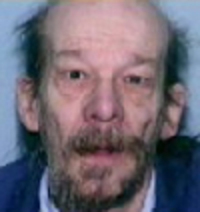
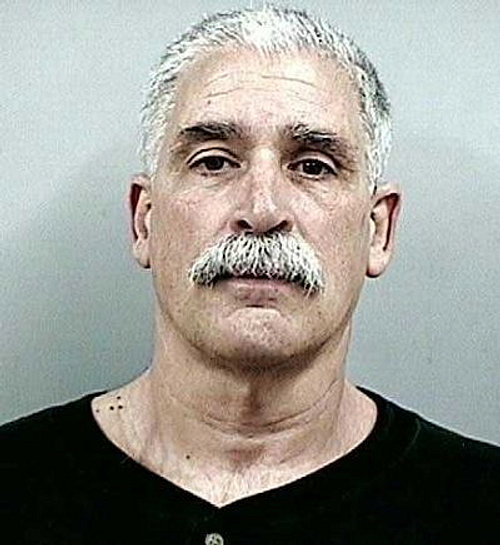
Ralph Raymond Andrews: Convicted Murderer and Suspected Serial Killer
Ralph Raymond Andrews was an American murderer and violent sexual offender whose criminal history stretched across several decades and multiple states. Born in Evanston, Illinois, in 1945, Andrews accumulated a lengthy record involving assaults, attempted abductions, unlawful restraint, and accusations of sexual violence before he was finally imprisoned for murder. He was ultimately convicted of killing two women, Susan Clarke in 1977 and Virginia Griffin in 1991. Investigators also examined him in connection with several other deaths, particularly those of teenage girls and young women in the Chicago suburbs.
Because Andrews was convicted of only two murders, it is important to distinguish his proven crimes from the much larger number of killings attributed to him in later reports. Authorities investigated possible connections between Andrews and unsolved murders in Illinois and Michigan, with additional inquiries extending into other Midwestern states. Reports that he may have killed 20, 30, or even 40 people were never established in court. The strongest additional suspicions centered on a small group of Illinois victims whose deaths occurred during periods when Andrews was living or working in the area.
Early Criminal History and Violence Against Women
Andrews had encounters with law enforcement long before his murder convictions. By the early 1970s, his behavior already showed a pattern of violence directed toward women. In April 1972, he was accused of strangling a woman he had previously dated in Evanston. Although originally charged with aggravated battery, he pleaded guilty to a lesser battery charge and served approximately six months in jail.
Late in December 1973, Andrews picked up two 15-year-old hitchhikers, identified in contemporary reporting as Betty Lee Hanson and Pamela Trankle. Instead of simply taking the teenagers home, Andrews attempted to take them toward a forested area and threatened them with a knife. The girls fought back while inside his automobile. During the struggle the vehicle left the roadway, giving them an opportunity to escape. Andrews was prosecuted, but the case ended in an acquittal. Hanson later publicly described herself as a survivor of Andrews.
Andrews subsequently moved between Illinois and Michigan. In 1976, while working as a mechanic at a gasoline station in Wyoming, Michigan, he was accused of sexually assaulting two women after threatening them with a screwdriver. He was prosecuted for criminal sexual conduct but was acquitted.
Another serious incident occurred in August 1978, when Andrews went canoeing with a woman in the Cook County Forest Preserve. During the outing, he attacked her, rendered her unconscious and restrained her. Unlike several earlier cases, this incident resulted in a conviction. Andrews was convicted of unlawful restraint and sentenced to prison. He was paroled in February 1980.
After returning to Michigan, Andrews was accused in another disturbing episode involving a 20-year-old female neighbor who was riding a bicycle. Andrews knocked the woman from the bicycle and forced her into his automobile. She later described fighting his efforts to place a chemical-soaked cloth over her face. The confrontation attracted attention, and Andrews eventually took the woman home. When her father questioned him about what had happened, Andrews struck him. Despite the allegations, Andrews was not prosecuted for the incident.
The Murder of Susan Clarke
Sixteen-year-old Susan Clarke was a high school student who earned money babysitting in the northern Chicago suburbs. She disappeared on August 28, 1977, after leaving a babysitting job in the Lincolnwood area. When she failed to arrive at later appointments, her family became alarmed and a search began.
On August 30, two days after she disappeared, Clarke's body was discovered in a vegetable-growing area near the Old Orchard Shopping Center in Skokie, Illinois. Her body had been deliberately concealed among vegetation. Investigators determined that she had been violently assaulted and killed. Andrews was questioned during the original investigation because of his background, his presence in the area and his previous attacks on teenage girls, but prosecutors did not have enough evidence to charge him at the time.
The case remained unresolved for more than two decades. After Andrews was imprisoned for the later murder of Virginia Griffin, authorities received information that he had been discussing Clarke's death with another prisoner. Investigators arranged for conversations involving Andrews to be secretly recorded. Those conversations reportedly contained details concerning Clarke's murder that renewed the case against him.
In May 1999, Andrews was formally charged with Clarke's murder. The prosecution prepared to introduce evidence concerning his earlier crimes and the similarities between his attacks. Andrews initially denied killing Clarke and pleaded not guilty. In March 2003, however, he changed his position and pleaded guilty to her murder, eliminating any remaining legal uncertainty over his responsibility for Clarke's death. On April 30, 2003, he received another life sentence.
The Murder of Virginia Griffin
By 1991, Andrews was living in Chicago and working as a caretaker and gardener around Pottawattomie Gardens in the Rogers Park neighborhood. People familiar with him later described a man with a disturbing temper who sometimes carried a stun gun and made threatening remarks.
During the night of August 12 into August 13, 1991, residents in the Rogers Park area reported hearing a woman screaming. Police responded but initially failed to locate the source of the disturbance. The following morning, 44-year-old Virginia Griffin was found dead inside the Pottawattomie Gardens area.
Griffin had suffered an extraordinarily violent attack. She had been sexually assaulted, subjected to a stun gun and stabbed more than 30 times. Her body had also been severely mutilated. Investigators quickly focused attention on Andrews, who had been around Griffin shortly before her death and had access to the area where she was found.
Police searched Andrews's residence and recovered knives, a stun gun, bloodstained items and other potential evidence. Laboratory examination connected blood evidence associated with Andrews to the Griffin crime scene. Andrews was taken into custody on August 15, 1991, only days after Griffin's murder.
A jury convicted Andrews of Griffin's murder on July 15, 1993. Prosecutors presented his extensive history of violence during subsequent proceedings, including testimony from surviving victims and investigators who had examined earlier suspicious deaths. On August 18, 1994, Andrews was sentenced to life imprisonment for Griffin's murder.
Confirmed and Suspected Victims
- Susan Clarke, 16 - Confirmed victim: Disappeared August 28, 1977, after leaving a babysitting job in the Lincolnwood area of Illinois. Her body was discovered August 30, 1977, in a garden area near Old Orchard Shopping Center in Skokie. Andrews was a suspect from the original investigation and eventually pleaded guilty to her murder in March 2003.
- Virginia Griffin, 44 - Confirmed victim: Murdered during the night of August 12-13, 1991, in the Rogers Park neighborhood of Chicago, Illinois. Her body was discovered in Pottawattomie Gardens on the morning of August 13. Griffin had been sexually assaulted, repeatedly stabbed and mutilated. Andrews was convicted of her murder on July 15, 1993.
- Amy Alden, 15 - Suspected victim: Alden disappeared in September 1972 after reportedly hitchhiking in the Evanston-Skokie area. Her body was discovered on September 22, 1972, in heavy vegetation near a cemetery along Old Orchard Road in Skokie. A belt was found around her neck, but contemporary autopsy reporting did not establish a definitive cause or exact date of death. Andrews later became a significant suspect but was never charged with killing Alden.
- Robin Feuerriegel, 17 - Suspected victim: Feuerriegel was reported missing on August 26, 1972, after leaving her boyfriend's home in the Skokie area. On November 18, 1972, badly decomposed remains were discovered in an unincorporated area near Naval Air Station Glenview. Dental records confirmed the remains were Feuerriegel's. Because of decomposition, investigators were unable to establish a precise date or definitive cause of death. Andrews was later investigated as a possible suspect but was never charged.
- Laura Anne Williams, 16 - Suspected victim: Williams's body was discovered on May 2, 1977, near Old Willow Road and the Naval Air Station Glenview area in Cook County, Illinois. She had been stabbed to death and investigators believed her body may have been transported to the secluded location after the attack. Andrews was subsequently considered in connection with her murder, but no charge was filed against him.
- Arvella Louise Thomas, 14 - Suspected victim: Thomas was last seen alive on April 11, 1978, in the Chicago area while attempting to obtain transportation money. Her body was discovered the following day, April 12, in a Skokie alley. She had suffered multiple stab wounds and had pantyhose wrapped around her neck. Investigators later recovered a bloodstained knife from Andrews's vehicle. Testing reportedly established that the blood was human and consistent with Thomas's blood type, but the available evidence was insufficient to prosecute Andrews for her murder.
- Floyd Glen Foster, 51 - Suspicious death investigated in connection with Andrews: Foster was shot on November 21, 1982, during a deer-hunting trip with Andrews and Foster's son near Ravenna, Michigan. Andrews said his rifle accidentally discharged while Foster was attempting to help him after he fell near a creek. Foster was transported to a hospital in Muskegon, where he died. Authorities classified the shooting as accidental and Andrews was not charged. Foster's son later testified that he believed the shooting had been intentional. The death therefore remains separate from Andrews's two proven murders.
Why Investigators Suspected Additional Murders
The investigation surrounding Andrews expanded significantly after the Griffin conviction. Police departments compared his movements with unsolved murders because he had lived or worked in several communities across Illinois and Michigan and had also spent time elsewhere in the Midwest. Several of the cases involved young female victims, secluded body-disposal locations, stabbing or strangulation, and circumstances investigators believed resembled Andrews's known violence.
Authorities also heard allegations that Andrews had boasted in prison about numerous murders and had written lists containing women's names. These claims generated inquiries into unsolved cases in Illinois, Michigan, Indiana and Wisconsin. Some reports suggested investigators were examining as many as 20 to 40 deaths. Those numbers, however, were investigative possibilities rather than a verified victim count. No evidence ever established that every person named by Andrews was actually killed by him, and only Susan Clarke and Virginia Griffin resulted in murder convictions.
Investigation of the Older Cases
The cases of Amy Alden and Arvella Thomas drew particular attention because Andrews had been known to police when both girls were killed. Investigators examining Alden's death learned that Andrews had been participating in a work-release program and drove a bus along a route associated with her travels. One person also reported that Andrews had previously made a threatening remark involving strangulation with a belt, a detail that became significant because a belt was discovered around Alden's neck.
Thomas's murder raised a different evidentiary issue. Police had obtained a knife from Andrews's automobile containing blood. Andrews reportedly claimed that the blood came from an animal, but testing determined it was human and reportedly similar to Thomas's blood type. At the time, however, forensic testing was far less discriminating than modern DNA analysis, and prosecutors did not have sufficient evidence to establish that Thomas's blood was on the knife or that Andrews had killed her.
Robin Feuerriegel's and Laura Williams's deaths were also reviewed because both victims were teenagers, both cases involved areas in the northern Chicago suburbs, and both occurred during years when Andrews was known to have been active in the region. Neither case produced enough evidence for an indictment.
A Pattern of Escalating Violence
What made Andrews especially troubling to investigators was the continuity of violent behavior across decades. His documented history included strangling a former girlfriend, threatening teenage hitchhikers with a knife, accusations of sexual assault, rendering a woman unconscious and tying her up, an alleged attempted abduction in Michigan, and finally the proven murders of Clarke and Griffin.
The 1973 attack on Betty Lee Hanson and Pamela Trankle was particularly significant in retrospect. Both girls survived because they fought back inside Andrews's vehicle and escaped after the automobile left the roadway. The circumstances demonstrated that Andrews was willing to isolate teenage girls, threaten them with a weapon and use violence when they resisted. Years later, surviving victims and witnesses were called upon when prosecutors attempted to demonstrate the long history of dangerous conduct surrounding him.
Convictions and Life Imprisonment
Virginia Griffin's murder was the case that finally removed Andrews from society permanently. His 1993 conviction led to a life sentence imposed in 1994. While he was incarcerated at Stateville Correctional Center, investigators continued reviewing older cases and eventually obtained the recorded statements that helped revive the Susan Clarke investigation.
The Clarke prosecution was particularly important because Andrews had been suspected almost immediately after the teenager's 1977 murder, yet more than two decades passed before prosecutors could bring the case into court. His 2003 guilty plea confirmed what investigators and Clarke's family had waited more than 25 years to establish legally: Ralph Andrews was responsible for her death.
Death in Prison
Ralph Raymond Andrews remained incarcerated at Stateville Correctional Center in Illinois for the rest of his life. He died there on January 31, 2006, at approximately 61 years old, while serving two life sentences for the murders of Virginia Griffin and Susan Clarke.
Legacy and Unanswered Questions
Andrews died without providing a reliable accounting of every crime he may have committed. His proven record is already severe: decades of violence against women, multiple serious assaults and two murder convictions. The broader allegations surrounding him are more difficult to evaluate. Prison boasts, lists of supposed victims and similarities among unsolved murders caused investigators to examine numerous cases, but suspicion alone cannot establish responsibility.
For that reason, Ralph Raymond Andrews is most accurately described as a convicted double murderer and suspected serial killer whose true number of victims remains unknown. Susan Clarke and Virginia Griffin are his confirmed murder victims. Amy Alden, Robin Feuerriegel, Laura Anne Williams and Arvella Louise Thomas were among the deaths investigated for possible connections to him, while Floyd Foster's 1982 shooting was officially ruled accidental despite later suspicions expressed by Foster's son. Andrews's history left investigators with a disturbing possibility that his two murder convictions represented only a portion of the violence he committed during more than two decades of criminal activity.