Quincy Jovan Allen: The 2002 Carolinas Killing Spree
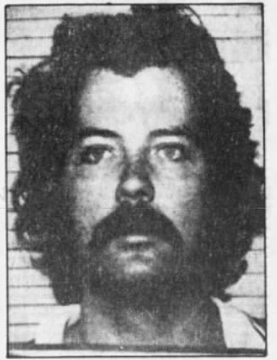
Quincy Jovan Allen is an American serial killer whose violent crime spree crossed South Carolina and North Carolina during the summer of 2002. Over a period of little more than a month, Allen murdered four people, wounded another man, committed multiple acts of arson, threatened other potential victims, and fled across several states before being captured in Texas. His crimes were carried out primarily with a sawed-off 12-gauge shotgun and were notable for their seemingly random nature and the lack of any meaningful connection between Allen and most of the people he attacked.
Allen ultimately admitted responsibility for the four murders. He received two consecutive life sentences without the possibility of parole for the North Carolina killings and was originally sentenced to death for the two South Carolina murders. After nearly two decades on death row, his South Carolina death sentences were overturned by a federal appeals court. In July 2024, he was resentenced to life imprisonment without the possibility of parole.
Background and the Beginning of the Violence
Quincy Jovan Allen was born on November 7, 1979, in Columbia, South Carolina. Before the murders, Allen had already spent time in federal prison for stealing a vehicle. According to statements Allen later gave investigators, an inmate he met while incarcerated told him that he might be able to arrange work for Allen as a Mafia hit man. Allen later told police that after his release he became tired of waiting for the supposed opportunity and decided to begin killing on his own.
Allen obtained a shotgun and began preparing himself to use it against people. The South Carolina Supreme Court later described how Allen said he wanted experience with the weapon before committing murders. His first known attack therefore became what he himself described to investigators as practice.
The Shooting of James White
At approximately 3:00 a.m. on July 7, 2002, Allen entered Finlay Park in downtown Columbia, South Carolina. There he encountered 51-year-old James White, a homeless man who was resting on a swinging bench. Allen ordered White to stand and shot him in the shoulder. After White fell backward onto the bench, Allen ordered him to stand again and fired a second time.
White survived the attack and received medical treatment. Allen later admitted that he had selected White because he had recently obtained the shotgun and wanted to learn how to use it. The shooting was an ominous precursor to the murders that followed only three days later.
The Murder of Dale Evonne Hall
On July 10, 2002, Allen encountered Dale Evonne Hall on Two Notch Road in Columbia. Hall was also identified in contemporary reporting as Dale Evonne Pressley, while some later accounts rendered her surname as Hale. Court records identify her as Dale Hall. Contemporary reporting generally described her as 45 years old, although some later reports gave her age as 44.
Allen took Hall to an isolated dead-end area on Oakway Drive near Interstate 77 in the Columbia area. Armed with his 12-gauge shotgun, he shot Hall multiple times. After the shooting, Allen left the location, purchased gasoline from a nearby truck stop, and returned. He poured the gasoline over Hall's body and set it on fire.
Firefighters responding to what initially appeared to be a woods or brush fire discovered Hall's burned body. Investigators eventually connected the homicide to Allen. The murder was particularly significant in the later South Carolina death-penalty case because prosecutors argued that Allen had deliberately isolated Hall, killed her, and then returned with gasoline to burn her remains. Allen went back to his job at the Texas Roadhouse Grill on Two Notch Road after the killing.
The Murder of Jedediah Harr
Allen's next murder occurred on August 8, 2002, and arose from a confrontation connected to the Texas Roadhouse where he worked. Allen had become involved in an argument with two sisters, Taneal and Tiffany Todd. During the dispute, he made a violent threat toward Tiffany, who was pregnant.
Tiffany's boyfriend, Brian Marquis, subsequently arrived at the restaurant with his friend, 22-year-old Jedediah "Jed" Harr. A confrontation developed outside. Allen retrieved his shotgun and fired into Harr's vehicle while attempting to shoot Marquis. The blast missed Marquis and struck Harr in the head.
As Harr's vehicle began rolling, Marquis escaped and ran into a nearby convenience store. An employee hid him inside a cooler while Allen entered the business searching for him. Unable to find Marquis, Allen eventually left. Harr died from the shotgun wound on August 8, 2002.
Allen's violence did not end with Harr's death. He went to Marquis's residence and set the front porch on fire. A few hours later he set fire to a vehicle belonging to another Texas Roadhouse employee, Sarah Barnes. On August 9, he burned another automobile belonging to Don Bundrick, a man whom authorities said Allen apparently did not know. Later that day, Allen went to the Platinum Plus club in Columbia and pointed his shotgun at another person.
The North Carolina Double Murder
Allen left South Carolina and traveled as far north as New York before heading south again. On August 12, 2002, he stopped at a Citgo convenience store and gasoline station in Dobson, Surry County, North Carolina, near Interstate 77.
Inside were 53-year-old store clerk Richard Calvin Hawks of Lowgap, North Carolina, and 29-year-old Robert Shane Roush of Lancaster, Ohio. Roush was a customer who had stopped at the store. Investigators said there was no confrontation that precipitated the shootings.
Allen shot and killed both men with the shotgun. The killings were captured by the store's surveillance system, providing investigators with important evidence. Allen also committed robbery and stole Roush's red Ford Explorer after the murders. By this point, law-enforcement agencies in both Carolinas were attempting to locate him.
Confirmed Murder Victims
- Dale Evonne Hall — Killed July 10, 2002. Hall, also known as Dale Evonne Pressley and whose surname has sometimes been reported as Hale, was murdered in an isolated area along Oakway Drive near Interstate 77 in Columbia, South Carolina. Allen shot her with a 12-gauge shotgun, later returned with gasoline, and set her body on fire.
- Jedediah "Jed" Harr, 22 — Killed August 8, 2002. Harr was shot inside his vehicle outside the Texas Roadhouse Grill on Two Notch Road in Columbia, South Carolina. Allen had been attempting to shoot Harr's friend Brian Marquis during a confrontation.
- Richard Calvin Hawks, 53 — Killed August 12, 2002. Hawks, a resident of Lowgap, North Carolina, was working as a clerk at a Citgo convenience store in Dobson, North Carolina, when Allen entered and fatally shot him.
- Robert Shane Roush, 29 — Killed August 12, 2002. Roush, of Lancaster, Ohio, was a customer at the same Citgo station in Dobson, North Carolina. Allen shot Roush and subsequently stole his vehicle while fleeing the area.
Surviving Victim
- James White, 51 — Shot July 7, 2002, at Finlay Park in Columbia, South Carolina. Allen shot White twice after approaching him while he was resting on a park bench. White survived. Allen later told investigators that he had used White as a practice victim after obtaining his shotgun.
The Manhunt and Arrest
Following the North Carolina murders, Allen continued west. Investigators in South Carolina had already connected him to the deaths of Hall and Harr, while authorities in North Carolina were pursuing him for the Dobson double murder. The surveillance evidence from the convenience store and information about the stolen vehicle helped law enforcement track his movements.
On August 14, 2002, Allen was located at a rest area in Mitchell County, Texas, near Colorado City. A sheriff found him sleeping in a vehicle. Deputies positioned devices to disable the vehicle and attempted to take him into custody, but Allen tried to escape. A short pursuit followed before the vehicle crashed. Allen was arrested at approximately 6:30 that morning, bringing the killing spree to an end.
After his capture, Allen gave investigators statements describing his involvement in the crimes. Authorities said he admitted all four murders. His statements also provided investigators with details about his interest in becoming a killer and the supposed Mafia hit-man opportunity he claimed had been discussed while he was in federal prison.
North Carolina Prosecution
Allen was indicted in North Carolina on two counts of murder in the deaths of Richard Hawks and Robert Roush, along with robbery and larceny charges. Prosecutors initially intended to seek the death penalty.
On February 20, 2004, Allen pleaded guilty to two counts of first-degree murder, two counts of robbery with a dangerous weapon, and felony larceny. On February 24, 2004, he was sentenced to two consecutive terms of life imprisonment without the possibility of parole for the murders. Additional consecutive prison terms were imposed for the robberies and larceny.
The North Carolina sentences ensured that even without the later South Carolina death sentence, Allen faced spending the remainder of his life behind bars.
South Carolina Prosecution and Death Sentence
South Carolina prosecuted Allen for the murders of Dale Hall and Jedediah Harr, as well as the shooting of James White, the arsons, and the firearm offense. On February 28, 2005, Allen pleaded guilty rather than proceeding to a jury trial.
His convictions included two counts of murder, assault and battery with intent to kill, second-degree arson, two counts of third-degree arson, and pointing and presenting a firearm. Because Allen pleaded guilty in a capital case, the sentencing proceeding was conducted before a judge.
Following an extensive sentencing hearing, the judge imposed death sentences for the murders of Hall and Harr. Allen also received a 20-year sentence for the assault on White, 25 years for second-degree arson, 10 years for each third-degree arson conviction, and five years for the firearm offense.
The South Carolina Supreme Court upheld the death sentences in November 2009. An execution date of January 8, 2010, was subsequently established, but Allen's attorneys continued challenging the sentence and obtained a stay before the execution could take place.
Violence While on Death Row
Allen was involved in another serious violent incident while imprisoned. On December 2, 2009, Allen and fellow South Carolina death-row prisoner Mikal Mahdi attacked a corrections officer at Lieber Correctional Institution near Ridgeville.
The officer was supervising the inmates in a fenced recreation area when Allen and Mahdi repeatedly stabbed him with a makeshift weapon. The wounded officer managed to escape from the immediate attack, and additional correctional officers used chemical agents to subdue the inmates. The officer survived and was hospitalized with injuries that were described at the time as non-life-threatening.
The incident occurred only weeks before authorities announced Allen's January 2010 execution date and further demonstrated the continuing security concerns surrounding him while incarcerated.
Appeals and the Overturning of the Death Sentence
Allen's death sentence remained under appellate review for years. His attorneys challenged the manner in which mitigating evidence had been evaluated during the 2005 sentencing proceeding. The defense had presented extensive evidence concerning Allen's childhood, psychiatric history, previous hospitalizations, and mental-health problems.
On July 26, 2022, the United States Court of Appeals for the Fourth Circuit overturned Allen's South Carolina death sentence. The appellate majority concluded that the original sentencing process had improperly failed to give meaningful consideration to significant mitigating evidence concerning Allen's mental condition and personal history.
The ruling did not disturb Allen's murder convictions. It instead required South Carolina either to conduct another capital sentencing proceeding or impose a different lawful sentence. Allen also continued to face the two consecutive life-without-parole sentences already imposed in North Carolina.
Resentencing to Life Without Parole
South Carolina prosecutors ultimately decided not to conduct another proceeding seeking Allen's execution. Prosecutors and Allen's attorneys reached an agreement under which Allen would receive life imprisonment without the possibility of parole and waive further challenges to the new sentence.
On July 22, 2024, a South Carolina judge approved the agreement and formally resentenced Allen to life in prison without parole for the South Carolina murders. The decision removed him from death row nearly 19 years after the original death sentences were imposed.
The resentencing did not mean Allen was eligible for eventual release. Between the life-without-parole sentence in South Carolina and his two consecutive life-without-parole sentences for the North Carolina murders, Allen will remain imprisoned for the rest of his life.
Legacy of the Case
Quincy Jovan Allen's crimes remain one of the more disturbing multistate killing sprees to emerge from the Carolinas in the early 2000s. His four confirmed murder victims had little or no connection to one another. Dale Hall was deliberately taken to an isolated location, Jedediah Harr became the unintended victim of Allen's attempt to shoot another man, and Richard Hawks and Robert Roush happened to be inside a North Carolina convenience store when Allen arrived.
The case was also unusual because Allen openly described the shooting of surviving victim James White as practice and told investigators about his desire to become a killer after hearing talk of work as a Mafia hit man. His increasingly violent behavior included shootings, murder, arson, robbery, pursuit of intended victims, interstate flight, and eventually a violent attack on a correctional officer while he was imprisoned.
Allen's legal history continued for more than two decades after the murders. He went from facing execution in two different states, to receiving life sentences in North Carolina and a death sentence in South Carolina, to having the South Carolina death sentence overturned on constitutional grounds. His 2024 resentencing finally left all four murder convictions subject to sentences that guarantee he will spend the remainder of his life in prison.