Ray Shawn Jackson: The Gillham Park Strangler
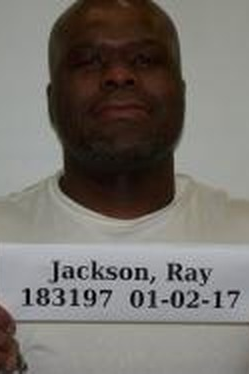
Ray Shawn Jackson is an American serial killer who murdered six women in Kansas City, Missouri, between September 1989 and April 1990. Because several victims were discovered in or near Gillham Park, he became known as the “Gillham Park Strangler.” Jackson targeted vulnerable women, lured them into isolated areas and killed them by strangulation.
The murders occurred within a period of approximately seven months. The bodies were left outdoors or at abandoned locations in the midtown area of Kansas City. Jackson’s crimes created intense fear among women living and working near Gillham Park, particularly those involved in street-level sex work or struggling with drug addiction.
The dates associated with the victims below are the publicly reported dates on which their bodies were found. In many accounts, these discovery dates are also listed as their dates of death because a more precise time of death was not publicly established.
Early Life and Background
Ray Shawn Jackson was born on August 28, 1967, in Missouri. He spent much of his childhood and adult life in Kansas City. Public accounts describe him as having grown up in poverty and receiving a limited education. As a young adult, he worked primarily as a laborer.
Nothing publicly known about Jackson’s early life fully explains why he became violent. By 1989, however, he was walking through the streets and parks of midtown Kansas City at night, searching for women he believed he could isolate and overpower.
Jackson was familiar with Gillham Park and its surrounding neighborhoods. The park’s wooded sections, bushes, pathways and poorly observed areas gave him places where he could attack women without immediately attracting attention. His repeated use of the same general area later helped police connect the murders.
The Beginning of the Murders
The known series began in September 1989. Jackson approached women on the street and attempted to gain their cooperation rather than immediately attacking them in a public location. According to statements presented after his arrest, he sometimes offered to share crack cocaine or claimed that he knew where the drug could be obtained.
Once a woman followed him to a secluded location, Jackson attacked her from behind and choked her until she became unconscious or physically unable to resist. His attacks involved sexual violence. He then strangled the victim to death and abandoned her body.
Investigators noticed disturbing similarities among the crime scenes. The victims were women of comparable circumstances, strangulation was the principal method of murder and several bodies were found in or around Gillham Park. Clothing was sometimes removed or left scattered near the bodies. Some victims were reportedly positioned in sexually degrading ways.
Known Victims
- Annette Stewart, age 33 — September 16, 1989 — Near 31st Street and Oak Street, Kansas City, Missouri: Stewart was the first confirmed victim in the series attributed to Jackson. Her body was found near the intersection of 31st and Oak streets, close to the area Jackson regularly traveled. She had been strangled. Her death established the beginning of the seven-month murder series.
- Kimberly Creer, age 22 — September 20, 1989 — Gillham Park, Kansas City, Missouri: Creer was found only four days after Stewart. Her body was discovered inside Gillham Park. She had also been strangled. The short interval between the first two discoveries demonstrated how rapidly Jackson was attacking women during the beginning of the series.
- Tresa Williams, age 21 — October 22, 1989 — 4136 Euclid Avenue, Kansas City, Missouri: Williams was found at a property located at 4136 Euclid Avenue. At 21, she was the youngest of Jackson’s six confirmed victims. Her death showed that the killer was operating beyond the immediate boundaries of Gillham Park while remaining within the same general section of Kansas City.
- Janice Berryman, age 36 — October 28, 1989 — Gillham Park, Kansas City, Missouri: Berryman’s body was discovered in Gillham Park six days after Williams was found. She was the fourth confirmed victim and the oldest woman in the known series. By this point, the repeated strangulations and the concentration of bodies around the park had created a recognizable pattern.
- Tonya Ward, age 23 — January 18, 1990 — Gillham Park, Kansas City, Missouri: Ward was found dead in Gillham Park after an apparent pause of nearly three months. She had been strangled. Her murder confirmed that the earlier killings had not ended and that the person responsible was still using the park as a hunting ground and body-disposal location.
- Michelle Mitchell, age 22 — April 5, 1990 — Gillham Park, Kansas City, Missouri: Mitchell was the final confirmed murder victim attributed to Jackson. Her body was found in Gillham Park approximately one week before Jackson was identified and arrested. As with the other victims, strangulation was the cause of death.
A Pattern of Predatory Violence
Jackson selected women whom he believed were unlikely to be protected, quickly reported missing or treated as priorities by authorities. Contemporary reports commonly described the victims as women involved in prostitution. Some were also affected by crack cocaine addiction, which Jackson exploited as a method of gaining their trust.
Describing the women only by their circumstances, however, can obscure the fact that each victim was an individual with a name, a family and a life before encountering Jackson. Their vulnerability did not make the crimes less serious. It made Jackson’s conduct more calculated because he deliberately targeted people he believed he could control.
Jackson’s method depended on isolation. He usually approached women at night and led them toward areas where trees, bushes, darkness or abandoned property concealed his actions. He strangled his victims at close range, making the murders prolonged and physically personal.
According to descriptions of his confession, Jackson sometimes choked a victim until she lost consciousness, allowed her to regain awareness and then continued the assault. He sexually assaulted victims before completing the strangulation. Afterward, he left their bodies exposed rather than attempting an elaborate burial or long-distance disposal.
The locations suggest that Jackson was comfortable operating within a limited geographic area. Gillham Park and nearby streets were places he understood well. Returning repeatedly to the same area increased his risk of detection, but it also allowed him to select concealed locations quickly and move through familiar surroundings.
Fear in Kansas City
As additional bodies were discovered, fear spread through the neighborhoods surrounding Gillham Park. Women who worked on the streets understood that someone was deliberately targeting them. The similarities between the murders made it increasingly difficult to view the deaths as unrelated incidents.
The concentration of victims in one area placed pressure on Kansas City police to identify the killer. Investigators examined the victims’ activities, the locations where they had last been seen and the physical evidence found near their bodies. They also considered whether the offender lived near the park or had another strong connection to it.
The case remained difficult because many interactions involving the victims took place late at night and were not documented. Potential witnesses could be reluctant to speak with police, and investigators often had no clear record of the victims’ final movements.
The Attack That Led to Jackson’s Capture
The break in the investigation came in April 1990, when Jackson attacked another woman near Gillham Park. Unlike the six murder victims, she survived.
Jackson reportedly approached the woman and attempted to persuade her to accompany him. When she refused, he followed her, attacked her and dragged her toward bushes or another concealed part of the park. He began choking and sexually assaulting her.
A passerby walking a dog noticed what was happening and intervened. The interruption forced Jackson to abandon the attack and flee. The witness’s actions prevented the woman from becoming another murder victim.
After recovering, the survivor was able to provide investigators with information about her attacker. Police circulated a description and composite image. The publicity generated hundreds of responses and directed attention toward men who lived in or frequently visited the neighborhood.
People familiar with the area identified Ray Shawn Jackson as someone resembling the suspect. His connection to Gillham Park and the surrounding streets made him a strong person of interest. Police brought him in for questioning in April 1990.
Confession and Criminal Charges
During questioning, Jackson made statements connecting himself to the attacks. He admitted involvement in the killings and described how he had approached women, offered access to crack cocaine and led them into secluded locations.
On April 13, 1990, authorities announced that the 22-year-old Jackson had been charged with killing six women. He was also charged in connection with the violent assault on the surviving woman.
At the time of his arrest, police had been investigating seven strangulation deaths in the area. Jackson was formally linked to six of those murders. The available evidence did not establish that he was responsible for every similar death under investigation.
His confession provided investigators with an explanation for the pattern they had observed. The victims had not simply entered the park independently. Jackson had deliberately approached them, gained their trust through promises involving drugs and led them to locations he had selected for an attack.
Guilty Pleas and Sentencing
Jackson’s case did not proceed through a full murder trial. On December 6, 1991, he pleaded guilty to six counts of first-degree murder. He also pleaded guilty to first-degree assault for the attack on the woman who survived.
By entering guilty pleas, Jackson avoided the possibility of receiving a death sentence. In court, he admitted strangling the six women. He offered an apology to members of the victims’ families but said that he did not understand why he had committed the murders.
The court sentenced Jackson to six consecutive terms of life imprisonment without the possibility of parole for the murders. He received an additional sentence for the assault on the surviving victim. The consecutive life sentences ensured that he would remain imprisoned permanently.
The Importance of the Survivor and the Witness
The surviving woman was central to the identification of Jackson. She endured an attack that followed the same essential pattern as the murders, but the intervention of a stranger allowed her to live and communicate directly with investigators.
The passerby’s decision to investigate and intervene was equally significant. Without that action, Jackson might have completed another murder and continued attacking women. The witness not only saved a life but also created the first immediate link between the killer, a surviving victim and a specific crime scene.
The case illustrates how a serial offender can be exposed when an established pattern is interrupted. Jackson had previously controlled the locations and circumstances of his attacks. The unexpected arrival of a witness removed that control and left behind a survivor capable of describing him.
Remembering the Victims
Ray Shawn Jackson is often the central name in accounts of the Gillham Park murders, but the lasting human cost is represented by Annette Stewart, Kimberly Creer, Tresa Williams, Janice Berryman, Tonya Ward and Michelle Mitchell.
The victims were repeatedly described through labels connected to prostitution and drug use. Those details may help explain how Jackson approached them, but they should not define their lives or reduce their importance. Jackson chose them because he believed their circumstances would make their disappearances and deaths easier to ignore.
The sequence of murders demonstrates the danger created when violence against marginalized people is not immediately recognized as part of a larger pattern. Each victim deserved the same urgency, dignity and investigative attention as any other person killed in the community.
Legacy of the Gillham Park Murders
The murders remain one of Kansas City’s most disturbing serial homicide cases. Over approximately seven months, Jackson repeatedly entered the same general area, approached vulnerable women and used strangulation to kill them.
His eventual capture resulted from the combination of an interrupted attack, a surviving witness, public assistance and police recognition of the geographic pattern. Once identified, Jackson confessed and accepted responsibility in court for six murders.
The name “Gillham Park Strangler” describes the location and method associated with Jackson, but it does not convey the full damage he caused. Six women lost their lives, their families were left with permanent grief and another woman survived an attack that could easily have ended in her death.
Ray Shawn Jackson’s convictions closed the criminal cases against him, but the history of the murders is most accurately understood by remembering the victims individually and recognizing the deliberate manner in which he exploited their vulnerability.