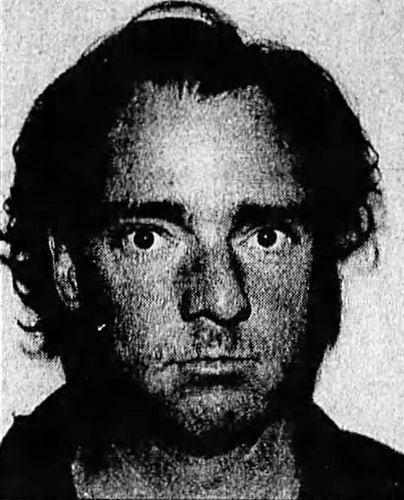
Andrew David Edwards: The Transient Serial Killer Who Murdered Across Three States
Background
Andrew David Edwards, born March 6, 1958, in Sunnyvale, California, is an American serial killer whose known crimes stretched across Oregon, California, and Colorado between 1987 and 1992. Edwards lived much of his adult life as a transient, traveling from place to place and frequently associating with other homeless or transient men. His victims were generally men he encountered while drinking, staying in homeless camps, or traveling along railroad routes.
Before adopting a transient lifestyle, Edwards reportedly attended Fremont High School and later Chemeketa Community College in Salem, Oregon. He worked for a period as a bricklayer and had a girlfriend. Alcohol, however, became a serious and persistent problem in his life. Edwards reportedly entered alcohol-treatment programs repeatedly beginning when he was approximately 19 years old. By 1985, he had left his job and girlfriend and began living an increasingly nomadic existence.
The isolation of transient communities and Edwards's frequent movement between cities helped separate his crimes geographically. His first two known victims were killed in Portland, Oregon, but subsequent killings occurred hundreds of miles away in California and Colorado. It was not until Edwards himself began talking to authorities in 1993 that investigators were able to connect the murders to the same man.
The Murder of John Harold Schiermeister
Edwards's earliest known victim was John Harold Schiermeister, a man from Roseburg, Oregon. On October 5, 1987, Edwards and Schiermeister were drinking together in or around a railroad yard in Portland. According to the account Edwards later provided to investigators, an alcohol-fueled confrontation developed and Edwards attacked Schiermeister.
Schiermeister suffered a fatal blow to the head. Railroad employees discovered his body the following day, October 6, in a Burlington Northern Railroad yard in Portland. He was identified shortly afterward, but investigators initially had no clear suspect. The homicide remained unsolved for years.
The Murder of Anthony Keith Thurman
Nearly two and a half years later, another transient man was murdered in Portland. On April 5, 1990, 24-year-old Anthony Keith Thurman encountered Edwards. As in the Schiermeister case, drinking preceded an eruption of violence.
Edwards later admitted attacking Thurman with a length of pipe, repeatedly striking him in the head. Thurman's body was left beneath a freeway overpass in Portland and was not discovered until later in April. Investigators did not immediately recognize that his death was connected with the earlier murder of Schiermeister.
The similarities became much more significant after Edwards confessed. Both victims were vulnerable men living transient lifestyles, both were encountered in Portland, and both were killed through severe blunt-force violence after drinking with Edwards.
The Murder of Melvin Richards
By 1992, Edwards's travels had taken him outside Oregon. While riding freight trains, he met 52-year-old Melvin Richards. The men reportedly drank together as they traveled. Once again, Edwards later described becoming enraged while intoxicated and attacking his companion.
On February 21, 1992, Edwards beat Richards to death and disposed of his body from a train near Bakersfield, California. The circumstances demonstrated how Edwards's transient lifestyle complicated efforts to identify a pattern: his victims could be killed far from where either man had originally met, and Edwards could quickly leave a jurisdiction simply by boarding another train.
The Murder of Bud Griffith
The fourth known killing occurred only a few months after Richards's death. Edwards reached Pueblo, Colorado, where he encountered 48-year-old Bud Griffith in the vicinity of a homeless shelter or transient encampment associated with the railroad area.
Edwards and Griffith drank together before another violent confrontation occurred. Edwards later confessed that he beat Griffith with a wooden board, described in accounts as a two-by-four, and a wine bottle. Griffith died from the attack.
Available accounts place Griffith's murder in April or May 1992, but a reliable exact date of death has not been established in the surviving published information. His death reportedly went unnoticed or unreported for several days. Because the precise date cannot be verified, it should not be represented as a specific day in April or May.
Known Victims
- John Harold Schiermeister — approximately 37 or 38 years old. Killed October 5, 1987, at a railroad yard in Portland, Oregon. Edwards beat him in the head after the men had been drinking together. Schiermeister's body was discovered by railroad workers on October 6, 1987.
- Anthony Keith Thurman — 24 years old. Killed April 5, 1990, in Portland, Oregon. Edwards beat Thurman with a pipe and left his body beneath a freeway overpass. His remains were discovered later in April 1990.
- Melvin Richards — 52 years old. Killed February 21, 1992, near Bakersfield, California. Edwards met Richards while traveling by rail, drank with him, beat him to death, and disposed of his body from the train.
- Bud Griffith — 48 years old. Killed in April or May 1992 in the Pueblo, Colorado, area. Edwards attacked Griffith with a wooden board and a wine bottle after the two had been drinking. The exact date of Griffith's death is not reliably documented in available accounts.
The Attack on Lynn Ellis Delong
Edwards's violent pattern continued into January 1993, but his next victim survived. In San Jose, California, Edwards encountered 42-year-old Lynn Ellis Delong. Behind a bowling alley, Edwards attacked Delong with a wrench, inflicting extremely serious injuries. Delong survived despite losing an ear during the assault.
Edwards apparently believed that he had killed Delong. This mistaken belief became important when he later spoke to law enforcement, because he initially claimed that he had murdered five men. Investigators eventually determined that the supposed fifth murder victim was Delong, who was still alive.
Arrest and Confession
After the attack in San Jose, Edwards traveled north. On January 26, 1993, he came to the attention of authorities in Oroville, California, while seeking medical treatment for an injured hand and wandering through a residential area. Rather than simply attempting to conceal his identity and continue traveling, Edwards began making startling admissions.
He told a law-enforcement officer that he had killed five men. Investigators soon began examining his claims and comparing them with unsolved homicides in places Edwards said he had visited. Although Edwards believed all five men had died, authorities established that Delong had survived the San Jose attack. Edwards nevertheless provided information connecting himself with four actual homicides.
His statements suddenly gave investigators an explanation for killings that had occurred years apart and in different states. The Portland cases were particularly significant because Edwards could be connected to both Schiermeister and Thurman, men whose deaths had previously remained unresolved.
Connecting the Murders
The four killings displayed a remarkably consistent pattern. Edwards generally befriended or associated with men living on society's margins. Alcohol was frequently involved. During or after drinking sessions, Edwards would become enraged and attack the other man with whatever blunt object was available or simply beat him severely enough to cause fatal injuries.
There was little indication that Edwards selected victims according to an elaborate physical preference or carefully prepared murder plan. Instead, the crimes appear to have developed from volatile encounters with fellow transients. His mobility then worked in his favor. Railroad yards, freight trains, homeless camps, shelters, and highway areas provided locations where people could disappear without immediately generating the attention that might accompany the disappearance of someone with a fixed home and routine.
The movement between Oregon, California, and Colorado also meant that individual police departments initially had little reason to suspect their homicide was part of a multistate series. Modern centralized databases and rapid electronic communication were far less developed when the murders began in the 1980s.
Convictions and Sentence
Although Edwards confessed to four killings, his criminal convictions centered on the two Oregon murders. He was convicted of murdering John Harold Schiermeister and Anthony Keith Thurman and received a life sentence.
This distinction is important when describing Edwards's record. Four homicide victims are attributed to him based upon his confessions and the subsequent investigation, but he was convicted of two murders. The killings of Melvin Richards in California and Bud Griffith in Colorado are nevertheless consistently identified as part of Edwards's admitted series.
A Serial Killer Hidden Among Railroad Transients
The Andrew David Edwards case illustrates the particular difficulties investigators faced when crimes involved transient victims and a transient offender. Edwards did not remain in one neighborhood or repeatedly strike within the boundaries of a single police department. He moved along railroad routes and crossed state lines, encountering men whose circumstances could make their disappearance difficult to notice immediately.
His crimes occurred over approximately five years, beginning with Schiermeister's murder in Portland in October 1987 and ending with Griffith's death in Colorado during the spring of 1992. The near-fatal attack on Delong in January 1993 ultimately preceded Edwards's arrest and extraordinary confession.
Without that confession, it is possible that investigators would have continued treating at least some of the murders as unrelated cases. Edwards's own statements provided the link between Portland railroad yards, a death near Bakersfield, and a killing in Pueblo.
Legacy of the Case
Andrew David Edwards is generally classified as a serial killer responsible for four murders in three states. His victims were John Harold Schiermeister, Anthony Keith Thurman, Melvin Richards, and Bud Griffith. A fifth man, Lynn Ellis Delong, survived Edwards's violent January 1993 attack.
Unlike serial offenders whose crimes were uncovered through forensic evidence or a lengthy surveillance operation, Edwards effectively exposed his own murder series when he began confessing after his final attack. The information he provided allowed authorities to revisit unsolved deaths and connect cases separated by years and hundreds of miles.
The four men who died had lives extending far beyond their encounters with Edwards, yet their circumstances as transient or homeless individuals made them particularly vulnerable. Their murders demonstrate why deaths within transient communities can be difficult to connect across jurisdictions. Edwards exploited no sophisticated criminal technique; instead, his mobility, the isolation of his victims, and the distance between the crime scenes allowed his violence to remain unidentified as the work of one offender until 1993.