Ray Copeland: The Missouri Cattle-Swindle Serial Killer
Overview
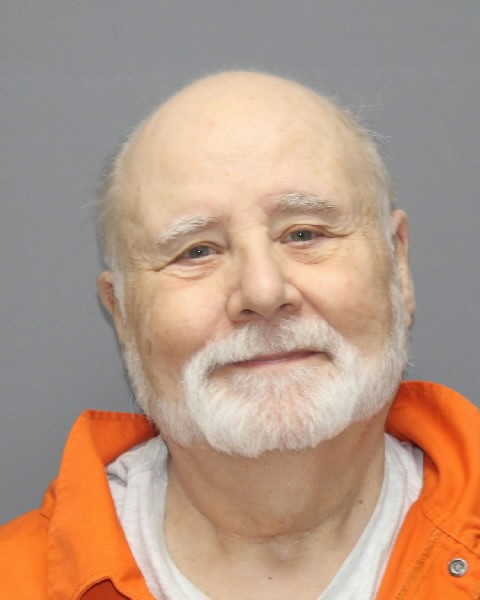
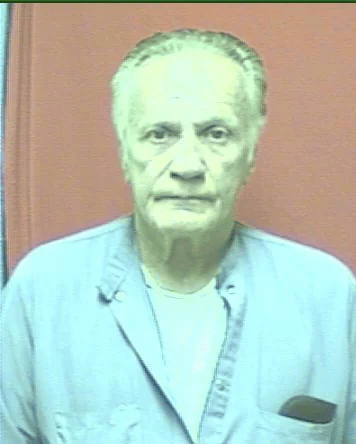
Raymond W. "Ray" Copeland was an American serial killer and longtime cattle swindler who was convicted of murdering five men in northwestern Missouri between 1986 and 1989. Born on December 30, 1914, Copeland spent much of his adult life moving between legitimate farm work and criminal schemes involving livestock, worthless checks, theft and fraud. By the time the murders were discovered, he was an elderly farmer living near Mooresville, Missouri, with his wife, Faye Copeland.
What made the Copeland case particularly disturbing was the connection between murder and an apparently routine financial fraud. Ray recruited homeless men, transients and men looking for work, brought them to rural Missouri and presented himself as someone willing to employ them in the cattle business. The men were then used as intermediaries in a fraudulent cattle-buying operation. Once their usefulness ended and bad checks threatened to lead investigators back to the scheme, the workers disappeared. Five were eventually found dead.
Ray Copeland's Criminal Background
Copeland had a criminal history extending back decades before he became known as a murderer. He became involved in check fraud and livestock-related crimes as a young man and accumulated arrests and convictions over the years. His reputation made conducting cattle transactions in his own name increasingly difficult. Rather than abandon livestock dealing, he developed ways to put other people's names on the transactions.
Copeland began recruiting men who had few financial resources and often few close connections in the area. Some were contacted through homeless shelters or missions. To the men, Copeland appeared to be offering work, food, lodging and an opportunity to earn money. In reality, prosecutors later demonstrated that the workers were being positioned to take responsibility for fraudulent livestock purchases.
The Cattle Fraud Scheme
The basic scheme involved having a recruited worker establish a post office box and open a bank account in his own name. Money supplied by the Copelands could initially be placed into the account, giving it an appearance of legitimacy. The worker would then accompany Ray to livestock auctions and purchase cattle with checks drawn on the new account.
The account did not contain enough money to cover the cattle purchases. Ray could quickly resell the livestock while the original checks were still moving through the banking system. Once the checks were returned for insufficient funds, investigators and cattle sellers would naturally look for the person whose name appeared on the account and checks rather than immediately focusing on Ray Copeland.
The five murders for which Ray was eventually convicted fit directly into this pattern. The Missouri Supreme Court later described the operation as one in which the recruited worker would be killed before the bad checks could lead investigators back through the fraudulent transactions. Murder effectively removed the person whose testimony could expose how the scheme actually worked.
The Confirmed Victims
Ray Copeland was convicted of five counts of first-degree murder. All five victims had been connected in some way with the Copelands' farm, employment arrangements or cattle transactions. Their remains were discovered on rural properties where Ray had worked or had access.
- Dennis K. Murphy, 27 - October 17, 1986 - northwestern Missouri: Murphy, associated with Normal, Illinois, was one of the earliest confirmed victims. Evidence showed that a pasture-rental agreement involving Murphy had been prepared in Faye Copeland's handwriting. Murphy's body was eventually discovered at the bottom of a well on a farm associated with Ray's work. His remains had been secured to a roughly forty-pound concrete block. An autopsy determined that he had suffered a fatal gunshot wound to the head.
- Wayne Warner - November 19, 1986 - northwestern Missouri: Warner was another man connected with the Copelands through their cattle operation. His body was discovered in a shallow grave in a barn on another rural property where Ray had worked. Investigators had to search an area containing thousands of bales of hay before the burial site was located. Warner had also been shot in the head. November 19, 1986 is the death date commonly recorded for him, although the earliest public reporting initially identified only November 1986.
- Jimmie "Jimmy" Dale Harvey, 27 - October 25, 1988 - northwestern Missouri: Harvey was from Springfield, Missouri. He became involved with Copeland's operation and later disappeared. His remains were among three bodies discovered in shallow graves in a barn near Ludlow, Missouri. Harvey had been killed by a gunshot to the head.
- John W. Freeman, 27 - December 8, 1988 - northwestern Missouri: Freeman was recruited into the cattle-buying operation and opened a bank account used in livestock transactions. Checks connected to the account were eventually returned for insufficient funds. After the bank closed Freeman's account, correspondence intended for him was sent to the Copelands' address. His body was later discovered in a shallow grave near Ludlow with those of Harvey and Cowart. He had been shot in the head.
- Paul Jason Cowart, 21 - May 3, 1989 - northwestern Missouri: Cowart, from Dardanelle, Arkansas, was the youngest of the five confirmed victims. Like Freeman, he established an account and became involved in cattle transactions in which checks were later returned for insufficient funds. His remains were discovered in a shallow grave in the Ludlow-area barn. Cowart had been shot in the head. His exact death date has been reported inconsistently: May 3, 1989 is commonly recorded in later death records, while early indictment-era reporting gave May 1 and some accounts have described the killing as occurring May 3 or 4.
A Pattern Hidden in Rural Missouri
The victims' disappearances attracted relatively little immediate attention because the men were transient or had recently moved from place to place. Their circumstances made it possible for someone to disappear without relatives, employers or neighbors immediately realizing that a crime had occurred. Copeland exploited that vulnerability.
The bodies were also concealed away from the Copelands' residence itself. Investigators ultimately found remains on other farms and properties to which Ray had access through agricultural work. Three of the victims - Harvey, Freeman and Cowart - were recovered from shallow graves in a barn near Ludlow. Warner was found buried beneath hay in another barn, while Murphy was recovered from a well on the same general property associated with Warner's burial location.
Jack McCormick Survives
The scheme finally began to collapse because one prospective victim survived. In July 1989, Ray recruited Jack McCormick from the Victory Mission in Springfield, Missouri. Copeland offered him cattle-related work and directed him through a process similar to that used with other men: McCormick obtained a post office box, opened a bank account with money supplied by the Copelands and began attending cattle auctions with Ray.
On August 6, 1989, McCormick was walking behind a barn when he saw what he believed to be human bones protruding from the ground. The discovery immediately made him suspicious. According to evidence later summarized in court proceedings, Faye appeared upset when she learned that McCormick had been behind the barn and told him that she and Ray did not want anyone going back there.
McCormick soon decided that he wanted to leave. The following morning, Ray persuaded him to enter a barn by claiming that he needed help locating a raccoon. Ray was carrying a .22-caliber rifle. McCormick also noticed a tractor and trailer positioned near the barn, along with a shovel and plastic. While McCormick was occupied, he turned and saw Ray pointing the rifle directly at him.
McCormick managed to talk his way out of the confrontation. He eventually convinced Ray to take him away from the farm and refused to return. Weeks later, while in Nebraska, McCormick contacted a Crime Stoppers hotline and reported what he had seen. Although authorities initially had to determine whether his extraordinary story was credible, Ray's extensive criminal history gave them reason to investigate.
The Search for Evidence
Authorities obtained a warrant and searched the Copeland residence in October 1989. The investigation quickly expanded beyond the farm itself. Inside the house, officers discovered a guest-bedroom closet containing clothing in numerous sizes. Some of the clothing was later identified as belonging to murder victims. Luggage connected to one of the dead men was also discovered.
Investigators found documents tying the Copelands to the financial arrangements used in the livestock scheme. There were records concerning the bank accounts and transactions of recruited workers as well as pasture-rental agreements involving Dennis Murphy and Wayne Warner.
One of the most important discoveries was a handwritten list of men's names. The writing was identified as Faye Copeland's. Several names had notations beside them, and the names of three known murder victims - Freeman, Cowart and Harvey - were marked with an "X." Prosecutors argued that the markings demonstrated knowledge of what had happened to the men. The list also contained names associated with men whose whereabouts became subjects of investigation.
Discovery of the Bodies
Tips from residents familiar with Ray's movements led officers to properties outside the Copeland farm. At a barn near Ludlow where Ray had performed work, investigators uncovered separate shallow graves containing the bodies of Paul Cowart, John Freeman and Jimmie Harvey.
Another search led to Wayne Warner's grave in a barn concealed beneath a large quantity of hay. Dennis Murphy's remains were then recovered from a well. Investigators determined that all five men had died from gunshot wounds to the head.
A .22-caliber rifle was seized from the Copeland home. Ballistics evidence provided an important physical connection between the household and the murders: at least one recovered bullet was positively identified as having been fired from the .22-caliber rifle found in the residence. Combined with the financial records, the victims' property, witness testimony and locations where the bodies had been hidden, the evidence established the structure of the murder-and-fraud operation.
Faye Copeland's Role
Ray's wife, Faye Della Copeland, was also prosecuted. Her precise level of participation in the actual shootings was a major issue during her case. Prosecutors did not need to prove that she personally fired the fatal shots; she was prosecuted under a theory of accomplice liability.
Evidence showed that Faye participated in financial aspects of the operation. She maintained information concerning the accounts used by recruited workers, accompanied men during some transactions, possessed signed blank checks and prepared documents associated with individuals who later became victims. The handwritten list containing the victims' names and X marks became particularly important evidence.
Faye's defense portrayed her as an abused and intimidated wife who had lived for years under Ray's domination. Evidence of Ray's violence and mistreatment of her became part of later appeals. Nevertheless, a jury convicted Faye of five counts of first-degree murder in November 1990.
Ray Copeland's Murder Trial
Ray was tried separately in March 1991. Prosecutors presented the cattle swindle as the motive connecting all five killings. Each victim could potentially expose fraudulent transactions conducted in his name. Once the cattle had been purchased and resold, leaving the worker alive meant leaving behind a witness capable of explaining who had really organized the operation.
Ray's defense challenged whether prosecutors could prove that he had personally committed the murders. The jury rejected that argument. On March 18, 1991, he was found guilty of five counts of first-degree murder.
The penalty phase followed. Jurors recommended death sentences for the killings, and on May 22, 1991, Judge E. Richard Webber formally sentenced Ray Copeland to death on all five murder counts. At 76, Copeland was widely described at the time as the oldest inmate on death row in the United States. Faye, who had already received death sentences in four of the five murders, was likewise described as the country's oldest female death-row prisoner.
Possible Additional Victims
Investigators feared that the five recovered men might not represent the full extent of the Copeland crimes. Other transient workers had passed through Ray's operation, and some could not immediately be located. Names of additional men appeared in records recovered from the Copeland residence. During Faye's case, prosecutors referred to missing men connected with the same general pattern, including a man named Thomas Parks.
Authorities investigated the possibility of additional murders, but no additional bodies were conclusively tied to Ray in a way that resulted in further murder convictions. Claims that the Copelands murdered seven or more additional people therefore remain allegations or suspicions rather than established homicides. The five men for whom Ray was convicted remain his confirmed victims.
Death of Ray Copeland
Ray never reached the execution chamber. He remained imprisoned under his death sentences while the case moved through the legal process. On October 19, 1993, approximately two and a half years after his murder convictions, Raymond W. Copeland died at the Potosi Correctional Center in Missouri. He was 78 years old. His death was attributed to natural causes.
Faye's case continued much longer. Her murder convictions remained intact, but her death sentences were eventually overturned in federal court and replaced with life imprisonment. After suffering a severe stroke in 2002, she received medical parole and was transferred to a nursing facility. She died in 2003.
Legacy of the Copeland Murders
The Ray Copeland case stands out because the killings were not committed during sudden arguments or conventional robberies. They were tied to a continuing financial enterprise. Men were recruited because they could provide Ray with names, bank accounts and signatures that separated him from fraudulent cattle purchases. According to the case presented by prosecutors and later summarized by Missouri's highest court, those same men became liabilities when the transactions began attracting scrutiny.
The investigation also demonstrated how easily people living transient lives could become targets. The victims were offered employment and drawn into an unfamiliar rural environment by someone who appeared to be an ordinary elderly cattle farmer. Their limited connections to the area helped delay recognition that several men associated with the same employer had disappeared.
Jack McCormick's survival ultimately broke that pattern. His suspicions, escape from the farm and report to authorities gave investigators the opening they needed. What initially appeared to be another investigation of Ray Copeland's long history of livestock fraud developed into the discovery of five homicide victims and one of Missouri's most notorious serial murder cases.