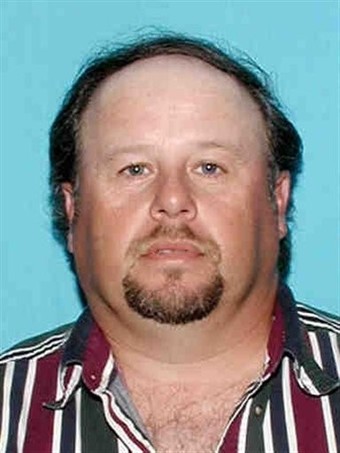
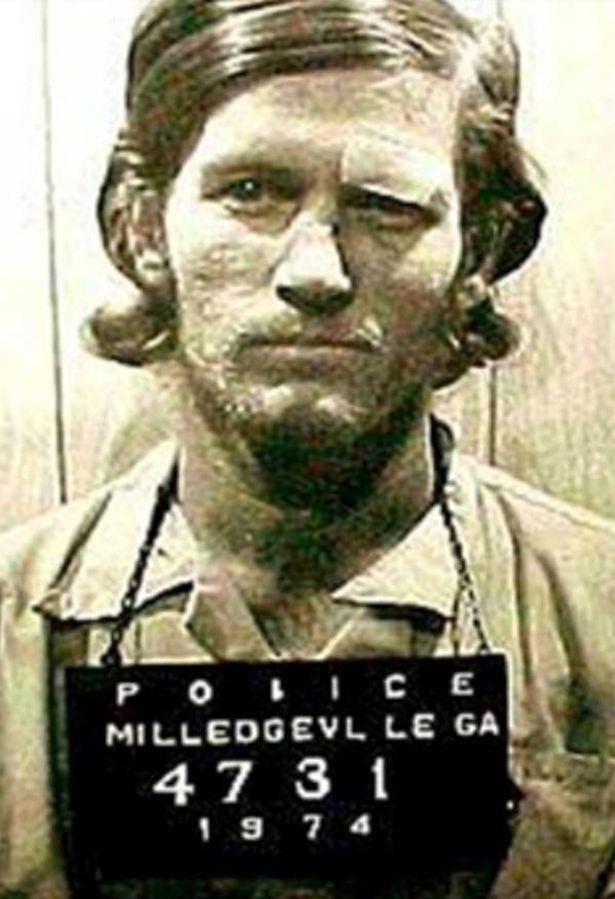
Thor Nis Christiansen: The Isla Vista "Look-Alike" Killer
Thor Nis Christiansen was a Danish-born American serial killer responsible for the murders of four young women in Southern California between 1976 and 1979. His first three known victims disappeared from the Isla Vista and Goleta area near the University of California, Santa Barbara. Because those women were close in age and shared similar physical characteristics, the crimes became widely known as the "look-alike murders." Christiansen later moved south and committed another murder in the Los Angeles area before a woman who survived being shot by him ultimately helped bring him to the attention of investigators.
Christiansen's crimes were particularly disturbing because the shootings were only part of his pattern. Evidence and his own later statements established that he was sexually interested in his victims after death. He generally targeted young women he encountered while they were hitchhiking or seeking transportation, placed them inside his vehicle, drove them to locations where he could control them, and used a .22-caliber handgun to shoot them in the head. Their bodies were then abandoned in isolated areas where discovery might be delayed.
Early Life
Thor Nis Christiansen was born in Denmark on December 28, 1957. He immigrated to the United States with his parents when he was approximately five years old. The family initially lived in Inglewood, California, before settling in Solvang in Santa Barbara County, a community known for its Danish heritage. Christiansen's father operated a restaurant in the area.
Christiansen was reportedly a capable student during his younger years, but his performance and behavior deteriorated during high school. He eventually left his parents' home, dropped out of school and worked at a service station. During his late teenage years he also experienced substantial changes in his appearance and weight. More significantly, according to information that emerged after his arrest, he developed increasingly violent sexual fantasies involving women, firearms and death.
At some point Christiansen acquired a .22-caliber pistol. That type of weapon would become closely associated with the murders that began around Isla Vista in late 1976.
The Disappearance of Jacqueline Ann Rook
Twenty-one-year-old Jacqueline Ann Rook, commonly called Jackie, was a University of California, Santa Barbara student and resident adviser. She disappeared from the Isla Vista area on November 20, 1976. Her disappearance initially offered investigators little indication of what had happened to her.
Rook remained missing for approximately two months. On January 20, 1977, searchers found her body in the Refugio Canyon area of Santa Barbara County. She had been shot in the head. Because of the length of time between her disappearance and the recovery of her remains, November 20, 1976 is generally treated as the date she was killed, although her body was not discovered until January.
Mary Ann Sarris Disappears
Only a little more than two weeks after Rook vanished, 19-year-old Mary Ann Sarris disappeared from the same general community. Sarris, originally from the Santa Rosa area, was working as a waitress near Goleta and Isla Vista. She was last known to be alive on December 6, 1976.
Sarris could not be located during the intensive concern that followed the disappearances of young women around Isla Vista. Her remains were not recovered until May 22, 1977, when they were discovered in a remote canyon area north of Santa Barbara, reported in contemporary accounts as Drum Canyon near the Los Alamos area. She had also been shot. Investigators ultimately concluded that Sarris had been another victim of the same killer who murdered Rook, with December 6, 1976 generally regarded as the date of her death.
The Murder of Patricia Marie Laney
By January 1977, the disappearances were already generating fear around Isla Vista. Twenty-one-year-old Patricia Marie Laney was a UCSB student who had become concerned about violence against women in the community. She participated in efforts intended to draw attention to women's safety. On January 18, 1977, Laney herself disappeared.
Her body was found the following day along an isolated road in Refugio Canyon in the Santa Ynez Mountains northwest of Isla Vista, near the Rancho del Cielo area. She had been shot in the head with a small-caliber weapon. The recovery of Laney's body prompted additional searches of the surrounding area, leading to the discovery of Jacqueline Rook's remains on January 20.
The proximity of the two bodies, together with the similarities between the women and their wounds, convinced authorities they were dealing with related murders. Once Mary Sarris's remains were located several months later, investigators had three young women connected to Isla Vista who had disappeared within approximately two months of one another and had been murdered in a similar manner.
The "Look-Alike" Murders
The three Santa Barbara County cases became known as the "look-alike" murders because Rook, Sarris and Laney were young women with enough similarities in appearance to suggest that the killer might have been selecting a particular type of victim. The crimes profoundly affected Isla Vista. Hitchhiking had been a common means of transportation among students and young residents, but the possibility that a killer was using rides as a method of obtaining victims made that practice increasingly dangerous.
The murders also generated demonstrations and community activism concerning violence against women and the need for safer transportation. Laney in particular became an enduring symbol within the community because she had been involved in efforts addressing those very issues before becoming a victim herself.
An Early Encounter With Police
One of the most troubling aspects of the investigation was that Christiansen came to law enforcement attention in 1977 without being identified as the murderer. During a liquor-related encounter, officers discovered a .22-caliber pistol in his vehicle. Investigators were interviewing and examining large numbers of potential suspects and persons of interest connected to the Isla Vista investigation, and Christiansen was not singled out as the killer.
The importance of that encounter would become clear only later. The victims had been shot with small-caliber weapons, and Christiansen's possession of a .22-caliber handgun fit the method ultimately associated with his crimes. At the time, however, authorities did not have enough evidence to connect him directly to the murders.
Leaving Santa Barbara and Returning
After the first three murders, Christiansen spent a period away from the Santa Barbara area, including time in Oregon. He later returned to California, lost a considerable amount of weight and continued his education. He eventually lived in the Goleta area again.
No additional murder has been conclusively attributed to Christiansen during his period in Oregon. His movements nevertheless produced later speculation about whether four victims represented the full extent of his crimes. Authorities never established additional murders with enough evidence to add them to his confirmed victim count.
The Attack on Lydia Preston
On April 18, 1979, Christiansen attacked 24-year-old Lydia Preston in the Los Angeles area. Preston accepted a ride from him, placing her in the same vulnerable situation Christiansen had exploited with other women. While she was inside his vehicle, Christiansen produced a firearm and shot her in the head near her ear.
Unlike his murder victims, Preston remained capable of escaping. Despite suffering a serious gunshot wound, she managed to get away from Christiansen and obtain medical treatment. Doctors removed the bullet, and she survived.
Preston's survival was disastrous for Christiansen because she had seen the man who attacked her. He could no longer rely on an abandoned body and an isolated crime scene to conceal his identity.
The Murder of Laura Sue Benjamin
During the same period, Christiansen murdered Laura Sue Benjamin in Los Angeles County. Benjamin was a young woman in her early twenties. Her decomposed body was discovered on May 26, 1979, inside or near a drainage culvert in the vicinity of Angeles Forest Highway and Big Tujunga Road, near Big Tujunga Dam in the San Gabriel Mountains north of Los Angeles.
Benjamin had been shot twice in the head. Because of the condition of her body when she was found, May 26 was the date of discovery rather than a reliably established date of death. Investigators determined that she had apparently been killed sometime during April 1979.
Her murder represented the same basic pattern seen in Christiansen's Santa Barbara County crimes: a young woman, gunshots to the head and disposal of the body in an isolated location. Benjamin became Christiansen's fourth confirmed murder victim.
Confirmed Victims
- Jacqueline Ann Rook, 21 - Disappeared November 20, 1976, from the Isla Vista area near UC Santa Barbara. She is believed to have been killed at approximately the time she disappeared. Her body was found January 20, 1977, in Refugio Canyon in Santa Barbara County. She had been shot in the head.
- Mary Ann Sarris, 19 - Disappeared December 6, 1976, from the Isla Vista/Goleta area and is believed to have been killed at approximately that time. Her remains were discovered May 22, 1977, in the Drum Canyon/Los Alamos area north of Santa Barbara.
- Patricia Marie Laney, 21 - Disappeared January 18, 1977, from the Isla Vista area. She was murdered that day and her body was found January 19, 1977, along an isolated road in Refugio Canyon in the Santa Ynez Mountains northwest of Isla Vista.
- Laura Sue Benjamin, approximately 22-23 - Murdered in April 1979 in Los Angeles County. The exact date of death has not been firmly established. Her decomposed body was discovered May 26, 1979, in a drainage culvert near Angeles Forest Highway, Big Tujunga Road and the Big Tujunga Dam area north of Los Angeles. She had been shot twice in the head.
Surviving Victim
- Lydia Preston, 24 - Shot in the head by Christiansen on April 18, 1979, after accepting a ride from him in the Los Angeles area. She escaped despite her injuries, received medical treatment and survived. Her later identification of Christiansen was instrumental in bringing him to police attention.
The Chance Encounter That Broke the Case
On July 11, 1979, Preston encountered Christiansen again under extraordinary circumstances. She saw the man who had shot her at the Bottom Line Bar in Hollywood. Recognizing him as her attacker, she contacted authorities.
The identification gave investigators something they had never possessed in the earlier murders: a surviving eyewitness who could point directly to the man responsible. Once police began examining Christiansen's background, his connections to Goleta and Santa Barbara County immediately became significant. Investigators compared Preston's shooting with the unresolved Isla Vista murders and began looking much more closely at a man who had previously passed through their investigation.
Christiansen was taken into custody in connection with the Los Angeles attack, and Santa Barbara authorities formally charged him with three counts of first-degree murder on July 27, 1979. On August 20, prosecutors in Los Angeles charged him with Laura Benjamin's murder, followed by charges connected to the attempted killing of Preston.
Confessions and Psychiatric Evidence
As the cases progressed toward trial, evidence emerged concerning Christiansen's sexual motivation and mental condition. Psychiatric examinations described serious psychological abnormalities and chronic substance abuse, while his defense explored insanity and diminished-capacity arguments.
Christiansen described killing women and taking their bodies to secluded places, where he removed clothing and engaged in sexual activity with or sexually examined their bodies after death. His necrophilic behavior established that the murders were sexually motivated rather than simply killings committed during robberies or spontaneous confrontations.
The shootings also demonstrated planning. Christiansen had a weapon, obtained women through rides, placed himself in control of their transportation and used isolated locations to conceal their bodies. Those circumstances became important when the courts considered whether his psychological problems prevented him from forming the intent required for murder.
Conviction for the Los Angeles Crimes
Christiansen initially entered pleas that included not guilty by reason of insanity. His Los Angeles proceedings eventually focused on a diminished-capacity defense rather than a complete insanity defense.
On April 16, 1980, a Los Angeles County jury found Christiansen guilty of first-degree murder for killing Laura Benjamin and guilty in connection with his attack on Lydia Preston. The verdict established criminal responsibility for the crimes despite testimony concerning his psychological disorders.
On May 14, 1980, Christiansen received a sentence of 25 years to life for Benjamin's murder, together with an additional nine-year term for the attack on Preston.
Guilty Pleas to the Isla Vista Murders
Christiansen still faced prosecution in Santa Barbara County for the murders of Jacqueline Rook, Mary Sarris and Patricia Laney. His trial on those charges began on May 28, 1980. Instead of continuing to contest the accusations, Christiansen unexpectedly pleaded guilty to all three murders.
The guilty pleas formally resolved the cases that had terrorized Isla Vista since 1976. On June 18, 1980, Christiansen was sentenced to life imprisonment for the three Santa Barbara County murders. Combined with the Los Angeles conviction, he had been held legally responsible for four killings and one near-fatal shooting.
Death at Folsom State Prison
Christiansen did not live long after being sent to prison. He was incarcerated at Folsom State Prison, one of California's most notorious maximum-security institutions. On March 30, 1981, the 23-year-old Christiansen was attacked in the prison exercise yard and fatally stabbed in the chest.
He died less than a year after receiving his principal murder sentences. The identity of the prisoner responsible for killing him was never conclusively established, leaving Christiansen's own death officially unresolved.
Possibility of Additional Victims
Christiansen's confirmed victim total remains four murdered women and one surviving attempted-murder victim. His time outside California, particularly his period in Oregon, has led to speculation that he may have committed additional crimes. His method of approaching women who needed transportation also gave him access to strangers whose connection to him could have been extremely difficult for investigators to discover.
Nevertheless, no additional homicide has been established with evidence strong enough to classify the victim as a confirmed Christiansen murder. Any attempt to connect him to other disappearances or killings must therefore remain speculative unless supported by additional investigative evidence.
Legacy of the Crimes
The case of Thor Nis Christiansen is remembered not simply because of the number of women he killed but because of the effect the murders had on Isla Vista. The first three victims were part of a young community where hitchhiking, walking and informal transportation were part of daily life. Their disappearances transformed ordinary acts such as accepting a ride into sources of fear.
The murders also intensified local activism surrounding violence against women. Patricia Laney's involvement with community efforts before her own murder gave her death particular significance, and memorial activities in the Santa Barbara area continued long after Christiansen's conviction and death.
Christiansen's capture ultimately depended on something his previous victims had been unable to provide: a living witness. Lydia Preston survived a gunshot wound, remembered her attacker and recognized him months later in a Hollywood bar. Her identification connected a seemingly separate Los Angeles shooting with a series of unsolved Santa Barbara County murders and helped expose a killer who had previously come into contact with police without being recognized for what he had done.
By the time the cases were finished, Christiansen had admitted responsibility for the three Isla Vista murders and had been convicted of Laura Benjamin's murder. Jacqueline Ann Rook, Mary Ann Sarris, Patricia Marie Laney and Laura Sue Benjamin remain his four confirmed murder victims. The violence that began with Rook's disappearance on November 20, 1976, ended only after Preston survived Christiansen's attack in 1979 and helped authorities identify the man responsible.