Ramon Torres Hernandez: A Texas Serial Killer
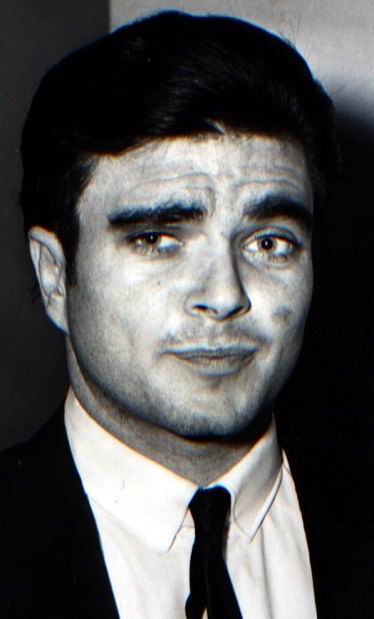
Ramon Torres Hernandez was an American serial killer, kidnapper, rapist, and convicted murderer whose crimes took place in and around San Antonio, Texas. Born in Bexar County on November 8, 1971, Hernandez developed a record of serious violence before he was connected to three murders committed between 1994 and 2001. Prosecutors described him as a serial predator who selected vulnerable victims, abducted them, sexually assaulted them, and killed them by strangulation or another form of asphyxiation.
Hernandez was convicted and sentenced to death for the murder of 37-year-old Rosa Maria Rosado. DNA evidence also connected him to the murders of two young cousins, Sarah Beth Gonzales and Priscilla Almares. Hernandez eventually confessed to killing the girls, although he was not separately tried for their deaths. Investigators also considered him a suspect in two additional killings, but the available evidence was not sufficient to prove those cases against him.
Earlier Criminal History
Before the known murders, Hernandez had already demonstrated a pattern of burglary and sexual violence. He received an 18-year prison sentence for three counts of burglary of a habitation. During one of those crimes, he entered a residence and sexually assaulted a 21-year-old woman. The victim suffered physical injuries during the attack.
Hernandez was released on parole on June 11, 1993. Approximately a year and a half later, two middle-school students disappeared from the west side of San Antonio. Their murders remained unsolved for several years, allowing Hernandez to remain free until another abduction and killing brought him to the attention of investigators in 2001.
The Murders of Sarah Beth Gonzales and Priscilla Almares
On December 16, 1994, 13-year-old Sarah Beth Gonzales and her 12-year-old cousin, Priscilla Almares, left a friend's house in San Antonio. They were last seen at approximately 4:30 that afternoon. When the girls failed to return home, their families reported them missing.
On the morning of December 17, their bodies were discovered near Rodriguez Park, in the area of the 6500 block of Keitha Boulevard. Both girls had been beaten, sexually assaulted, and killed by asphyxiation. Their bodies had been left outdoors in brush near the roadway.
The case initially produced no arrest. Investigators preserved biological evidence recovered during the autopsies, but the technology available in 1994 did not immediately identify the person responsible. The murders remained unresolved until Hernandez was arrested in connection with Rosa Rosado's death in 2001.
After that arrest, detectives obtained a sample of Hernandez's DNA and compared it with evidence from the 1994 crime scene. The testing produced a match. Hernandez later confessed to killing Gonzales and Almares. Although prosecutors did not conduct separate murder trials for the girls, their deaths were included in the capital-murder case as part of an alleged common criminal scheme.
The Abduction and Murder of Rosa Maria Rosado
On March 31, 2001, Hernandez was driving through San Antonio with Santos Minjarez and Hernandez's girlfriend, Asel Abdygapparova. According to court records, the group was searching for someone to rob when they saw 37-year-old Rosa Maria Rosado waiting alone at a bus stop.
Minjarez attempted to take Rosado's purse. When she resisted, she was forcibly pulled into the vehicle. Her head was covered, and Hernandez drove away from the bus stop. The group stopped at Hernandez's home to obtain tape, which was then used to restrain and gag Rosado.
Rosado was transported to a motel, where she was held against her will and sexually assaulted. While she was still being held, Abdygapparova was directed to purchase a shovel. Rosado was killed by asphyxiation, and her body was transported to a wooded area near the University of Texas at San Antonio, Loop 1604, and the UTSA Boulevard or Chase Hill Boulevard area. Hernandez and his accomplices buried her in a shallow grave.
After the murder, Rosado's personal property and several items connected to the crime were burned or thrown from the vehicle. The attempt to destroy evidence did not succeed. Abdygapparova later contacted authorities, provided a written statement, and led investigators to Rosado's body, the motel, and the vehicle used during the abduction.
Hernandez eventually admitted participating in the kidnapping and robbery, although he attempted to place responsibility for the sexual assault and killing on Minjarez. Prosecutors argued that Hernandez was fully involved in the criminal plan and was legally responsible for Rosado's death regardless of which man performed each individual act.
Known Victims
- Sarah Beth Gonzales — Age 13. Murdered on December 16, 1994, in San Antonio, Texas. She disappeared after leaving a friend's house with her cousin, Priscilla Almares. Her body was found the following morning near Rodriguez Park in the 6500 block of Keitha Boulevard. She had been beaten, sexually assaulted, and killed by asphyxiation.
- Priscilla Almares — Age 12. Murdered on December 16, 1994, in San Antonio, Texas. She disappeared with her cousin, Sarah Beth Gonzales, and was found beside her near Rodriguez Park on December 17. She had been beaten, sexually assaulted, and killed by asphyxiation.
- Rosa Maria Rosado — Age 37. Murdered on March 31, 2001, in San Antonio, Texas. She was abducted from a bus stop, restrained, taken to a motel, sexually assaulted, and killed by asphyxiation. Her body was buried in a shallow grave in a wooded area near Loop 1604 and the University of Texas at San Antonio.
Investigation and Arrest
Abdygapparova's cooperation gave detectives important information about Rosado's final hours. She showed officers where Rosado had been buried and identified locations and property connected with the crime. Investigators were also able to connect Hernandez to the shovel purchased for the burial.
Once Hernandez was in custody, detectives revisited other unresolved murders involving similar victims and methods. DNA testing tied him to the sexual assaults and killings of Gonzales and Almares. Hernandez was also investigated in connection with the earlier murders of two other teenage girls from the San Antonio area. Authorities considered him a strong suspect, but the available evidence did not support additional charges. The victims in those suspected cases are not included here because Hernandez's responsibility for their deaths was never established in court.
Trial and Death Sentence
Hernandez was indicted for capital murder in March 2002. The indictment alleged that he intentionally killed Rosa Rosado while committing or attempting to commit aggravated sexual assault, kidnapping, and robbery. It also presented Rosado's murder and the murders of Gonzales and Almares as crimes committed during different transactions but as part of a common scheme or course of conduct.
During the trial, jurors heard evidence about Rosado's abduction and death, Hernandez's previous violent crimes, and the DNA evidence connecting him to the two murdered girls. In October 2002, a Bexar County jury convicted Hernandez of capital murder and sentenced him to death. He was formally received on Texas death row on October 21, 2002.
Santos Minjarez was separately convicted and sentenced to death for his involvement in Rosado's murder. He died from natural causes while on death row in January 2012. Abdygapparova was initially convicted of capital murder and sentenced to life imprisonment. Her conviction was later overturned, and in 2014 she entered a no-contest plea to murder under an agreement limiting her sentence to 28 years.
Execution
After years of appeals, Ramon Torres Hernandez was executed by lethal injection at the Huntsville Unit in Huntsville, Texas, on November 14, 2012. He was 41 years old. His death sentence was carried out for the capital murder of Rosa Maria Rosado.
Shortly before his execution, Hernandez addressed his brother and apologized for the suffering he had caused his family. He also expressed regret for the pain connected with his actions. Relatives of Priscilla Almares and Rosa Rosado witnessed the execution.
Legacy of the Cases
Hernandez's crimes left three families dealing with the violent deaths of their loved ones. The murders of Sarah Beth Gonzales and Priscilla Almares also demonstrated the importance of preserving biological evidence in unresolved cases. Material collected in 1994 was tested with newer DNA methods years later, finally identifying Hernandez as the person connected to the crime scene.
Although Hernandez was convicted only for Rosado's murder, law-enforcement officials regarded the DNA evidence and his confession as establishing his responsibility for the deaths of Gonzales and Almares. He is therefore commonly described as a serial killer with three confirmed victims. The possibility that he committed additional murders remains part of the history of the investigation, but those suspicions were never proven beyond a reasonable doubt.