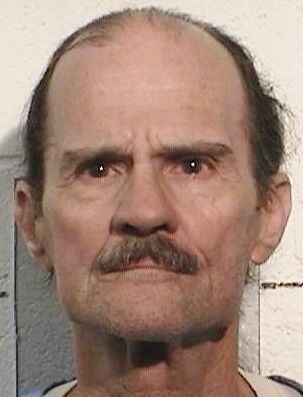
Joseph Gerard Christopher – The .22-Caliber Killer and Midtown Slasher
Background
Joseph Gerard Christopher was an American serial killer whose racially motivated attacks terrorized communities across New York during a concentrated period of violence in 1980 and early 1981. Born on July 26, 1955, in Buffalo, New York, Christopher became known by two notorious nicknames: the ".22-Caliber Killer," after a series of shootings in western New York, and the "Midtown Slasher," after a later series of knife attacks in Manhattan.
Christopher deliberately targeted men and boys who were Black or, in at least one case, Hispanic. His crimes were notable not only for their racial motivation but also for the abrupt changes in his method of attack. He used a .22-caliber firearm during his first known series of murders, while later crimes involved stabbing, slashing and other forms of violence. Twelve killings have commonly been attributed to his crime spree, although the strength of the evidence differs considerably from case to case.
Mental Health Problems Before the Killings
Shortly before the murders began, Christopher sought psychiatric help. In September 1980 he went to the Buffalo Psychiatric Center and attempted to have himself admitted. He was evaluated but was reportedly considered not to pose an immediate danger to himself or anyone else and was instead directed toward outpatient counseling. Approximately two weeks later, the first of the killings associated with him occurred.
Christopher would later be diagnosed with serious mental illness, and questions about his competency and mental condition became central issues during his criminal proceedings. Those issues eventually resulted in one set of his murder convictions being overturned, although they did not prevent him from later being convicted in connection with the Manhattan attacks.
The .22-Caliber Murders Begin
The violence began on September 22, 1980, in Buffalo. Four Black males were shot to death during a period of roughly 30 hours. Investigators determined that the shootings were connected through ballistics, and descriptions of the gunman pointed toward a young white male. The weapon was described as a .22-caliber firearm, reportedly concealed in or used in conjunction with a paper shopping bag, leading newspapers to call the unidentified attacker the ".22-Caliber Killer."
The first victim was 14-year-old Glenn Dunn. Dunn was waiting in a vehicle outside a Tops supermarket in Buffalo when the gunman approached and opened fire. Dunn's age made the crime particularly shocking, and there was initially no apparent reason that anyone would have targeted him.
The following day, September 23, Harold Green was killed in suburban Cheektowaga. Green was sitting in his vehicle in the parking lot of a fast-food restaurant when he was shot in the head. Later that night, Emanuel Thomas was shot and killed while walking along a Buffalo street. The violence then moved to Niagara Falls, where Joseph McCoy was fatally shot on September 24.
The victims differed in age, occupation and circumstances. What they shared was that they were Black males attacked without any apparent personal connection to the killer. As investigators recognized the racial pattern, fear spread rapidly through Buffalo's Black community. Police formed a large investigation in an effort to identify the gunman before he attacked again.
The Cab Driver Murders
Two particularly disturbing murders occurred approximately two weeks after the shootings. On October 8, 1980, 71-year-old taxi driver Parler W. Edwards was found dead in the trunk of his taxi in Amherst, New York. He had been beaten to death and his body had been mutilated after death, including the removal of his heart.
On October 9, 40-year-old taxi driver Ernest Jones was found dead near the Niagara River in Tonawanda. Jones had also been violently killed and his heart had been removed. His bloodstained taxi was discovered several miles away in Buffalo.
The similarities between the Edwards and Jones murders immediately suggested that the same person was responsible. Christopher was later linked to and suspected in both killings, and accounts of statements he made while in custody have been interpreted as suggesting involvement. However, he was never prosecuted for the murders of Edwards and Jones. Authorities continued to treat the cases separately, and later reviews have noted that evidence concerning Christopher's responsibility was not as conclusive as it was in several of the other attacks.
The Hospital Attack
On October 10, 1980, another Black man, 37-year-old Collin Cole, was attacked while hospitalized in Buffalo. A white assailant entered his room and attempted to strangle him. The attacker reportedly made an explicitly racist statement before trying to kill Cole. A nurse interrupted the assault, allowing Cole to survive.
The description of the assailant was considered similar to descriptions associated with the ongoing murder investigation, and the attack was investigated for a possible connection to the same offender. Christopher has frequently been listed as the suspected attacker, although responsibility for the Cole assault was never established with the same certainty as the shootings for which Christopher was prosecuted.
Christopher Joins the Army
In November 1980, with the Buffalo-area murders still unsolved, Christopher enlisted in the United States Army. He was assigned to Fort Benning, Georgia. His departure from western New York coincided with a temporary pause in the series of killings.
Christopher later received Christmas leave and traveled back to New York. He arrived in New York City shortly before a new series of attacks began. This time the weapon was not a firearm. The killer used a knife, striking men in public places during a remarkable series of attacks on December 22, 1980.
The Midtown Slasher Attacks
On December 22, six men were stabbed in Manhattan over the course of approximately twelve hours. Four died. Because the attacks were concentrated in and around Midtown Manhattan, the unknown attacker became known as the "Midtown Slasher."
The first known victim that day was 25-year-old John Adams, who was stabbed at approximately 11:30 a.m. but survived. Roughly two hours later, Ivan Frazier was attacked. Frazier managed to deflect the knife and survived his injuries.
At approximately 3:30 p.m., 19-year-old Luis Rodriguez, a messenger from the Bronx, was stabbed while walking on Madison Avenue. Rodriguez died from his wounds. Christopher would eventually be tried and convicted specifically for Rodriguez's murder.
Later that evening, 30-year-old Antone Davis was stabbed to death. Twenty-year-old Richard Renner was killed several hours afterward. Near the end of the night, another man was fatally stabbed around the Midtown area. Later accounts identify this victim as Carl Ramsey, although some early reports described the fourth fatal victim simply as an unidentified Black man.
The rapid succession of seemingly unprovoked attacks caused considerable alarm in New York City. Investigators recognized that the victims had again been overwhelmingly Black, with Rodriguez being Hispanic, reinforcing suspicions that the killer was selecting victims because of race rather than because of any personal connection.
Return to Western New York
The violence continued after Christopher returned to western New York. On December 29, 1980, 31-year-old Roger Adams was stabbed to death in Buffalo. Adams was attacked during the morning near a commercial area on Broadway.
The following day, December 30, 26-year-old Wendell Barnes was stabbed while waiting for transportation in downtown Rochester, New York. Barnes was critically injured and died from his wounds. Authorities investigating the Buffalo, Rochester and Manhattan attacks increasingly suspected that the same racially motivated offender could be responsible.
On December 31, Albert Menefee was stabbed in Buffalo but survived despite a serious chest wound. On January 1, 1981, Larry Little and Calvin Crippen were attacked in separate incidents. Both men survived. These nonfatal attacks were also investigated as part of the wider series associated with Christopher.
Attack at Fort Benning and Arrest
Christopher returned to military duty at Fort Benning. On January 18, 1981, he attacked fellow soldier Leonard Coles with a knife in what was described as an unprovoked assault. Coles survived, and Christopher was taken into military custody.
While being held, Christopher exhibited serious psychiatric problems and injured himself. During his subsequent treatment and questioning, he began making statements about the murders in New York. He reportedly spoke of having killed numerous people and made clear that his victims had been deliberately selected because they were non-white males.
Military officials notified investigators in New York. Authorities examining Christopher's background discovered that his movements corresponded with several of the murder series. Searches also uncovered .22-caliber ammunition and firearm components that strengthened investigators' belief that they had identified the man responsible for the Buffalo shootings.
Victims Killed During the Crime Spree
- Glenn Dunn, 14 – September 22, 1980 – Buffalo, New York. Shot while sitting in a vehicle outside a Tops supermarket. Christopher was convicted in connection with this shooting in his original Buffalo murder trial.
- Harold Green, 32 – September 23, 1980 – Cheektowaga, New York. Shot while sitting in his vehicle near a fast-food restaurant. Christopher was convicted in connection with Green's murder in his original Buffalo trial.
- Emanuel Thomas, approximately 30 – September 23, 1980 – Buffalo, New York. Shot while walking along a Buffalo street. Christopher was convicted in connection with Thomas's murder in his original Buffalo trial.
- Joseph L. McCoy, 43 – September 24, 1980 – Niagara Falls, New York. Shot to death on a public street. Christopher was charged in connection with McCoy's killing.
- Parler W. Edwards, 71 – October 8, 1980 – Amherst, New York. Taxi driver found murdered in the trunk of his cab. His heart had been removed after death. Christopher was suspected but never prosecuted for the murder.
- Ernest Jones, 40 – October 9, 1980 – Tonawanda, New York. Taxi driver found murdered near the Niagara River. His heart had also been removed. Christopher was suspected but never prosecuted for the killing.
- Luis Rodriguez, 19 – December 22, 1980 – Manhattan, New York City. Stabbed to death near Madison Avenue in Midtown. Christopher was convicted of Rodriguez's murder in 1985.
- Antone Davis, 30 – December 22, 1980 – Manhattan, New York City. Fatally stabbed during the Midtown Slasher attacks and commonly attributed to Christopher.
- Richard Renner, 20 – December 22, 1980 – Manhattan, New York City. Fatally stabbed during the same series of attacks and commonly attributed to Christopher.
- Carl Ramsey – December 22, 1980 – Manhattan, New York City. Fatally stabbed late in the evening. Some early accounts described this victim as unidentified, while later accounts identify him as Carl Ramsey. The killing is commonly attributed to Christopher.
- Roger Adams, 31 – December 29, 1980 – Buffalo, New York. Stabbed to death in Buffalo during the continuation of the racially motivated knife attacks.
- Wendell Barnes, 26 – December 30, 1980 – Rochester, New York. Stabbed in downtown Rochester and died from his injuries. His murder was linked by investigators to the wider series of attacks.
Known and Suspected Surviving Victims
- Collin Cole, 37 – October 10, 1980 – Buffalo, New York. Nearly strangled in a hospital by a racist attacker. Christopher was suspected, but his responsibility was never conclusively established.
- John Adams, 25 – December 22, 1980 – Manhattan, New York City. Stabbed during the Midtown attacks but survived.
- Ivan Frazier – December 22, 1980 – Manhattan, New York City. Attacked with a knife and survived. Christopher was later convicted of attempting to murder him.
- Albert Menefee, 32 – December 31, 1980 – Buffalo, New York. Stabbed in the chest but survived.
- Larry Little – January 1, 1981 – Buffalo, New York. Attacked but survived.
- Calvin Crippen, 23 – January 1, 1981 – Buffalo, New York. Attacked but survived.
- Leonard Coles – January 18, 1981 – Fort Benning, Georgia. Fellow soldier attacked with a knife. Coles survived, and the attack led directly to Christopher's detention.
Confessions and Evidence
Once Christopher was in military custody, his statements dramatically changed the investigation. He told military medical personnel about killings in Buffalo and New York City and claimed responsibility for a large number of deaths. At different times he suggested that he had killed at least 13 people.
Investigators also established that Christopher had been in the correct locations at critical times. He lived in the Buffalo area during the September and October murders, joined the Army shortly afterward, and was on leave when the December knife attacks occurred. Physical evidence recovered during searches included .22-caliber ammunition and parts associated with a shortened firearm.
The case was nevertheless complicated by Christopher's severe psychiatric problems, inconsistent statements and the fact that some crimes attributed to him had considerably stronger evidence than others. The murders of Edwards and Jones, in particular, remained disputed despite Christopher's reported statements and their frequent inclusion in accounts of his killing spree.
Trials and Convictions
Christopher was returned to New York to face murder charges. In April 1982, he was convicted of three counts of second-degree murder for the shooting deaths of Glenn Dunn, Harold Green and Emanuel Thomas. The court imposed consecutive sentences totaling 60 years to life.
Those convictions were later overturned in July 1985. New York's highest court concluded that the trial judge had improperly prevented the defense from presenting additional psychiatric evidence concerning Christopher's mental competency. The decision did not declare that Christopher was innocent of the murders; rather, it found that errors involving his mental competency and defense required the convictions to be reversed.
Christopher separately went on trial in Manhattan for the December 22 attacks. In October 1985, a jury rejected his insanity defense and convicted him of murdering Luis Rodriguez and attempting to murder Ivan Frazier. He was returned to prison under a lengthy sentence.
A Campaign of Racial Violence
Christopher's attacks were distinguished by their racial focus. The victims had little or nothing else connecting them. They ranged from a 14-year-old student to working men and elderly victims, and they were attacked in parking lots, streets, public transportation areas and other ordinary locations. His surviving statements and the pattern of his victim selection led investigators and prosecutors to regard the crimes as acts of racial hatred.
The murders created intense fear in Buffalo's Black community. Residents had no way of knowing where or when the gunman might appear, and the seemingly random selection of victims meant virtually any Black man or boy could fear becoming a target. Community leaders demanded greater police protection while local, state and federal authorities worked together to identify the killer.
The December stabbings demonstrated that Christopher did not require a particular weapon or location. After abandoning the .22-caliber firearm, the killer could attack with a knife in crowded urban surroundings and then move between cities. This changing method contributed to the difficulty investigators initially had connecting the various crimes.
Death
Joseph Gerard Christopher remained incarcerated in New York and was eventually held at Attica Correctional Facility. He died in prison on March 1, 1993, at the age of 37 after suffering from cancer.
Legacy
Christopher's crimes remain one of the most notorious episodes of racially motivated serial violence in New York history. His murderous campaign stretched from Buffalo and its suburbs to Niagara Falls, Rochester and Manhattan, with his final known knife attack occurring against a fellow soldier at Fort Benning, Georgia.
Although Christopher is commonly described as responsible for twelve murders, the historical record requires an important distinction. Some killings, particularly the September shootings and the murder of Luis Rodriguez, resulted in formal prosecution and convictions at various stages of the legal proceedings. Other deaths were linked to Christopher primarily through circumstances, investigative conclusions or his own statements. The murders of Parler Edwards and Ernest Jones were never prosecuted against him and have remained especially disputed.
What is beyond dispute is the devastation produced during the months of violence. Twelve people died in the larger series attributed to Christopher, numerous others survived attacks, and entire communities lived under the fear that an unknown man was hunting victims solely because of their race. The combination of racial hatred, seemingly random victim selection, changing weapons and attacks across multiple cities made Joseph Gerard Christopher one of the most disturbing serial offenders to emerge from New York during the twentieth century.