Ramon Jay Rogers: The San Diego Dismemberment Murders
Background
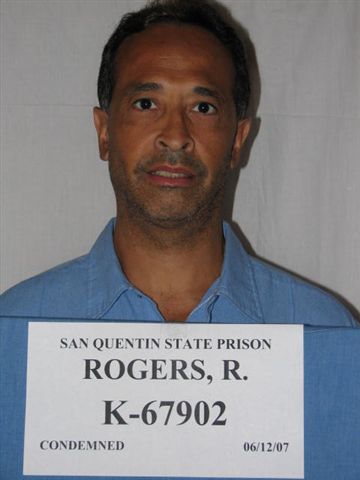
Ramon Jay Rogers was a former United States Navy serviceman, aspiring actor, drummer, businessman and apartment manager who was convicted of murdering three people close to him in San Diego, California, between 1993 and 1996. His victims were not strangers selected at random. They were a former best friend and two women with whom he had intimate relationships. Each victim had become a source of personal conflict for Rogers, and each disappeared after going to or living at the apartment complex he managed at 7007 Saranac Street.
Rogers had performed small acting roles, including appearances as criminals, and attempted to establish himself in the entertainment industry. To friends and acquaintances, he could appear sociable and ambitious. Behind that public image, however, prosecutors described a controlling man who responded violently when relationships threatened his finances, reputation or personal plans. The three murder cases were connected by Rogers's shifting explanations, his possession of victims' property and physical evidence recovered from storage rooms beneath his apartment.
The Disappearance and Murder of Ron Stadt
Ron Stadt had met Rogers while both men were serving in the Navy. They became close friends and later lived in San Diego, where Stadt temporarily stayed with Rogers after separating from his wife, Debra. The friendship deteriorated after Stadt learned that Rogers had been having an affair with Debra. Stadt intended to use evidence of the affair during a child-custody dispute, creating a serious conflict between the two men.
On June 24, 1993, Stadt had a heated telephone conversation with Rogers while at work. Stadt told a coworker that he planned to go to Rogers's apartment to retrieve personal property. He was uneasy about meeting Rogers alone and asked the coworker and his wife to accompany him, but they declined. Stadt left work during the early evening and drove to the Saranac Street apartment complex.
At approximately 6:20 p.m., Debra Stadt saw Stadt driving his truck through the alley behind the apartment building, with Rogers following in another vehicle. Rogers noticed Debra and urgently told her to leave. That was the last confirmed sighting of Stadt. He failed to appear for work the following day, never collected his paycheck and conducted no further activity on his credit accounts. His body has never been recovered.
Rogers gave contradictory accounts of Stadt's visit. He initially said Stadt had come to retrieve a ladder, but later told a detective that Stadt had come for jewelry. He subsequently offered friends several different explanations for Stadt's disappearance, claiming that Stadt had fled to avoid child-support obligations, had driven away to begin another life or had been killed in a fight. At other times, Rogers made disturbing remarks suggesting that Stadt was dead and that his remains had been concealed.
After Stadt disappeared, Rogers possessed items that had belonged to him, including a radar detector and a key connected to Debra's vehicle. Rogers also telephoned women using unlisted numbers that had been given to Stadt but not to Rogers. During a conversation about Stadt's extensive dental work, Debra stated that Stadt's body could still be identified by his teeth. Rogers replied in a manner prosecutors interpreted as an admission that failing to remove the teeth had been his only mistake.
The Murder of Rose Albano
Rose Albano was living with Rogers and was pregnant when she disappeared in December 1993. Rogers told acquaintances that Albano claimed he was the father of her unborn child. He did not want to marry her, did not want responsibility for her two other children and wanted her to terminate the pregnancy and leave his apartment. Albano refused to do either.
Albano's parents last saw her alive on December 18, 1993. Rogers reported her missing on December 23, but his statements immediately created inconsistencies. During the first call, he said that he had last seen her on December 12 and that she might have been carrying approximately $6,400 from a retirement-account withdrawal. When he called police again the next day, he supplied a different address and claimed he had last seen her on December 21.
Rogers also gave friends conflicting stories. He claimed that Albano had gone to Los Angeles, traveled to see her sister, gone shopping in Mexico with Stadt, returned to the Philippines or left for a new job. Witnesses said he showed little concern about her disappearance and avoided efforts to search for her.
On December 29, 1993, Albano's severed left arm, left leg and lower jaw were discovered inside a trash bag in a rural, mountainous area near Valley Center. The remains were located approximately a mile and a half from the home of Rogers's sister. Although authorities did not officially inform Albano's family that the remains had been identified until January 27, 1994, Rogers told his sister on the day of the discovery that Albano's body parts had been found. Investigators considered this apparent advance knowledge highly suspicious.
Evidence also suggested a financial motive. Albano had withdrawn more than $4,600 from her retirement account on December 17. After she vanished, Rogers paid for a used engine and new tires for his truck, purchases estimated to cost approximately $4,000. When police began questioning him, Rogers gave a friend cash, his passport, an airline ticket to Poland, an ATM card and other personal property to hold. He reportedly feared that investigators would regard the airline ticket as evidence that he planned to flee.
The Murder of Beatrice Toronczak
Biata “Beatrice” Toronczak was a Polish woman who had a young son with Rogers. She had been raising the child in Europe, but Rogers wanted the boy brought to the United States. Rogers traveled to Poland and returned to San Diego with the child in January 1996. Toronczak followed in February and moved into Rogers's apartment, forcing his current girlfriend to leave.
Toronczak maintained regular contact with her mother in Europe and rarely went more than a week without speaking to her. Their last known conversation occurred on February 18, 1996. When weeks passed without another call, Toronczak's mother became frightened. Rogers refused her request to report Toronczak missing and instead claimed that she had simply left.
Once again, Rogers offered numerous explanations. He said Toronczak had run away with a man and crossed the Mexican border, returned to Germany or Poland, or traveled to Las Vegas. Her family found these stories implausible because she had left her child behind and had vanished without contacting anyone.
Toronczak's mother remembered that Rogers had previously threatened to lock her daughter in a basement or storage area during an argument. Acting on the family's concerns, police went to the apartment complex on March 11, 1996. Officers examined storage rooms beneath Rogers's apartment, areas to which he controlled the keys.
Inside, investigators found Toronczak's severed fingers and portions of her jaw. They also discovered bloodstained tools and materials, including a handsaw, butcher knife, hammer, tarp, rope, plastic restraints and cutting equipment. Rogers's fingerprints were found inside surgical gloves associated with other gloves stained with Toronczak's blood. The storage area contained torn clothing and personal possessions connected to her.
Investigators also recovered pieces of a calendar from which dates corresponding with the victims' disappearances appeared to have been removed. The physical evidence transformed what had begun as a missing-person investigation into a multiple-murder case and prompted detectives to reexamine the disappearances of Ron Stadt and Rose Albano.
Confirmed Victims
- Ron Stadt – Last seen and believed murdered on June 24, 1993, at or near Rogers's apartment complex on Saranac Street in San Diego, California. Stadt's remains have never been found. Rogers was convicted of second-degree murder in his death.
- Rose Albano, 33 – Last seen by her family on December 18, 1993, and believed murdered later that month in San Diego, California. Her partial remains were found on December 29, 1993, in a rural area near Valley Center in San Diego County. Rogers was convicted of first-degree murder.
- Biata “Beatrice” Toronczak, 32 – Last known to have spoken with her mother on February 18, 1996, and believed murdered around that date at Rogers's San Diego apartment complex. Her partial remains were recovered from a storage room beneath the building on March 11, 1996. Rogers was convicted of first-degree murder.
Evidence Connecting the Crimes
The prosecution's case rested on a combination of physical evidence, witness testimony and Rogers's own statements. The crimes shared notable characteristics. Each victim knew Rogers personally, each presented a problem that threatened his relationships or plans, and each disappeared after an encounter connected to the apartment complex. Rogers repeatedly supplied changing stories instead of offering a consistent explanation for their whereabouts.
Forensic specialists testified that damage to Albano's arm and leg was consistent with cuts that could have been produced by the handsaw recovered beneath Rogers's apartment. Marks on Albano's wrist suggested that she had been bound with rope or plastic restraints similar to those found stained with Toronczak's blood. Both women had been dismembered, and portions of their jaws had been separated from the rest of their bodies. Teeth were missing from both sets of recovered jaw remains.
Prosecutors argued that the removal of the women's teeth was connected to Rogers's earlier conversation about Stadt's dental records. According to the prosecution, Rogers had learned from Stadt's murder that teeth could be used for identification and attempted to prevent investigators from identifying his later victims. Although Stadt's body was never found, the similarities between the cases helped establish a pattern of concealment.
Arrest, Trial and Convictions
Rogers was taken into custody in March 1996 after police discovered Toronczak's remains and bloodstained equipment in the storage area. He was initially charged in connection with her murder. As investigators reviewed the earlier cases and developed additional evidence, he was also charged with murdering Stadt and Albano.
His trial began in San Diego County in 1997. Prosecutors presented the recovered body parts, forensic comparisons, blood evidence, tools from the storage rooms, financial records and testimony from numerous friends and relatives. Witnesses described Rogers's contradictory explanations, incriminating remarks and unusual behavior following each disappearance.
On June 30, 1997, the jury found Rogers guilty of the first-degree murders of Rose Albano and Beatrice Toronczak. He was convicted of second-degree murder in the death of Ron Stadt. The jury also found the multiple-murder special circumstance to be true, making Rogers eligible for capital punishment.
Rogers received a death sentence for the first-degree murders, along with a term of 15 years to life for Stadt's second-degree murder. He appealed his convictions and sentence, but the California Supreme Court upheld the judgment on July 6, 2009, modifying it only to clarify the separate prison sentence imposed for Stadt's murder.
Possible Connection to an Idaho Disappearance
Following Rogers's arrest, investigators examined whether he might have been connected to the 1977 disappearance of Marie Watson in Emmett, Idaho. Watson had reportedly been involved in a dispute with members of Rogers's family before she vanished. Rogers was 17 years old at the time.
No conclusive evidence established that Rogers participated in Watson's disappearance, and he was never charged in that case. His confirmed criminal convictions remain limited to the murders of Stadt, Albano and Toronczak.
Legacy of the Case
The Ramon Jay Rogers case was especially disturbing because the murders occurred within a close social circle. Rogers killed people who trusted him, lived with him or shared years of personal history with him. He then attempted to explain their absences through a series of contradictory stories while continuing his daily life as an apartment manager and aspiring entertainer.
The discovery beneath the Saranac Street apartment building exposed the physical evidence of the final murder and provided the link needed to resolve two older cases. Although much of Stadt's murder had to be proved without a body, Rogers's possession of Stadt's property, his statements and his behavior after the disappearance persuaded the jury that Stadt had also been killed.
The convictions established Rogers as a serial murderer who used personal access and trust to isolate his victims. His efforts to dismember and conceal remains delayed the investigations, but the evidence he left behind ultimately connected the three deaths and led to his conviction and death sentence.