Nancy Staffleback and the Staffleback Family Murders
Overview
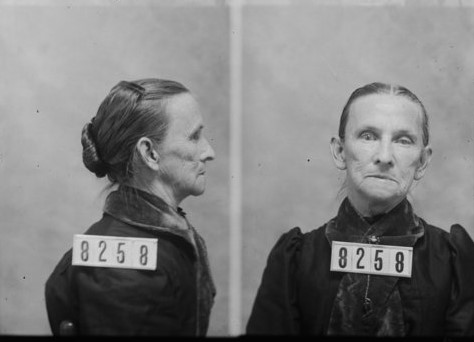
Nancy Staffleback, also known after her second marriage as Nancy Wilson, was the matriarch of a notorious criminal family that operated in southwestern Missouri and southeastern Kansas during the late nineteenth century. She was born Nancy Chase on August 16, 1832, in Allegany County, New York. Although she is frequently described in later accounts as a serial killer, the surviving historical record firmly connects her conviction to one murder. Additional killings were attributed to members of her household through witness statements and sensational newspaper reports, but the names and exact death dates of most alleged victims were never reliably documented.
Nancy married Michael Staffleback and raised a large family that included several sons who later became involved in serious crimes. After the marriage deteriorated, Nancy and some of her children lived in the Joplin, Missouri, area. The family was associated with Swindle Hill, a rough district known during the mining boom for theft, violence, gambling and other unlawful activities. Nancy later moved with several family members to Galena, Kansas, a mining community near the Missouri border.
The Staffleback House in Galena
By the middle of the 1890s, the Stafflebacks occupied a crude house near Galena’s mining district. Contemporary reports described the property as a disorderly house or brothel frequented by miners, laborers and travelers. Nancy lived there with relatives and associates, including her sons Edward, George and Michael Staffleback, her second husband Charles Wilson, and several women connected to the household.
The house acquired a reputation as a dangerous place where visitors could be robbed, assaulted or threatened. Because abandoned mine shafts surrounded Galena, the region provided numerous concealed places where evidence or bodies could be discarded. Later testimony suggested that members of the household used this isolated environment to intimidate witnesses and hide their crimes.
The Murder of Frank Galbreath
The crime that led to Nancy Staffleback’s conviction was the 1897 murder of Francis Marian “Frank” Galbreath, whose surname was also printed as Galbraith in some contemporary newspaper reports. Galbreath was a local miner or laborer who had lived and worked around Galena for several years. He reportedly went to the Staffleback residence after being invited or encouraged to visit by Nancy’s daughter Emma.
Accounts of the confrontation differed in their details, but they agreed that Galbreath became involved in an argument with members of the Staffleback household. He was attacked inside or near the property. Evidence reported after his body was recovered indicated that he had been shot and that his throat had been cut. His possessions were allegedly taken before his body was carried away and thrown into an abandoned, water-filled mine shaft near the Staffleback home.
Galbreath’s body was discovered on July 19, 1897. Because the remains had been concealed in the shaft and reportedly had been there for approximately two weeks, the precise day of his death could not be established with certainty. Contemporary accounts placed the killing in early July 1897. The discovery transformed local suspicions about the Staffleback household into a major murder investigation.
Known and Alleged Victims
- Francis Marian “Frank” Galbreath — Killed in early July 1897 in Galena, Cherokee County, Kansas. His exact death date was not conclusively established. His body was discovered in an abandoned mine shaft on July 19, 1897. He had been shot, his throat had been cut, and he was allegedly robbed before his body was concealed.
- Two unidentified women — According to later testimony, two young women stayed at the Staffleback residence approximately two years before the family’s 1897 prosecution. One was allegedly beaten to death by Michael Staffleback, and the second was allegedly killed by Edward Staffleback to prevent her from reporting the first murder. Their names, exact dates of death and burial locations were never reliably established.
- Other unidentified victims — Witnesses and newspapers alleged that additional visitors disappeared after entering the Staffleback property. Some accounts claimed that bodies were placed in mine shafts or buried around the house. No dependable list of names or verified death dates survives, and many of these accusations were never proven in court.
Witnesses Reveal the Family’s Secrets
The investigation expanded after women associated with the family began speaking to authorities. Cora Staffleback, George Staffleback’s wife, gave particularly damaging testimony. She described violence within the household and claimed that family members had committed murders beyond the killing of Frank Galbreath. Another woman, commonly identified in reports as Rosa or Rose Bayne, also provided information about alleged crimes.
Cora claimed that fear had previously prevented her from speaking openly. According to her account, Nancy exercised considerable authority within the household and threatened anyone who might expose the family. Cora’s testimony portrayed Nancy not merely as an elderly woman living among violent sons, but as an active participant who knew about criminal activity, helped maintain control over witnesses and assisted in concealing wrongdoing.
Some testimony accused Nancy of encouraging violence or helping plan the disposal of victims. Historical reports varied regarding whether she personally attacked anyone. Her established criminal responsibility came from her participation in the events surrounding Galbreath’s murder rather than conclusive proof that she personally carried out several killings.
Arrests and Trials
Authorities arrested several members of the Staffleback household after Galbreath’s body was identified and witnesses began cooperating. The prosecutions exposed the family’s activities to a national audience. Newspapers portrayed the Stafflebacks as one of the most vicious criminal families since the Bloody Benders, another Kansas family associated with the murders and disappearances of travelers.
George and Edward Staffleback were convicted of first-degree murder and received life sentences. Nancy was convicted of second-degree murder as an accomplice and sentenced in 1897 to twenty-one years in the Kansas State Penitentiary. Charles Wilson, her second husband, received a twenty-five-year sentence for his involvement. Michael Staffleback was sentenced to seven years for larceny rather than for one of the alleged murders.
The difference between the sentences reflected the evidence presented against each defendant. Prosecutors persuaded the court that Nancy had knowingly participated in the crime, but the verdict did not identify her as the person who fired the fatal shots or cut Galbreath’s throat. Her conviction nevertheless demonstrated that the jury considered her legally responsible for assisting the murder and its concealment.
Nancy’s Role and the Serial-Killer Label
Nancy Staffleback is often called a serial killer because of the numerous killings attributed to her family. That description should be treated cautiously. She was convicted in connection with one confirmed victim, Frank Galbreath. The alleged murders of the unidentified women and other visitors were largely based on witness testimony and contemporary newspaper reports rather than separate convictions supported by complete records.
Her importance in the case came from her position as the family matriarch. Witnesses portrayed her as a controlling presence who protected her sons, threatened potential informants and participated in the concealment of criminal acts. Even when individual acts of violence were attributed to her sons, Nancy was accused of helping create an environment in which robbery and murder could occur without immediate disclosure.
The lack of confirmed names does not prove that the additional murders never happened. Galena’s mining district contained numerous deep and abandoned shafts, many filled with water or debris. Recovering remains from such locations was difficult, and identification methods in the 1890s were limited. However, without physical evidence, named victims or court findings, the broader claims remain allegations rather than verified murders.
Imprisonment and Death
Nancy entered the Kansas penitentiary as an elderly woman. She continued to seek release and was reportedly considered among applicants for executive clemency. Her age and declining health attracted some sympathy, but the brutality of the Galbreath murder and the continuing notoriety of the Staffleback family worked against her efforts.
Nancy Staffleback died from pneumonia in the Kansas State Penitentiary at Lansing on March 9, 1909. She had served approximately twelve years of her twenty-one-year sentence. One of her sons who had received a life sentence died in prison before her. Other family members remained incarcerated for their roles in the crimes.
Historical Legacy
The Staffleback case became one of the darkest stories associated with the mining era of Galena, Kansas. The combination of a violent household, a suspected murder house, abandoned mine shafts and testimony concerning unidentified victims created a legend that grew with each retelling. The family was eventually compared with organized groups of killers, although the number of murders that can be conclusively proven is far smaller than the number alleged.
Nancy’s case also demonstrates the difficulty of separating historical fact from sensational reporting. Newspapers of the period often used dramatic language and repeated accusations before they had been independently verified. The murder of Frank Galbreath, the discovery of his body on July 19, 1897, and Nancy’s conviction for second-degree murder are well-established. Claims involving numerous additional victims remain uncertain because their names, remains and exact dates of death were never confirmed.
Nancy Staffleback therefore occupies an unusual place in criminal history. She was a convicted participant in a brutal murder and the dominant figure in a family accused of repeated killings, but she was not convicted of a documented series of murders. Her enduring notoriety rests both on the proven killing of Frank Galbreath and on the unresolved possibility that other victims disappeared inside the violent world surrounding the Staffleback house.