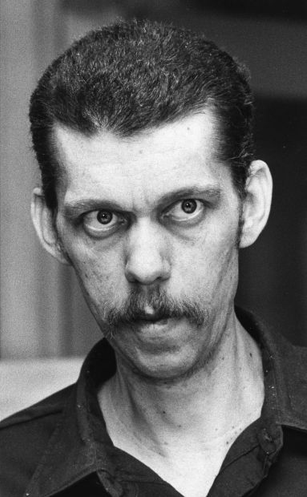
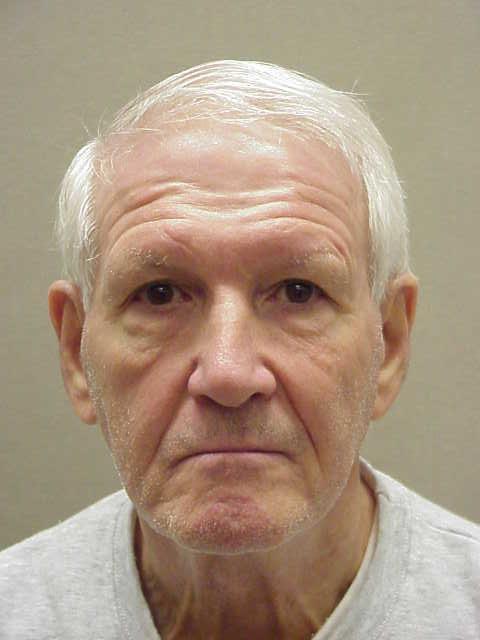
John Joseph Fautenberry: Interstate Serial Killer
Background
John Joseph Fautenberry was an American serial killer whose crimes crossed several states during a five-month period between November 1990 and March 1991. He was born in Connecticut in July 1963 and spent much of his adult life moving from place to place. He worked at different times as a long-haul truck driver, giving him experience with highways, truck stops and long-distance travel.
Fautenberry frequently approached people as a traveler who needed companionship, transportation, employment or temporary assistance. Several victims apparently trusted him because he appeared friendly or vulnerable. Once he had isolated them, however, he used sudden violence and stole money, vehicles, credit cards and personal belongings. His constant movement allowed him to leave one state before investigators understood that a murder had occurred.
Confirmed Victims
- Donald “Don” Nutley — November 30, 1990 — Mount Hood area near Zigzag, Oregon: Nutley was a 47-year-old man from Waco, Texas. He met Fautenberry at a truck stop in Troutdale, Oregon, and mentioned that he planned to go target shooting near Mount Hood. Fautenberry accompanied him to the isolated area. After they finished shooting, Fautenberry shot Nutley in the head and stole a large amount of cash from him. Nutley disappeared, and his remains were not found until April 21, 1991, when his skull and teeth were discovered in woodland northeast of Zigzag.
- Gary Wayne Farmer — February 1, 1991 — Bloomsbury, New Jersey: Farmer was a 27-year-old truck driver from Springfield, Tennessee. He encountered Fautenberry at the Pilot Truck Stop near Interstate 78. Fautenberry shot Farmer in the head inside Farmer’s tractor-trailer and stole items that included his watch, knife and approximately $40. Farmer’s body remained in the sleeping compartment of the truck until it was discovered on February 5, 1991. Investigators later connected Fautenberry to the killing, and he eventually received a life sentence in New Jersey for Farmer’s murder.
- Joseph William Daron Jr. — February 17, 1991 — Cincinnati area, Ohio: Daron was a 45-year-old data supervisor and the father of two daughters. He picked up Fautenberry, who was hitchhiking near Interstate 275 east of Cincinnati. Fautenberry directed him toward another highway junction and then shot him twice in the chest. He stole Daron’s white 1988 Subaru, credit cards, wallet, briefcase, wristwatch and Bible. Daron’s body was left in a wooded area near the Ohio River and was discovered on March 20, 1991. This murder resulted in Fautenberry’s Ohio death sentence.
- Christine Anne Guthrie — February 23, 1991 — northwestern Oregon: Guthrie was a 32-year-old former bank teller from Portland. She met Fautenberry at a social gathering after he returned to Oregon in Daron’s stolen vehicle. The two traveled toward the Oregon coast and were seen at a motel in Rockaway Beach. Guthrie was shot in the head, and her body was abandoned near the remote logging community of Timber. Her remains were discovered on April 1, 1991. Fautenberry later admitted responsibility for her death.
- Jefferson “Jeff” Diffee — March 13, 1991 — Juneau, Alaska: Diffee was a 39-year-old miner employed at the Greens Creek Mine. He met Fautenberry at a bar and invited him to his apartment. Inside the residence, Fautenberry beat Diffee, placed him in handcuffs and stabbed him 17 times. He then stole Diffee’s wallet, bank card and handgun. Fautenberry used the stolen card to withdraw money from Diffee’s account. Evidence left in the apartment helped Juneau police identify and arrest him. He pleaded guilty to first-degree murder and received a 99-year sentence without eligibility for parole.
The Murder of Donald Nutley
Donald Nutley’s death was the beginning of Fautenberry’s confirmed series of murders. The circumstances demonstrated the method he would continue to use: meeting a stranger at a transportation center, creating a sense of friendship and moving with the victim to an isolated location. Nutley had no apparent reason to consider Fautenberry dangerous when he agreed to let him join the target-shooting trip.
After killing Nutley, Fautenberry took his money and left the area. Because Nutley’s body was concealed in remote woodland, the crime was not immediately identified as a homicide. His disappearance remained unresolved during the months in which Fautenberry continued traveling across the country and killing other people.
The Killing of Gary Farmer
In New Jersey, Fautenberry used the anonymous environment of a busy interstate truck stop to approach Gary Farmer. Farmer’s occupation required him to spend long periods alone on the road, and his truck contained a sleeping compartment that concealed the crime for several days. Fautenberry later offered different explanations for the confrontation, but the robbery following the shooting provided investigators with evidence of a financial motive.
The discovery of Farmer’s body on February 5 led police to release information about a man seen in the area. At that point, however, Fautenberry was already traveling west. The distance between the New Jersey killing and his later crimes initially prevented local authorities from recognizing the larger pattern.
The Murder of Joseph Daron Jr.
Joseph Daron’s decision to help a hitchhiker proved fatal. After shooting Daron, Fautenberry took his car and personal property and began using the stolen credit cards during a cross-country journey. Those transactions created a record of his movements through several states. Witnesses also reported seeing Daron’s Subaru thousands of miles from Ohio.
The theft of the vehicle became one of the most important links between the separate investigations. Police traced the Subaru to Fautenberry’s movements in Oregon, Washington and Alaska. When Daron’s body was found near Cincinnati, investigators were able to reconstruct how a seemingly ordinary act of kindness had placed him in contact with the killer.
The Murder of Christine Guthrie
Fautenberry reached Portland in Daron’s stolen Subaru and reconnected with people he knew in Oregon. Christine Guthrie met him at a gathering and accompanied him toward the coast. Their movements were later reconstructed through witness statements, including observations made at a motel in Rockaway Beach.
Guthrie disappeared after traveling with Fautenberry. Her body was found several weeks later in an isolated area near Timber. The location was far enough from Portland to delay discovery and obscure the connection between her death and Fautenberry’s interstate movements. Her killing showed that he did not restrict his victims to truck drivers or roadside encounters.
The Murder of Jefferson Diffee
After abandoning Daron’s car near the Seattle-Tacoma airport, Fautenberry flew to Juneau, Alaska. He found temporary work on a fishing boat and stayed at a downtown hotel. On March 13, he met Jefferson Diffee at a bar. Diffee reportedly felt sympathy for the newcomer and invited him to his apartment.
The attack on Diffee was particularly prolonged. Fautenberry beat and restrained him before stabbing him repeatedly. He then stole property that could quickly be traced. Diffee’s absence from work caused concern among his co-workers, while transactions involving his bank card attracted the attention of investigators. Fingerprint evidence from the apartment and property recovered from Fautenberry connected him directly to the crime.
Arrest and Confessions
Juneau police arrested Fautenberry in March 1991 after connecting him to Diffee’s death and the use of stolen property. Searches of his hotel room and storage area uncovered possessions belonging to Joseph Daron, including his briefcase, watch and Bible. These discoveries linked the Alaska investigation to the missing-person and murder investigation in Ohio.
During questioning, Fautenberry admitted responsibility for multiple killings. His statements provided investigators in Oregon, New Jersey and Ohio with information about crimes that had previously appeared unrelated. He sometimes attempted to excuse his violence by claiming that he had been threatened or provoked, but the repeated theft of money and property demonstrated a consistent robbery motive.
The Disputed Richard Combs Confession
Fautenberry also claimed that he had killed 25-year-old Richard F. Combs in Roseburg, Oregon, in 1984. Combs had been stabbed, and his body was left near a freeway. The confession was controversial because another man, Michael Collier, had already pleaded guilty to manslaughter in connection with the death and later withdrew his confession.
Authorities investigated Fautenberry’s statement but did not charge him with Combs’s murder. For that reason, Richard Combs is generally treated as a possible or disputed victim rather than one of Fautenberry’s five confirmed victims.
Trials and Sentences
Fautenberry faced prosecution in several jurisdictions. In Alaska, he pleaded guilty to the first-degree murder of Jefferson Diffee and received a 99-year prison sentence without parole eligibility. In New Jersey, he pleaded guilty to murdering Gary Farmer and received a life sentence.
Ohio prosecuted him for the aggravated murder and robbery of Joseph Daron Jr. Fautenberry entered a no-contest plea before a three-judge panel. The court found him guilty and sentenced him to death in September 1992. His conviction and sentence were reviewed repeatedly in state and federal courts, but his appeals were unsuccessful.
Execution
John Joseph Fautenberry was executed by lethal injection on July 14, 2009, at the Southern Ohio Correctional Facility near Lucasville. He was executed for the murder of Joseph Daron Jr., although the complete record of his crimes included four other confirmed victims in Oregon, New Jersey and Alaska.
Fautenberry’s crimes demonstrated how an offender could exploit interstate travel before modern law-enforcement databases allowed information to be shared rapidly. Each murder was initially investigated by a different local or state agency. The connections became clear only after stolen vehicles, credit-card records, fingerprints, witness accounts and Fautenberry’s own statements were compared across jurisdictions.
Summary
Between November 30, 1990, and March 13, 1991, Fautenberry killed five confirmed victims in four states. He approached people in truck stops, bars, social gatherings and along highways, gaining their trust before attacking them. His victims included people who offered friendship, transportation or assistance. Robbery was a recurring element, and the property he stole eventually helped authorities trace his movements and bring his series of murders to an end.